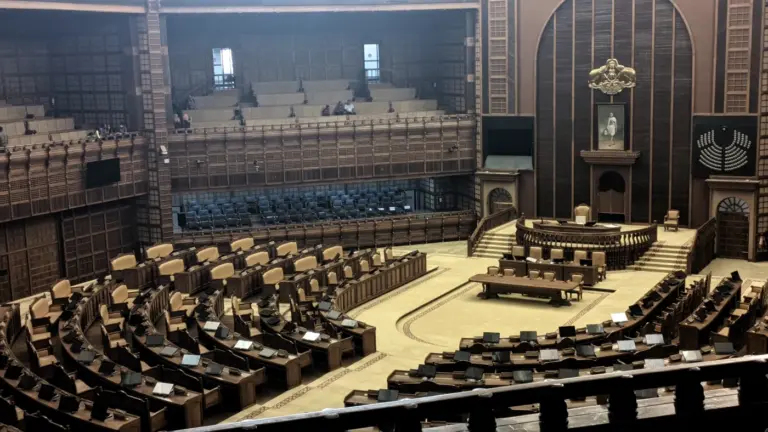
Article 110 says a Money Bill must contain only provisions dealing with taxes, the Consolidated Fund and borrowing. The Aadhaar Act had eight parts, most of them unrelated to any of those. It was passed as a Money Bill. So were amendments to 25 statutes in the Finance Act 2017, and the PMLA amendments in 2019.
A seven-judge bench has been sitting on what that single word means since October 2023, and its answer will determine the validity of more than fifteen laws. Money bill misuse is not a procedural quibble; it is a live question about whether India has a functioning second chamber.
Why Classification Matters
A Money Bill bypasses effective Rajya Sabha scrutiny. The upper House may only recommend amendments, which the Lok Sabha may reject, and it must return the bill within fourteen days. Certifying an ordinary bill as a Money Bill therefore removes an entire chamber from the legislative process without amending anything.
The Pattern
| Year | Instrument | Issue | Judicial outcome |
|---|---|---|---|
| 2016 | Aadhaar Act | Eight parts, most unrelated to the Consolidated Fund | Upheld 4 to 1; Justice Chandrachud dissented, calling it an abuse of constitutional process |
| 2017 | Finance Act | Amended 25 Acts including tribunal service conditions | Rojer Mathew (2019) struck down the tribunal rules and referred Article 110 to a seven-judge bench |
| 2019 | Finance Act | Amended PMLA, granting ED sweeping arrest, attachment and search powers | Vijay Madanlal (2022) upheld the amendments but left the Money Bill question open |
| 2025 | Income Tax (No. 2) Bill | Passed as a Money Bill in the Lok Sabha on 11 August; Rajya Sabha returned it in a day; Clause 247 grants tax authorities access to social media and private chats | Criticised as surveillance overreach |
The Constitutional Question
The text. Article 110(1) requires that a Money Bill contain only the specified provisions. That word sets a narrow test. If the drafters had intended a predominant-purpose test, they would have written one.
The certification. Under Article 110(3) the Speaker certifies, and the certification is stated to be final. In Puttaswamy (2018) the Supreme Court held that certification is nonetheless judicially reviewable, without settling the standard of review. A power that is final and reviewable at once is an unstable arrangement, and the pending bench exists to stabilise it.
The stakes. If the Court reads only narrowly, several laws may be invalidated for having bypassed the Rajya Sabha. That would be a substantial constitutional disruption, and it is the reason a decision has been slow.
The Structural Point
Between 2014 and 2024 the governing party held a Lok Sabha majority without a Rajya Sabha majority. That is the context in which the Money Bill route became attractive, and naming it explains the pattern better than any account of individual bills.
This is worth stating carefully rather than partisanly. Any government facing an upper House it does not control has an incentive to use whatever lawful route reduces that House’s leverage. The problem is not the motive, which is predictable, but the absence of an effective check on the classification decision. The Speaker belongs to the majority party; certification is final on its face; and judicial review arrived late and without a standard.
Bicameralism does not fail through amendment. It fails through classification.
The Way Forward
- Decide the reference. The seven-judge bench has the question; the uncertainty itself is now a constitutional cost.
- Establish a reviewable standard, so that certification is tested against the text of Article 110(1) rather than against deference.
- Require the Speaker to record reasons for certification, which converts an unexplained decision into a reviewable one.
- Prospective invalidation. If the Court reads only narrowly, prospective effect would protect settled arrangements while restoring the rule.
- Strengthen the Rajya Sabha’s revising function generally, since the Money Bill route is only the sharpest instance of a wider decline in second-chamber scrutiny.
Frequently Asked Questions
What does Article 110 define as a Money Bill?
A bill containing only provisions dealing with taxes, the Consolidated Fund of India, borrowing and related matters listed in Article 110(1). The word only is the operative term, because it establishes a narrow test rather than a predominant-purpose test.
Why does Money Bill classification matter?
Because a Money Bill bypasses effective Rajya Sabha scrutiny. The upper House may only recommend amendments, which the Lok Sabha can reject, and must return the bill within fourteen days. Classifying an ordinary bill as a Money Bill therefore removes one chamber from the legislative process.
Who decides whether a bill is a Money Bill?
The Speaker of the Lok Sabha certifies it under Article 110(3), and the certification is stated to be final. In Puttaswamy (2018) the Supreme Court held that certification is nonetheless judicially reviewable, though the standard of review was left unclear.
What was the controversy over the Aadhaar Act?
The Aadhaar Act 2016 had eight parts, most unrelated to the Consolidated Fund, and was passed as a Money Bill, bypassing Rajya Sabha scrutiny. A 4 to 1 Supreme Court majority upheld the certification. Justice Chandrachud dissented, describing the route as an abuse of constitutional process.
What happened in Rojer Mathew?
The Finance Act 2017 amended 25 Acts, including tribunal service conditions, and was certified a Money Bill. In Rojer Mathew (2019) the Supreme Court struck down the tribunal rules as unconstitutional and referred the interpretation of Article 110 to a seven-judge bench.
What is the status of the seven-judge bench?
It was constituted in October 2023 to decide the scope of the word only in Article 110(1). Its ruling will determine the validity of more than fifteen laws passed as Money Bills, including the Aadhaar Act and the PMLA amendments.
What was the PMLA issue?
The Finance Act 2019 amended the Prevention of Money Laundering Act, giving the Enforcement Directorate sweeping powers of arrest, attachment and search. In Vijay Madanlal (2022) the Supreme Court upheld the amendments but expressly left the Money Bill question open, pending the larger bench.
Why is this described as a structural rather than an incidental problem?
Because between 2014 and 2024 the governing party held a Lok Sabha majority without a Rajya Sabha majority. The Money Bill route offered a lawful-looking way to legislate past an upper House it did not control, which turns a classification question into a question about bicameralism itself.
Practice Questions
Prelims MCQs
- The operative word establishing the narrow test for a Money Bill in Article 110(1) is
(a) Mainly
(b) Substantially
(c) Only
(d) Primarily
Answer: (c) Article 110(1) requires that a Money Bill contain only the specified provisions, which is a narrow rather than a predominant-purpose test. - Under Article 110(3), certification of a bill as a Money Bill is done by
(a) The President
(b) The Speaker of the Lok Sabha
(c) The Finance Minister
(d) The Rajya Sabha Chairman
Answer: (b) The Speaker certifies, and the certification is stated to be final, though Puttaswamy held it judicially reviewable. - The seven-judge bench on Article 110 was constituted in
(a) October 2019
(b) October 2021
(c) October 2023
(d) October 2025
Answer: (c) It was constituted in October 2023 following the reference in Rojer Mathew. - Rojer Mathew (2019) concerned
(a) Aadhaar data protection
(b) Tribunal service conditions under the Finance Act 2017
(c) PMLA arrest powers
(d) Electoral bonds
Answer: (b) The Court struck down tribunal rules and referred the Article 110 question to a larger bench. - In Vijay Madanlal (2022) the Supreme Court
(a) Struck down the PMLA amendments
(b) Upheld the PMLA amendments and left the Money Bill question open
(c) Held the Finance Act 2019 was not a Money Bill
(d) Declined jurisdiction
Answer: (b) The amendments were upheld while the Money Bill classification issue was reserved for the larger bench.
Mains Questions
- Passing ordinary legislation as a Money Bill undermines bicameralism. Critically examine with recent instances. (250 words)
- Speaker's certification under Article 110(3) is final but judicially reviewable. Discuss the tension this creates. (250 words)
- A narrow reading of Article 110 could invalidate a substantial body of legislation. Examine the constitutional consequences. (250 words)
- The Money Bill route reflects a structural feature of Indian politics rather than an incidental abuse. Discuss. (150 words)
- Evaluate the role of the Rajya Sabha as a revising chamber in light of Money Bill practice. (150 words)
Tell Google you want more of this.
Add Anantam IAS as a preferred sourceOne tap, and this site shows up more often in your own Top Stories, AI Overviews and AI Mode. Remove it any time.