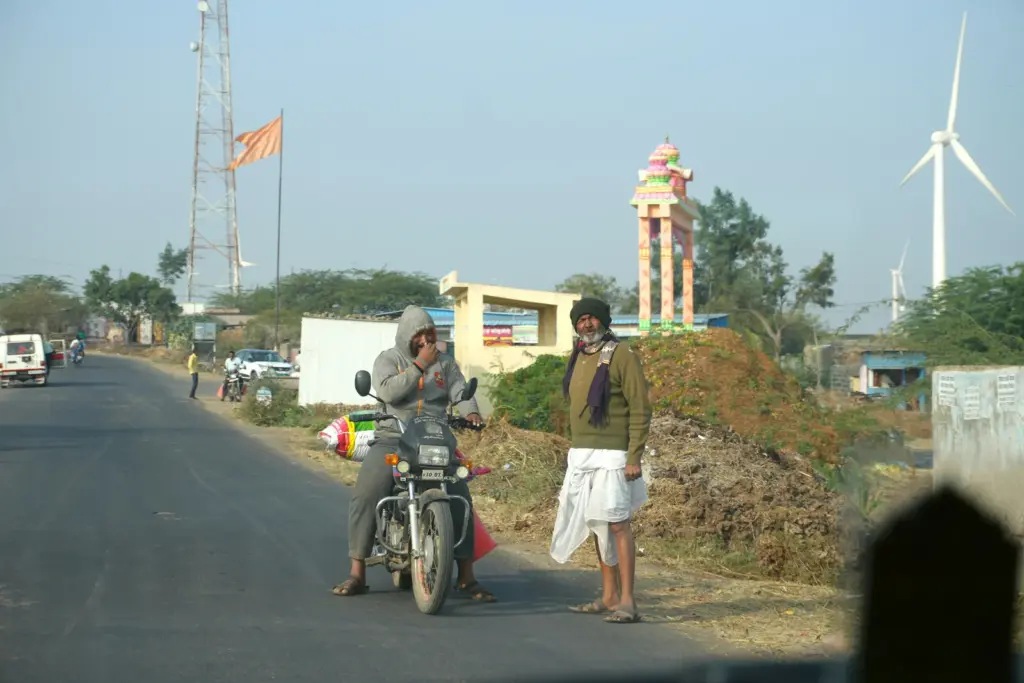
Every time a Member of Parliament inaugurates a borewell, a school boundary wall, or a stretch of village road with a plaque bearing their name, the money almost always comes from one scheme: MPLADS. Aspirants know the expansion, Members of Parliament Local Area Development Scheme, and the headline figure, Rs 5 crore a year. What trips them up is the mechanics, who actually holds the money, who sanctions the work, and why the Comptroller and Auditor General keeps flagging it year after year. The scheme sits on a genuine constitutional fault line, a legislator spending executive money, and that tension is exactly why examiners love it. Get the plumbing right and you can answer almost anything thrown at it.
What MPLADS is, and the one thing people get wrong about it
MPLADS is a central government scheme, launched on 23 December 1993, under which each Member of Parliament can recommend developmental works worth up to Rs 5 crore per year in their area, to create durable community assets like drinking water facilities, roads, school buildings, and health infrastructure. It is fully funded by the Union government and administered by the Ministry of Statistics and Programme Implementation (MoSPI).
Here is the single most important correction to make in your notes: an MP does not receive, hold, or spend this money. Not a rupee of it passes through the MP’s hands. The MP only recommends works. The funds are released by the central government directly to the district authority, usually the District Magistrate or Collector, who then sanctions the work, picks the implementing agency, and gets it executed. Miss this distinction and you will misread every question on the scheme, because the whole legal defence of MPLADS rests on it. The MP proposes; the executive disposes.
Think of the MP as a customer with a gift voucher, not a wallet full of cash. They can point at what they want built in their constituency, but a government official redeems the voucher, checks the rules, and does the buying. That design is deliberate, and it is what has kept the scheme constitutionally alive through repeated challenges.
How the Rs 5 crore grew, and how it is released
The Rs 5 crore figure was not the starting point; it climbed over three decades, and knowing the trajectory shows you the scheme’s political durability.
| Year | Annual entitlement per MP |
|---|---|
| 1993-94 (launch) | Rs 5 lakh |
| 1994-95 | Rs 1 crore |
| 1998-99 | Rs 2 crore |
| 2011-12 to present | Rs 5 crore |
The Rs 5 crore comes in two instalments of Rs 2.5 crore each. Crucially, the funds are non-lapsable: money not spent in one year does not vanish at the year-end the way an ordinary budget line does, it carries forward. That sounds like a taxpayer-friendly feature, and it is meant to be, but it is also the reason huge unspent balances pile up in district accounts, which is precisely what auditors keep pointing to.
There are equity earmarks built in. An MP is expected to recommend at least 15% of the annual entitlement for areas with Scheduled Caste populations and 7.5% for Scheduled Tribe areas, so that the benefit does not flow only to the loudest or most connected pockets of a constituency.
Who can spend where, and how a work moves from idea to asset
The geographic rules depend on which kind of MP is recommending, and this is a favourite objective-question hook. A Lok Sabha member recommends works in their own constituency. A Rajya Sabha member recommends works anywhere in the state from which they are elected. A nominated member, of either House, can recommend works anywhere in the country. That last provision exists because a nominated MP has no constituency of their own.
The life cycle of a single work is worth memorizing as a sequence, because Mains answers reward process clarity:
- The MP recommends a work to the district authority.
- The district authority examines eligibility against the guidelines and, if the work qualifies, sanctions it, ideally within a set number of days.
- The authority selects an implementing agency, typically a government department, a panchayat, or a municipal body, never the MP.
- The agency executes the work and the asset is created and vested in the government or local body.
- The district authority monitors, inspects, and reports utilisation upward to MoSPI.
Note who is absent from every step of the actual spending: the MP. Their role begins and ends at recommendation. The district collector is the pivot of the entire machine, which is why weaknesses in district-level administration translate directly into weaknesses in MPLADS delivery.
What the money can and cannot build
Permissible works must create durable assets of a public and community nature: drinking water supply, education, public health, sanitation, roads and pathways, irrigation, and similar infrastructure that a wider community uses. The scheme also allows an MP to contribute to specified national priorities and, within capped limits, to registered trusts and societies for building community assets, so long as no asset is created for the personal benefit of any individual.
The scheme carries some flexible provisions that surface in current affairs. An MP may recommend a limited amount for areas outside their own state or constituency to help areas affected by natural calamities, and there are ceilings on how much can go to trusts and societies to prevent the money leaking into private or religious institutions. The recurring red line is the same throughout the guidelines: no works for individual benefit, no assets in the name of any living person, and nothing that duplicates the ordinary work of a government department. In practice these lines get blurred, which is one reason the audit findings are so persistent.
The guidelines have also been revised over time to widen what counts as a durable public asset. Contributions are permitted towards national schemes and priorities, so an MP can top up things like community infrastructure under flagship programmes, and there is a specific window for rehabilitation of areas hit by calamities of severe nature anywhere in the country. What has stayed constant across every revision is the insistence on a *tangible, community-owned asset* at the end of the process. The scheme is not designed to fund running costs, honoraria, festivals, memorials, or anything that leaves nothing physical behind, precisely because those are the categories most open to misuse and hardest to audit. When you read a news report that an MP’s MPLADS funds went to some ineligible head, it is almost always one of these forbidden categories that has been breached.
Why the CAG keeps flagging MPLADS
The Comptroller and Auditor General has audited MPLADS repeatedly, and the criticisms cluster into a predictable and damning pattern. If you can reproduce this cluster, you have the analytical core of any answer on the scheme’s weaknesses.
The recurring findings are: large unspent and unutilised balances parked in district accounts, sometimes for years, because works are recommended late or sanctioned slowly; delays between the release of funds and the issue of work orders; poor asset registers, so that nobody can confirm the asset was actually built or is being maintained; works executed that diverge from the sanctioned purpose; and weak monitoring and inspection, with far fewer physical checks than the guidelines require. Underlying all of it is a governance problem: the scheme concentrates enormous discretion in the recommending MP and the sanctioning collector, without the arms-length scrutiny that a normal budget line faces in Parliament.
The deeper critique is structural, and it is one you should be able to state cleanly. MPLADS blurs the separation of powers. A Member of Parliament belongs to the legislature, whose job is to make laws and hold the executive to account, including scrutinising how money is spent. When that same MP is handed an annual pot to steer developmental spending, the watchdog starts commissioning the work it is supposed to watch. Both the Second Administrative Reforms Commission and the National Commission to Review the Working of the Constitution recommended reconsidering or abolishing the scheme on precisely this ground.
The constitutional challenge and the Bhim Singh verdict
Because of that separation-of-powers worry, the constitutional validity of MPLADS was challenged in the Supreme Court, and the outcome is essential. In Bhim Singh v. Union of India (2010), a five-judge Constitution Bench upheld the validity of the scheme. The Court’s reasoning turned on the very distinction we started with: MPs only *recommend* works, they do not implement or spend, and the actual sanction and execution rest with the executive machinery at the district level. On that basis the Court held that the scheme does not violate the separation of powers or the federal structure, since it does not usurp the executive’s function and does not encroach on the states’ domain in a way that offends the Constitution.
That judgment is why MPLADS survives every political attack. It is legally settled that the design is constitutional, even as the *administration* of it remains, in the CAG’s telling, chronically flawed. In an answer, keeping “constitutionally valid” and “administratively weak” as two separate claims is what marks a mature response. The scheme is not illegal; it is badly run.
When the scheme was suspended, and why
MPLADS has been paused more than once, and the most recent suspension is a ready-made current-affairs anchor. In April 2020, at the onset of the COVID-19 pandemic, the Union Cabinet suspended MPLADS for two financial years, 2020-21 and 2021-22. The funds that would have gone to the scheme, roughly Rs 7,900 crore across the two years, were diverted to the Consolidated Fund of India to strengthen the government’s capacity to fight the pandemic. The scheme was restored in November 2021, with a reduced allocation for the balance of 2021-22 and the full Rs 5 crore per MP resuming from 2022-23.
That episode is analytically rich because it cuts both ways. Supporters argued it showed the scheme’s money could be flexibly redeployed to a national emergency. Critics argued it exposed the scheme as expendable, easily raided when the centre needed cash, and questioned why MPs’ constituency funds should be the first thing surrendered while other spending continued. Either framing works in an answer, provided you state the facts, suspension in 2020, diversion to the Consolidated Fund, restoration in 2021, correctly first.
The scheme has also carried a reputational stain from the 2005 sting operation in which several MPs were caught on camera seeking commissions in connection with MPLADS recommendations, leading to expulsions from Parliament. That scandal is often cited by critics as evidence that discretionary constituency funds invite corruption, though it concerned the conduct of individual members rather than a flaw in the scheme’s legal design.
How MPLADS fits into the wider fiscal picture
To place the scheme correctly, distinguish it from the two big families of intergovernmental transfer that aspirants sometimes confuse it with. MPLADS is not a centrally sponsored scheme in which the centre and states share the cost and states implement, and it is not a statutory transfer of the kind the Finance Commission recommends from the divisible pool of taxes. It is a discrete, fully central, discretionary scheme that channels a fixed per-MP sum to district authorities on the recommendation of legislators.
That places it awkwardly against the grain of decentralisation. The 73rd and 74th Constitutional Amendments and programmes like the Revamped Rashtriya Gram Swaraj Abhiyan are built on the idea that panchayats and municipalities, the elected local governments, should plan and spend for local development. MPLADS runs a parallel channel in which a national legislator, not the elected local body, decides what gets built. Critics argue this undercuts the spirit of local self-government; defenders argue it lets an MP respond quickly to felt local needs that slow local-body budgets miss. That unresolved tension, between constituency responsiveness and genuine decentralisation, is the most sophisticated point you can make about the scheme.
The push to fix it through technology
Faced with the same audit findings year after year, the response has leaned heavily on digitisation rather than redesign. The government rolled out an online workflow, including the e-SAKSHI mobile application and portal, so that recommendation, sanction, fund release, and utilisation reporting all move through a single digital trail rather than paper files scattered across district offices. The logic is straightforward: if every step is timestamped and visible, the classic problems, works recommended late, sanctions delayed, unspent balances hidden, and asset registers never updated, become harder to bury. A real-time dashboard also lets MoSPI and the public see how much of each MP’s entitlement has actually been converted into completed assets, which is the single most useful accountability number the scheme has ever lacked.
Whether technology alone can fix a scheme whose deeper problem is *discretion* is a fair thing to doubt. A portal makes delay and diversion easier to spot, but it does not change the underlying incentive structure in which a legislator steers spending and a busy collector sanctions it. The honest reformist position is that digitisation is necessary but not sufficient: it should sit alongside tighter timelines for sanctioning, mandatory third-party inspection of a sample of works, and a genuinely maintained asset register, so that the money visibly ends in something a community can use rather than in a balance parked for years.
How to study MPLADS for the exam
Carry six load-bearing facts and you can handle anything on this topic. One, the identity: central scheme, 1993, Rs 5 crore per MP per year, administered by MoSPI. Two, the mechanics: MPs *recommend*, the *district authority* sanctions and executes, funds are *non-lapsable*, with 15% SC and 7.5% ST earmarks. Three, the geography rule: Lok Sabha member in constituency, Rajya Sabha member in state, nominated member anywhere in India. Four, the critique: the CAG cluster of unspent balances, delays, weak asset registers, and poor monitoring, plus the separation-of-powers objection and the ARC recommendation to reconsider it. Five, the law: Bhim Singh v. Union of India (2010) upheld its validity. Six, the current affairs: suspended 2020-21 and 2021-22 for COVID with funds sent to the Consolidated Fund, restored November 2021.
The mistake to avoid is treating MPLADS as a simple welfare scheme to praise. It is a governance case study with a genuine constitutional argument on both sides. A Prelims question will test the mechanics and the numbers; a Mains question will test whether you can weigh the responsiveness argument against the accountability and decentralisation objections. Practise stating both, then landing a reasoned judgment, because sitting on the fence reads as not having understood the debate.
Frequently Asked Questions
Who administers MPLADS and how much does each MP get?
The scheme is administered by the Ministry of Statistics and Programme Implementation. Each Member of Parliament can recommend works worth Rs 5 crore per year, released in two instalments of Rs 2.5 crore, and the funds are non-lapsable.
Does an MP receive the MPLADS money directly?
No. The MP only recommends works. The central government releases the funds directly to the district authority, the District Magistrate or Collector, who sanctions the work, selects the implementing agency, and gets it executed. No money passes through the MP.
Where can a Rajya Sabha member spend MPLADS funds?
A Rajya Sabha member can recommend works anywhere in the state from which they are elected. A Lok Sabha member is limited to their own constituency, while a nominated member of either House can recommend works anywhere in the country.
Why has the CAG criticised MPLADS?
The Comptroller and Auditor General has repeatedly flagged large unspent balances, delays in issuing work orders, poor maintenance of asset registers, works diverging from their sanctioned purpose, and weak monitoring and inspection, all pointing to slack district-level administration and thin accountability.
Is MPLADS constitutionally valid?
Yes. In Bhim Singh v. Union of India (2010), a five-judge Constitution Bench of the Supreme Court upheld the scheme, reasoning that MPs merely recommend works while the executive sanctions and implements them, so it does not violate the separation of powers or the federal structure.
When was MPLADS suspended and why?
It was suspended for the financial years 2020-21 and 2021-22 in April 2020, and roughly Rs 7,900 crore was diverted to the Consolidated Fund of India to fight COVID-19. The scheme was restored in November 2021, with full allocation resuming from 2022-23.
What kinds of works can MPLADS funds be used for?
Only durable community assets of a public nature, such as drinking water supply, education, public health, sanitation, roads, and irrigation. Works for individual benefit, assets in the name of any living person, and duplication of a government department’s routine functions are not permitted.
How is MPLADS different from a centrally sponsored scheme?
A centrally sponsored scheme shares costs between the centre and states and is implemented by states. MPLADS is fully funded by the centre, is discretionary, and channels a fixed per-MP amount to district authorities on the recommendation of individual legislators.
Practice Questions
1. Under MPLADS, who sanctions and implements the works recommended by a Member of Parliament?
a) The Member of Parliament personally
b) The Ministry of Statistics and Programme Implementation
c) The district authority (District Magistrate or Collector)
d) The state legislative assembly
Answer: c) The district authority (District Magistrate or Collector)
2. A nominated Member of Parliament can recommend MPLADS works in:
a) Only the state of their residence
b) Any one constituency chosen at nomination
c) Anywhere in the country
d) Only Union Territories
Answer: c) Anywhere in the country
3. Which case upheld the constitutional validity of MPLADS?
a) Kesavananda Bharati v. State of Kerala
b) Bhim Singh v. Union of India (2010)
c) S. R. Bommai v. Union of India
d) Minerva Mills v. Union of India
Answer: b) Bhim Singh v. Union of India (2010)
4. MPLADS was suspended for 2020-21 and 2021-22, and the funds were diverted to:
a) The National Disaster Response Fund
b) The Consolidated Fund of India
c) The PM CARES Fund
d) The Contingency Fund of India
Answer: b) The Consolidated Fund of India
5. Which of the following is a permissible use of MPLADS funds?
a) A house built in the name of a serving MP
b) A community drinking water facility
c) Salaries of a state government department
d) A commercial shopping complex for private lease
Answer: b) A community drinking water facility
Mains-style questions
- “MPLADS is constitutionally valid but administratively weak.” Examine this statement in light of the Bhim Singh judgment and successive CAG findings.
- Critically analyse whether MPLADS undermines the spirit of the 73rd and 74th Constitutional Amendments and the goal of genuine decentralisation.
- Discuss the separation-of-powers objection to MPLADS and evaluate the arguments made by the Second Administrative Reforms Commission for reconsidering the scheme.
- The suspension of MPLADS during the COVID-19 pandemic was read both as flexibility and as expendability. Assess both interpretations.
- Suggest concrete reforms to strengthen accountability and utilisation under MPLADS without sacrificing an MP’s ability to respond to local needs.
MPLADS endures because it hands every MP something politically priceless, a visible way to build things with their name on them, and because the courts have blessed its design. But durability is not the same as effectiveness. The honest verdict is that the scheme is legal, popular, and chronically under-audited, and that the fixes, faster sanctioning, real asset registers, tighter monitoring, and a clearer line between the legislator’s recommending role and the executive’s spending role, are all administrative rather than constitutional. Learn it as the case study it is, where the interesting question is never “what is MPLADS” but “should a lawmaker be steering development money at all”, and you will be ready for whichever version of the question turns up.
Tell Google you want more of this.
Add Anantam IAS as a preferred sourceOne tap, and this site shows up more often in your own Top Stories, AI Overviews and AI Mode. Remove it any time.