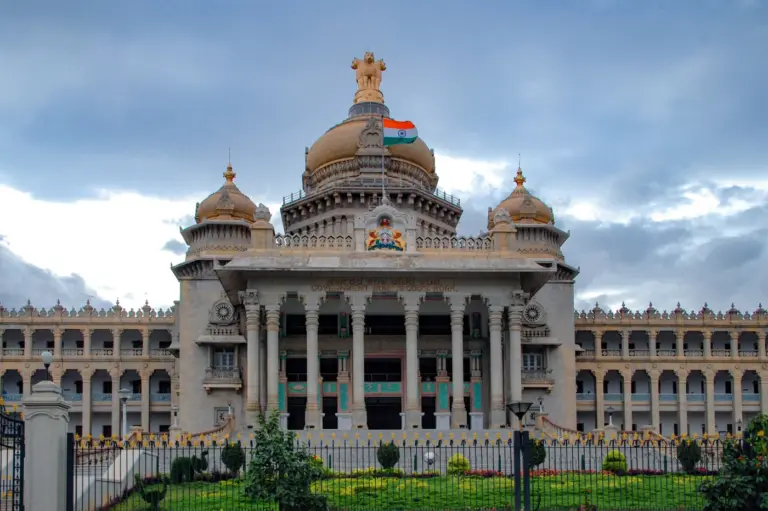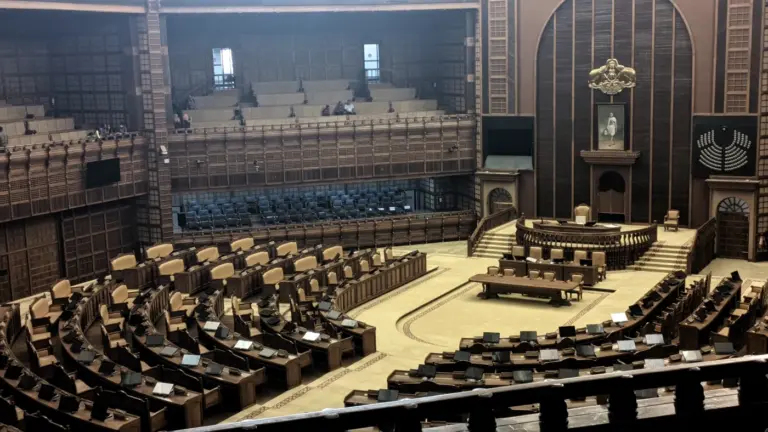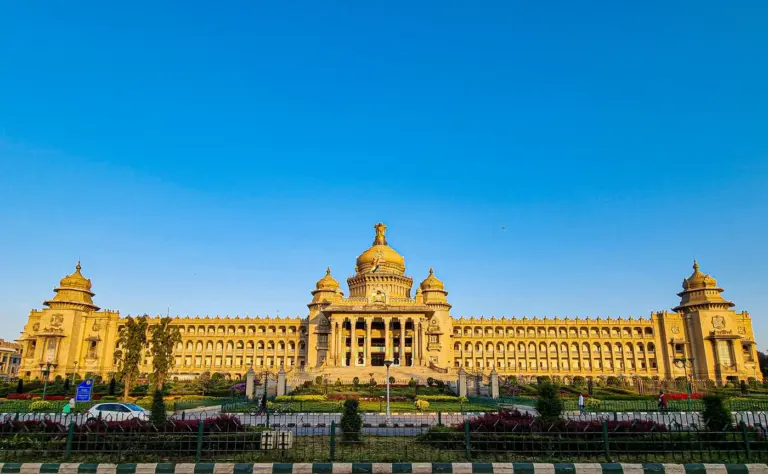
The United States Supreme Court hears about 70 cases a year and deliberates on each. India’s Supreme Court handles more than 70,000. That thousand-fold difference is not a measure of Indian litigiousness alone; it is a structural fact about what the Court has become, and it is the case for a National Court of Appeal.
Fali Nariman and Justice Ruma Pal have both put it directly: the Supreme Court has drifted from being a constitutional court to a regular court of appeal, and more than 60 percent of its workload is special leave petitions rather than constitutional questions.
The Crisis
Constitutional matters queue behind appeals. The electoral bonds case, the CAA challenge and the Article 370 abrogation challenge all took years to reach hearing while the Court worked through special leave petitions. The same-sex marriage constitution bench sat in 2023 with thousands of SLPs pending behind it.
Access is geographically skewed. The Court sits only in Delhi. A litigant from Manipur, Lakshadweep or rural Bihar must travel there, and the SLP admission rate from remote states is below one percent. Justice at the apex is, in practical terms, a Delhi privilege.
The identity problem. The Court was designed as a constitutional court under Article 32 and Articles 131 to 136. Special leave under Article 136 was written as a discretionary, exceptional jurisdiction. It has become routine. A court that settles ordinary civil and criminal disputes cannot simultaneously give the Constitution full deliberative attention.
What Is Proposed
Four regional benches of the Supreme Court, in the north, south, east and west, to hear special leave petitions and ordinary appeals, leaving the Court in Delhi to hear only constitutional questions, federal disputes and public interest matters of national importance.
The constitutional route is easier than assumed. Article 130 already permits the Supreme Court to sit at places other than Delhi with the Chief Justice’s approval and a Presidential notification. Bench sittings may therefore need executive notification rather than amendment. Full structural separation into a distinct court would require legislation.
The recommendation is old. The Law Commission’s 229th Report in 2009 recommended exactly this: four regional cassation benches, with Delhi reserved for constitutional matters. Fifteen years on, nothing.
The Comparative Evidence
| Country | Arrangement |
|---|---|
| France | Court of Cassation reviews questions of law only, not facts |
| Germany, Italy | Multi-tiered courts separating constitutional from ordinary appellate jurisdiction |
| United States | Circuit Courts of Appeal absorb ordinary appeals; the Supreme Court hears about 70 cases a year |
| India | A single apex court hearing over 70,000 matters |
Every comparable large jurisdiction separates the constitutional function from the appellate one. India is the outlier, and the outcome is visible in how long constitutional questions wait.
The Case Against
Three objections carry weight.
Fragmentation of precedent. Four regional benches may produce divergent interpretations of the same statute, and the mechanism for resolving those conflicts would itself become a docket.
Dilution of the apex principle. One Supreme Court whose word is final has value that is hard to quantify and easy to lose.
Capacity. Regional benches require judges, infrastructure and registry capacity that do not currently exist, at a time when subordinate court vacancies already exceed 5,000.
There is also institutional resistance. The Court has generally preferred internal case management reform to structural division, which is a significant obstacle given that its cooperation would be required either way.
The Honest Assessment
The strongest version of the argument is not about efficiency. It is that a constitutional court needs time to deliberate, and a court disposing of tens of thousands of appeals does not have it. Kesavananda took months of hearing. That kind of engagement is not available to a bench that also has an SLP list.
The strongest counter is that regional benches solve the volume problem by multiplying the institution, and a multiplied apex court is no longer an apex court.
A middle path exists and is under-discussed: tighten Article 136 itself. If special leave were applied as the exceptional jurisdiction the text describes, rather than as a routine third appeal, much of the docket would resolve without any structural change at all.
The Way Forward
- Apply Article 136 restrictively, with published admission criteria, before contemplating structural division.
- Use Article 130 to hold regional sittings as a pilot, which needs no amendment.
- Implement the Law Commission’s 229th Report in stages, beginning with a single regional bench.
- Fill subordinate and High Court vacancies, since apex court volume is downstream of delay below.
- Publish disposal and admission data by state, because the access problem cannot be argued without measurement.
Frequently Asked Questions
What is the proposal for a National Court of Appeal?
To create four regional benches of the Supreme Court, in the north, south, east and west, to hear special leave petitions and ordinary appeals. This would free the Supreme Court in Delhi to function exclusively as a constitutional court, hearing constitutional questions, federal disputes and public interest matters of national importance.
Why is the Supreme Court described as having an identity crisis?
Because it was designed as a constitutional court under Article 32 and Articles 131 to 136, with the special leave jurisdiction under Article 136 intended to be exceptional. It has become routine, and more than 60 percent of the Court’s workload is now civil and criminal appeals rather than constitutional questions. Fali Nariman and Justice Ruma Pal have both described this drift as the single biggest threat to the Court’s institutional identity.
How does the appellate load affect constitutional cases?
Constitutional matters queue behind appellate work. The electoral bonds case, the CAA challenge and the Article 370 abrogation challenge all took years to reach hearing, while the Court remained occupied with special leave petitions.
What is the geographical access problem?
The Supreme Court sits only in Delhi. A litigant from Manipur, Lakshadweep or rural Bihar must travel there, and the special leave petition admission rate from remote states is below one percent. Article 130 allows the Court to sit elsewhere with the Chief Justice’s approval and a Presidential notification, but this has never been used.
Does creating regional benches require a constitutional amendment?
Not necessarily for bench sittings. Article 130 already permits the Supreme Court to sit at places other than Delhi with the Chief Justice’s approval and Presidential notification, so executive notification may suffice. Full structural separation into a distinct National Court of Appeal would require legislation.
What did the Law Commission recommend?
The 229th Report in 2009 recommended four cassation benches at regional levels, with the Supreme Court in Delhi reserved for constitutional matters. It has remained unimplemented for more than fifteen years.
How do other countries handle this?
France’s Court of Cassation reviews only questions of law, not facts. Germany and Italy operate multi-tiered systems separating constitutional from ordinary appellate jurisdiction. In the United States, Circuit Courts of Appeal absorb ordinary appellate work, so the Supreme Court hears roughly 70 cases a year with full deliberation, against more than 70,000 in India.
What are the objections to the proposal?
That it would fragment the Supreme Court’s authority and produce conflicting regional precedent; that it dilutes the single apex court principle; that it requires substantial new infrastructure and judicial appointments; and that the Court itself has resisted, preferring internal case management reform to structural division.
Practice Questions
Prelims MCQs
- Approximately what share of the Supreme Court's workload consists of special leave petitions?
(a) 20 percent
(b) 40 percent
(c) Over 60 percent
(d) Over 90 percent
Answer: (c) More than 60 percent of the workload is civil and criminal appeals rather than constitutional questions. - Which Article permits the Supreme Court to sit at places other than Delhi?
(a) Article 124
(b) Article 130
(c) Article 136
(d) Article 141
Answer: (b) Article 130 allows other locations with the Chief Justice's approval and a Presidential notification, a power never used. - The Law Commission recommended four regional cassation benches in its
(a) 120th Report
(b) 189th Report
(c) 229th Report
(d) 277th Report
Answer: (c) The 229th Report of 2009 remains unimplemented. - The French Court of Cassation is distinctive because it reviews
(a) Only constitutional questions
(b) Only questions of law, not facts
(c) Only criminal appeals
(d) Both law and facts de novo
Answer: (b) Restricting review to questions of law is what keeps its docket manageable. - Special leave jurisdiction is conferred by
(a) Article 32
(b) Article 131
(c) Article 136
(d) Article 143
Answer: (c) Article 136 gives discretionary special leave jurisdiction, intended to be exceptional rather than routine.
Mains Questions
- The Supreme Court has drifted from a constitutional court to a general court of appeal. Examine the consequences and the remedies. (250 words)
- Evaluate the proposal for a National Court of Appeal with regional benches. (250 words)
- Access to the Supreme Court is geographically skewed. Discuss the constitutional and practical implications. (150 words)
- Compare India's apex court workload with comparable jurisdictions and assess what structural lessons follow. (250 words)
- Would regional benches fragment the authority of the Supreme Court? Critically examine. (150 words)
Tell Google you want more of this.
Add Anantam IAS as a preferred sourceOne tap, and this site shows up more often in your own Top Stories, AI Overviews and AI Mode. Remove it any time.