
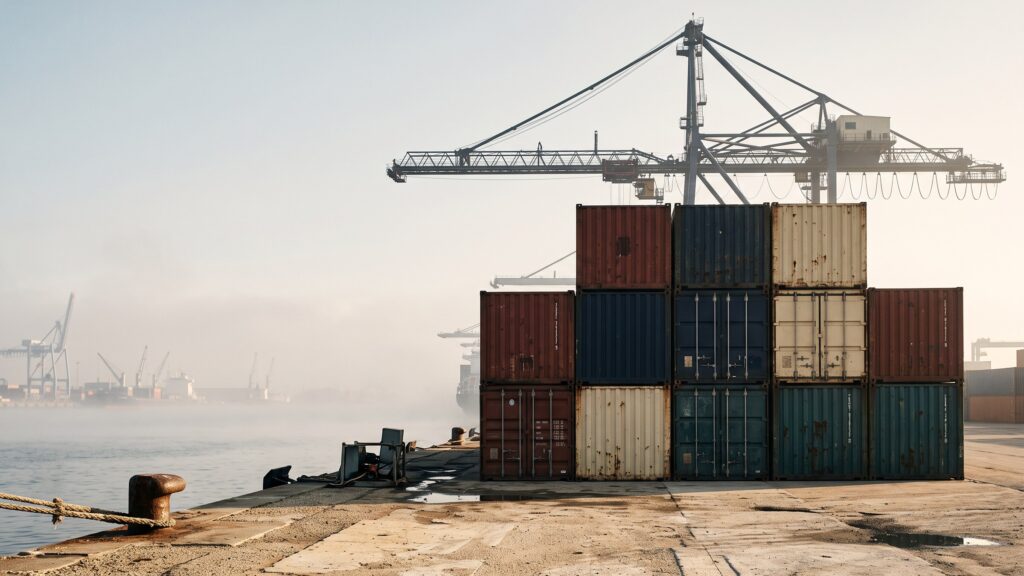
Globalisation produced convergent economic policy and divergent political reactions, and the backlash has come from the societies that designed it as much as from those that were told to adjust to it.
This is chapter 38 of the PSIR Optional Notes, from the part on Comparative Politics in the Paper II syllabus. The complete book is a free download.
UPSC syllabus
Globalisation: Responses from developed and developing societies.
In one page
- Globalisation is the intensification of worldwide social relations linking distant localities (Giddens), operating through trade, finance, production networks, migration, technology and culture.
- Three positions in the literature: hyperglobalists, who hold the nation-state obsolete; sceptics, who argue trade openness is not historically unprecedented; and transformationalists (Held), who hold that the state is being reconstituted rather than abolished.
- The Washington Consensus of the 1990s, in Williamson’s original ten points, supplied the policy template: fiscal discipline, tax reform, liberalised interest and exchange rates, trade and FDI liberalisation, privatisation, deregulation and property rights.
- Developed-society responses have moved from confident promotion to protection: the Seattle protests of 1999, the 2008 crisis, Brexit, tariff politics, industrial policy and supply-chain reshoring.
- Developing-society responses divide: East Asian states integrated selectively and on their own terms; Latin America experienced adjustment and then a leftward reaction; Africa largely experienced conditionality.
- The critique from the South runs through dependency and world-systems theory, the NIEO demand, and the WTO’s asymmetries in agriculture, TRIPS and dispute settlement.
- Cultural responses range from homogenisation claims (McDonaldisation) through hybridisation (Pieterse) to glocalisation (Robertson), and religious and nationalist revival is itself a response.
- Deglobalisation is the current phase, though trade in services and data has continued to grow while goods trade has plateaued, so fragmentation is selective rather than general.
Concept and positions
Globalisation is best treated as multi-dimensional: economic, in trade, finance and production networks; political, in the growth of international regimes and the diffusion of constitutional models; cultural, in media, consumption and language; technological, in transport, communications and now data; and ecological, since climate and pandemics respect no borders.
The three-fold classification from Held and McGrew is the standard organiser.
- Hyperglobalists (Ohmae, Friedman). A borderless world; the nation-state is losing its functions to markets and to regional and global institutions; convergence toward a single economic model.
- Sceptics (Hirst and Thompson). The data do not support novelty: trade and capital flows relative to output were comparable before 1914; activity is concentrated in a triad of Europe, North America and East Asia rather than being genuinely global; and states retain decisive regulatory power.
- Transformationalists (Held, Giddens, Castells). Globalisation is real and unprecedented in form, but it reconstitutes rather than abolishes state power: sovereignty becomes shared and layered, and the state’s role shifts from provider to regulator and negotiator.
Responses in developed societies
The promotion phase
From the 1980s the advanced economies drove liberalisation: the Uruguay Round and the creation of the WTO in 1995, capital-account opening, the single European market, and conditional lending through the IMF and World Bank on Washington Consensus lines. The domestic political basis was a consensus across centre-left and centre-right that market integration raised aggregate welfare and that its losers could be compensated.
The backlash
The compensation did not arrive at the scale required, and the reaction followed.
- Early protest, 1999–2001. Seattle, Genoa, and the alternative-globalisation movement, largely from the left, on labour, environment and democratic accountability.
- The 2008 financial crisis. Discredited the deregulatory case, produced large state interventions, and generated both Occupy and, subsequently, right-populist mobilisation.
- Political realignment. Brexit in 2016 and the tariff turn in the United States from 2018 marked the entry of anti-globalisation politics into government. Dani Rodrik‘s political trilemma is the standard analytical frame: deep economic integration, national sovereignty and democratic politics cannot all be had at once, and voters have begun to choose the second and third.
- Policy turn. Industrial policy has returned openly, in semiconductor and clean-energy subsidy programmes; supply chains are being reorganised for resilience through reshoring, nearshoring and friend-shoring; and export controls have become instruments of strategic competition. The 2025 paper’s reference to tariff threats pushing India and the European Union closer belongs to this phase.
Rodrik’s other formulation is worth carrying: hyperglobalisation required domestic policy to be subordinated to international integration, and democracies were unwilling to sustain that subordination indefinitely.
Responses in developing societies
The 2023 paper asked for a critical examination of globalisation’s impact on developing countries, which needs both the gains and the costs, disaggregated by region.
The record
Gains. Export-led growth lifted very large numbers out of poverty, overwhelmingly in East and South Asia; technology transfer and access to capital accelerated industrialisation; global value chains allowed countries to specialise in stages of production rather than whole industries, lowering the entry threshold; services offshoring created an entirely new growth path, of which India is the leading case; and remittances became a major and stable external inflow.
Costs. Volatility, since capital-account opening exposed economies to sudden stops, as the Asian crisis of 1997–98 demonstrated; conditionality, under which structural adjustment required fiscal contraction, devaluation, privatisation and subsidy removal, with social spending frequently cut; deindustrialisation in economies that could not compete, and premature deindustrialisation in others; commodity dependence for much of Africa and Latin America; rising inequality within countries even where poverty fell; and the erosion of policy space, since WTO commitments and investment treaties constrain the industrial policy that earlier developers used.
Three regional patterns
| Region | Response | Outcome |
|---|---|---|
| East and Southeast Asia | Selective integration on own terms: export promotion with continued protection of finance and strategic sectors, sequenced capital-account opening, active industrial policy | Sustained growth and structural transformation; the developmental-state model of Chapter 36 |
| Latin America | Debt crisis, structural adjustment, rapid liberalisation in the 1990s | Slow growth and rising inequality, followed by the left turn from 1998 and commodity-boom-financed redistribution; renewed volatility after |
| Africa | Structural adjustment under conditionality from the 1980s; limited manufacturing integration | Lost decades in many countries; commodity dependence; recent growth driven by resources and services rather than industry |
India’s own response, treated in Chapter 29 and Chapter 51, is closer to the East Asian pattern in its caution about capital-account convertibility than to the Latin American one, but without the export-manufacturing success.
The Southern critique and its institutional form
The intellectual line runs from dependency and world-systems theory in Chapter 35 through the New International Economic Order demand of 1974 in Chapter 42, to contemporary disputes at the WTO over agricultural subsidies in developed countries, TRIPS and access to medicines, the moribund Doha Development Agenda, and the paralysis of the Appellate Body. The 2025 paper’s question on the dispute-settlement crisis belongs to Chapter 42, and the 2024 question on India’s role as leader of the Global South in seeking a new international economic order belongs to Chapter 52.
Cultural and political responses
Homogenisation. Ritzer’s McDonaldisation, the spread of efficiency, calculability, predictability and control as organising principles; the concentration of media ownership; and the dominance of English.
Hybridisation. Pieterse’s argument that the characteristic cultural outcome is mixture rather than replacement; Appadurai’s five scapes, ethnoscapes, mediascapes, technoscapes, financescapes and ideoscapes, describing disjunctive global flows.
Glocalisation. Robertson’s term for the adaptation of global forms to local conditions, which is both a corporate strategy and a description of how reception actually works.
Reaction. Religious revival, ethno-nationalism and cultural protection are themselves responses to globalisation rather than survivals from before it, which is Barber’s Jihad vs McWorld argument and Castells’s account of resistance identity.
Deglobalisation?
The current phase requires care. Merchandise trade as a share of world output has plateaued since the 2008 crisis; cross-border capital flows fell sharply and have not recovered their pre-crisis share; tariffs and non-tariff measures have risen; and strategic competition has produced export controls in semiconductors and critical minerals.
Against that: trade in services and cross-border data flows have continued to grow rapidly; global value chains have been reorganised rather than dismantled; and migration and remittances remain at record levels. The accurate description is therefore selective fragmentation or slowbalisation along strategic lines, not a general reversal, and the 2025 paper’s question on overcentralised globalisation is asking about precisely this reconfiguration.
Where answers lose marks
- Treating globalisation as purely economic. The syllabus asks for responses, which are political and cultural as much as economic.
- Presenting the backlash as a developing-country phenomenon. Brexit and the tariff turn came from the states that designed the system.
- Giving the Washington Consensus without Williamson’s own point that it was a description of Latin American reform, later used as a universal template he did not intend.
- Treating developing-country responses as uniform. East Asian selective integration, Latin American adjustment and African conditionality are three different stories.
- Declaring globalisation over. Services and data flows have grown; the reversal is selective and strategic.
Asked before
- Critically examine the impact of Globalisation on the developing countries of the world. (2023, Paper II, 20 marks)
Answer skeleton
Critically examine the impact of Globalisation on the developing countries of the world. (20 marks, 350 words)
Frame. Refuse the single verdict. The impact varied by region and by whether the state retained capacity to integrate selectively, and that variation is the analysis.
The mechanisms. Trade liberalisation, capital-account opening, global value chains, technology transfer, services offshoring, migration and remittances; the Washington Consensus and conditionality as the policy channel.
Gains. Poverty reduction on a very large scale, concentrated in East and South Asia; entry into production stages rather than whole industries, lowering the threshold; a new services growth path, of which India is the leading case; remittances as a stable inflow.
Costs. Volatility and sudden stops, shown by the Asian crisis of 1997–98; conditionality compressing social spending; premature deindustrialisation; commodity dependence; rising internal inequality; and lost policy space, since WTO commitments and investment treaties foreclose the industrial policy earlier developers used.
Regional disaggregation. East Asia integrated on its own terms and transformed structurally; Latin America adjusted, stagnated and then turned left; Africa largely received conditionality without manufacturing integration.
The structural critique. Dependency and world-systems accounts; the NIEO demand of 1974; current WTO grievances over agricultural subsidies, TRIPS and the Appellate Body’s paralysis.
Conclude. Globalisation was neither engine nor trap but an environment whose returns depended on state capacity and on sequencing. The states that chose what to open and when did well; those that opened on external instruction generally did not, which is the lesson the current turn to industrial policy has belatedly acknowledged.
Last-mile revision
- Giddens’s definition; dimensions economic, political, cultural, technological, ecological.
- Hyperglobalists (Ohmae, Friedman); sceptics (Hirst and Thompson); transformationalists (Held, Giddens, Castells).
- Washington Consensus, Williamson’s ten points; conditionality and structural adjustment.
- Developed-society backlash: Seattle 1999, crisis of 2008, Brexit 2016, tariffs from 2018; Rodrik’s political trilemma; return of industrial policy and friend-shoring.
- Developing patterns: East Asian selective integration; Latin American adjustment and the left turn from 1998; African conditionality; Asian crisis 1997–98.
- Cultural: Ritzer’s McDonaldisation; Pieterse’s hybridisation; Appadurai’s five scapes; Robertson’s glocalisation; Barber’s Jihad vs McWorld.
- Current phase: plateaued goods trade, reduced capital flows, rising tariffs and export controls, but growing services and data flows; slowbalisation rather than reversal.
Read the rest. This chapter is one of 58 in the complete PSIR Optional Notes, covering Paper I and Paper II in full — free to download.
Tell Google you want more of this.
Add Anantam IAS as a preferred sourceOne tap, and this site shows up more often in your own Top Stories, AI Overviews and AI Mode. Remove it any time.