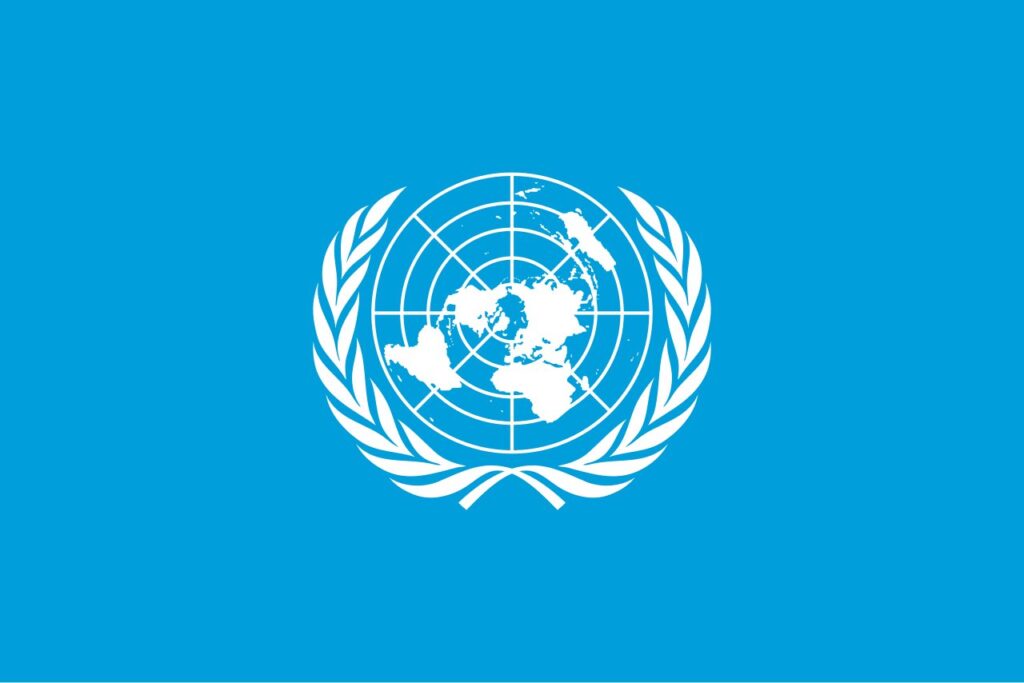
The United Nations Organisation is the most ambitious multilateral institution of the twentieth century, an attempt to replace the failed League of Nations with a permanent forum for collective security, development and human rights. The UN Charter was signed at San Francisco on 26 June 1945 by delegates from 50 founding states and entered into force on 24 October 1945, a date now observed annually as United Nations Day. India was among the 50 original signatories, having attended the San Francisco Conference even before independence as a member of the British Commonwealth and the League of Nations. Today the United Nations Organisation has 193 member states, is headquartered in New York City, and is led by Secretary-General António Guterres of Portugal, who took office on 1 January 2017 and was reappointed for a second term running through 31 December 2026.
For UPSC International Relations the United Nations Organisation is foundational because every other multilateral arrangement that India engages — from the World Trade Organization and India to regional groupings like ASEAN and India and SAARC and India — operates either inside the UN system or against its normative backdrop. Understanding the Charter, the six principal organs and India’s stake in reform is essential before turning to questions like the UNSC and India’s permanent seat.
The UN Charter and Founding Moment
The UN Charter is the constituent treaty of the United Nations Organisation. It opens with the famous preamble — “We the peoples of the United Nations determined to save succeeding generations from the scourge of war” — and runs to 19 chapters and 111 articles.
Drafting at Dumbarton Oaks and Yalta
The architecture of the United Nations Organisation was hammered out across three meetings. At Dumbarton Oaks near Washington (August–October 1944), the United States, the United Kingdom, the Soviet Union and China agreed on the broad structure of a successor to the League of Nations. At Yalta (February 1945) Roosevelt, Churchill and Stalin resolved the most contentious question — the voting formula in the Security Council — by accepting the great-power veto for the five permanent members. At San Francisco (April–June 1945) the full text of the Charter was negotiated by 50 states.
San Francisco Signature, 26 June 1945
The Charter was signed on 26 June 1945. Poland, which was not represented at the conference, signed later and is counted as the 51st original member. The Charter entered into force on 24 October 1945, the date the United Nations Organisation formally came into existence.
India as Founding Member
India was a founding member of the United Nations Organisation. Although still under British rule, India signed the Charter on 26 June 1945 in its own right. This continuity from the League of Nations gave independent India, after 1947, an unbroken multilateral identity and a head start in global diplomacy.
Purposes and Principles
Articles 1 and 2 of the Charter set out the purposes and principles that bind every member.
Four Purposes
The four purposes are to maintain international peace and security, to develop friendly relations among nations based on respect for the principle of equal rights and self-determination, to achieve international cooperation in solving economic, social, cultural and humanitarian problems, and to be a centre for harmonising the actions of nations.
Seven Principles
The seven principles include sovereign equality of all members, fulfilment in good faith of Charter obligations, peaceful settlement of disputes, refraining from the threat or use of force against territorial integrity or political independence of any state, assistance to UN actions, ensuring non-members behave consistent with these principles and — crucially — non-intervention in matters essentially within the domestic jurisdiction of any state (Article 2.7).
The Six Principal Organs
Article 7 establishes six principal organs of the United Nations Organisation. Five remain active; one is dormant.
General Assembly (UNGA)
The General Assembly is the deliberative body where all 193 member states are represented on the principle of one-state-one-vote. It meets in regular annual session starting in September and can hold emergency special sessions. UNGA elects non-permanent members of the Security Council, members of ECOSOC, judges of the ICJ (jointly with the Council), and the Secretary-General on the Council’s recommendation. UNGA decisions on important questions require a two-thirds majority; other matters need a simple majority. Resolutions are generally non-binding but carry significant moral and political weight.
Security Council (UNSC)
The Security Council has primary responsibility for international peace and security. It has 15 members — five permanent (China, France, Russia, the United Kingdom, the United States) with veto power and ten non-permanent members elected for two-year terms. Its decisions under Chapter VII are binding on all member states. India’s campaign for permanent membership is the subject of a separate article on the UNSC and India’s permanent seat.
Economic and Social Council (ECOSOC)
ECOSOC has 54 members elected by UNGA for three-year terms on a rotating regional basis. It coordinates the economic, social and related work of fourteen UN specialised agencies, ten functional commissions and five regional commissions, including UNICEF, UNDP, UNEP, UN Women and the regional commission for Asia and the Pacific (ESCAP) headquartered in Bangkok.
International Court of Justice (ICJ)
The ICJ is the principal judicial organ of the United Nations Organisation, seated at the Peace Palace at The Hague. With 15 judges elected for nine-year terms, it hears contentious cases between states and gives advisory opinions to UN organs. India’s relationship with the ICJ — from Justice Nagendra Singh’s presidency to the Kulbhushan Jadhav judgment — is examined in detail in the International Court of Justice (ICJ) article.
Secretariat
The Secretariat is the international civil service of the United Nations Organisation, headed by the Secretary-General. It services the other organs, prepares studies, undertakes peacekeeping operations and carries out tasks directed by UNGA, the Security Council, ECOSOC and other UN bodies. Staff are drawn from member states under Article 100 obligations of independence and impartiality.
Trusteeship Council (Dormant)
The Trusteeship Council was created to supervise the transition of eleven trust territories — most former League of Nations mandates and territories taken from Axis powers — to self-government or independence. Its task ended in 1994 when Palau, the last trust territory, achieved independence. The Council remains constitutionally part of the UN architecture but has suspended operations and meets only when needed.
The Secretary-General
The Secretary-General is the chief administrative officer of the United Nations Organisation under Article 97 of the Charter. The post is currently held by António Guterres of Portugal.
Selection and Term
The Secretary-General is appointed by the General Assembly on the recommendation of the Security Council, where all five permanent members must consent (the appointment is subject to veto). The conventional term is five years, traditionally extendable once.
Antonio Guterres in Office
António Guterres, a former Prime Minister of Portugal (1995–2002) and UN High Commissioner for Refugees (2005–2015), took office as the ninth Secretary-General on 1 January 2017. He was reappointed for a second term in June 2021 running through 31 December 2026. His priorities have included reform of UN peace operations, the development system and the Sustainable Development Goals; climate action under the Paris Agreement; gender parity in senior staff; and the broader reform agenda summarised in his report Our Common Agenda.
India and the Secretariat
India is a major troop and police contributor to UN peace operations and is among the largest non-Western suppliers of senior staff to the Secretariat. Shashi Tharoor, a former Under-Secretary-General for Communications and Public Information, was India’s candidate in the 2006 race for Secretary-General that elected Ban Ki-moon. Vijay Nambiar served as Chef de Cabinet to Ban Ki-moon and later as Special Adviser on Myanmar.
Financing the UN
The United Nations Organisation is financed by a mix of assessed and voluntary contributions.
Assessed Contributions
The regular budget and the peacekeeping budget are funded by assessed contributions calculated on a capacity-to-pay scale revised every three years. For the 2025–2027 scale, the United States is assessed at 22 percent of the regular budget (the ceiling), followed by China at 20.0 percent, Japan at around 6.9 percent, Germany at 6.0 percent, the United Kingdom at 4.4 percent and France at 4.3 percent. India’s assessment is around 1.05 percent.
Voluntary Contributions
Specialised agencies, funds and programmes — UNDP, UNICEF, UNHCR, the World Food Programme — depend largely on voluntary contributions. The United States, the European Union, Germany, the United Kingdom and Japan are the largest donors. India’s voluntary contributions go primarily to South-South cooperation initiatives like the India-UN Development Partnership Fund.
Liquidity Crisis
The United Nations Organisation has faced recurrent liquidity crises since 2019 because several large member states pay assessed contributions late or in arrears. The 2024 cash crunch forced cuts in conference services, travel and energy consumption at headquarters.
India and the United Nations Organisation
India’s relationship with the United Nations Organisation has three pillars — peacekeeping, development cooperation and reform advocacy.
Peacekeeping
India has been one of the largest contributors of troops and police to UN peacekeeping operations since 1950, having deployed over 290,000 personnel to more than 50 missions from Korea and Suez to Congo and South Sudan. As of 2025, India had over 5,000 personnel deployed across active missions, including all-female Formed Police Units that have become a model for gender-responsive peacekeeping.
Development and South-South Cooperation
India hosts the headquarters of the International Solar Alliance in Gurugram, a treaty-based intergovernmental organisation registered under Article 102 of the UN Charter. The India-UN Development Partnership Fund, launched in 2017 and topped up multiple times, supports projects across 60 partner countries in least developed countries and small island developing states, with implementation by UN agencies.
Reform Advocacy
India consistently presses for reform of the United Nations Organisation across three tracks — Security Council expansion (covered in the dedicated UNSC and India’s permanent seat article), revitalisation of the General Assembly, and Secretariat reform. India’s case rests on demographic weight, economic size, peacekeeping contributions and a track record of constructive multilateralism.
Frequently Asked Questions
When was the UN Charter signed and when did it enter into force?
The UN Charter was signed at San Francisco on 26 June 1945 by 50 founding states, with Poland signing later as the 51st. The Charter entered into force on 24 October 1945, observed annually as United Nations Day.
How many member states does the United Nations Organisation have?
The United Nations Organisation has 193 member states. South Sudan, which joined in July 2011, is the newest member. The Vatican (Holy See) and Palestine are non-member observer states.
Who is the current UN Secretary-General?
The current Secretary-General is António Guterres of Portugal, who took office on 1 January 2017 and was reappointed for a second term ending 31 December 2026. He is the ninth Secretary-General of the United Nations Organisation.
What are the six principal organs of the UN?
The six principal organs are the General Assembly, Security Council, Economic and Social Council, International Court of Justice, Secretariat and Trusteeship Council. The Trusteeship Council has been dormant since 1994 after Palau became independent.
Was India a founding member of the UN?
Yes, India was a founding member of the United Nations Organisation. India signed the UN Charter on 26 June 1945, before independence, in its own right as a member of the British Commonwealth and the League of Nations.
How is the UN financed?
The United Nations Organisation is financed by assessed contributions from member states on a capacity-to-pay scale, plus voluntary contributions to specialised agencies, funds and programmes. The United States is the largest assessed contributor at 22 percent, followed by China at 20.0 percent. India contributes around 1.05 percent of the regular budget.
Where is the UN headquartered?
The United Nations headquarters is in New York City on an 18-acre site donated by John D. Rockefeller Jr. The UN also has major duty stations in Geneva, Vienna and Nairobi.
What is India’s record in UN peacekeeping?
India is one of the largest historical contributors to UN peacekeeping, having deployed over 290,000 personnel to more than 50 missions since 1950. As of 2025 India had over 5,000 troops and police in active missions and has pioneered all-female Formed Police Units in peacekeeping.
Tell Google you want more of this.
Add Anantam IAS as a preferred sourceOne tap, and this site shows up more often in your own Top Stories, AI Overviews and AI Mode. Remove it any time.