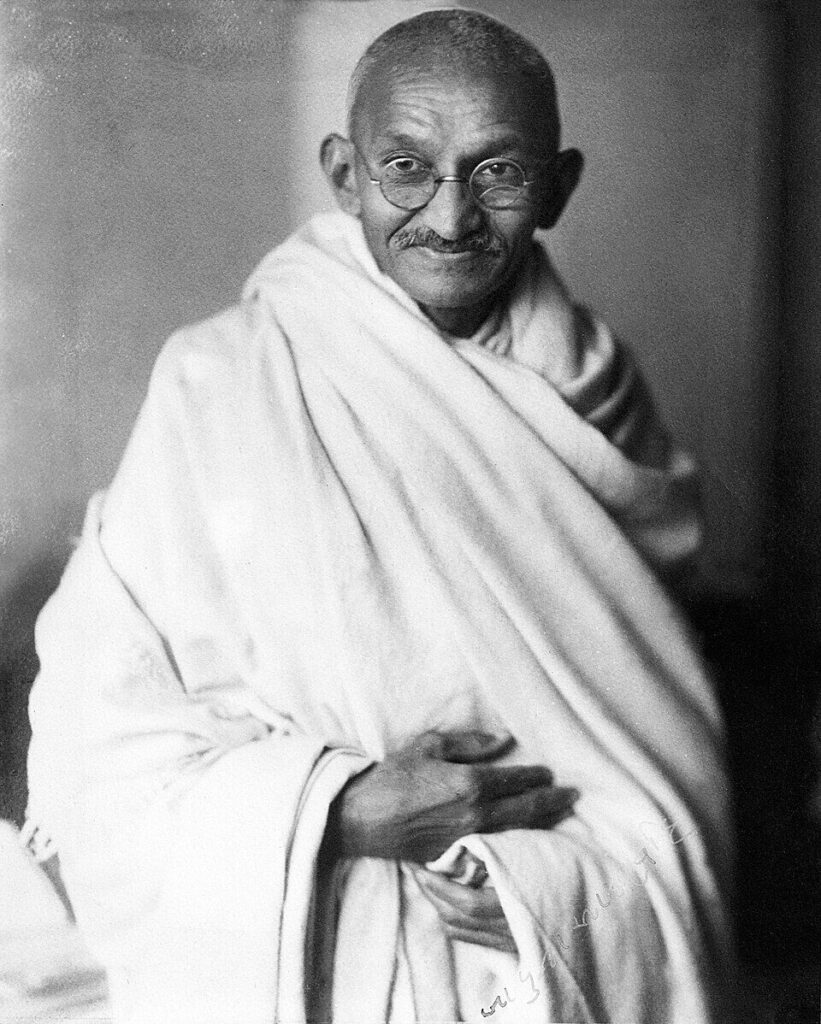
Gandhian philosophy is the most distinctive contribution India made to twentieth-century moral and political thought, and it remains a working framework for the UPSC General Studies aspirant. At its heart sit two ideas: Satya (truth as the highest reality) and Ahimsa (non-violence as the only means worthy of that truth). Everything else in the Gandhian system — Satyagraha, Sarvodaya, Trusteeship, Swaraj, Khadi, the Constructive Programme, the famous Talisman, even his charge-sheet of seven social sins — flows from those two axioms. For ethics papers and for modern Indian history, Gandhian philosophy is not a museum exhibit; it is the working manual that explains Champaran, Ahmedabad, Kheda, Bardoli, Dandi, and the entire grammar of Indian freedom.
Gandhi developed his thought in conversation with the Bhagavad Gita, the Sermon on the Mount, Tolstoy’s The Kingdom of God is Within You, Ruskin’s Unto This Last, and Thoreau’s essay on civil disobedience, but he tested every borrowed idea against Indian conditions. The result is a philosophy that is neither purely religious nor purely political, but moral through and through. It treats means and ends as inseparable — an immoral means corrupts a moral end — and it places the dignity of the poorest Indian, the Daridranarayana, at the centre of public reasoning.
Satya and Ahimsa: the twin foundations
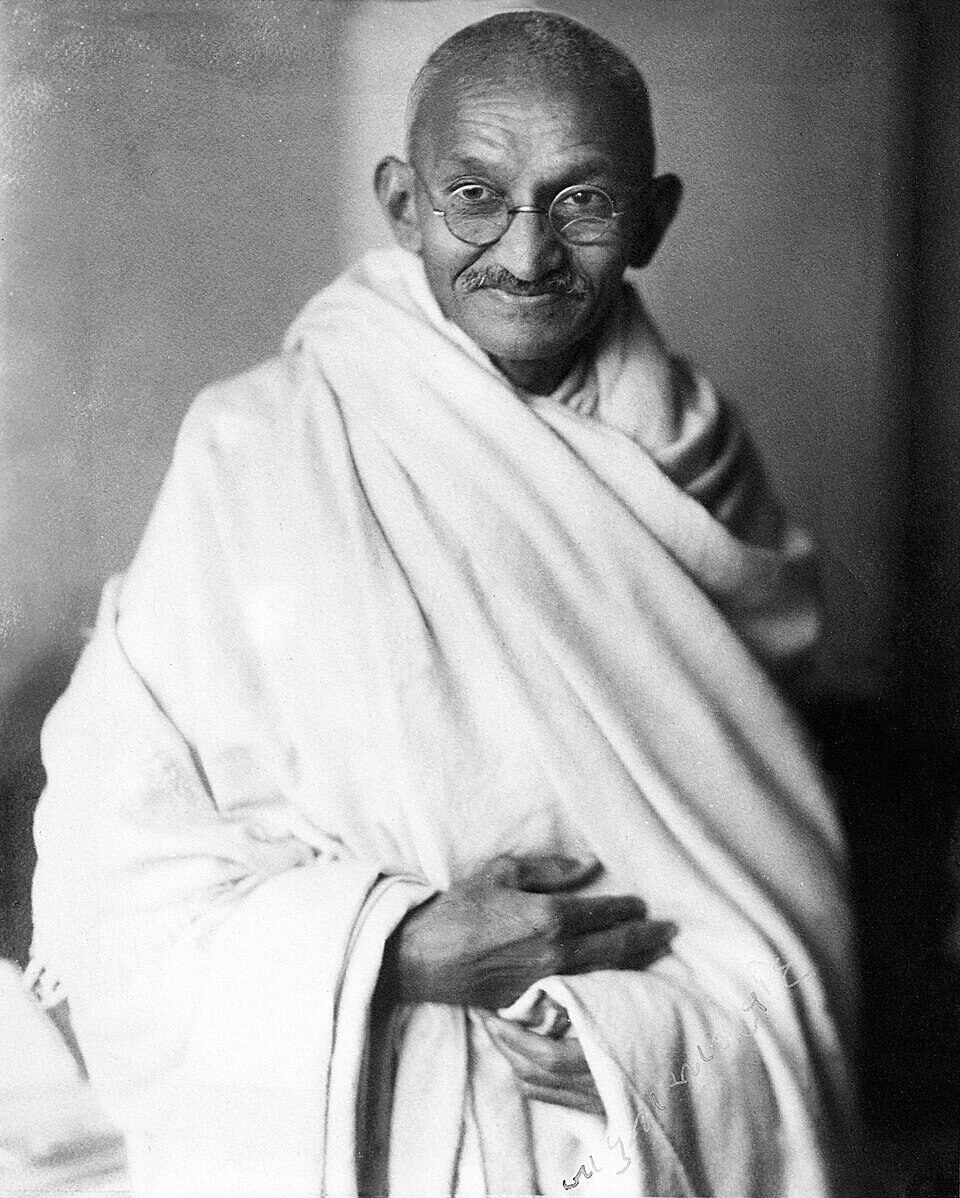
Gandhi inverted the conventional formula. Where most traditions say “God is Truth,” he eventually wrote that Truth is God. The shift matters. It opens the moral life to the agnostic, the atheist, and the believer of any faith, because all can pursue truth even if they cannot agree on God. Truth, for Gandhi, is not merely the absence of lying; it is Satyanishtha — fidelity to the real — in thought, word, and deed.
Ahimsa is the necessary companion. Gandhian non-violence is not the negative refusal to strike; it is the positive love that refuses to harm even the wrongdoer. It includes restraint in speech, in food, in possession, and in the will. Gandhi distinguished the ahimsa of the brave from the ahimsa of the weak: the coward who does not fight because he is afraid is not practising ahimsa at all. Ahimsa demands the readiness to suffer, not the readiness to flee.
Why means matter as much as ends
A famous Gandhi line — “the means are the end in the making” — encapsulates the deontological core of his ethics. You cannot reach truth through falsehood, freedom through terror, or equality through humiliation. This is where Gandhian thought intersects with Kantian deontology and parts company with crude utilitarianism, which is willing to trade clean means for desirable ends.
Satyagraha: truth-force in action
Satyagraha is Gandhi’s most original political invention. He coined the word in South Africa in 1906 because passive resistance sounded passive and weak. Satyagraha is active: it is the soul-force that holds firmly to truth while refusing to inflict suffering. The Satyagrahi takes the suffering onto himself, hoping that the opponent’s conscience will awaken.
A Satyagraha campaign follows a discernible grammar: investigation of facts, negotiation, agitation, ultimatum, self-purification (fasting, prayer), and finally civil disobedience. Withdrawal — himalayan blunder or not — is built in: when violence breaks out, the campaign is suspended, as it was after Chauri Chaura in February 1922.
Champaran 1917: the first Indian Satyagraha
Indigo planters in Bihar forced peasants under the tinkathia system to grow indigo on 3/20 of their holdings. Gandhi arrived, ignored the magistrate’s order to leave, accepted arrest, and forced the appointment of an inquiry committee on which he himself served. The Champaran Agrarian Act 1918 abolished tinkathia. Champaran proved that Satyagraha could work on Indian soil with Indian peasants.
Ahmedabad 1918: arbitration and the fast
A wage dispute between mill-owners (including his friend Ambalal Sarabhai) and mill-workers became Gandhi’s first major fast. He insisted workers demand a 35 per cent rise — not the 50 per cent the firebrands wanted, not the 20 per cent the owners offered. When workers wavered, he undertook a fast to fortify them, not to coerce the owners. Arbitration delivered the 35 per cent. Ahmedabad taught him the moral economics of the strike.
Kheda 1918: revenue refusal
When crop failure followed plague, Kheda peasants in Gujarat sought suspension of land revenue under the existing rules. The government refused. Gandhi led a no-revenue campaign with Vallabhbhai Patel. The government quietly instructed collectors to recover dues only from those who could pay — a face-saving climbdown that vindicated the peasants.
Bardoli 1928: the dress rehearsal for civil disobedience
A 22 per cent enhancement in land revenue in Bardoli taluka triggered Patel’s celebrated campaign — the campaign that earned him the title Sardar. Bardoli was technically Patel’s, but its method was Gandhian to the last comma: meticulous fact-finding, complete unity, no-revenue, social boycott of loyalists, government inquiry, rollback.
Swaraj: more than political independence
Gandhi’s Swaraj is two-storeyed. The ground floor is political swaraj — the end of British rule, control over law-making, the army, foreign affairs. The upper storey, the one most Indians forget, is self-rule in the moral sense: rule over the appetites, the senses, the ego. A nation of subjects who have not learned to rule themselves cannot run a republic. Hind Swaraj, written in Gujarati on the boat back from London in 1909, develops this argument with disturbing radicalism. Gandhi rejects not just British rule but the entire industrial civilisation that produced it — the railways, the lawyers, the doctors, the machinery, the parliament that is “a sterile woman and a prostitute.”
You can disagree with Hind Swaraj — Tagore did, Nehru did, Ambedkar certainly did — but you cannot understand Gandhi without it. It is his philosophical constitution.
Sarvodaya and Antyodaya: ends of the political order
Sarvodaya — the welfare of all — is Gandhi’s translation of Ruskin’s Unto This Last. Where utilitarianism asks for the greatest good of the greatest number and is willing to sacrifice the minority, Sarvodaya insists on the rise of all, including the last. Sarvodaya is therefore incomplete without Antyodaya — beginning with the lowest, the antyaja, the last person in the queue.
The Talisman captures Antyodaya as a decision-rule: “Recall the face of the poorest and the weakest man whom you may have seen, and ask yourself, if the step you contemplate is going to be of any use to him.” It is a practical test for every civil servant, every legislator, every administrator who has to choose between competing public-policy options. It is not a slogan; it is a method.
Rawls’s theory of justice reaches a similar conclusion through the veil of ignorance — that institutions should be designed to benefit the worst-off. Gandhi got there earlier and through a different door.
Trusteeship: a Gandhian economics
Gandhi rejected both unfettered capitalism and revolutionary Marxism. His alternative was Trusteeship: the rich man holds his wealth as a trustee for the community. He is entitled to a modest livelihood, no more; the surplus is held in trust for society’s welfare. Trusteeship is voluntary, but Gandhi was clear that if it failed, the state would be justified in imposing it.
Critics — Ambedkar most sharply — found Trusteeship naive. It depends on the conscience of the rich, who have rarely volunteered to give up power. But Gandhi insisted that violence-based redistribution would corrupt both the redistributor and the new order, an argument that the historical record of revolutionary states has not entirely refuted.
Khadi, Swadeshi and the Constructive Programme
For Gandhi, the spinning wheel was not nostalgia; it was a moral technology. Khadi gave the unemployed villager dignified labour during the lean months. Swadeshi — the duty to one’s neighbour — built the local economy and broke the British textile monopoly. The boycott of foreign cloth was political theatre; the daily turning of the charkha was its substance.
The Constructive Programme, published in 1941, lists eighteen items Gandhi wanted Congress workers to undertake whether or not the freedom struggle was active: communal unity, removal of untouchability, prohibition, khadi, village industries, village sanitation, basic education (Nai Talim), adult education, uplift of women, health, provincial languages, national language, economic equality, kisans, labour, adivasis, lepers, students. The list is the policy programme of Sarvodaya in practical terms.
The Dandi March of 1930 drew together Satyagraha, Swadeshi, and the Constructive Programme into a single salt-pinch on the Gujarat coast — perhaps the most perfectly realised Gandhian campaign.
The seven social sins
In Young India, 22 October 1925, Gandhi published a list given to him by a friend, which he made his own:
- Wealth without work
- Pleasure without conscience
- Knowledge without character
- Commerce without morality
- Science without humanity
- Worship without sacrifice
- Politics without principle
Each pair names a perversion: a legitimate human good detached from the moral framework that justifies it. The seven sins double as a checklist for Lokpal-style probity, civil service ethics case studies, and the GS-IV essay on integrity.
Critics and limits of Gandhian philosophy
Gandhian philosophy has powerful critics. Tagore worried that Gandhi’s charkha and his bonfires of foreign cloth turned a moral truth into a ritual coercion; read more in Tagore’s philosophy. Ambedkar argued that Gandhi’s defence of Varnashrama and his treatment of untouchability as a Hindu reform project, rather than as a problem of structural injustice, kept Dalits in dependent status — see Ambedkar’s philosophy. Savarkar attacked Gandhi from the right for what he called appeasement of Muslims. Marxists found his rejection of class struggle quietist.
These critiques are real. But they sharpen Gandhian philosophy rather than dissolve it. A civil servant who has internalised Satya, Ahimsa, the Talisman, and the seven sins is better equipped than one who has read only Bentham or only Kant.
Contemporary relevance
The relevance of Gandhian philosophy in 2026 runs through climate ethics (limits to consumption), public health (sanitation, prohibition, swacchata), constitutional morality (means matter), women’s leadership (Sucheta Kripalani was a direct Gandhian inheritor), and the long discussion on personal-law reform that began with the Hindu Code Bill. Whenever the Indian state asks itself whether a policy serves the last person, it is asking a Gandhian question.
Frequently Asked Questions
What are the two foundational principles of Gandhian philosophy?
Satya (truth) and Ahimsa (non-violence). Gandhi later refined Satya into the formula “Truth is God,” making it accessible across religious traditions, and treated Ahimsa as active love rather than mere refusal to harm.
What is Satyagraha and how is it different from passive resistance?
Satyagraha is “truth-force” — an active, disciplined method of resisting injustice through self-suffering rather than violence. Gandhi coined the term in South Africa in 1906 because “passive resistance” suggested weakness, while Satyagraha required the courage to invite suffering without inflicting it.
What is the difference between Sarvodaya and Antyodaya?
Sarvodaya means the welfare or rise of all; Antyodaya means beginning with the last, the lowest, the poorest. Antyodaya is the practical test of Sarvodaya — captured in Gandhi’s Talisman of recalling the face of the poorest person before any policy decision.
What is Gandhian Trusteeship?
Trusteeship is Gandhi’s economic doctrine that the wealthy hold their surplus wealth as trustees of the community. They are entitled to a modest livelihood, while the rest is administered for social welfare. Gandhi preferred voluntary trusteeship but accepted state enforcement as a fallback.
What are the four classic Gandhian Satyagraha campaigns in India?
Champaran 1917 (indigo peasants, Bihar), Ahmedabad 1918 (mill-workers’ wages), Kheda 1918 (no-revenue, Gujarat), and Bardoli 1928 (Patel’s no-revenue campaign against revenue enhancement). Each tested a different application of Satyagraha — rural distress, industrial dispute, agrarian taxation.
What did Gandhi mean by Swaraj?
Swaraj is two-layered: political independence from British rule, and self-rule over one’s senses, appetites, and ego. Hind Swaraj (1909) developed this argument, rejecting not only British rule but the entire industrial civilisation that produced it.
What are Gandhi’s seven social sins?
Wealth without work, pleasure without conscience, knowledge without character, commerce without morality, science without humanity, worship without sacrifice, and politics without principle. Each names a legitimate human good detached from its moral framework — a useful checklist for civil-services ethics.
Why does Gandhian philosophy still matter for UPSC GS-IV?
Because it offers a tested, India-rooted ethical framework — means-ends integrity, the Talisman as a decision-rule, Antyodaya as a justice criterion, and the seven sins as a probity checklist — directly usable in case studies, essay papers, and administrative reasoning.
Tell Google you want more of this.
Add Anantam IAS as a preferred sourceOne tap, and this site shows up more often in your own Top Stories, AI Overviews and AI Mode. Remove it any time.