The Bharat Ratna (literally "Jewel of India") is India's highest civilian award. Instituted on January 2, 1954 by President Dr. Rajendra Prasad, it is conferred for exceptional service or performance of the highest order in any field of human endeavour. Originally restricted to art, literature, science, and public services, the criteria were expanded in 2011 to include any field of human endeavour, making sportspersons eligible.
For UPSC, the Bharat Ratna is a frequently tested topic — particularly the list of recipients, recent additions, and the protocol surrounding the award.
Key Facts
| Aspect | Detail |
|---|---|
| Name | Bharat Ratna ("Jewel of India") |
| Instituted | January 2, 1954 |
| Instituted by | President Dr. Rajendra Prasad |
| Conferred by | President of India |
| Recommendation by | Prime Minister of India |
| Eligibility | "Exceptional service or performance of the highest order in any field of human endeavour" (since 2011) |
| Maximum awarded per year | Originally 3; relaxed in some years |
| Posthumous award | Permitted since 1955 amendment |
| Cash component | None |
| Privileges | Various — free domestic air travel, special protocol status |
Design and Symbolism
The Bharat Ratna medallion has the following design:
- Shape: Peepal leaf — about 5.8 cm long, 4.7 cm wide
- Material: Toned bronze
- Inscription: "Bharat Ratna" in Devanagari script with the Sun emblem above
- Reverse: Platinum State Emblem with the motto "Satyamev Jayate" (Truth Alone Triumphs) in Devanagari
- Ribbon: White (worn around the neck)
The peepal leaf design has cultural symbolism — the peepal is sacred in Indian tradition.
Eligibility and Selection
Original Criteria (1954-2011)
The original eligibility was restricted to:
- Art
- Literature
- Science
- Public Services (including statesmanship)
Current Criteria (2011 onwards)
In December 2011, the Government of India broadened the eligibility:
- "Performance of highest order in any field of human endeavour"
- This explicitly opened the award to sportspersons (e.g., Sachin Tendulkar)
Selection Process
- Recommendation: The Prime Minister of India recommends the award to the President
- No formal nomination process: Unlike Padma Awards, there is no public nomination form
- President's approval: The President formally confers the award
- Number per year: Maximum 3 per year, but this is not strictly enforced (some years have no awardees; others have multiple)
Privileges (Not Constitutional Rights)
Bharat Ratna recipients are entitled to:
- Special protocol status — placed above all dignitaries except the President, Vice President, PM, Governors, former Presidents, Deputy PM, Chief Justice, Speaker of Lok Sabha
- Free domestic air travel (lifelong) — given by Air India earlier; current arrangements vary
- Free first-class rail travel
- No tax on awards (income from the awards is not taxable)
- State funeral when the recipient passes away
- The award itself is not a title — under Article 18 of the Constitution, no titles can be conferred
The recipient is NOT addressed as "Bharat Ratna XYZ" as a prefix — Article 18 forbids the use of the award as a title.
First Bharat Ratna Awardees (1954)
The first three Bharat Ratna recipients were announced on January 2, 1954:
| Recipient | Field |
|---|---|
| Dr. C.V. Raman | Science (Nobel Prize in Physics 1930) |
| Dr. Sarvepalli Radhakrishnan | Public service / Philosophy (later Vice President and President) |
| Chakravarti Rajagopalachari | Public service (last Governor-General of India; first Indian-born Governor-General) |
Notable Recipients
Politicians and Statesmen
| Recipient | Year | Notable for |
|---|---|---|
| Jawaharlal Nehru | 1955 | First PM (received while in office — controversial) |
| Govind Ballabh Pant | 1957 | Freedom fighter; first CM of UP; Home Minister |
| Dr. B.R. Ambedkar | 1990 (posthumous) | Architect of the Constitution |
| Sardar Vallabhbhai Patel | 1991 (posthumous) | Iron Man of India |
| Subhas Chandra Bose | 1992 (posthumous, but later withdrawn) | Netaji; INA |
| Atal Bihari Vajpayee | 2015 | Former PM; statesman |
| Pranab Mukherjee | 2019 | Former President |
| Karpoori Thakur | 2024 (posthumous) | Former CM of Bihar; OBC leader |
| L.K. Advani | 2024 | BJP leader; former Deputy PM |
| P.V. Narasimha Rao | 2024 (posthumous) | Former PM; economic reformer |
| Charan Singh | 2024 (posthumous) | Former PM; farmer leader |
| M.S. Swaminathan | 2024 (posthumous) | Father of Green Revolution |
Foreigners (Non-Indian Recipients)
| Recipient | Year | Country |
|---|---|---|
| Khan Abdul Ghaffar Khan | 1987 | Afghan (Pashtun, Frontier Gandhi) |
| Nelson Mandela | 1990 | South Africa |
Scientists
- Dr. C.V. Raman (1954)
- Dr. M. Visvesvaraya (1955) — engineer; Karnataka Diwan
- Dr. Bidhan Chandra Roy (1961) — physician; CM of WB
- Dr. A.P.J. Abdul Kalam (1997) — missile scientist; later President
- Prof. CNR Rao (2014) — chemist
- Sir M. Visvesvaraya (1955) — engineer (Vishwakarma)
Music
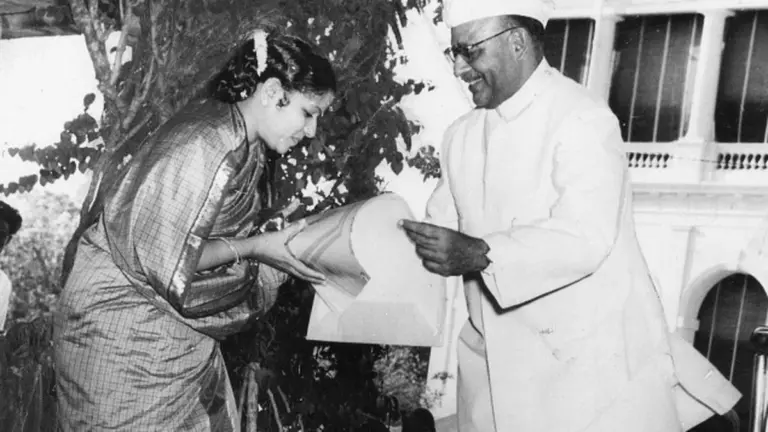
- M.S. Subbulakshmi (1998) — Carnatic vocalist
- Bhimsen Joshi (2008) — Hindustani classical
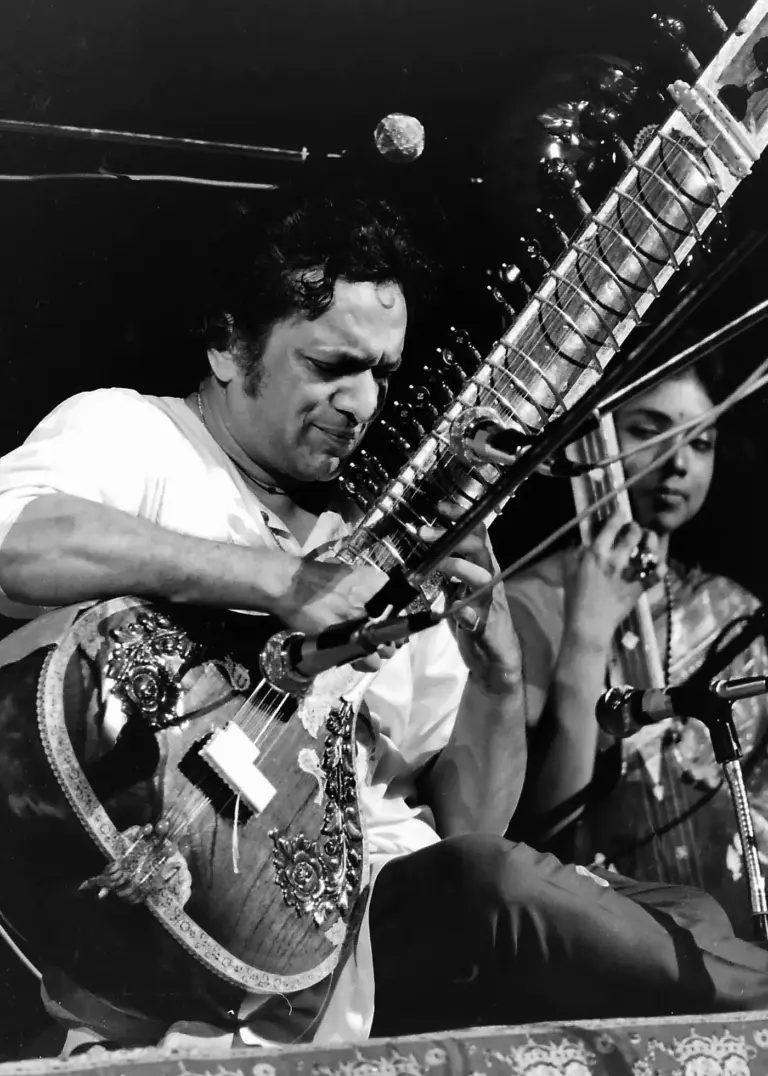
- Ravi Shankar (1999) — sitar maestro
- Lata Mangeshkar (2001) — playback singer
- Bismillah Khan (2001) — shehnai
Sports
- Sachin Tendulkar (2014) — first sportsperson to receive (after 2011 rule change)
Education and Social Service
- Mother Teresa (1980) — Nobel Peace Prize for service to the poor
- Dr. Bhagwan Das (1955) — educator, philosopher
- D.K. Karve (1958) — women's education
Posthumous Awards
The provision for posthumous awards was added in 1955 (one year after instituting the award). The first posthumous Bharat Ratna was given to Lal Bahadur Shastri (1966) — second PM of India, who died in office.
Notable Posthumous Awards
| Recipient | Year of Death | Year of Award |
|---|---|---|
| Lal Bahadur Shastri | 1966 | 1966 |
| Indira Gandhi | 1984 | 1971 (received in lifetime, while serving as PM) |
| K. Kamaraj | 1975 | 1976 |
| Marudur Gopalan Ramachandran (MGR) | 1987 | 1988 |
| B.R. Ambedkar | 1956 | 1990 |
| Rajiv Gandhi | 1991 | 1991 |
| Sardar Vallabhbhai Patel | 1950 | 1991 |
| Subhas Chandra Bose | 1945 | 1992 (but the award was withdrawn — see below) |
| Madan Mohan Malaviya | 1946 | 2014 |
| Aruna Asaf Ali | 1996 | 1997 |
| Karpoori Thakur | 1988 | 2024 |
| M.S. Swaminathan | 2023 | 2024 |
| P.V. Narasimha Rao | 2004 | 2024 |
| Charan Singh | 1987 | 2024 |
The Subhas Chandra Bose Withdrawal
In 1992, the government announced the Bharat Ratna for Netaji Subhas Chandra Bose (posthumously). However:
- The Indian Air Force had been carrying his framed picture for years
- The award was challenged in the Calcutta High Court by a person claiming Bose had not died and was still alive
- The Supreme Court directed the government to withdraw the announcement until the question of Bose's death was definitively resolved
- The award was thus technically not conferred
The Indian government has not formally clarified Bose's status in this matter. He remains the only Bharat Ratna whose award was announced but not conferred.
Recent Awards (2024)
In 2024, the Bharat Ratna was awarded to a record 5 individuals — the highest number in a single year:
| Recipient | Field | Status |
|---|---|---|
| Karpoori Thakur | Politician (Bihar; OBC leader) | Posthumous |
| L.K. Advani | Politician (BJP, former Deputy PM) | Living |
| P.V. Narasimha Rao | Former PM; economic reformer | Posthumous |
| Charan Singh | Former PM; farmer leader | Posthumous |
| M.S. Swaminathan | Agricultural scientist | Posthumous |
This was a politically significant set of awards — covering OBC leadership (Karpoori Thakur), BJP heritage (Advani), economic reform (Rao), farmer politics (Charan Singh), and agriculture (Swaminathan).
Total Number Awarded
As of early 2026, approximately 53 individuals have been awarded the Bharat Ratna (varies by counting; includes those who received it posthumously).
The award has been suspended twice in its history:
- 1977-1980 (Janata government period)
- 1992-1995 (a few years after the Bose controversy)
Other Civilian Awards
The Bharat Ratna sits at the top of India's civilian honours hierarchy:
| Award | Rank | Field Coverage |
|---|---|---|
| Bharat Ratna | Highest | Any field |
| Padma Vibhushan | Second | Exceptional and distinguished service |
| Padma Bhushan | Third | Distinguished service of high order |
| Padma Shri | Fourth | Distinguished service |
The Padma Awards are usually announced on Republic Day (January 26) each year.
UPSC Relevance
GS1 (Modern History): Civilian awards, recognition of contributions, post-independence India.
GS2 (Polity): Article 18 (no titles), constitutional provisions for awards.
GS4 (Ethics): Recognition of service, role of awards in public values.
Key Prelims facts:
- Instituted: January 2, 1954
- Instituted by: President Dr. Rajendra Prasad
- First three recipients (1954): C.V. Raman, S. Radhakrishnan, C. Rajagopalachari
- Posthumous award allowed since: 1955
- Eligibility expanded to all fields: 2011
- First sportsperson: Sachin Tendulkar (2014)
- Foreigners awarded: Khan Abdul Ghaffar Khan (1987), Nelson Mandela (1990)
- 2024: 5 awardees (record)
- Design: Peepal leaf medallion (toned bronze); Sun emblem; "Satyamev Jayate" on reverse
- Ribbon colour: White
- Cash component: None
- Subhas Chandra Bose: Award announced 1992 but withdrawn after legal challenge
- Article 18: Bharat Ratna not to be used as a title
- Hierarchy: Bharat Ratna > Padma Vibhushan > Padma Bhushan > Padma Shri
Tell Google you want more of this.
Add Anantam IAS as a preferred sourceOne tap, and this site shows up more often in your own Top Stories, AI Overviews and AI Mode. Remove it any time.