Contract farming is straightforward in principle: a farmer and a buyer agree before sowing on the price, quality, and quantity of the produce. The farmer gets price assurance. The buyer gets guaranteed supply. Both reduce risk. In practice, the power dynamics make it far more complicated.
This topic became headline news in 2020-21 with the three Farm Laws and their repeal. UPSC GS-III 2021 directly asked about the farm laws. Prelims has tested APMC and e-NAM multiple times. You need to understand the pre-reform status quo (APMC), the attempted reform (Farm Laws), and the post-repeal reality.
The APMC System: Status Quo
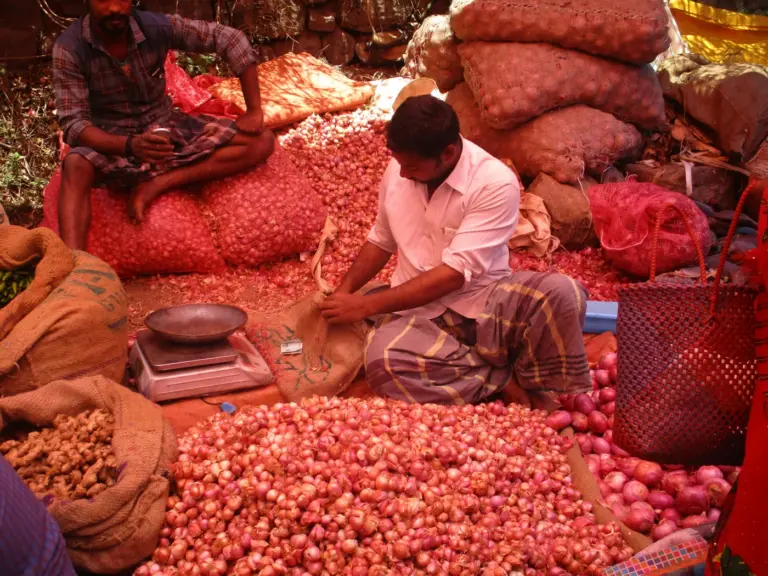
The Agricultural Produce Market Committee (APMC) system has governed agricultural marketing since the 1960s-70s. Each state enacted APMC Acts requiring farmers to sell notified commodities only in designated market yards (mandis) through licensed commission agents.
How it works: Farmers bring produce to the mandi. Licensed traders bid. The APMC charges a market fee (varies by state, typically 1-2%). Commission agents (arthiyas) facilitate transactions, often also providing credit to farmers.
Problems are well-documented:
- Cartelization: A few traders dominate mandis, suppressing prices through collusion
- Multiple levies: Market fee + commission + loading/unloading charges eat into farmer returns
- Limited buyer access: Only licensed traders can buy, excluding direct purchase by processors, exporters, and retailers
- Infrastructure deficit: Most mandis lack cold storage, grading facilities, and electronic weighing
- Geographic restriction: Farmers must sell in their designated mandi, can't shop around for better prices
Despite these problems, APMC mandis provide a physical marketplace and, in states like Punjab and Haryana, relatively reliable procurement at MSP. This is why farmer unions defended the APMC system during the 2020-21 protests — not because it's perfect, but because it's the only infrastructure they have.
The Three Farm Laws of 2020
In September 2020, Parliament passed three laws:
1. Farmers' Produce Trade and Commerce Act 2020
Allowed farmers to sell produce outside APMC mandis — at farm gates, warehouses, or through electronic platforms — without paying mandi fees. Essentially, it created a parallel market alongside the APMC system.
2. Farmers (Empowerment and Protection) Agreement on Price Assurance and Farm Services Act 2020
This was the contract farming law. It provided a legal framework for:
- Written farming agreements between farmer and sponsor (buyer)
- Pre-agreed price with a guaranteed floor
- Quality specifications and delivery terms
- Dispute resolution through conciliation and the SDM (Sub-Divisional Magistrate)
3. Essential Commodities (Amendment) Act 2020
Removed stock limits on cereals, pulses, oilseeds, potatoes, and onions except under "extraordinary circumstances." The idea was to attract private investment in storage and cold chain by removing the fear of sudden stock limit imposition.
Why It Was Controversial
The opposition was fierce and sustained, especially from Punjab and Haryana farmers. Key concerns:
Corporate capture fear: Without the APMC safety net, large corporations could dictate terms to small farmers. The concern was that contract farming would become "contract labour" on farmers' own land.
MSP undermining: The laws didn't mention MSP. Farmers feared that once APMC mandis weakened (with trade moving outside), government procurement at MSP would decline. For Punjab wheat and rice farmers, MSP procurement is their economic lifeline.
Dispute resolution outside courts: The contract farming law placed disputes under SDMs and DMs, not civil courts. Farmer unions argued this disadvantaged farmers against well-resourced corporations with legal teams.
No consultation: The laws were pushed through Parliament without committee scrutiny or meaningful consultation with farmer organizations. The process alienated even those who supported reform in principle.
After over a year of protests, the government repealed all three laws in November 2021.
Common student mistake: Writing that the Farm Laws "privatized agriculture" or "abolished APMC." Neither is accurate. The laws created a parallel market structure alongside APMC, not in replacement of it. APMC mandis would have continued operating. The issue was about the long-term trajectory, not immediate abolition.
Model Contract Farming Act 2018
Before the Farm Laws, NITI Aayog released a Model Contract Farming Act in 2018 for states to adopt. Agriculture is a State Subject (Entry 14, State List), so the centre can only provide a model framework.
Key features:
- Registration of farming agreements with a designated authority
- No transfer of land — sponsor gets produce rights, not land rights
- Price determination linked to market prices with a guaranteed minimum
- Crop insurance responsibility on the sponsor
- Dispute resolution through a three-tier mechanism (conciliation board, sub-divisional authority, appellate authority)
Few states adopted it. Tamil Nadu, Odisha, and a handful of others notified rules. Most states were either indifferent or actively opposed due to political considerations. The Model Act remains relevant as a reference for future reform attempts.
Contract Farming: Success Stories
PepsiCo Potato Farming (Punjab)
PepsiCo contracts with potato farmers in Punjab to grow specific varieties (primarily for Lay's chips). The company provides:
- Certified seed
- Technical guidance on cultivation practices
- Guaranteed buyback at pre-agreed prices
This model has worked for over two decades. Farmers get price certainty and technical support. PepsiCo gets consistent quality raw material. The contract specifies variety, size, moisture content, and defect tolerance.
But the model isn't frictionless. When market prices rise above contract prices, farmers are tempted to sell in the open market. When quality standards aren't met, PepsiCo rejects consignments. Both sides have grievances, though the relationship has been more stable than critics predicted.
ITC e-Choupal
ITC launched e-Choupal in 2000, setting up internet kiosks in villages managed by sanchalaks (lead farmers). Farmers access real-time market prices, weather information, and farming best practices. They can sell directly to ITC's procurement centres or to the mandi, whichever offers better prices.
e-Choupal covers 4 million+ farmers across 10 states, mainly for soy, wheat, coffee, and shrimp. It's not classical contract farming but a disintermediation model — removing layers of middlemen and giving farmers information and choice.
The model's success lies in transparency. Electronic weighing, real-time pricing, and instant payment at ITC centres contrast with the opacity of many mandis.
APMC vs Contract Farming vs e-NAM
| Parameter | APMC Mandi | Contract Farming | e-NAM |
|---|---|---|---|
| Structure | Physical marketplace with licensed traders | Direct agreement between farmer and buyer | Electronic platform linking mandis |
| Price discovery | Open auction (often cartelized) | Pre-agreed price with floor | Online bidding across mandis |
| Intermediaries | Commission agents (arthiyas) | None (direct buyer-farmer) | Reduced (online trading) |
| Market fees | Mandi fee + commission (2-6%) | None | Single point levy |
| Coverage | ~7,000 mandis across India | Limited, crop-specific | 1,361 mandis in 23 states (as of 2024) |
| Key benefit | Physical infrastructure, MSP procurement point | Price assurance, reduced risk | Price transparency, wider buyer access |
| Key limitation | Cartelization, multiple levies, geographic lock-in | Unequal bargaining, quality disputes, limited crops | Poor adoption, infrastructure gaps, interoperability issues |
e-NAM (National Agriculture Market) was launched in 2016 to create a unified electronic marketing platform. It connects APMC mandis across states, allowing traders in one state to bid on produce listed in another.
On paper, e-NAM solves the geographic restriction problem. In practice, adoption is poor because:
- States haven't harmonized APMC rules (different fees, procedures, quality standards)
- Physical movement of goods across states faces infrastructure and logistics barriers
- Many mandis listed on e-NAM still conduct business the traditional way
- Assaying (quality testing) infrastructure is missing in most mandis
Post-Repeal Scenario: What Remains, What Changed
The repeal of the Farm Laws didn't restore any "pre-2020 status quo" because the laws were barely implemented. Most states had not set up the regulatory apparatus required by the new laws before they were repealed.
What remains unchanged:
- APMC system continues as the primary marketing channel
- e-NAM operates but with limited real traction
- Model Contract Farming Act 2018 remains available for states to adopt
- Private markets (outside APMC) existed before 2020 in states that had already reformed their APMC acts (Bihar abolished APMC in 2006, parts of Maharashtra and Rajasthan allowed private markets)
What changed politically:
- Agricultural reform is now considered politically radioactive at the central level
- The promised Committee on MSP (announced during repeal) submitted its report but legal guarantee of MSP hasn't materialized
- States are proceeding with incremental reforms independently
- Farmer organizations remain mobilized and vigilant about any reform attempt
What changed economically: Very little. The structural problems of Indian agricultural marketing — fragmented mandis, multiple intermediaries, inadequate cold chain, poor price discovery — remain intact. The public distribution system continues to depend on MSP-based procurement, which works in a few states for a few crops.
Common student mistake: Concluding that "Farm Laws were entirely bad" or "entirely good." UPSC wants balanced analysis. Acknowledge that reform was needed, that the specific design had genuine flaws, and that the process (no consultation, parliamentary rushing) undermined legitimacy regardless of content.
The Path Forward
Agricultural marketing reform hasn't died with the Farm Laws repeal. It's shifted to:
- State-level experimentation: Bihar (no APMC since 2006), Madhya Pradesh (e-procurement), Kerala (agri-value chains)
- FPO strengthening: Farmer Producer Organizations as collective bargaining units that can negotiate contracts from a position of strength
- Digital infrastructure: Agristack, digital crop surveys, and technology-enabled price discovery
- Private sector engagement: Through the existing frameworks rather than new legislation
The connection to financial inclusion is direct. Farmers who have bank accounts, crop insurance, and KCC access are better positioned to engage in contract farming than those dependent on arthiyas for credit. Digital payments reduce the cash-based opacity that enables exploitation.
India needs agricultural marketing reform. The question is whether it comes through top-down legislation, bottom-up cooperative building, or incremental state-level changes. Post-2021, the third option seems most likely.
Tell Google you want more of this.
Add Anantam IAS as a preferred sourceOne tap, and this site shows up more often in your own Top Stories, AI Overviews and AI Mode. Remove it any time.