Opens in a new tab
Join Anantam IAS Channel on Telegram

Daily Digest · Wednesday

10 December 2025 Current Affairs for UPSC

2 current affairs published on Wednesday, 10 December 2025

10 December 2025 Current Affairs for UPSC — every Why-in-News article AnantamIAS published on Wednesday, 10 December 2025, broken down with Why in News?, the exact GS paper it feeds, sub-topic mapping, MCQ-ready facts and a UPSC-style practice question. 2 articles in total, covering Polity, Economy, Environment, S&T, IR, Geography, History, Society and Internal Security — the same Why-in-News + GS-paper-mapping + practice-question format the Compass uses across every daily digest on the site.

Daily current affairs for UPSC is where new material enters your prep stream. Read this 10 December 2025 digest end-to-end in 25–35 minutes, attempt the practice question at the foot of each article (it's MCQ for some, 10/15-marker for others), then bookmark the entries that fall inside your active revision window. Everything stays cross-linked: tap any subject pill to jump to that subject's hub, or use the table of contents above to skip straight to a specific story.

Use this page three ways. Read sequentially for a one-sitting scan of everything that mattered on 10 December 2025. Download the 10 December 2025 PDF below for offline study or print revision. Or use the December 2025 Current Affairs compilation to see this day in the month's full context. For the previous day's reading, see 9 December 2025 Current Affairs; the next day's is 11 December 2025 Current Affairs.

Why we publish daily current affairs separately from the monthly compilation: daily is learning, monthly is revision. Use the daily page to add fresh material to your notes the day it breaks; come back to the December 2025 compilation 60 days before Prelims when the noise has settled and only the lasting takeaway is worth re-reading.

STEM Potential of India

Open article →Download PDF

image 8 14

image 8 12

Context:

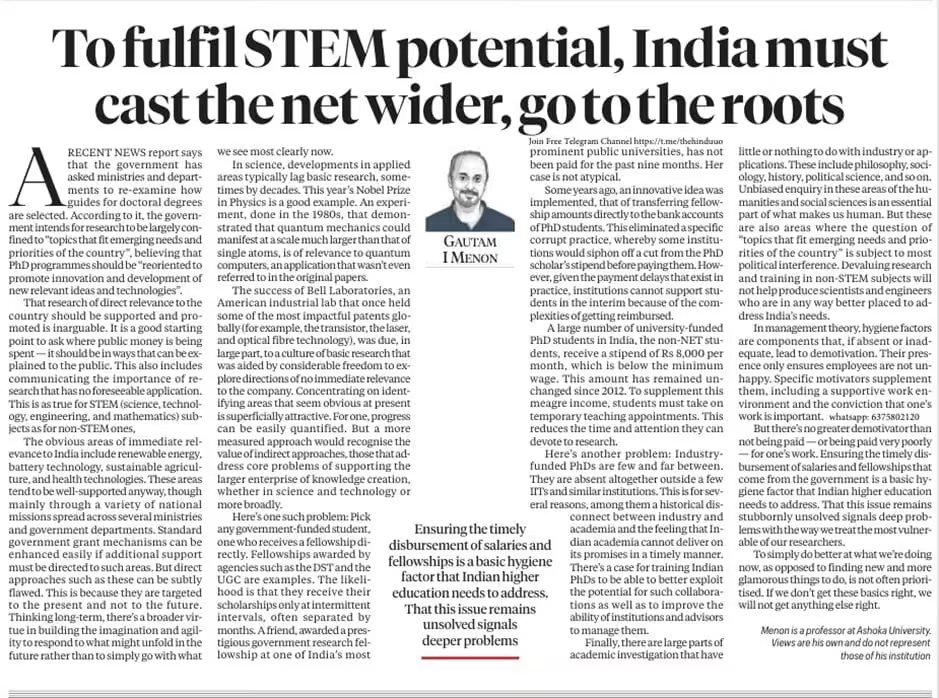
To fulfil STEM potential, India must cast the net wider, go to the roots because it comes amid government directions to re-examine national research priorities and funding patterns. Debate on India’s R&D spending (~0.65% of GDP) — far below global leaders.

UPSC Relevance:

S&T, IPR and Innovation ecosystem

UPSC PYQ:

Q: What is the present world scenario of intellectual property rights with respect to life materials? Although India is second in the world to file patents, still only a few have been commercialised. Explain the reasons behind this less commercialization.(2024)

About STEM:

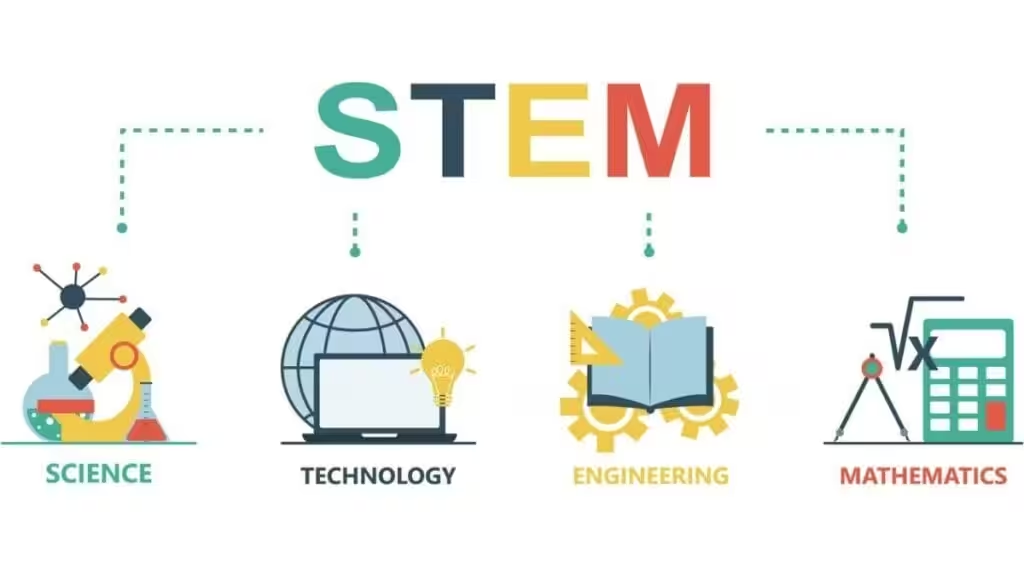
According to UNESCO: STEM stands for Science, Technology, Engineering and Mathematics, encompassing disciplines that drive innovation and address global challenges. It fosters critical thinking, problem-solving and creativity, equipping individuals to tackle complex issues and contribute to sustainable development.

Major areas of study:

beakerNatural, physical, and life sciences (sometimes including medicine)

beakerComputer, electronics, and other technology-related disciplines

beakerAll types of engineering

beakerMathematics, or any field involving a heavy application of mathematical principles

Why Is STEM Important?

  • As society innovates and technology advances, the need for professionals who understand how these technologies work and who can propose practical solutions continues to grow. The U.S. Bureau of Labor Statistics (BLS) calls STEM careers “tomorrow’s jobs,” emphasizing the importance of these unique industries.
  • Today, STEM jobs are in high demand, and many are projected to stay in demand for several years. At the same time, STEM professionals are in short supply, which is why so many colleges — as well as the U.S. government — are imploring students to study STEM.
  • In 2019, the Trump administration invested $578 million in STEM education. More recently, President Biden’s 2022 education budget promised to prioritize STEM.
  • Ensuring students have access to a quality STEM education is essential for keeping the U.S. competitive in the global market. Students are actively encouraged to study STEM through statewide initiatives, many of which encourage women and people of color to enter the predominantly white, male industry.

Key Issues:

  • Over-Focus on Applied Research:
    • Government prioritises “emerging areas” and mission-mode projects.
    • But breakthrough technologies always originate from basic science, not targeted missions.
    • Example cited:
      • Quantum Mechanics → Today’s semiconductors and lasers.
      • Bell Labs → Success due to freedom in research, not rigid targets.
  • Debate on India’s R&D spending (~0.65% of GDP) — far below global leaders.
  • Concerns over delayed fellowships for PhD and research scholars.
  • Fellowship Crisis in India:
    • PhD scholars receive very low and delayed stipends.
    • This:
      • Discourages bright students.
      • Forces scholars to take up part-time work.
      • Kills research focus.
  • Mentor and Faculty Shortage:
    • India lacks:
      • Trained PhD supervisors.
      • Research advisors.
    • Without this, even funding cannot create quality research.
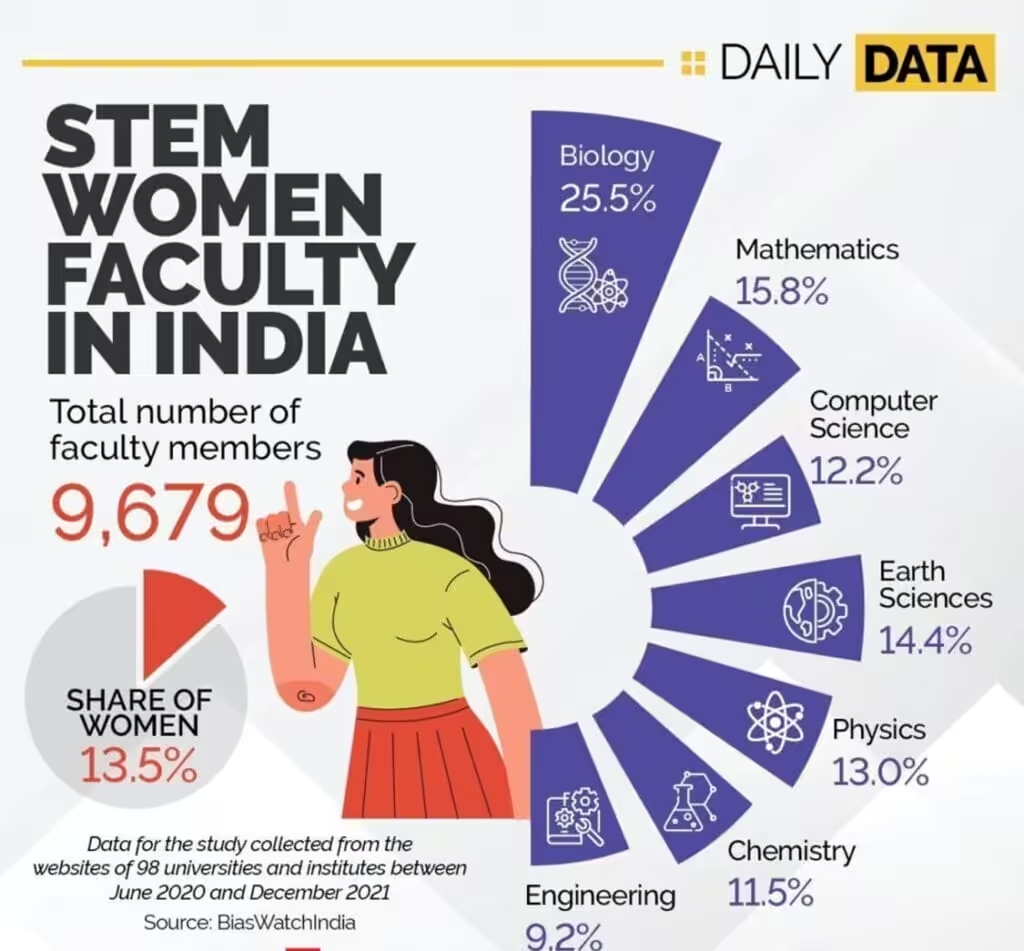
  • Women Participation is less:
image 8 15

Steps by GOI:

  • Indian Science Technology and Engineering facilities Map (I-STEM) initiative called “Women in Engineering, Science, and Technology (WEST)” was launched.
    • Women may join the WEST program and explore opportunities to become stakeholders in various domains and pursue careers in R&D at various levels: technicians, technologists, scientists, and entrepreneurs.
  • Vigyan Jyoti: Inspires girls in STEM.
  • WISE-KIRAN, GATI, CURIE, SERB-POWER: Schemes to boost women’s participation in S&T.
  • National Education Policy (NEP) 2020: Promotes interdisciplinary learning, critical thinking, holistic education, and integrating vocational training, aligning education with industry needs.
  • Research Parks: Established in IITs to link R&D with industry.
  • Uchhatar Avishkar Yojana (UAY): Promotes academia-industry collaboration for innovation.
  • Anusandhan National Research Foundation (ANRF) (PAIR Program): Fosters research collaboration between academia and industry.
  • Teacher Training & Resources:
    • NISHTHA: World’s largest teacher training program to foster critical thinking.
    • Diksha & SWAYAM: Digital platforms for online teacher training, especially in rural areas.

India cannot create world-class science simply by choosing priority topics or pushing for innovation slogans. It must first build a healthy, stable, supportive ecosystem for researchers.

Strong roots → strong STEM.
Weak roots → no progress.

Value of Water

Open article →Download PDF

image 9 1

WhatsApp Image 2025 12 10 at 10.37.43 8e5b10cc

Context:

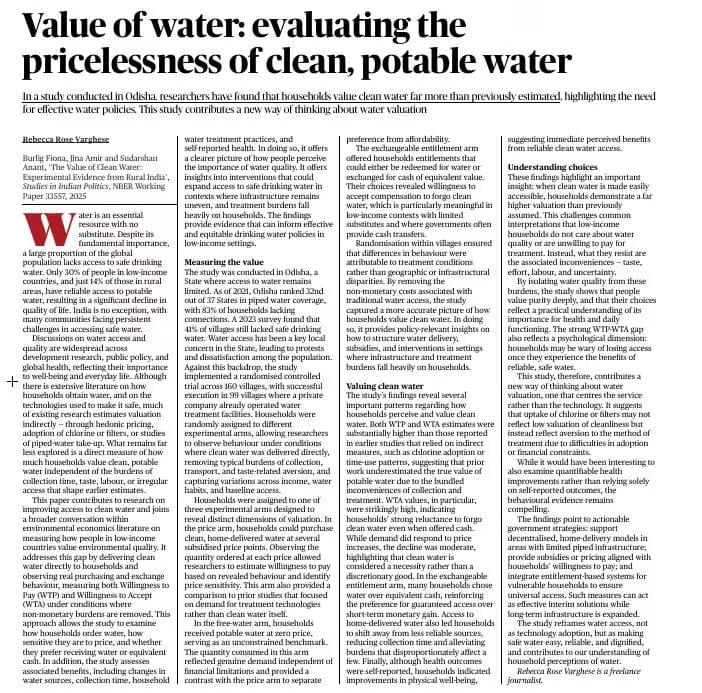
A recent field study conducted in Odisha, published in the American Economic Review, which reassesses how rural households value clean drinking water. Clean drinking water is not just a free public good — it is a highly valued life-enhancing resource that poor households are willing to pay for when the service is reliable and safe.

UPSC Relevance:

Environment

UPSC PYQ:

Q.1 What are the salient features of the Jal Shakti Abhiyan launched by the Government of India for water conservation and water security? (2020)

Q.2 Suggest measures to improve water storage and irrigation system to make its judicious use under the depleting scenario. (2020)

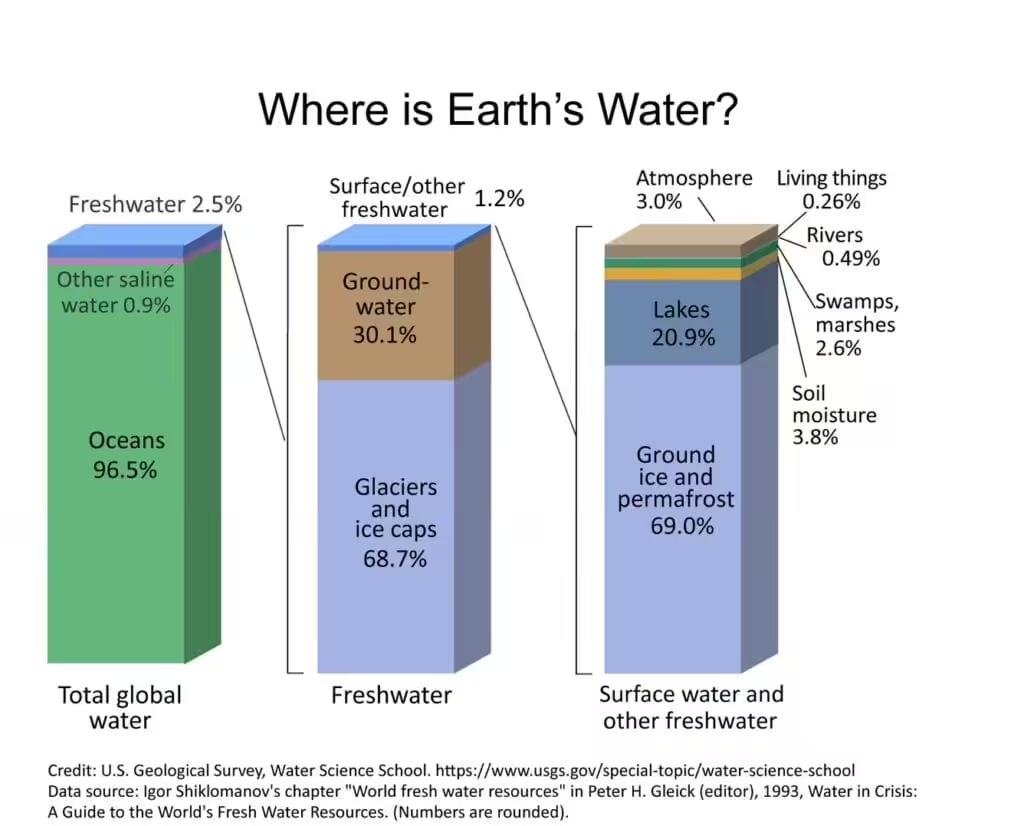
About Water Scarcity in India:

image 8 16
  • Out of its population of 1.4 billion people, 35 million people lack access to safe water and 678 million people lack access to a safe toilet. 
  • The Indian population is expected to rise to 1.7 billion by 2050 will struggle for more safe drinking water for its population.
  • With nearly half of
  • India’s population that is near about 600 million population is facing extreme water stress and out of the total availability 70% is contaminated. This is a serious threat to India’s GDP as India owns 17% of the total world’s population but India has only 4% of freshwater resources.

Even,

  • Delhi’s groundwater contamination is a significant environmental issue, with high levels of uranium, lead, nitrate, fluoride, and salinity-related indicators.
  • Uranium levels in Delhi are high, with 13-15% of samples surpassing permissible limits- CWC Report
image 8

Key Findings of the Study

  • Poor Households Value Clean Water More Than Previously Estimated:
    • Clean water is seen as a necessity, not a luxury.
    • Families showed a high willingness to pay for safe and reliable water.
  • Major Public Health Benefits
    • Sharp decline in:
      • Diarrhoea
      • Water-borne infections
    • Improved:
      • Child health
      • Work productivity
      • Attendance at school and work
  • Huge Reduction in Women’s Drudgery
    • Before piped water:
      • Women walked long distances
      • Lost productive hours
    • After access:
      • Time savings
      • Reduced physical stress
      • Better participation in economic and educational activities
  • Free Water ≠ Sustainable Water
    • When water is entirely free:
      • Overuse increases
      • Maintenance suffers
    • Affordable but meaningful pricing improves:
      • Accountability
      • Service quality
      • Long-term sustainability

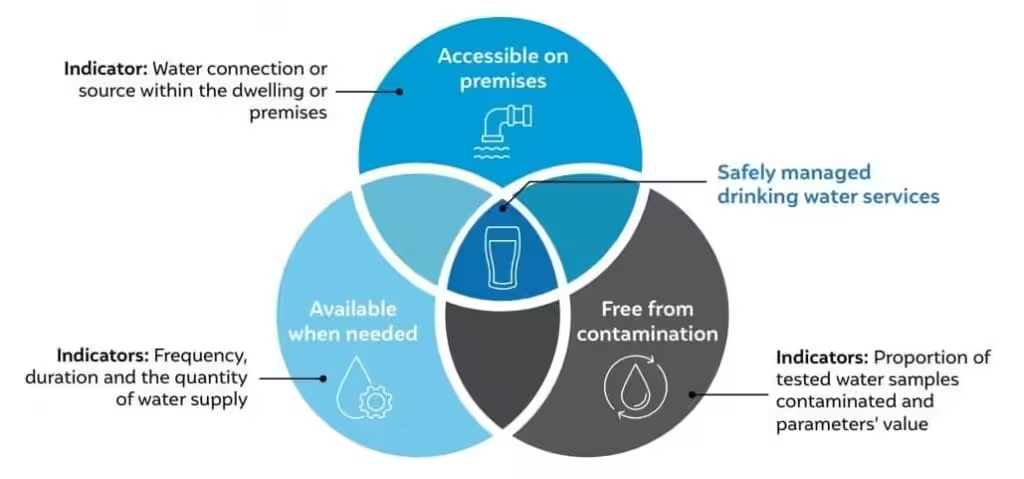
Water Should be:

image 9

Govt. Steps:

Mission Amrit Sarovar:

  • Launched under Azadi Ka Amrit Mahotsav to promote the conservation, restoration and rejuvenation of water bodies.
  • Targets the development of 75 water bodies in each district across the country.
  • Focuses on strengthening local water security, groundwater recharge and community participation.

Jal Jeevan Mission (JJM):

  • Seeks to provide functional household tap water connections (FHTCs) to every rural household.
  • Emphasises safe, adequate and potable drinking water on a regular basis.
  • Gives special priority to water-deficient, drought-prone and quality-affected areas.
  • Incorporates bulk water transfer and regional water supply schemes to ensure long-term sustainability.

Jal Shakti Abhiyan (JSA):

  • A nationwide initiative targeted at water-stressed districts for water conservation and efficient water management.
  • Implemented through the mass movement “Catch the Rain”, covering rural as well as urban areas.
  • Based on the principle: “Catch rain where it falls, when it falls.”
  • Promotes rainwater harvesting, watershed development and reuse of treated wastewater.

Atal Bhujal Yojana (ABY):

  • A central sector groundwater management scheme implemented in 8,774 gram panchayats across 81 districts in Haryana, Gujarat, Karnataka, Madhya Pradesh, Maharashtra, Rajasthan and Uttar Pradesh.
  • Aims at sustainable groundwater management through:
    • Community participation
    • Demand-side interventions
    • Water-use efficiency
  • Encourages behavioural change and local ownership of groun

Clean drinking water is not merely a basic utility but a high-value developmental investment with massive health, economic, and social returns.