UPSC CSE 2026 Essay Paper Discussion

Daily Digest · Thursday

18 September 2025 Current Affairs for UPSC

2 current affairs published on Thursday, 18 September 2025

18 September 2025 Current Affairs for UPSC — every Why-in-News article AnantamIAS published on Thursday, 18 September 2025, broken down with Why in News?, the exact GS paper it feeds, sub-topic mapping, MCQ-ready facts and a UPSC-style practice question. 2 articles in total, covering Polity, Economy, Environment, S&T, IR, Geography, History, Society and Internal Security — the same Why-in-News + GS-paper-mapping + practice-question format the Compass uses across every daily digest on the site.

Daily current affairs for UPSC is where new material enters your prep stream. Read this 18 September 2025 digest end-to-end in 25–35 minutes, attempt the practice question at the foot of each article (it's MCQ for some, 10/15-marker for others), then bookmark the entries that fall inside your active revision window. Everything stays cross-linked: tap any subject pill to jump to that subject's hub, or use the table of contents above to skip straight to a specific story.

Use this page three ways. Read sequentially for a one-sitting scan of everything that mattered on 18 September 2025. Download the 18 September 2025 PDF below for offline study or print revision. Or use the September 2025 Current Affairs compilation to see this day in the month's full context. For the previous day's reading, see 17 September 2025 Current Affairs; the next day's is 19 September 2025 Current Affairs.

Why we publish daily current affairs separately from the monthly compilation: daily is learning, monthly is revision. Use the daily page to add fresh material to your notes the day it breaks; come back to the September 2025 compilation 60 days before Prelims when the noise has settled and only the lasting takeaway is worth re-reading.

Japanese Encephalitis

Open article →Download PDF

Why in news:

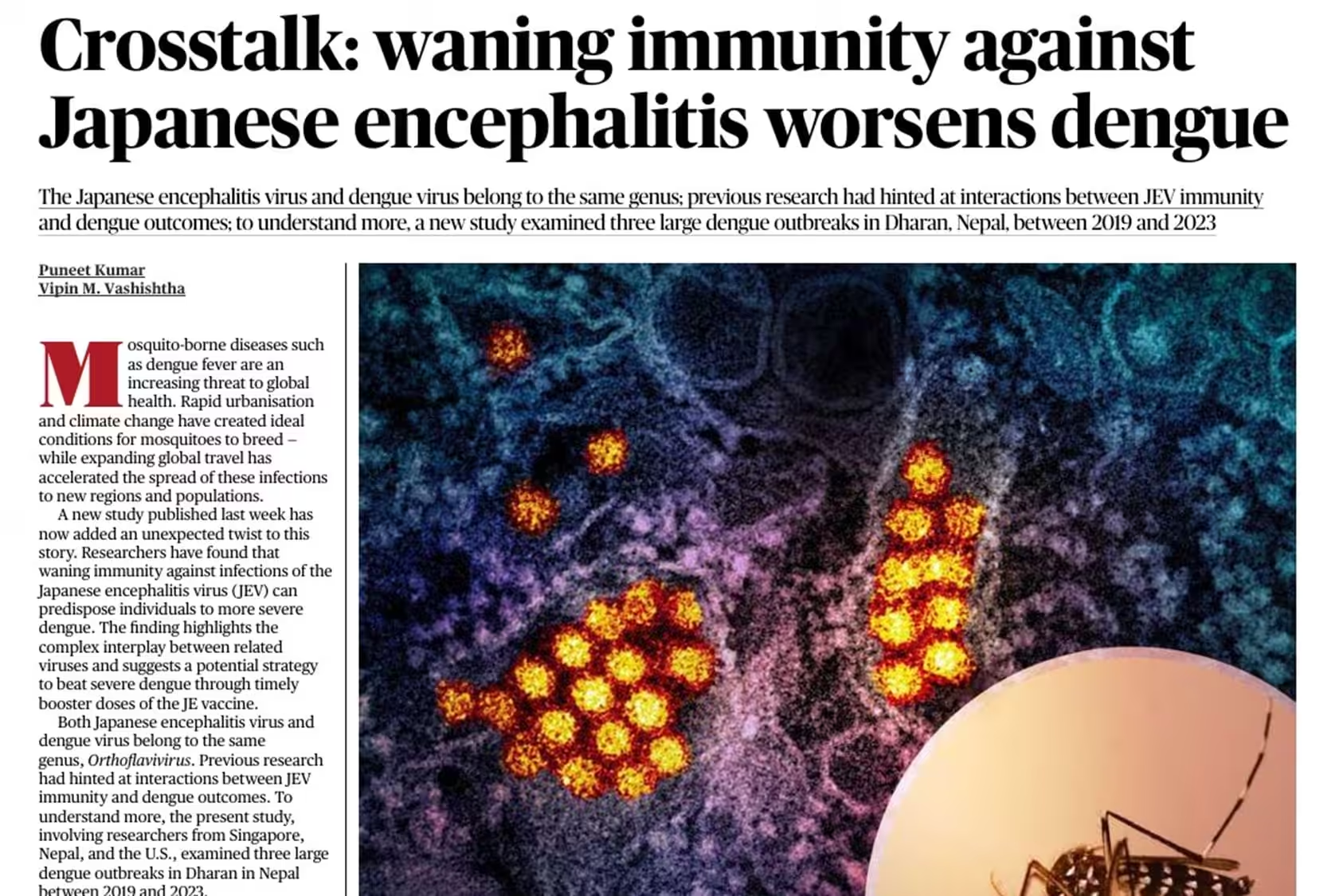
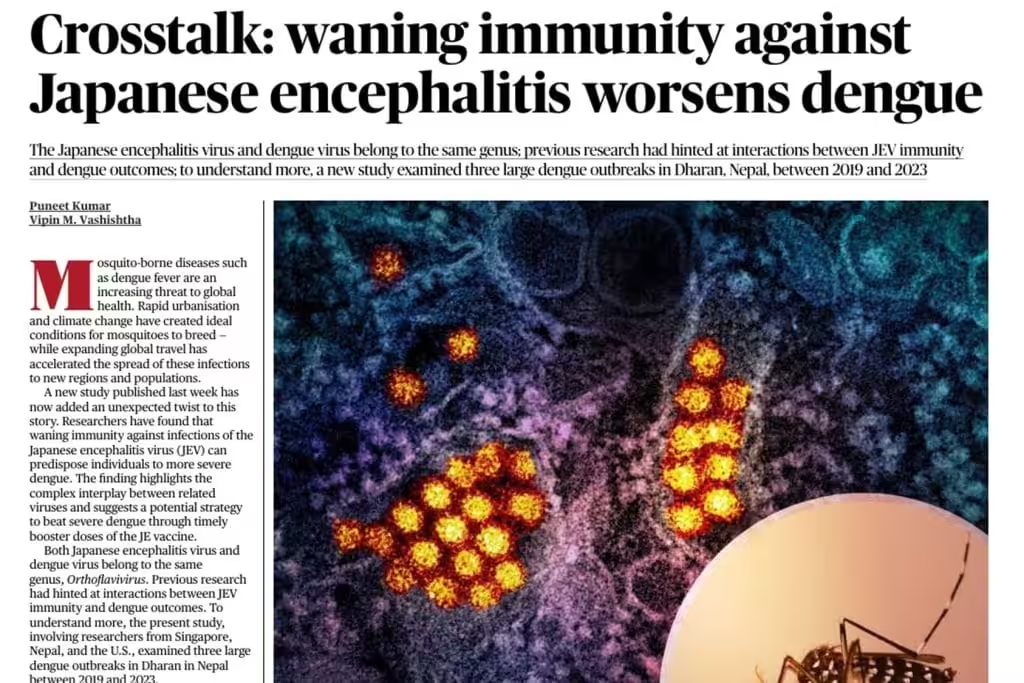
Anew study published last week has now added an unexpected twist to this story. Researchers have found that waning immunity against infections of the Japanese encephalitis virus (JEV) can predispose individuals to more severe dengue.

UPSC Relevance:

Examination has tested our knowledge with respect to critical and emrging disease frequetly in Prelims as can be seen by the following questions:

UPSC PYQ:

Prelims 2013

Q: Which of the following diseases can be transmitted from one person to another through tattooing?

  1. Chikungunya
  2. Hepatitis B
  3. NW-AIDS

Select the correct answer using the codes given below.

A 1 only

B 2 and 3 only

C 1 and 3 only

D 1, 2 and 3

About Japanese Encephalitis:
  • Japanese encephalitis virus (JEV) is an important cause of viral encephalitis in Asia.
  • It is a mosquito-borne flavivirus and belongs to the same genus as dengue, Zika, yellow fever and West Nile viruses. 
  • The first case of Japanese encephalitis viral disease (JE) was documented in 1871 in Japan.
  • JE primarily affects children. Most adults in endemic countries have natural immunity after childhood infection, but individuals of any age may be affected.

Signs and symptoms:

  • Most JEV infections are mild (fever and headache) or without apparent symptoms, but approximately 1 in 250 infections results in severe clinical illness.
  • The incubation period is 4–14 days. 
  • Severe disease is characterized by rapid onset of high fever, headache, neck stiffness, disorientation, coma, seizures, spastic paralysis and ultimately death. 

Transmission:

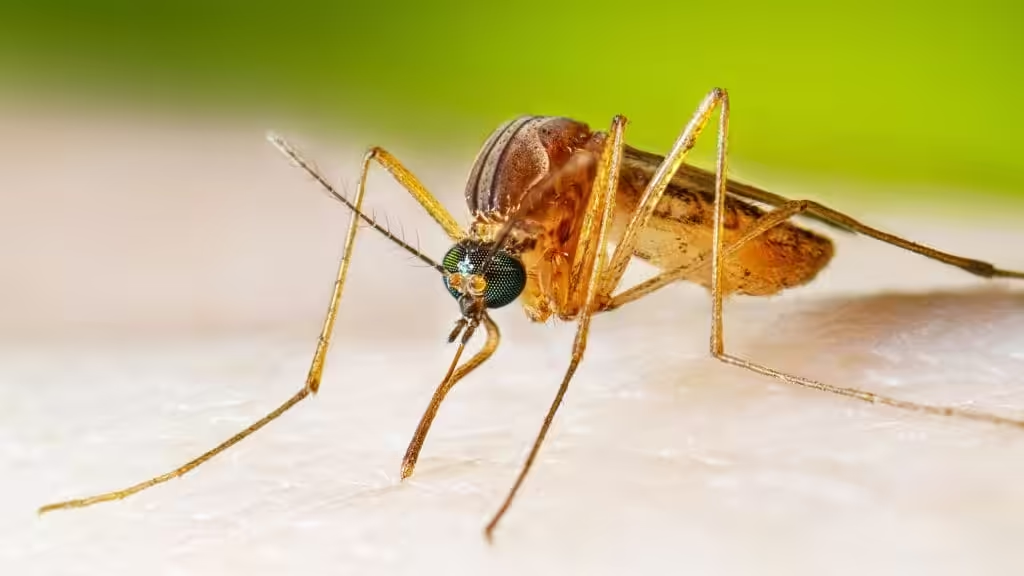
  • JEV is transmitted to humans through bites from infected mosquitoes of the Culex species (mainly Culex tritaeniorhynchus). 
  •  The virus exists in a transmission cycle between mosquitoes, pigs and/or water birds (enzootic cycle).
  • In most temperate areas of Asia, JEV is transmitted mainly during the warm season, when large epidemics can occur. 

Treatment:

  • There is no antiviral treatment for patients with JE.
  • Those who have lived through encephalitis often have health-care needs requiring long-term treatment and care including rehabilitation. 
  • There are three main types of JE vaccines currently in use: several inactivated Vero cell-derived vaccines, a live attenuated vaccine, and a live recombinant (chimeric) vaccine. One inactivated vaccine and the two live vaccines are WHO prequalified.

Sarnath site

Open article →Download PDF

Context:

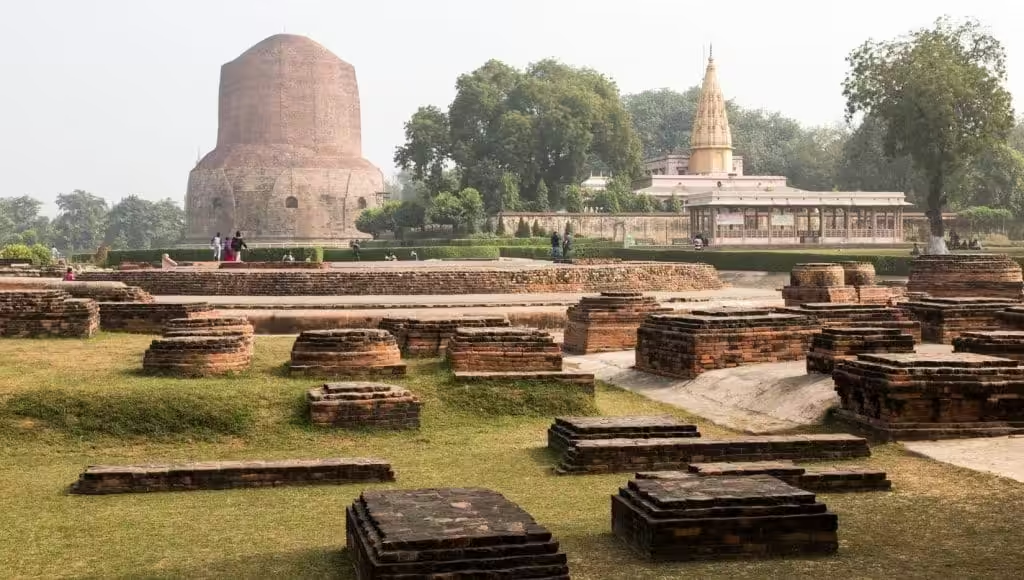
India has officially nominated Sarnath for the UNESCO world heritage list for the 2025-26 cycle. So, the UNESCO team is about to visit the site and as a matter of preparation for it, the Archaeological survey of India (ASI) is installing what it calls a corrected plaque that will credit a local ruler and not the British, for preserving the holy Buddhist site.

UPSC Relevance:

Art and culture including architectural marvels of Indian history.

UPSC PYQ:

Q. Consider the following properties included in the World Heritage List released by UNESCO: ( 2024)

  1. Shantiniketan
  2. Rani-ki-Vav
  3. Sacred Ensembles of the Hoysalas 
  4. Mahabodhi Temple Complex at Bodhgaya 

How many of the above properties were included in 2023? 

(a) Only one 

(b) Only two 

(c) Only three 

(d) All four 

Introduction:

  • Sarnath is a prominent buddhist pilgrimage site close to Varanasi at the confluence of river ganga and varuna. Here, Buddha gave his first sermon and formed the first Buddhist Sangha.
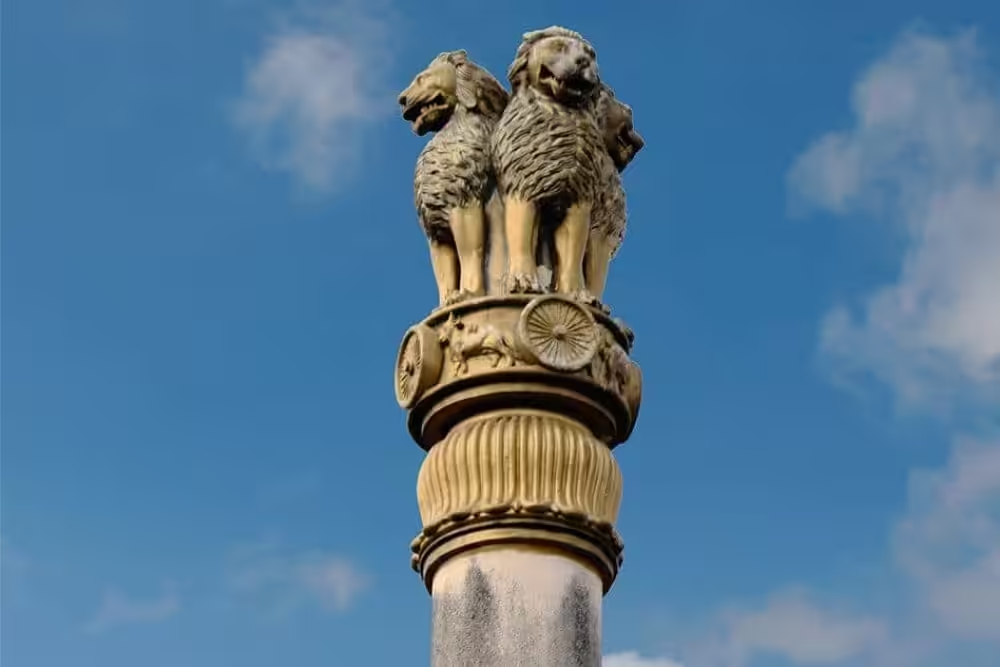
  • It was invaded, destroyed and demolished over the years however still many artefacts of cultural importance like the Lion capital of Ashoka are found here. Famous stupas here are Chaukhandi stupa and Dhamek stupa.  
  • Sarnath is remembered as the location for delivery of Buddha’s first sermon in 528 BC, known as the “turning the wheel of law” or traditionally called “Dharma-chakra-pravartana”. Here, he talked about the four noble truths to his five companions or disciples namely Kaudinya, Bhadrika, Vashpa, Mahanaman, Ashvajit. Together they formed a “sangha’ or a community of spiritual seekers.
  • The most significant work on Sarnath was carried out by archaeologist Friedrich Oertel in 1904-05

Art and Architectural element related to Sarnath:

  • Ashokan Pillar: the famous four-faced lion-headed capital pillar was found at Sarnath and dates back to 250 BC. It is now a prominent part of the National emblem of India showing the horse on the left and bull on the right of the Ashoka Chakra in the circular base on which the four Indian lions are standing back-to-back.
  • Dhamek Stupa: it marks the precise location at which Buddha’s first sermon was delivered. It is built in a unique Gupta style of architecture characterized by the use of cream -coloured sandstone and metal.
  • Chaukhandi stupa: It is an ancient Buddhist site. Later, an octagonal tower was built to commemorate Humayun’s visit to Sarnath.
  • Lalitvistara sutra: It is a Mahayana Buddhist text containing stories about the life of Buddha and his first sermon at Sarnath.
  • Mahaparinibbana Sutta: Buddha called Sarnath one of the four places of pilgrimage for Buddhists apart from Lumbini, Bodh Gaya and Kushinagar.
  • Sarnath Museum is the oldest site of Archaeological survey of India setup in 1910. It houses the Lion capital of Ashoka.

Significant visitors to Sarnath:

  • British Colonial explorers like Alexander Cunningham, Francis Buchanan-Hamilton and Colin Mackenzie also visited the for exploration and excavation.
  • Fa-Hein visited the Sarnath site during Gupta era and recorded it in writing in his book “Record of Buddhist Kingdoms”.
  • Hieun Tsang visited the Sarnath site during the reign of Harsha, recording it in his book “Buddhist record of the western”. He mentioned that many priests, small shrines and stupas dotted the Sarnath landscape.
  • Qutbuddin Aibak raided and looted Sarnath. This led to large scale exodus of Buddhist monks from Sarnath.