Opens in a new tab
Join Anantam IAS Channel on Telegram

Daily Digest · Monday

8 September 2025 Current Affairs for UPSC

3 current affairs published on Monday, 8 September 2025

8 September 2025 Current Affairs for UPSC — every Why-in-News article AnantamIAS published on Monday, 8 September 2025, broken down with Why in News?, the exact GS paper it feeds, sub-topic mapping, MCQ-ready facts and a UPSC-style practice question. 3 articles in total, covering Polity, Economy, Environment, S&T, IR, Geography, History, Society and Internal Security — the same Why-in-News + GS-paper-mapping + practice-question format the Compass uses across every daily digest on the site.

Daily current affairs for UPSC is where new material enters your prep stream. Read this 8 September 2025 digest end-to-end in 25–35 minutes, attempt the practice question at the foot of each article (it's MCQ for some, 10/15-marker for others), then bookmark the entries that fall inside your active revision window. Everything stays cross-linked: tap any subject pill to jump to that subject's hub, or use the table of contents above to skip straight to a specific story.

Use this page three ways. Read sequentially for a one-sitting scan of everything that mattered on 8 September 2025. Download the 8 September 2025 PDF below for offline study or print revision. Or use the September 2025 Current Affairs compilation to see this day in the month's full context. For the previous day's reading, see 7 September 2025 Current Affairs; the next day's is 9 September 2025 Current Affairs.

Why we publish daily current affairs separately from the monthly compilation: daily is learning, monthly is revision. Use the daily page to add fresh material to your notes the day it breaks; come back to the September 2025 compilation 60 days before Prelims when the noise has settled and only the lasting takeaway is worth re-reading.

Blood Moon

Open article →Download PDF

image 17

image 17

Why in news:

The blood moon atop Bhubaneswar during the lunar eclipse on Sunday. The total eclipse phase began at 11.01 p.m. and sky watchers across India and other nations, turned their gaze towards the moon.

UPSC Relevance:

This kind of phenomena is important for Prelims.

UPSC PYQ:

Q1. On 21st June, the Sun (2019)

(a) does not set below the horizon at the Arctic Circle

(b) does not set below the horizon at Antarctic Circle

(c) shines vertically overhead at noon on the Equator

(d) shines vertically overhead at the Tropic of Capricorn

About Blood Moon:
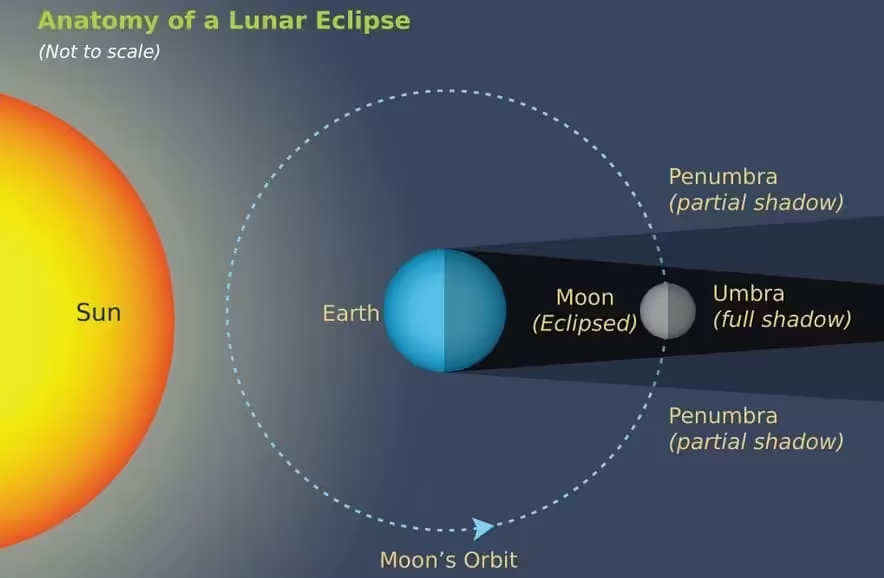
image 20

image 18
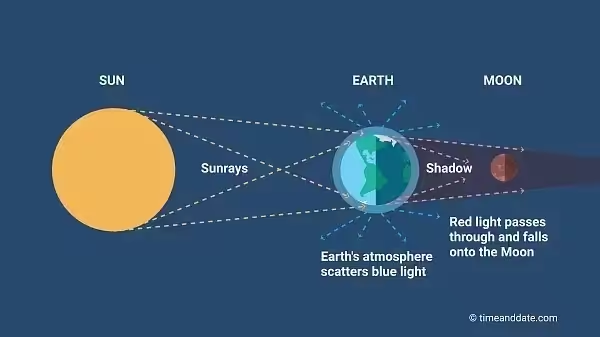
  • A blood moon occurs when Earth comes directly between the Sun and the moon.
  • The moon enters the Earth’s penumbral shadow, marking the beginning of the eclipse. And, as the moon moves further into the umbra, a dark shadow is cast across the lunar surface until totality, which brings a reddish-orange hue. The colour of the moon is largely dependent on the atmospheric conditions on Earth during the eclipse. 
  • The total lunar eclipse will be visible to the naked eye whenever it happens above the horizon. 
  • Rayleigh scattering (the elastic scattering of electromagnetic radiation, such as light, by particles that are much smaller than the radiation’s wavelength)causes the moon to appear red instead of dark.
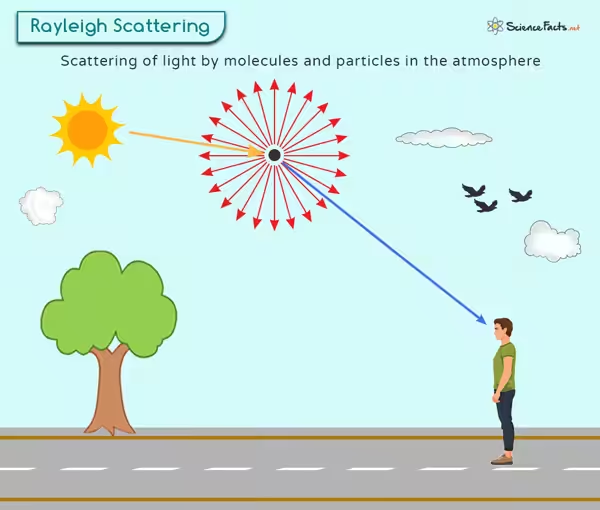
image 19

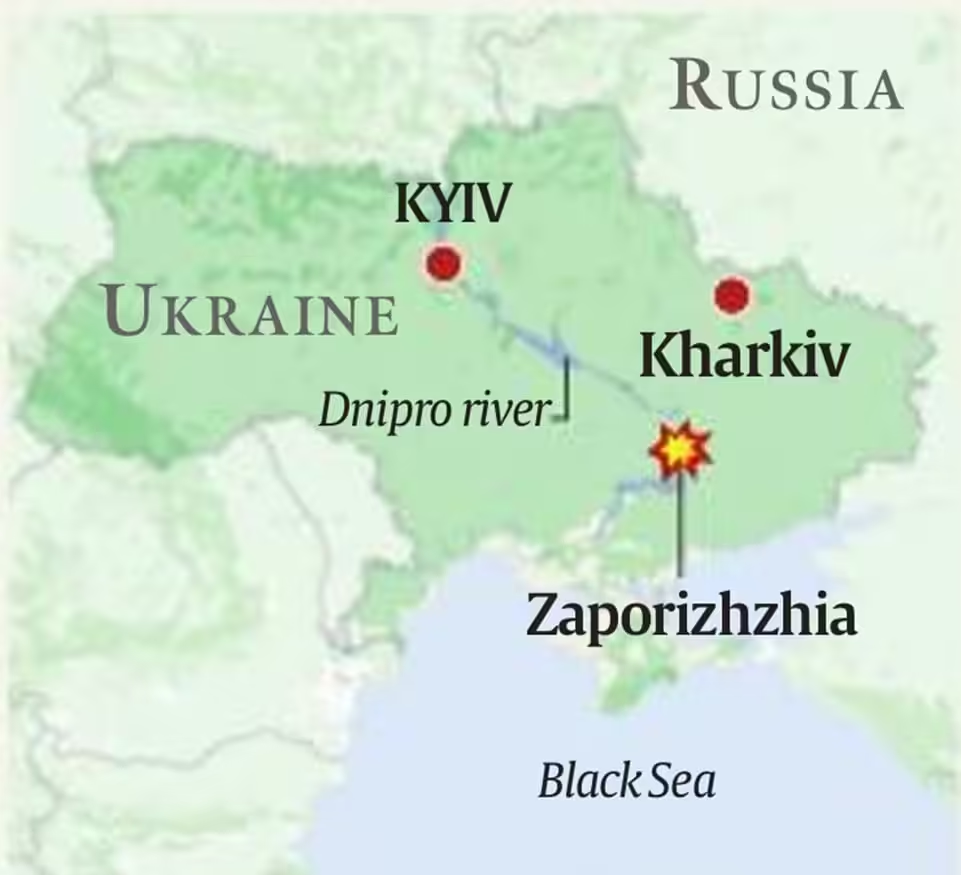
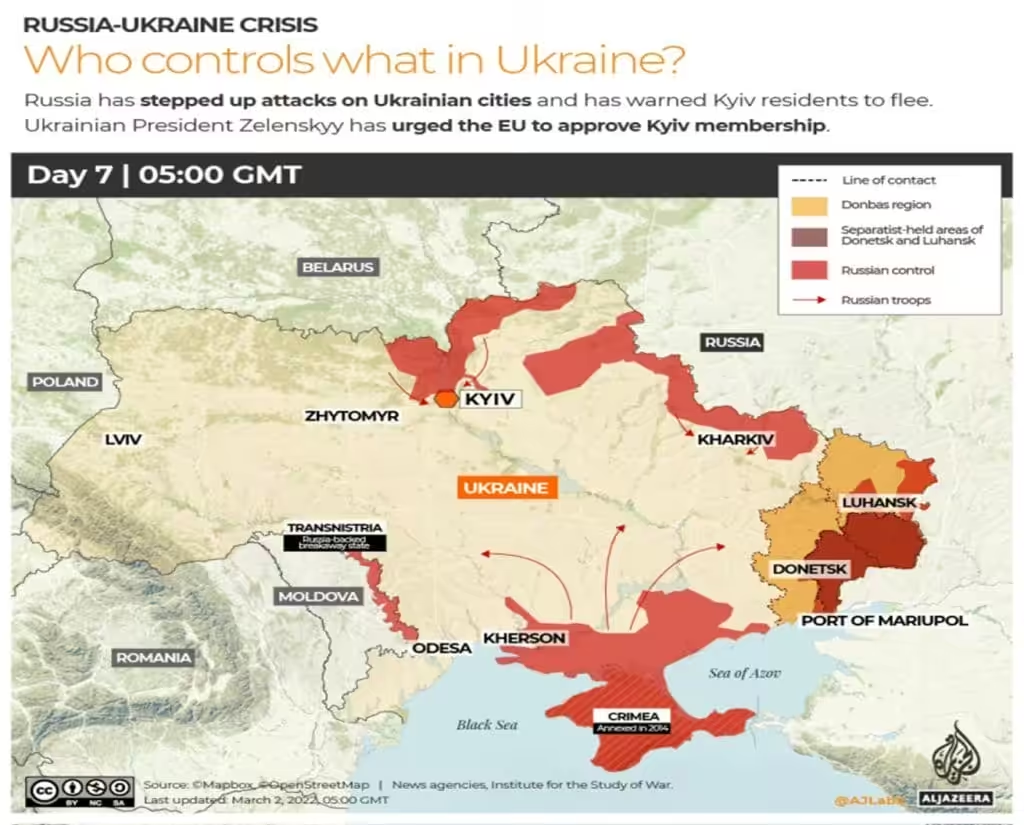
Location in news-Kyiv

Open article →Download PDF

image 20 1

Why in news:

Russia launched the largest aerial assault on Ukraine’s capital Kyiv since the war began. The attack involved 810 drones and decoys, 13 missiles, and other weaponry.

UPSC Relevance:

UPSC has asked questions on world location which are in news every year.

UPSC PYQ:

Consider the following pairs:

Towns sometimes mentioned in newsCountry
1.AleppoSyria
2.KirkukYemen
3.MosulPalestine
4.Mazar-i-sharifAfghanistan

Which of the pairs given above are correctly matched?

A) 1 and 2 only

B) 1 and 4 only

C) 2 and 3 only

D) 3 and 4 only

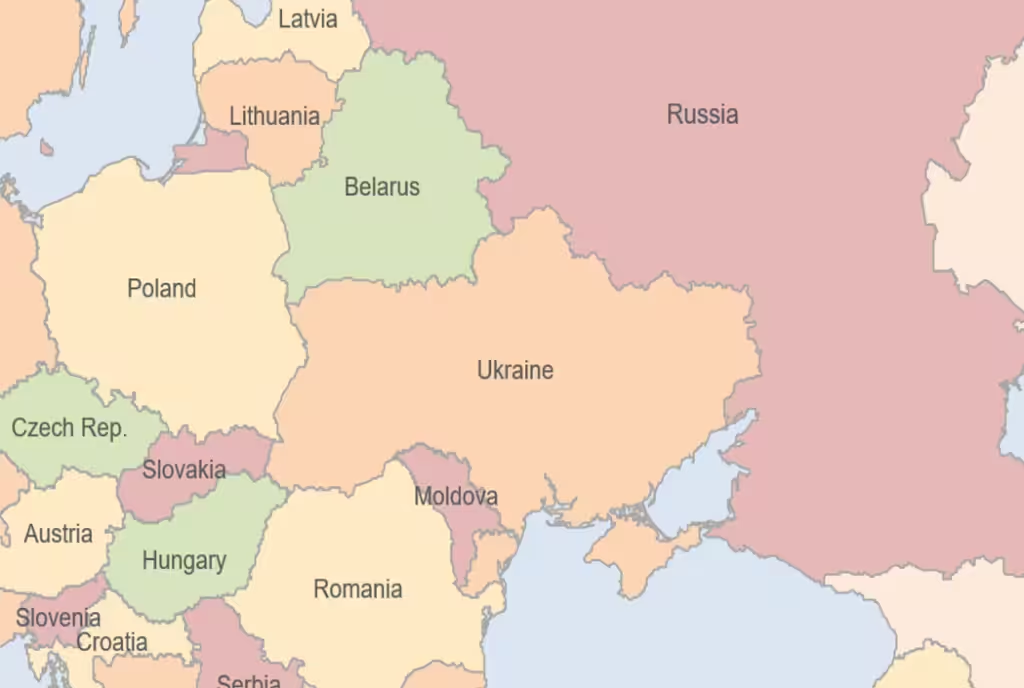
Kyiv Location:

image 20 2

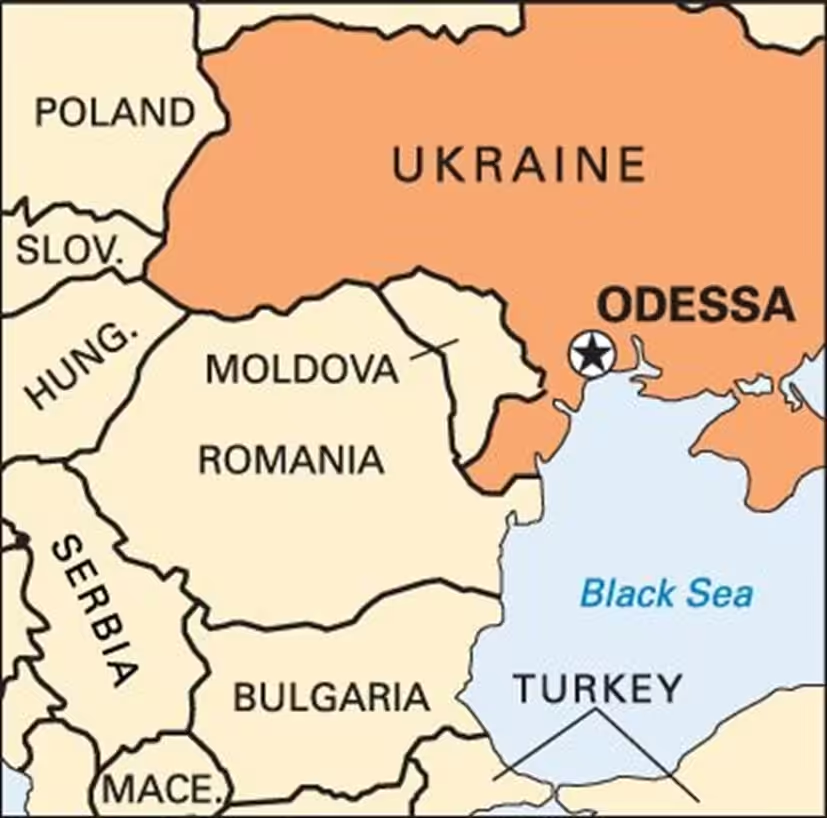
Ukraine:

image 20 3

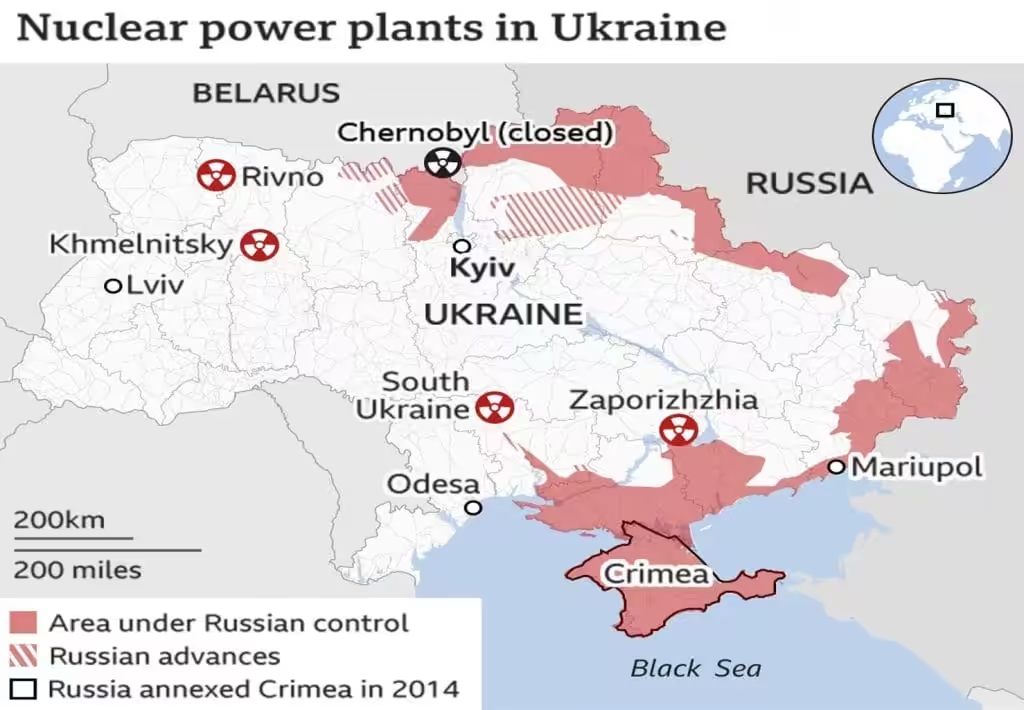
Nuclear Power plants in Ukraine:

image 20 4

Ukraine Surrounding by:

  • Belarus
  • Russia
  • Moldova
  • Romania
  • Hungry
  • Slovakia
  • Poland
image 20

image 21

Practice Question:

Match the Following

PlaceCountry (as given)
RostovUkraine
OdesaRussia
Al AhmadiKuwait

Which of the following pairs are correct?

a) Only one
b) Only two
c) All three
d) None of the above

Foreign Capital in India

Open article →Download PDF

image 21 1

WhatsApp Image 2025 09 08 at 09.59.15 4ce7df38

Why in news:

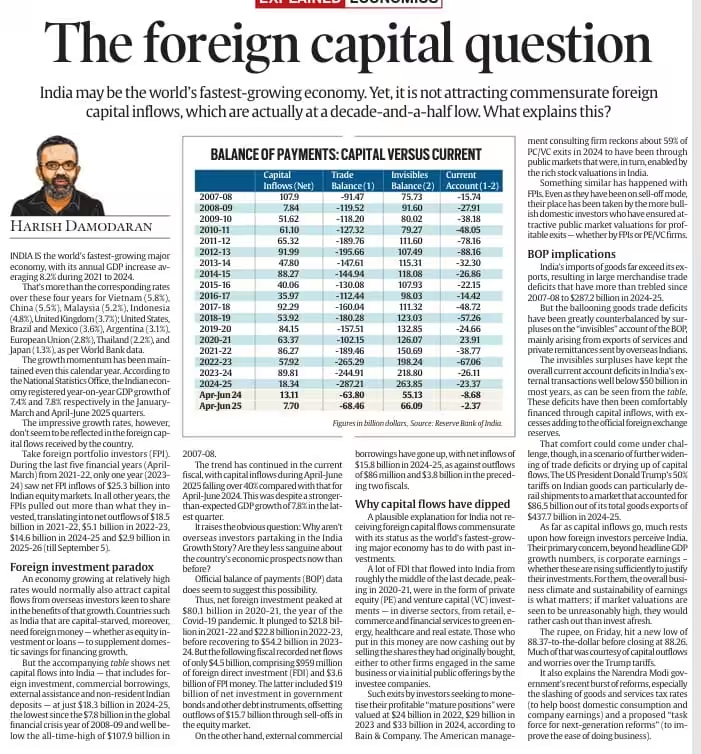
The article highlights the changing dynamics of Foreign Direct Investment (FDI) in India — while inflows are rising in numbers, outflows, disinvestments, and the nature of investments raise concerns about long-term growth, sustainability, and economic stability.

UPSC Relevance:

CSE in prelims as well as in mains examination has focused on FDI. A case in point is a following PYQ.

Mains PYQ 2013

Q1: Though India allowed foreign direct investment (FDI) in what is called multi brand retail through joint venture route in September 2012, the FDI ,even after a year, has not picket up. Discuss the reasons.(2013)

Mains PYQ 2014

Q1: Foreign direct investment in the defence sector is now set to be liberalized. What influence this is expected to have on Indian defence and economy in the short and long run?

Key Highlights:

Divergence between Inflows and Outflows:

  • FDI inflows touched $81 billion in FY 2024-25, a rise from the previous year.
  • However, outflows and repatriations surged, leading to a decline in net FDI inflows.

Sectoral Trends:

  • Manufacturing sector: Weak participation, falling from 25% to just 12% of total FDI.
  • E-commerce & IT hardware: Still attracting large FDI.

The Paradox: Why inflows dipped despite growth?

  • FPI (Foreign Portfolio Investment): Net equity inflows turned negative in 2022-23 and 2023-24. Inflows shifted to developed economies (US, EU) where bond yields rose and risks were lower.
  • FDI (Foreign Direct Investment): Net inflows fell from $44.4 billion (2022-23) to $33 billion (2023-24). Lack of sustained manufacturing investment weakens India’s industrial base.
  • Global factors: Tight monetary policy & higher interest rates in US/EU attract capital away from emerging markets.
  • Domestic factors: Policy and regulatory unpredictability. High valuations in Indian stock markets, limiting new FPI entry. FDI not aligned with India’s manufacturing push (Make in India, PLI schemes).

For more details:

Note: https://anantamias.com/current-affairs/foreign-direct-investment/