Why in news:
The blood moon atop Bhubaneswar during the lunar eclipse on Sunday. The total eclipse phase began at 11.01 p.m. and sky watchers across India and other nations, turned their gaze towards the moon.
UPSC Relevance:
This kind of phenomena is important for Prelims.
UPSC PYQ:
Q1. On 21st June, the Sun (2019)
(a) does not set below the horizon at the Arctic Circle
(b) does not set below the horizon at Antarctic Circle
(c) shines vertically overhead at noon on the Equator
(d) shines vertically overhead at the Tropic of Capricorn
About Blood Moon:
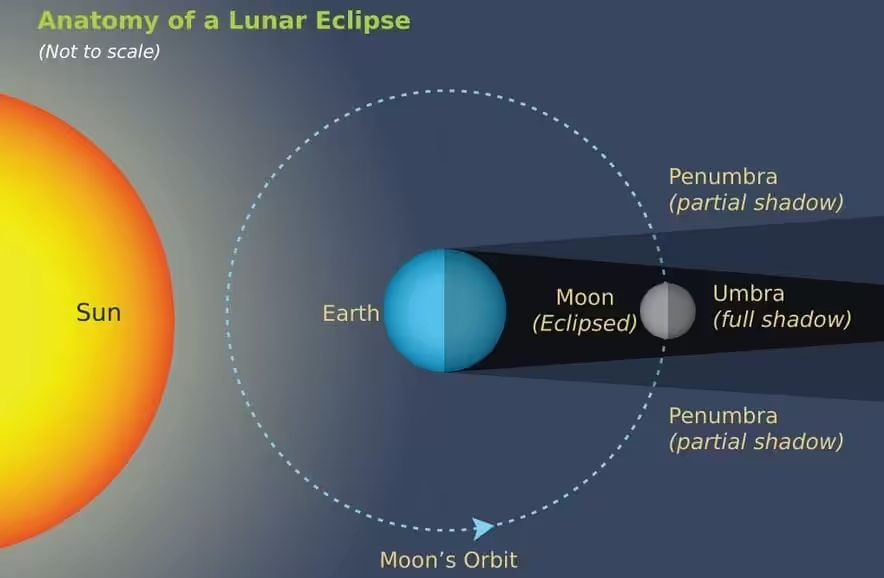
- A blood moon occurs when Earth comes directly between the Sun and the moon.
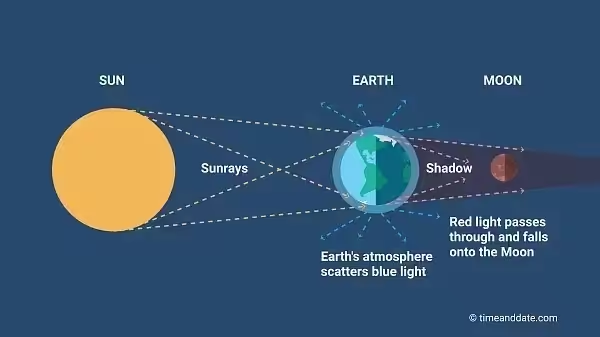
- The moon enters the Earth’s penumbral shadow, marking the beginning of the eclipse. And, as the moon moves further into the umbra, a dark shadow is cast across the lunar surface until totality, which brings a reddish-orange hue. The colour of the moon is largely dependent on the atmospheric conditions on Earth during the eclipse.
- The total lunar eclipse will be visible to the naked eye whenever it happens above the horizon.
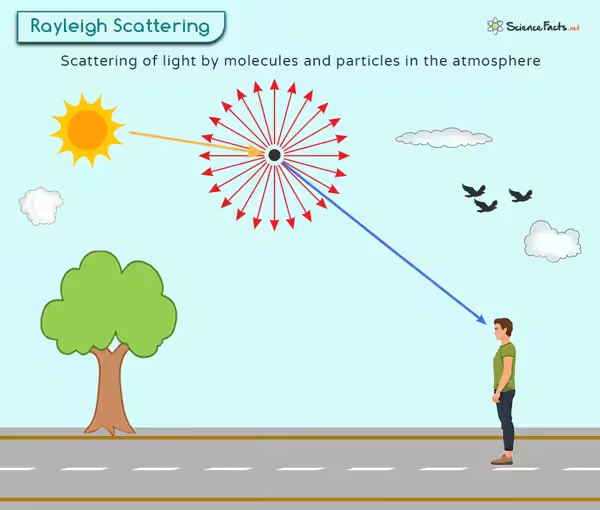
- Rayleigh scattering (the elastic scattering of electromagnetic radiation, such as light, by particles that are much smaller than the radiation’s wavelength)causes the moon to appear red instead of dark.
Tell Google you want more of this.
Add Anantam IAS as a preferred sourceOne tap, and this site shows up more often in your own Top Stories, AI Overviews and AI Mode. Remove it any time.