Why in News?
On 24 October 2026, India’s indigenous submarine Air Independent Propulsion energy module reached the inauguration of Setting to Work Phase-2 at Hazira, with energisation and naval testing still ahead.
- Naval Materials Research Laboratory, a DRDO laboratory, developed the AIP energy module for diesel-electric submarines; the milestone was announced by the Ministry of Defence.
- The next phase involves power production and rigorous testing under Indian Navy protocols before the module is handed over for submarine integration.
- Integration on a Kalvari-class submarine at Mazagon Dock Shipbuilders Limited is planned for early 2027; this is a future programme milestone.
- The announcement stresses hydrogen and fuel-cell safety; it does not establish completed installation, operational induction or a verified increase in endurance for an inducted submarine.
- For a conventional submarine, underwater endurance affects how long it can remain submerged before needing access to atmospheric air for conventional power generation.
- The policy issue is the passage from indigenous technology development to a dependable naval capability, including industrial production, platform integration and operational support.
UPSC Relevance
Prelims Relevance
- AIP: Air Independent Propulsion, associated here with extending the submerged endurance of diesel-electric submarines.
- NMRL: Naval Materials Research Laboratory, the DRDO laboratory developing the indigenous system.
- Fuel cell: an electrochemical device that converts the chemical energy of supplied fuel into electrical energy.
- Kalvari class: the submarine class identified for the planned integration of this energy module.
- Technology stages: module testing, platform integration and operational induction establish different levels of readiness.
Mains Relevance
GS Paper 3
- Indigenous defence technology and the industrial pathway from research to operational capability.
- Balancing naval endurance gains with safety, testing, maintainability and integration requirements.
Essay
- Technological self-reliance requires institutions that can test, maintain and improve what they produce.
Background and Context
What Air Independence Changes
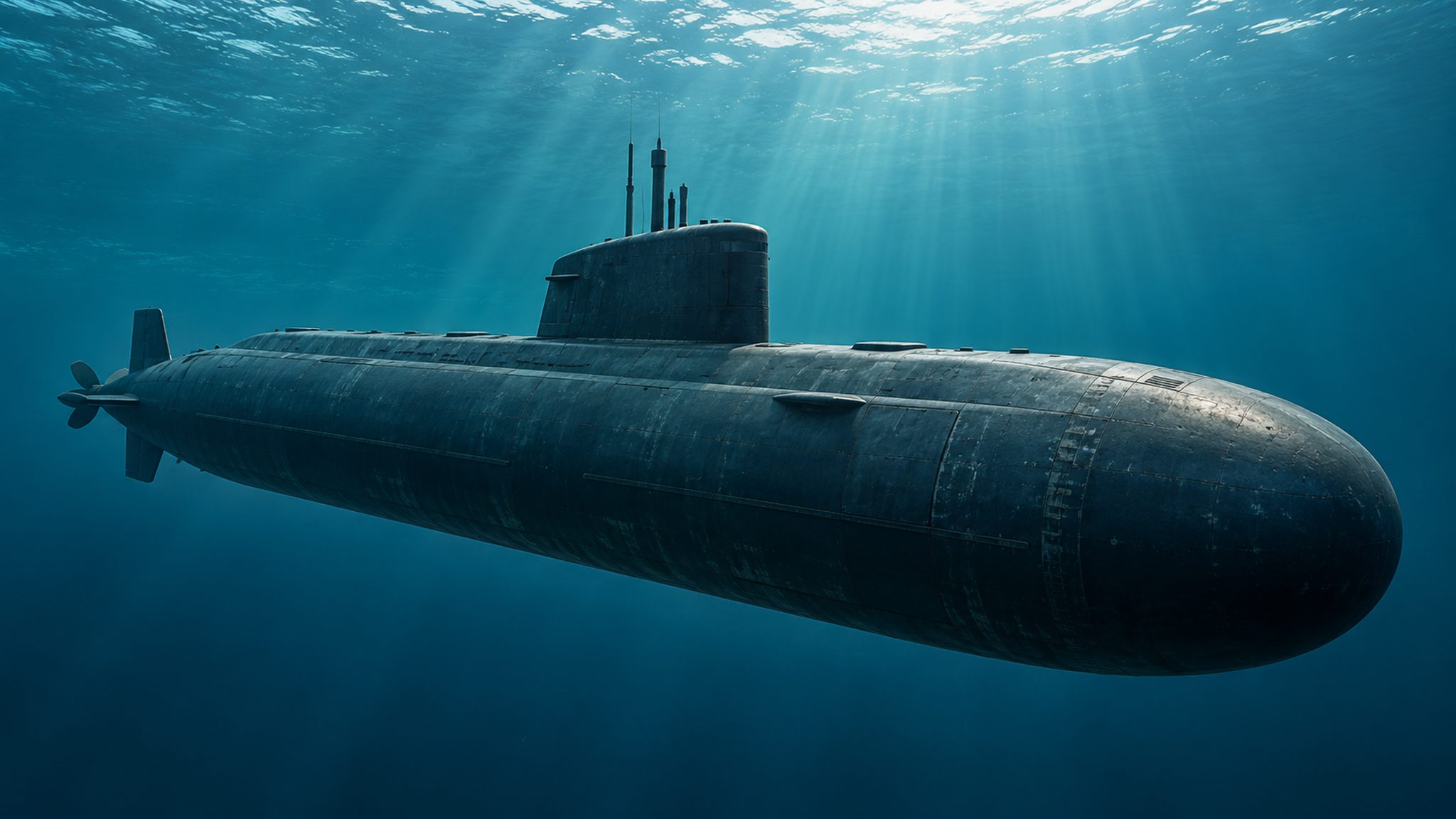
AIP addresses a conventional submarine’s dependence on atmospheric air while supplying electrical power below the surface.
- A diesel-electric submarine can operate submerged using stored electrical energy. Conventional diesel generation needs air, making the need to replenish available energy an important constraint on how the boat sustains underwater operations over time.
- A fuel cell converts chemical energy into electricity through electrochemical reactions. The US Department of Energy’s explanation identifies electricity, water and heat as the products when hydrogen is the fuel supplied to the cell.
- Air-independent does not mean that the system needs no chemical reactants. The relevant distinction is reduced dependence on atmospheric oxygen; the announcement does not describe every storage arrangement or internal component of this module.
- Fuel-cell AIP and nuclear propulsion are different technologies. A fuel-cell installation does not turn a conventional boat into a nuclear-powered submarine, and a common endurance objective does not make their energy systems interchangeable.
- The useful claim is longer submerged endurance. It should not be expanded into an unsupported promise about maximum speed, a fixed number of underwater days, complete invisibility or unlimited operation under every mission condition.
What the New Testing Stage Establishes
The development pathway has several evidence gates; success at one gate does not settle the questions posed by the next.
- Earlier land-based prototype tests demonstrated operation under user requirements, according to PIB. That earlier achievement provides development context, while the present announcement concerns a new energy-module activity and its remaining route towards submarine integration.
- The immediate next step is energising the module for power production and testing it under naval protocols. An inauguration marks the start of an activity; it cannot substitute for the results that testing must establish.
- Platform integration asks a wider engineering question than whether a module produces power. The installation must function with the submarine as a whole; component-level performance alone cannot establish the readiness of the integrated vessel.
- The planned handover to Mazagon Dock Shipbuilders Limited places shipbuilding integration after the announced module-testing stage. Keeping those responsibilities distinct helps explain why a successful research programme still needs coordinated delivery across different institutions.
- The early-2027 integration plan remains a timetable stated by the Ministry. It is not evidence that a submarine already carries the completed installation, or that the Navy has accepted the resulting capability for operational service.
Why Safety and Industrial Capability Matter
The strategic value depends on turning scientific knowledge into a safe system that can be supported throughout its service life.
- Hydrogen and fuel-cell safety is an explicit concern in the announcement. Safety should be treated as a continuing condition for progress, rather than a procedural formality that can be displaced by an ambitious induction timetable.
- The programme connects NMRL’s development work, industry participation at L&T and the planned shipyard integration. This division of work illustrates why defence self-reliance depends on coordination across laboratories, manufacturing facilities and the eventual user.
- An indigenous system can strengthen domestic technical knowledge, but the label alone does not prove that every component is locally sourced. Such a claim would require separate evidence about suppliers, manufacturing and critical dependencies.
- A useful assessment also asks about maintenance and support: trained personnel, reliable procedures and access to replacement components. These are evaluation questions for sustained capability, not additional programme achievements established by the inauguration release.
- India’s naval trials platforms and shallow-water anti-submarine craft illustrate different capability requirements. AIP’s specific contribution is to the conventional submarine’s power and endurance problem, rather than replacing those separate surface-fleet roles or development functions.
Way Forward
Make Readiness Claims Follow Test Evidence
- Link each readiness claim to the relevant completed stage: module performance, safe integration or operational acceptance, with future milestones described as plans.
- Keep safety requirements central to the testing schedule, with the laboratory, industry, shipyard and naval user coordinating the transition between stages.
- Assess lifecycle support alongside initial performance so that indigenous development translates into a capability that can be maintained and improved in service.
Conclusion
- AIP’s importance lies in reducing a diesel-electric submarine’s dependence on atmospheric oxygen and improving submerged endurance. The present milestone advances that pathway while leaving energisation, testing and integration to be completed.
- Defence self-reliance should be assessed through demonstrated performance, safe platform integration and sustained support. Announced schedules explain intended progress; they cannot stand in for evidence that an operational capability has already been delivered.
UPSC Practice Questions
Prelims MCQ 1
With reference to fuel-cell Air Independent Propulsion, consider the following statements:
- It can reduce a diesel-electric submarine’s dependence on atmospheric oxygen.
- A hydrogen fuel cell converts chemical energy into electrical energy.
- Installing fuel-cell AIP necessarily converts a submarine into a nuclear-powered vessel.
How many of the above statements are correct?
(a) Only one (b) Only two (c) All three (d) None
Answer: (b) Only two
Explanation:
The first two statements describe the stated endurance objective and the fuel-cell mechanism. Fuel-cell and nuclear propulsion are different energy technologies; AIP installation does not imply a nuclear reactor.
Prelims MCQ 2
A submarine energy module has begun a new testing activity, with platform integration planned later. Which conclusion is most justified?
(a) The submarine has already entered operational service with the module. (b) Integration testing is unnecessary once the module produces electricity. (c) The milestone advances development, while later readiness claims still require evidence. (d) The announced integration date guarantees a fixed underwater endurance.
Answer: (c) The milestone advances development, while later readiness claims still require evidence.
Explanation:
The Ministry’s sequence leaves energisation, naval-protocol testing and subsequent integration ahead. Starting a testing activity does not establish completed platform integration or operational induction.
UPSC Mains Questions
- Explain how Air Independent Propulsion can improve conventional submarine capability. Why must its contribution be assessed alongside testing, safety and integration requirements?
- Indigenous defence development requires a coordinated industrial ecosystem. Discuss with reference to the transition from an AIP energy module to a supported naval capability.
Sources: PIB, Ministry of Defence and PIB, earlier NMRL fuel-cell AIP tests.
Frequently Asked Questions
What does Air Independent Propulsion mean?
AIP enables a conventional submarine to reduce its dependence on atmospheric air while producing power underwater. Its relevance is improved submerged endurance, although actual performance depends on the system and operating conditions.
What is India’s latest AIP milestone?
On 24 October, Setting to Work Phase-2 activity for the indigenous AIP energy module was inaugurated at Hazira. Energisation and naval-protocol testing are the next steps before planned submarine integration.
Does fuel-cell AIP make a submarine nuclear-powered?
No. A fuel cell converts chemical energy into electricity, while nuclear propulsion uses a different energy source. Adding fuel-cell AIP to a conventional submarine does not mean installing a nuclear reactor.
Has the module already been integrated into a Kalvari-class submarine?
The Ministry’s announcement describes integration as planned for early 2027, after the stated testing and handover stages. It does not report completed integration or operational induction of the system on a submarine.
Tell Google you want more of this.
Add Anantam IAS as a preferred sourceOne tap, and this site shows up more often in your own Top Stories, AI Overviews and AI Mode. Remove it any time.