Why in News?
The Hindu’s November 29 coverage highlighted the European Parliament’s objection to including two Indian ship-recycling facilities in the European List.
- The November 25 resolution challenges a draft Commission implementing decision concerning two beaching facilities at Alang, including their environmental infrastructure and verification arrangements.
- Parliament called on the European Commission to withdraw the draft and submit a replacement excluding the two facilities. The resolution records Parliament’s position in the approval process.
- The dispute concerns facility-level compliance, including hazardous-material handling and downstream waste treatment. Its significance extends to the evidence required for access to a regulated recycling market.
- Ship recycling recovers useful metals and equipment while creating responsibilities for handling hazardous substances.
- A yard’s commercial capacity and its documented environmental compliance must be assessed together.
UPSC Relevance
Prelims Relevance
- European List of ship recycling facilities
- European Parliament and Commission roles
- Hong Kong Convention on ship recycling
- Inventory of Hazardous Materials
- Independent verification and downstream waste treatment
Mains Relevance
GS Paper 3
- Industrial competitiveness linked to environmental safeguards
- Worker protection and hazardous-waste management in recycling
GS Paper 2
- International conventions and regional regulatory requirements
Background and Context
Facility Approval and the European List
The European List connects access to particular ship-recycling work with a facility’s demonstrated compliance with the EU framework.
- Ships covered by the EU Ship Recycling Regulation must use listed facilities for recycling. Inclusion gives a yard access to that regulated segment, making the assessment commercially important for operators seeking those vessels.
- The current dispute concerns two proposed listings. A facility’s application must be assessed against the applicable criteria, including the infrastructure, operating practices and supporting evidence relevant to its own recycling operations.
- The adopted resolution states that the proposed additions would exceed the Commission’s implementing powers because Parliament considers the required safeguards and verification inadequately established. These conclusions should be attributed to Parliament.
- The resolution asks the Commission to withdraw and replace its draft. Tracking subsequent Commission action remains necessary before describing the resulting implementing decision or the final status of the proposed additions.
- The procedure record marks Parliament’s resolution procedure as completed. That label identifies the completion of Parliament’s recorded procedure; it does not itself describe every later administrative step concerning the list.
Safeguards Across the Recycling Chain
Environmental performance depends on how a vessel is dismantled and where its hazardous materials go after leaving the yard.
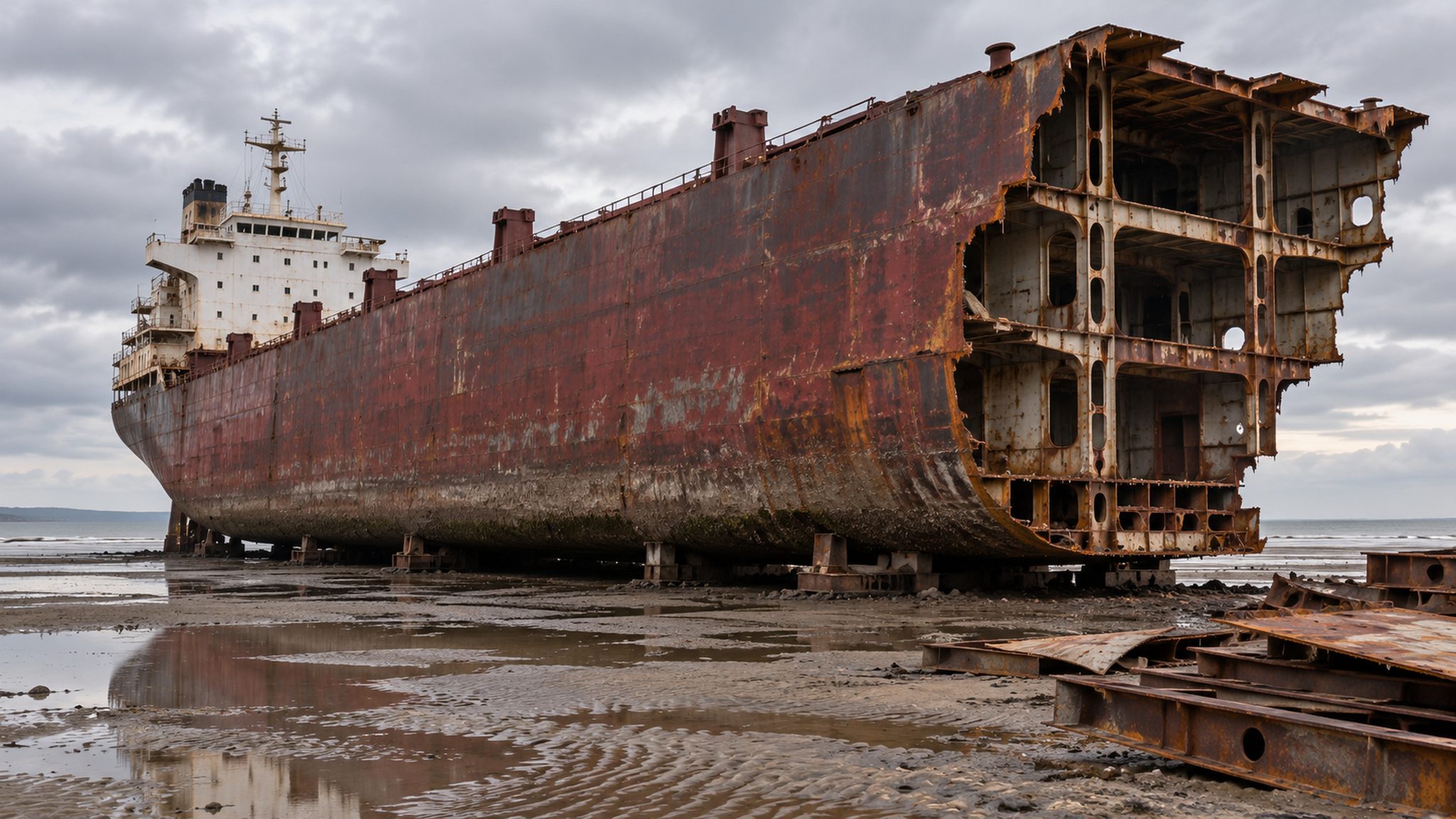
- End-of-life ships can contain asbestos, waste oils and hazardous coatings. Recoverable steel gives the vessel economic value, while these materials require controlled identification, removal and treatment to protect workers and surrounding ecosystems.
- An impermeable working surface and effective drainage help prevent contaminated liquids or residues from reaching soil and coastal water. The resolution examines whether hazardous-material handling satisfies these safeguards throughout relevant dismantling operations.
- Containment and monitoring serve complementary purposes. Physical arrangements reduce releases, while suitable monitoring can identify contamination and demonstrate whether controls perform as intended during the actual operation of a recycling facility.
- The Parliament also scrutinises downstream waste management. Sending hazardous material away from a yard leaves a further question about treatment, wastewater discharge and disposal standards at the receiving facilities.
- Independent site inspection gives regulators evidence beyond an operator’s own account. Parliament questioned reliance on claims that had not been independently checked, showing why proposed improvements require documented verification before supporting approval.
Global Convention and Regional Approval
The Hong Kong Convention supplies an international framework, while EU listing follows its own facility-assessment requirements.
- The Hong Kong Convention addresses safe and environmentally sound recycling through requirements for ships, recycling facilities and enforcement. IMO describes certification and reporting as parts of the framework for reducing risks to health and environment.
- A ship-specific Inventory of Hazardous Materials identifies materials requiring attention. Keeping it verified and updated helps connect information accumulated during the ship’s life with preparations for safe recycling at the end.
- The convention also provides for surveys and facility authorisation. These arrangements connect a ship’s preparation with the capability of the receiving yard, making planning and oversight relevant before dismantling begins.
- The EU listing assessment applies the requirements of the regional regulation. A claim of compliance with an international convention cannot by itself establish that every separate condition for European List inclusion has been met.
- For Indian yards, verifiable improvements can link environmental performance with market access. Investment in working surfaces, waste treatment and credible inspection records supports the ability to demonstrate compliance when a regulator examines a particular facility.
Way Forward
Demonstrate Compliance Through Evidence
- Document hazardous-material handling from removal to final treatment, with traceable records for receiving facilities.
- Assess infrastructure and monitoring through independent inspection of the actual operating conditions.
- Track the Commission’s response to the resolution before treating the proposed listing process as concluded.
Conclusion
- The Alang dispute shows how market access can depend on documented safeguards across an industrial process and its waste chain.
- Regulatory credibility requires clear distinctions between an operator’s claim, independent verification, a parliamentary objection and the resulting administrative decision.
UPSC Practice Questions
Prelims MCQ 1
With reference to ship recycling, consider the following statements:
- The European List concerns approved ship-recycling facilities under the EU framework.
- Downstream treatment of hazardous waste can form part of a facility-compliance assessment.
- An international-convention compliance claim automatically establishes every requirement for European List inclusion.
How many of the above statements are correct?
(a) Only one (b) Only two (c) All three (d) None
Answer: (b) Only two
Explanation:
The first two statements are correct. European List inclusion requires compliance with the applicable EU conditions and cannot be inferred automatically from a convention-compliance claim.
Prelims MCQ 2
What did the European Parliament request in its November 25 resolution?
(a) Withdrawal of the draft and submission of a replacement excluding the two facilities (b) Immediate automatic approval of both facilities (c) Abolition of inventories of hazardous materials (d) Transfer of all ship surveys to shipowners alone
Answer: (a) Withdrawal of the draft and submission of a replacement excluding the two facilities
Explanation:
The resolution calls on the Commission to withdraw its draft implementing decision and submit a new draft without the two Indian beaching facilities.
UPSC Mains Questions
- Explain how facility verification and downstream waste management influence market access in the ship-recycling industry.
- Discuss the relationship between international environmental conventions and regional approval systems, using ship recycling as an example.
Sources: European Parliament and International Maritime Organization.
Frequently Asked Questions
What is the European List of ship-recycling facilities?
It identifies facilities approved under the EU Ship Recycling Regulation. Ships covered by the regulation must use listed facilities, making inclusion relevant to a yard’s access to that regulated market.
What did Parliament decide about the two Alang facilities?
Its November 25 resolution objected to the proposed additions and asked the Commission to withdraw and replace the draft. The resolution sets out Parliament’s concerns and requested action.
Why does downstream waste management matter?
Hazardous material removed from a ship may be transported to another facility. Assessing the receiving facility’s treatment and disposal arrangements helps establish whether environmental safeguards extend through the waste chain.
Does the Hong Kong Convention automatically secure EU listing?
EU listing requires assessment under the regional regulation. International convention obligations provide an important framework, while separate evidence is needed to establish compliance with the conditions governing European List inclusion.
Tell Google you want more of this.
Add Anantam IAS as a preferred sourceOne tap, and this site shows up more often in your own Top Stories, AI Overviews and AI Mode. Remove it any time.