Why in News?
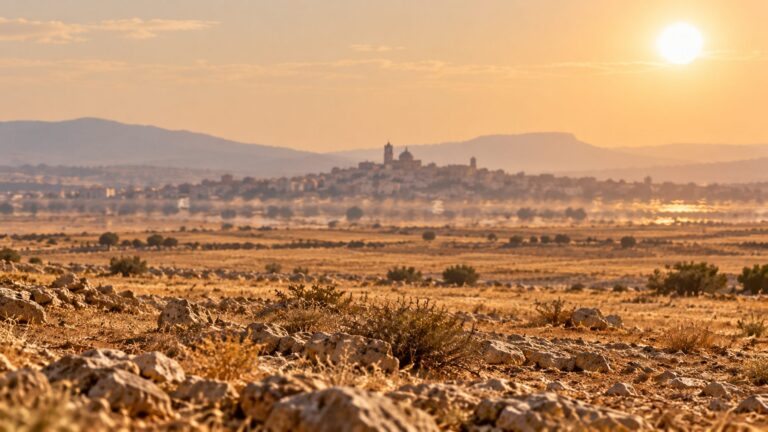
Indian Express reported on 30 October 2026 that a glacial lake outburst flood at Shintaphu Lake in Bhutan had prompted alerts for possible downstream effects along the Sankosh river in India.
- The reported event involved Shintaphu Lake in Bhutan’s Gasa district; alerts concerned possible downstream impacts rather than confirmed flooding throughout the alerted areas.
- A Kokrajhar district official told Indian Express that water was receding and inundation was not expected there at that point.
- The report did not establish the lake’s specific breach trigger. General explanations of moraine failure should not be treated as findings about this event.
- The development highlights cross-border warning needs: a disturbance upstream can require decisions by authorities and communities farther down the river.
- A flood alert communicates a potential threat; it does not establish the extent of actual inundation or damage.
- Lake monitoring becomes useful to exposed communities when observations lead to timely, understandable warnings and practical action.
UPSC Relevance
Prelims Relevance
- GLOF: a sudden release of water from a naturally dammed glacial lake.
- Moraine: debris deposited by a glacier, which can sometimes form a barrier retaining lake water.
- Piping: internal erosion caused when seepage removes fine material from a natural barrier.
- Flood routing: assessment of how a flood moves through downstream channels and potentially inundated areas.
- Early warning: a connected process involving observation, assessment, communication and action.
Mains Relevance
GS Paper 3
- Link hazard monitoring with preparedness, evacuation and resilient local communications.
- Distinguish the background effects of warming from evidence needed to attribute an individual disaster.
GS Paper 2
- Examine cross-border information sharing and coordination between technical agencies, district authorities and communities.
Essay
- Scientific observation protects people when institutions can convert knowledge into timely action.
Background and Context
How a Lake Stores Water
A glacial lake becomes a downstream hazard when the conditions holding its water change enough to permit a sudden release.
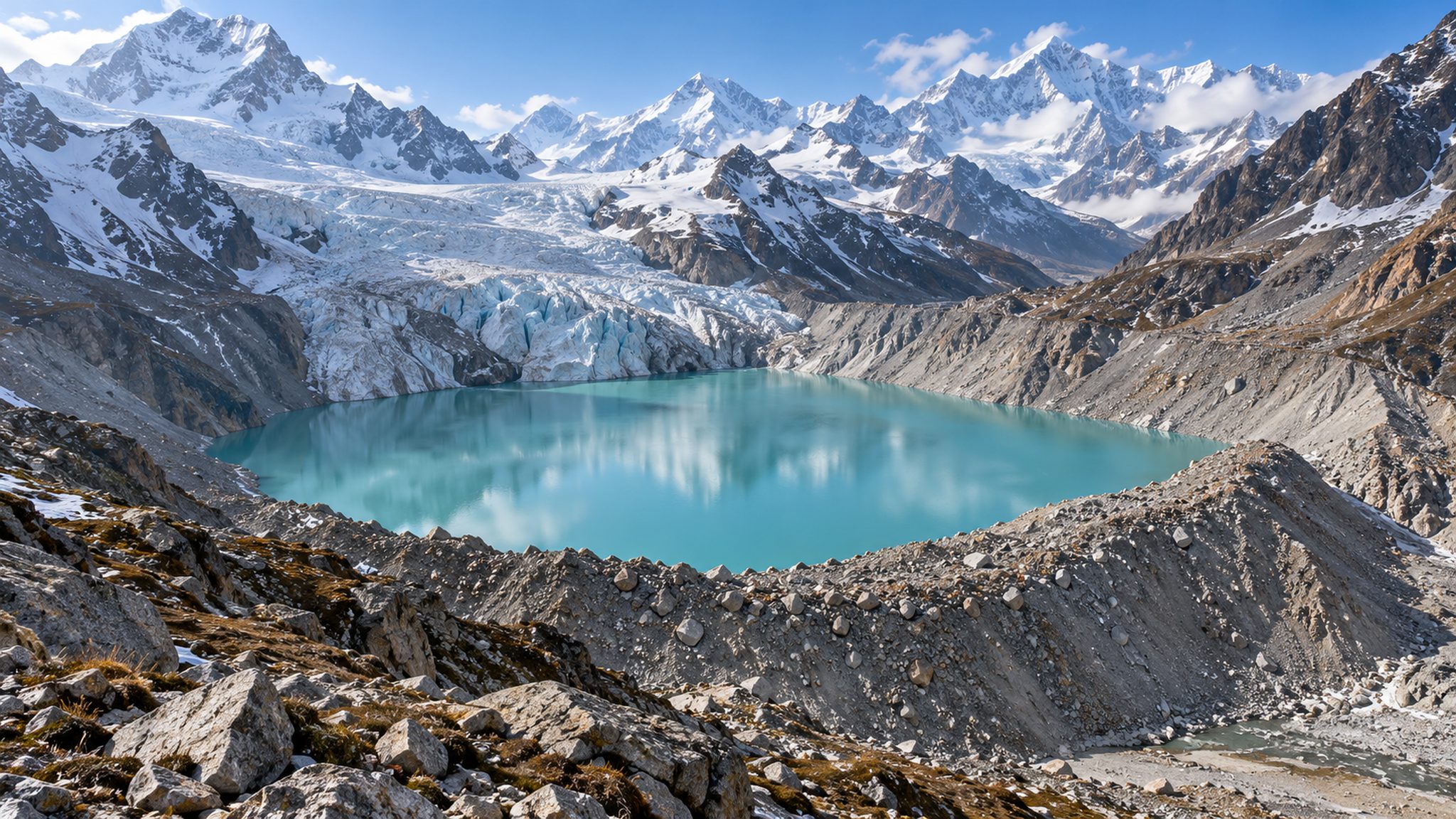
- A glacial lake can occur in front of, beside, on or beneath a glacier. Its setting matters because the barrier and the route available for drainage differ between these locations.
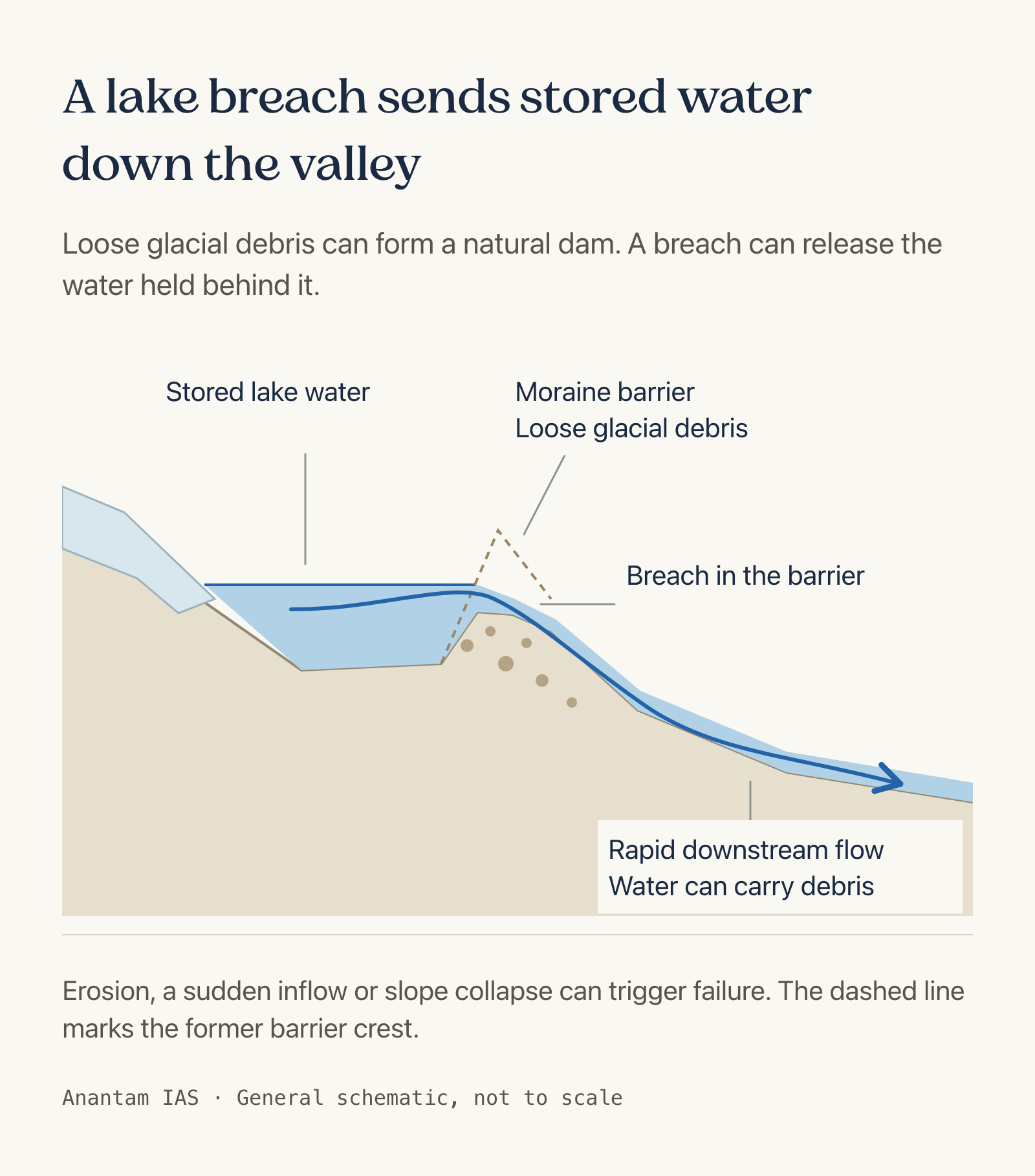
- A moraine contains material left by moving ice, including finer sediment and larger rock fragments. When this debris forms a barrier across a depression, water can accumulate behind it as a lake.
- Glacier retreat can expose depressions where water collects, while warming changes the wider mountain environment. These background changes explain why monitoring is necessary, but cannot establish what triggered a particular lake outburst.
- Moraine-dammed and ice-dammed lakes have different retaining structures. A barrier made of loose debris behaves differently from glacier ice, so assessment must identify the actual dam rather than infer it from appearance.
- A larger lake is not automatically the most dangerous one. Dam condition, surrounding slopes and possible drainage routes matter alongside stored water; lake-area change alone cannot determine the likelihood or consequences of failure.
How a Breach Becomes a Flood
The central process is rapid drainage through or over a weakened natural barrier, followed by movement of water and debris into downstream channels.
- Internal erosion can weaken a moraine as water moving through it carries away fine particles. This process, called piping, can enlarge flow paths within the barrier and reduce its ability to retain water.
- An ice or rock avalanche entering a lake can disturb its water, while heavy rainfall or drainage from another lake can increase inflow. Such disturbances are possible triggers, requiring evidence at each site.
- Buried ice can form part of a moraine barrier. Melting can alter its structure and stability; this is one possible failure pathway, rather than a universal explanation for every moraine-dammed lake breach.
- After a breach, rapid release sends water into the valley below. The flow can also move sediment and debris, so downstream assessment must consider the moving material as well as the water itself.
- Release speed changes the hazard: C-DAC notes that a small lake draining suddenly may produce a more dangerous peak than a larger lake draining gradually. Stored volume alone cannot describe the flood threat.
From Detection to Evacuation
An early-warning system must connect what happens at the lake with decisions that people downstream can understand and act upon.
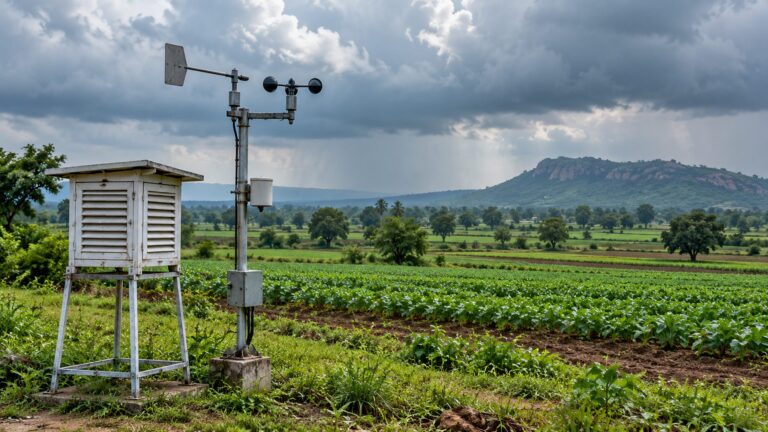
- Water-level sensors provide observations at a monitored lake. Their readings need interpretation alongside knowledge of the barrier and surrounding terrain; an instrument cannot, by itself, determine every possible breach mechanism or downstream outcome.
- C-DAC describes a Sikkim installation that transmits lake-sensor data through INSAT to a control centre in Gangtok. This illustrates a monitoring link; it does not establish that the same installation covers Bhutan or the Sankosh.
- Flood models examine possible outburst scenarios, inundation and arrival times. Their outputs depend on the scenario and underlying information, so operational decisions should recognize uncertainty rather than treat one simulated boundary as certain.
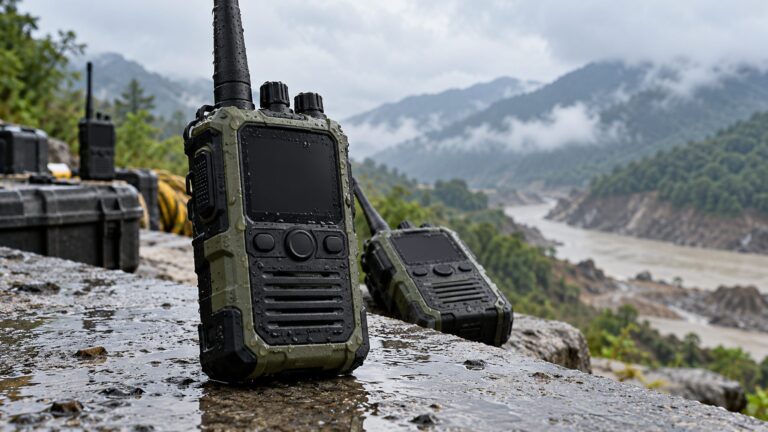
- Warning communication needs designated authorities, understandable messages and a route to exposed settlements. Resilient telecommunications matter because a technically sound forecast cannot support evacuation if its message fails to reach people.
- For a cross-border river, upstream information must reach downstream authorities with enough context to assess local exposure. Prepared routes, local drills and assistance for people needing support determine whether that information becomes protective action.
Way Forward
Test the Complete Warning Chain
- Link lake observations, technical assessment and district decisions through named contacts, clear escalation thresholds and routinely tested communication arrangements.
- Use scenario exercises to check whether an upstream alert reaches exposed communities and whether evacuation routes remain usable under disrupted transport or communications.
- Connect flood-path assessment with Himalayan carrying-capacity planning so new infrastructure does not increase exposure in vulnerable valley locations.
- Keep public updates specific about location, expected action and uncertainty, and revise them as observations change instead of leaving an initial alert unqualified.
Conclusion
- A glacial lake outburst links stored water, barrier failure and downstream exposure. The reported Bhutan event illustrates the need to monitor that chain without assuming that its precise trigger or every downstream impact is already known.
- Effective early warning requires more than sensors: reliable assessment, communication and prepared local action must work together. For shared river basins, the practical test is whether upstream information reaches the people who may need to move.
UPSC Practice Questions
Prelims MCQ 1
With reference to glacial lake outburst floods, consider the following statements:
- A moraine barrier can contain loose material deposited by a glacier.
- Piping involves the removal of fine material by water moving through a barrier.
- Lake surface area alone is sufficient to determine the downstream flood hazard.
How many of the above statements are correct?
(a) Only one (b) Only two (c) All three (d) None
Answer: (b) Only two
Explanation:
Statements 1 and 2 are correct. Barrier condition, release speed, surrounding terrain and downstream exposure also influence hazard; lake area alone is insufficient.
Prelims MCQ 2
Which approach best completes the chain between monitoring a glacial lake and protecting downstream communities?
(a) Publishing sensor readings without an identified warning authority (b) Treating every simulated inundation boundary as certain (c) Linking observations to assessed warnings, reliable communication and practiced local action (d) Assuming that a larger lake always produces the most dangerous flood
Answer: (c) Linking observations to assessed warnings, reliable communication and practiced local action
Explanation:
Monitoring must support assessment, warning delivery and action. Instruments and models provide inputs, while communication and preparedness determine whether communities can respond in time.
UPSC Mains Questions
- Explain how failure of a naturally dammed glacial lake can create downstream flood risk. Why is lake-area monitoring alone insufficient for assessing that risk?
- Discuss the institutional and communication requirements for a glacial-lake early-warning system in a river basin shared across national borders.
Sources: Indian Express Explained and C-DAC, Glacier Lake Management and GLOF Early Warning System.
Frequently Asked Questions
What is a glacial lake outburst flood?
A GLOF is a sudden release of water from a naturally dammed glacial lake. Failure or rapid drainage can send water and debris downstream, with impacts shaped by the barrier, terrain and exposed settlements.
Does climate change establish the cause of every GLOF?
Warming and glacier retreat alter the conditions in which lakes and mountain hazards develop. The cause of an individual outburst still needs site-specific evidence about the barrier, inflows, slopes and sequence of failure.
Why can a small glacial lake still be dangerous?
The rate of release matters alongside the volume stored. A small lake draining suddenly can produce a severe flood peak, while downstream terrain and exposure affect the resulting danger to people and infrastructure.
What does an early-warning system need beyond lake sensors?
It needs interpretation of observations, assessment of possible downstream impacts, responsible authorities, reliable communication and prepared local action. Warnings must reach exposed people in a form they can understand and act on.
What was established about the reported Bhutan event?
Indian Express reported an outburst at Shintaphu Lake and downstream alerts along the Sankosh. The reporting did not establish its precise physical trigger, and alerts should not be read as confirmation of inundation everywhere downstream.
Tell Google you want more of this.
Add Anantam IAS as a preferred sourceOne tap, and this site shows up more often in your own Top Stories, AI Overviews and AI Mode. Remove it any time.