Why in News?
The Indian Institute of Tropical Meteorology hosted the first Climate Science into Services for India Forum stakeholder consultation in Pune on 17 October 2026, according to the Ministry of Earth Sciences.
- The CSSIF consultation brought research institutions, operational agencies and sector users together to identify practical climate information needs.
- Technical discussions examined weather and climate products, models, datasets and the need for a national Climate Services Information System.
- The PIB release describes the beginning of sustained engagement; it does not announce an operational national system or binding sectoral decisions.
- A climate dataset becomes useful only when a decision-maker can interpret it at the relevant location, time horizon and level of confidence.
- The challenge is institutional as well as scientific: service providers and users must agree what information can change a real decision.
UPSC Relevance
Prelims Relevance
- CSSIF: Climate Science into Services for India Forum.
- IITM, Pune: institution under the Ministry of Earth Sciences.
- Climate prediction versus scenario-dependent climate projection.
- CSIS: climate data, monitoring, prediction, projection and user-targeted information.
Mains Relevance
GS Paper 3
- Applying climate science to adaptation and sector planning.
- Communicating uncertainty without preventing timely decisions.
GS Paper 2
- Co-production of public services through sustained institutional coordination.
Essay
- Useful knowledge depends on the questions society asks of science.
Background and Context
What Makes Climate Information a Service?
A climate service connects scientific information with a specific decision, rather than ending when a dataset becomes available online.
- User needs define the starting question: what decision is pending, who will make it, and when can action still change the outcome? These questions determine the information a provider should prepare.
- Co-production means researchers and users develop the service together. Users explain operating constraints and decision thresholds; scientists clarify available evidence and limits, reducing the mismatch between technically sound products and practical requirements.
- Sector translation adds context to climate variables. For example, a water manager needs rainfall information interpreted alongside storage conditions and demand; rainfall alone cannot specify a responsible allocation decision for the season.
- Access and interpretation are part of service quality. A scientifically valid product may remain unused if its language, delivery channel or timing does not fit the institution expected to act on it.
- The WMO climate-services framework places user engagement alongside observations, research and information systems. This makes feedback an ongoing responsibility, rather than a single consultation held after experts finish designing a product.
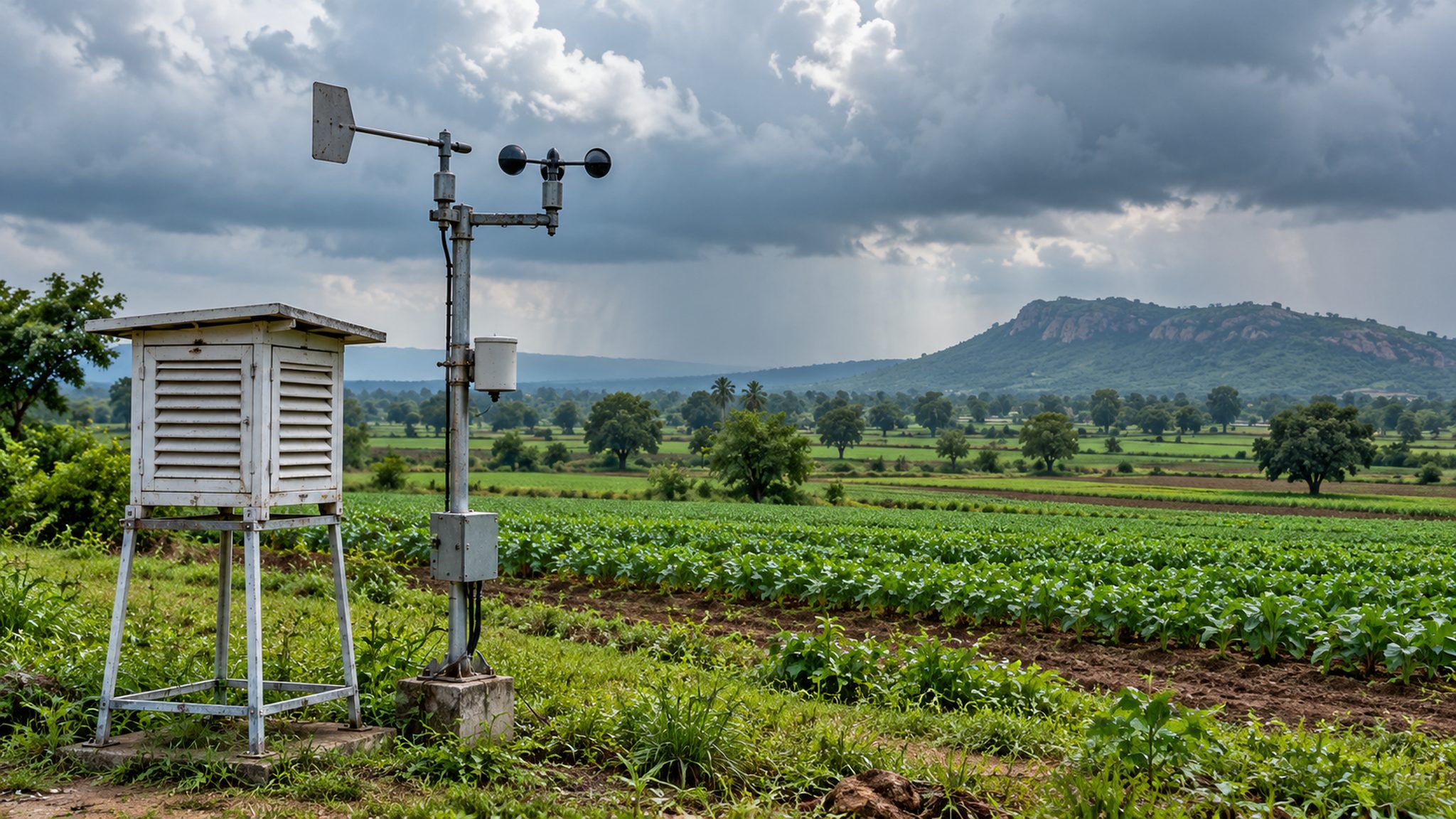
Match the Product to the Decision Horizon
Weather forecasts, seasonal outlooks and climate projections answer different questions; choosing the wrong timescale can make precise-looking information misleading.
- A weather forecast describes expected atmospheric conditions over a relatively short horizon. It can support near-term scheduling, but it cannot directly establish the climatic conditions that infrastructure will face throughout its lifetime.
- A seasonal outlook assesses likely climate conditions over an upcoming season, often probabilistically. It can inform preparedness or resource planning without specifying the weather on every individual day within that season.
- A long-term projection explores how climate may evolve under specified assumptions, including future emissions. It is conditional evidence for planning, rather than a promise that one exact future will inevitably occur.
- Decision lifetime helps select the product: a short operational choice and a long-lived investment require different information. Combining horizons is useful when planners clearly explain what each product can and cannot support.
- Spatial scale matters alongside time. Regional information may guide a broad planning choice, while local design requires further analysis; a finer-looking map does not automatically provide reliable evidence at every individual site.
Use Uncertainty to Improve Decisions
The service should explain the strength and limits of evidence so users can compare options without treating a single estimate as certainty.
- Uncertainty can arise from natural variability, model limitations and different future assumptions. Communicating these distinctions helps users understand why an estimate may change and which decisions remain sensible across several plausible outcomes.
- Probability expresses a range of possible outcomes, not a guarantee. Users need help interpreting that range in relation to consequences, because the same forecast can justify different actions in different operating settings.
- Validation asks whether a prediction method performs usefully against observations. A service should disclose relevant performance limits, rather than assuming that greater computational complexity automatically produces dependable guidance for a particular sector.
- Feedback should ask whether information arrived before the decision, was understood and influenced action. These practical checks complement scientific evaluation and reveal whether the service needs a different format, timing or variable.
- CSSIF’s present status is consultative: stakeholders identified needs and discussed translation into services. The announcement supports an institutional direction, but does not establish that proposed services are already operating or delivering measured benefits.
Way Forward
Build Around Testable User Decisions
- Define a decision use case for each pilot: responsible institution, action window, required variable and consequences of an incorrect interpretation.
- Publish performance and uncertainty guidance with each product, explaining appropriate uses and decisions the evidence cannot support.
- Maintain a feedback cycle with sector users and document changes made after practical use; evaluate whether the service improves decisions.
Conclusion
- Climate services bridge scientific evidence and sector choices through suitable timescales, interpretation and sustained user participation. The value lies in better decisions, not simply in producing more datasets or more detailed maps.
- The CSSIF consultation provides a starting point for this relationship. In an answer, distinguish consultation from operational delivery and explain how transparent uncertainty can support responsible planning rather than justify either certainty or inaction.
UPSC Practice Questions
Prelims MCQ 1
With reference to the first CSSIF stakeholder consultation, consider the following statements:
- It was hosted by IITM, Pune, under the Ministry of Earth Sciences.
- It discussed the need for a Climate Services Information System for the nation.
- Its announcement established that a national CSIS had become operational.
How many of the above statements are correct?
(a) Only one (b) Only two (c) All three (d) None
Answer: (b) Only two
Explanation:
The PIB release confirms the host and discussion of a national CSIS. It describes consultation and sustained engagement, not the launch of an operational national system.
Prelims MCQ 2
Which statement best describes a long-term climate projection?
(a) A guaranteed forecast of daily weather for every future year (b) A conditional assessment of future climate under specified assumptions (c) An observation of atmospheric conditions already measured (d) A seasonal forecast that eliminates natural variability
Answer: (b) A conditional assessment of future climate under specified assumptions
Explanation:
Climate projections depend on specified assumptions, including emissions pathways. They support planning across plausible futures and do not promise exact daily weather.
UPSC Mains Questions
- Explain how co-production with sector users can improve the usefulness of climate services in India.
- Distinguish weather forecasts, seasonal outlooks and long-term climate projections. How should uncertainty affect their use in public investment decisions?
Sources: PIB, Ministry of Earth Sciences and World Meteorological Organization.
Frequently Asked Questions
What is CSSIF?
CSSIF stands for Climate Science into Services for India Forum. Its first stakeholder consultation, hosted by IITM in Pune, examined how climate research can support practical information needs across different sectors.
Did the consultation launch a national CSIS?
The PIB announcement discusses the need for a national Climate Services Information System and the beginning of sustained engagement. It does not state that an operational national CSIS was launched.
Why do climate services need users to participate?
Users identify the decision, timing and operating constraints. Scientists explain suitable information and its limits. Working together helps ensure that an accurate dataset becomes understandable and useful in a real decision.
Is a climate projection the same as a weather forecast?
A weather forecast concerns expected atmospheric conditions over a shorter horizon. A long-term climate projection assesses possible future climate under specified assumptions, making it conditional planning evidence rather than an exact daily forecast.
Tell Google you want more of this.
Add Anantam IAS as a preferred sourceOne tap, and this site shows up more often in your own Top Stories, AI Overviews and AI Mode. Remove it any time.