Context:
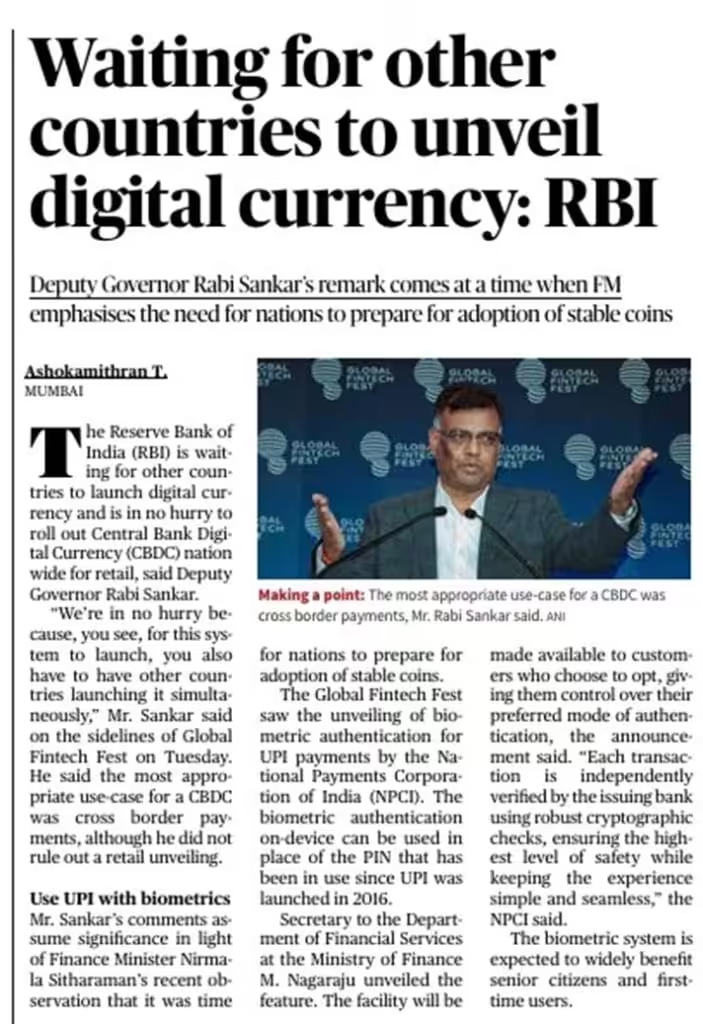
The Reserve Bank of India (RBI) has stated that it is in no hurry to launch the Central Bank Digital Currency (CBDC) for retail use and is waiting for other countries to unveil their own digital currencies.
UPSC Relevance:
Banking sector
UPSC PYQ
Q. With reference to Central Bank digital currencies, consider the following statements : (2023)
- It is possible to make payments in a digital currency without using US dollar or SWIFT system.
- A digital currency can be distributed with condition programmed into it such as a time-frame for spending it.
Which of the statements given above is/are correct?
(a) 1 only
(b) 2 only
(c) Both 1 and 2
(d) Neither 1 nor 2
What is Digital Rupee?
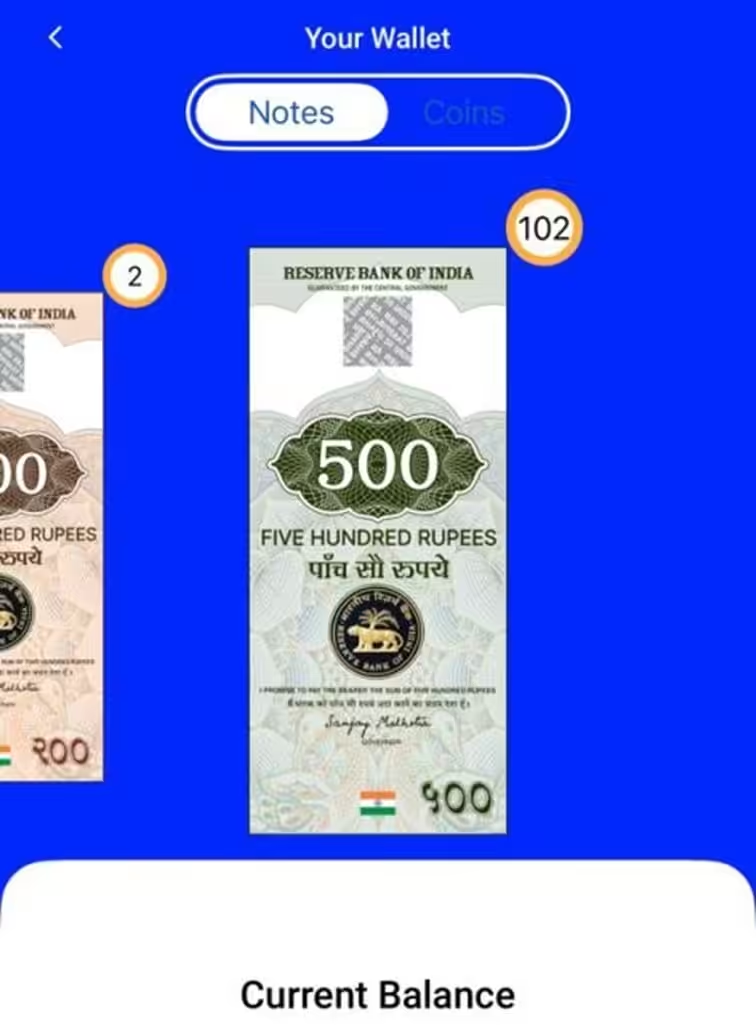
- Digital Rupee or e₹, is India’s Central Bank Digital Currency (CBDC). It is the digital form of India’s physical currency, the Rupee (₹).
- e₹ is issued by the Reserve Bank of India (RBI) in digital form and offers features similar to physical cash like convenience of use, guarantee of RBI, finality of settlement, etc. e₹ is stored in the user’s digital wallet and can be used to receive / send money, and / or make payment for transactions, just like any physical ₹ note.
How can e₹ be held and used?
- e₹ can be held and transacted through e₹ wallets offered by banks and non-banks for person-to-person payments or person-to-merchant transactions.
- Detailed instructions on using the e₹ wallet can be checked with the banks and non-banks providing the wallet. Payments to merchants can be made by scanning either the CBDC QR code or the UPI QR code available at the respective merchant location.
The e₹ issuance, distribution, and usage within the retail segment (for members of the public) is live in pilot mode with effect from December 1, 2022. The users and merchants of identified pilot banks and non-banks across the country can use e₹.
- There is no minimum balance required to open/maintain an e₹ wallet.
- There are no charges or fees associated with using e₹ or e₹ wallets.
Is there any difference between e₹ and UPI?
- e₹ is a digital form of ₹ whereas UPI is a means of payment. In addition to being used for payments, e₹ also serves as a ‘store of value’, i.e., e₹ can be withdrawn from one’s bank account and kept separately in the e₹ wallet.
The offline feature of e₹ enables the user to transact in locations with limited or no internet connectivity.
Wholesale CBDC:
Wholesale Central Bank Digital Currency (e₹-W) is designed for use by financial institutions and intermediaries, primarily to streamline interbank settlements and large-value transactions. It operates within a restricted ecosystem and enhances the efficiency, speed, and security of wholesale payment systems by using the functionalities of programming and smart contracts.
Other countries CBDC:
- The Bahamas: Launched the “Sand Dollar” in 2020, making it the first country to officially issue a CBDC.
- Jamaica: Rolled out its CBDC, “Jam-Dex,” in 2022, also recognizing it as legal tender.
- Nigeria: Introduced the “eNaira” in 2021, the first CBDC in Africa.
- Eastern Caribbean Currency Union (ECCU): Launched “DCash” in 2021 for its members
- Brazil: The Central Bank of Brazil is developing “Drex” and aims to release its CBDC.
- El Salvador: Became the first country in the world to adopt Bitcoin as legal tender in September 2021.
- Central African Republic (CAR): In 2022, the CAR became the second country to approve Bitcoin as legal tender, though this was later revoked in 2023.
Tell Google you want more of this.
Add Anantam IAS as a preferred sourceOne tap, and this site shows up more often in your own Top Stories, AI Overviews and AI Mode. Remove it any time.