Context:
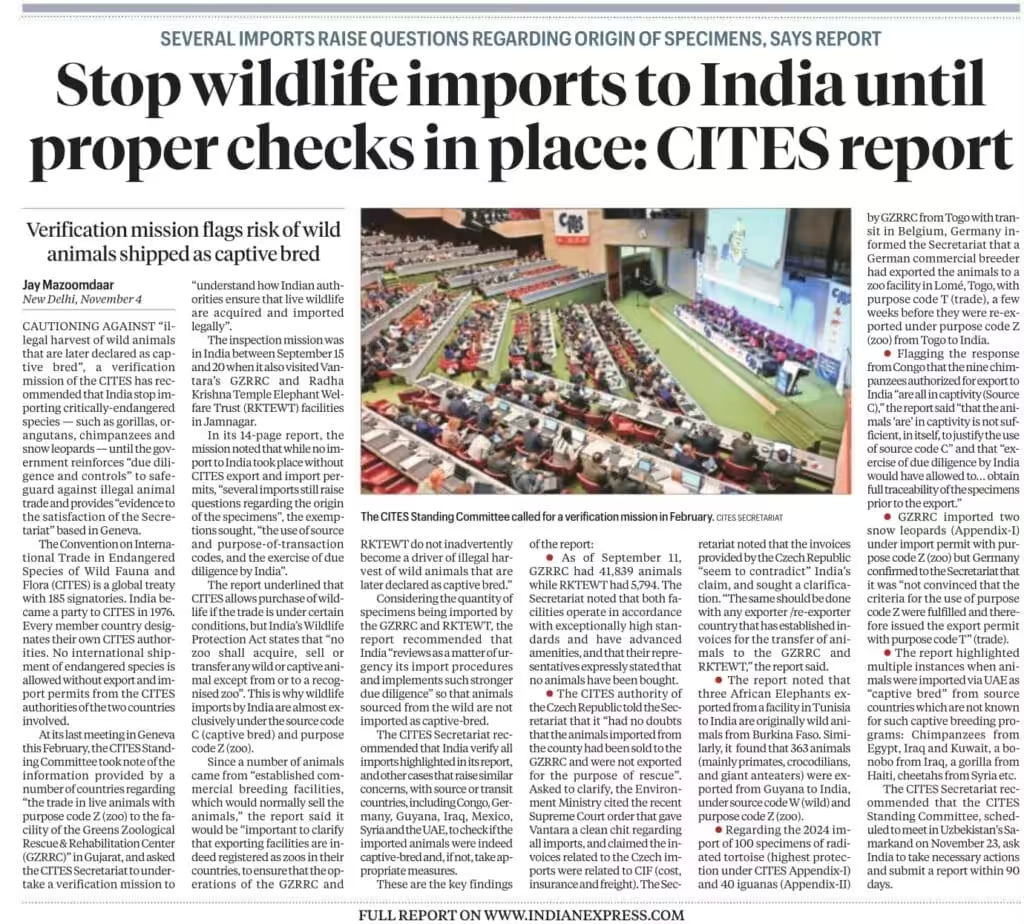
The Convention on International Trade in Endangered Species of Wild Fauna and Flora (CITES) has recommended that India temporarily halt all wildlife imports — particularly of critically endangered species like gorillas, orangutans, chimpanzees, and snow leopards — until proper verification and due-diligence mechanisms are established.
UPSC Relevance:
Environment
UPSC PYQ:
Q. With reference to the International Union for Conservation of Nature and Natural Resources (IUCN) and the Convention on International Trade in Endangered Species of Wild Fauna and Flora (CITES), which of the following statements is/are correct? (2015)
- IUCN is an organ of the United Nations and CITES is an international agreement between governments.
- IUCN runs thousands of field projects around the world to better manage natural environments.
- CITES is legally binding on the States that have joined it, but this Convention does not take the place of national laws.
Select the correct answer using the code given below:
(a) 1 only
(b) 2 and 3 only
(c) 1 and 3 only
(d) 1, 2 and 3
About CITES:
CITES (the Convention on International Trade in Endangered Species of Wild Fauna and Flora) is an international agreement between governments. Its aim is to ensure that international trade in specimens of wild animals and plants does not threaten the survival of the species.
- CITES was drafted as a result of a resolution adopted in 1963 at a meeting of members of IUCN (The World Conservation Union).
- The text of the Convention was finally agreed at a meeting of representatives of 80 countries in Washington, D.C., United States of America, on 2 March 1973, and was opened for signature on 3 March 1973.
- On 1 July 1975 CITES entered in force.
- The original of the Convention was deposited with the Depositary Government in the English, French and Spanish languages, each version being equally authentic. The Convention is also available in Chinese and Russian.
How CITES works:
- CITES works by subjecting international trade in specimens of selected species to certain controls. All import, export, re-export and introduction from the sea of species covered by the Convention has to be authorized through a licensing system.
- The species covered by CITES are listed in three Appendices, according to the degree of protection they need.
- Appendix I includes species threatened with extinction. Trade in specimens of these species is permitted only in exceptional circumstances.
- Appendix II includes species not necessarily threatened with extinction, but in which trade must be controlled in order to avoid utilization incompatible with their survival.
- Appendix III: This Appendix contains species that are protected in at least one country, which has asked other CITES Parties for assistance in controlling the trade. Changes to Appendix III follow a distinct procedure from changes to Appendices I and II, as each Party’s is entitled to make unilateral amendments to it.
- In the case of trade from a State that included the species in Appendix III, an export permit issued by the Management Authority of that State is required.
- Administered by the UN Environment Programme (UNEP) in Geneva,
The structure of CITES:
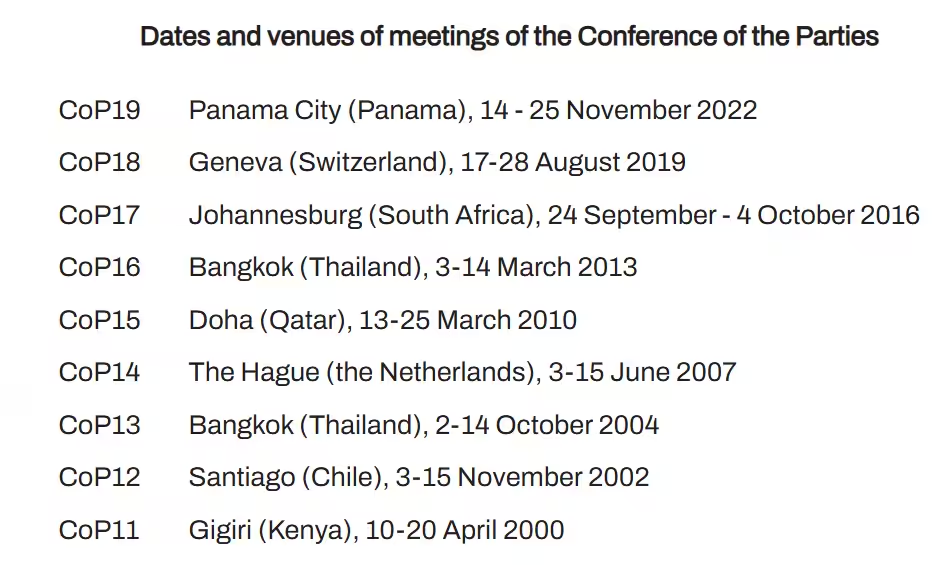
Meetings:
Secretary General:

Prelims Focus:
- CITES: Convention on International Trade in Endangered Species of Wild Fauna and Flora (1973).
- Headquarters: Geneva, Switzerland
- India: Party since 1976
- Objective: Ensure that international trade in wild animals and plants does not threaten their survival.
Tell Google you want more of this.
Add Anantam IAS as a preferred sourceOne tap, and this site shows up more often in your own Top Stories, AI Overviews and AI Mode. Remove it any time.