Why in News?
On 26 October 2026, the Ministry of Road Transport and Highways announced notified amendments expressly including E100 alongside E85 in vehicle emission certification provisions.
- The changes amend the Central Motor Vehicles Rules, 1989; certified vehicles must meet the emission and safety requirements applicable to their category.
- E85 contains up to 85% ethanol by volume, while the ministry describes E100 as consisting predominantly of ethanol.
- Existing vehicle owners are not required to switch to E85 or modify their vehicles under this notification, either presently or in the future.
- The rules take effect upon publication in the Official Gazette; the ministry release does not supply the Gazette identifier or publication date.
- Fuel substitution involves vehicle design, certification and fuel availability; changing the permitted certification framework does not upgrade an existing vehicle.
- Environmental assessment must distinguish exhaust effects from emissions across fuel production and use.
UPSC Relevance
Prelims Relevance
- Flex-fuel vehicle: designed to operate on an approved range of ethanol and petrol blends using a single tank.
- Fuel compatibility: the manufacturer-declared and certified range governs fuel choice.
- E10/E20 approval: does not establish suitability for E85.
- Emission certification: vehicles must satisfy requirements applicable to their category.
- Lifecycle emissions: include fuel production and use, rather than exhaust alone.
Mains Relevance
GS Paper 3
- Energy security: opportunities and limits of substituting domestically produced ethanol for imported petroleum.
- Environmental policy: evaluating transport fuels through compatibility, production pathways and lifecycle emissions.
GS Paper 2
- Consumer protection: clear technical communication when regulations introduce additional fuel options.
Background and Context
What the Rule Changes for Vehicles and Owners
The amendment expands the certification framework while preserving the distinction between a newly certified vehicle and the existing vehicle fleet.
- The ministry reports notified amendments that expressly add E100 alongside E85 in emission certification provisions. This is a regulatory change for the relevant vehicles; it does not establish that every available model supports these fuels.
- Category-specific requirements continue to apply to emissions and safety. Inclusion of an additional fuel in the rules does not remove compliance obligations or make fuel compatibility independent of the vehicle design submitted for certification.
- The ministry explicitly states that existing owners need not switch or modify vehicles under this notification. A policy supporting additional vehicle options should not be interpreted as a compulsory conversion instruction for current users.
- Gazette publication determines when the rules take effect. The date of a ministry explanation and the legal commencement date should be distinguished unless the relevant notification establishes that both dates are the same.
- The practical decision rests on the manufacturer-declared fuel range. Motorists should consult the compatibility sticker and owner’s manual, because a general description of flex-fuel technology cannot establish what their particular vehicle is approved to use.
How Flex-Fuel Compatibility Works
A flex-fuel vehicle combines suitable components with engine control that accommodates an approved range of fuel compositions.
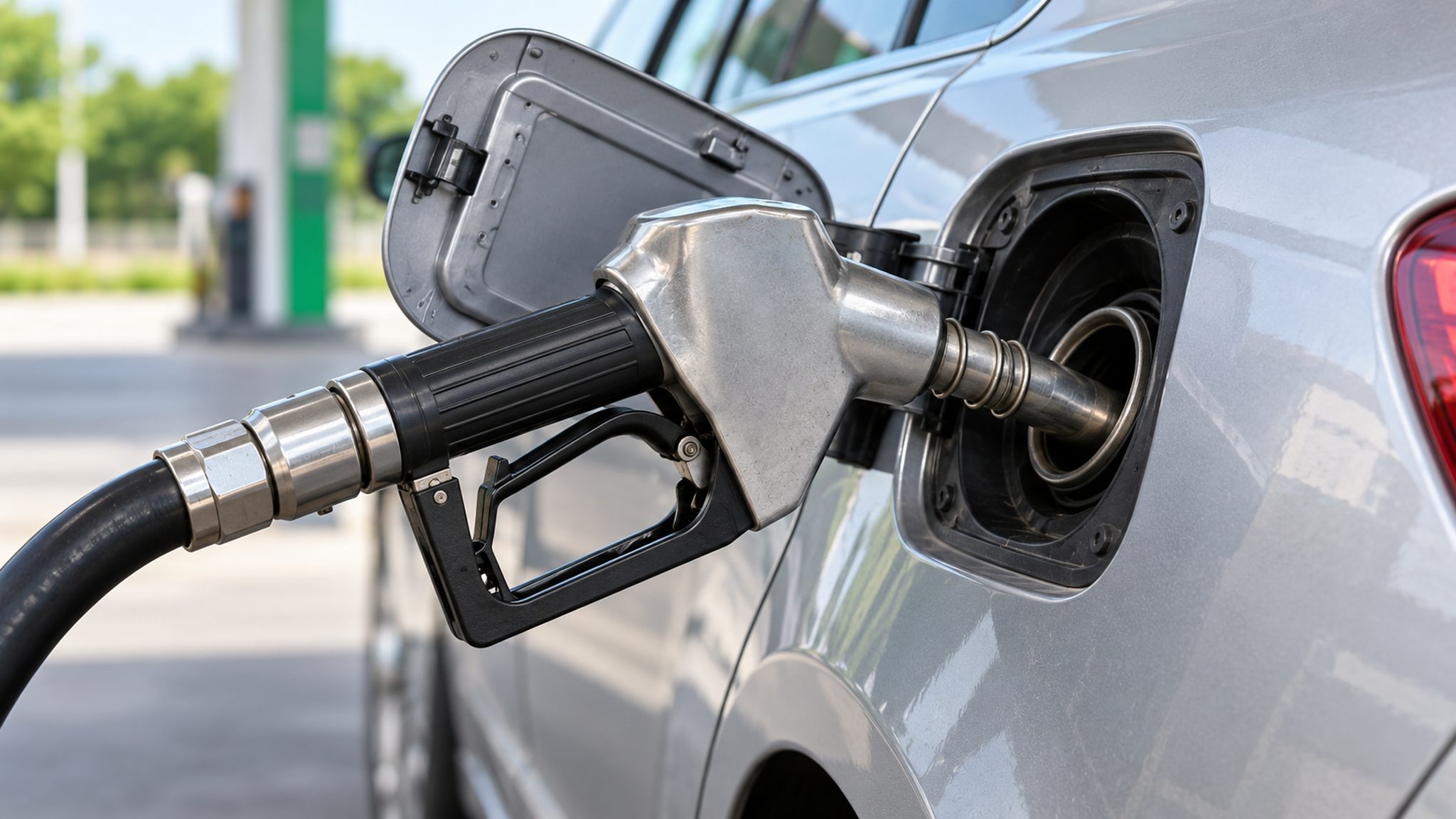
- Flex-fuel technology permits operation on different ethanol and petrol blends using one tank. The usable range depends on the vehicle’s design and certification, so the label describes a capability with defined limits rather than unrestricted choice.
- Fuel-system components and materials are selected for the approved blends. Compatibility involves the vehicle system as a whole; adding a higher-ethanol fuel to the tank cannot substitute for the required design and certification.
- Engine controls automatically adjust operation to the fuel composition within the vehicle’s approved range. This adjustment is part of the flex-fuel system and should not be assumed to exist in every conventional petrol vehicle.
- E10 or E20 compatibility alone does not establish E85 suitability. Approval for a lower ethanol blend and approval for a high-ethanol blend are separate claims, even though both fuels contain ethanol and petrol components.
- The ministry defines E85 as a blend containing up to 85% ethanol by volume and describes E100 as predominantly ethanol. The latter wording should be preserved without converting the name into an unsupported absolute-purity claim.
Assessing Energy and Environmental Benefits
The policy case depends on how the fuel is produced and used, as well as whether vehicles are suited to it.
- Greater use of domestically produced ethanol can reduce dependence on imported crude oil. The release presents this as a potential contribution to energy security, rather than a quantified guarantee of savings from each vehicle purchase.
- The ministry states that ethanol use in suitably designed vehicles can reduce certain exhaust pollutants. The qualification matters: a claim about selected pollutants should not become a claim that combustion produces no emissions at all.
- Lifecycle greenhouse-gas performance depends on feedstock and production processes as well as vehicle use. Fuel assessment must examine these stages together before drawing a general conclusion about the climate benefit of a particular pathway.
- Tailpipe and lifecycle assessments answer different questions. One concerns pollutants emitted during operation; the other includes production and use, so a change at the exhaust cannot by itself establish the complete environmental result.
- The announcement provides no universal mileage, running-cost or emissions-reduction figure for every certified vehicle. Policy analysis should retain this evidence limit instead of treating a new fuel option as an identical benefit across all models.
Way Forward
Make the Approved Fuel Range Clear
- Use consistent compatibility information across the vehicle sticker, owner’s manual and manufacturer guidance so consumers can identify the approved fuel range.
- Explain that certification changes expand permitted vehicle options while existing owners retain the notification’s explicit protection against a compulsory switch or modification.
- Assess environmental claims using evidence about the relevant fuel-production pathway and vehicle, keeping exhaust findings separate from lifecycle conclusions.
Conclusion
- Flex-fuel adoption requires alignment between the fuel offered and the vehicle approved to use it. The amendment creates a certification pathway for relevant vehicles while leaving existing owners free from a compulsory conversion requirement.
- Energy-security and climate benefits should be assessed alongside vehicle suitability and fuel-production conditions. The useful distinction is between enabling an additional option and proving that every vehicle or production pathway will deliver the same outcome.
UPSC Practice Questions
Prelims MCQ 1
With reference to the notified flex-fuel amendments described by MoRTH, consider the following statements:
- Compatibility with E20 alone establishes suitability for E85.
- Existing vehicle owners must modify their vehicles to use E85.
- Certified vehicles must meet the emission and safety requirements applicable to their category.
How many of the above statements are correct?
(a) Only one (b) Only two (c) All three (d) None
Answer: (a) Only one
Explanation:
Only statement 3 is correct. E10/E20 compatibility does not establish E85 suitability, and the notification does not require existing owners to switch to E85 or modify their vehicles.
Prelims MCQ 2
Which approach best evaluates the greenhouse-gas implications of an ethanol fuel pathway?
(a) Treat all fuels containing ethanol as having zero emissions. (b) Consider feedstock, production processes and vehicle use together. (c) Infer the full climate impact from the fuel name alone. (d) Assume certification guarantees an identical emissions reduction for every model.
Answer: (b) Consider feedstock, production processes and vehicle use together.
Explanation:
Lifecycle greenhouse-gas performance depends on fuel production and use. The ministry specifically qualifies potential benefits by feedstock and production process; certification alone does not establish a universal reduction.
UPSC Mains Questions
- Explain why expanding the certification framework for high-ethanol fuels does not automatically establish compatibility across the existing vehicle fleet.
- Discuss the potential energy-security benefits of ethanol adoption and the importance of distinguishing tailpipe effects from lifecycle environmental outcomes.
Source: PIB, Ministry of Road Transport and Highways.
Frequently Asked Questions
What is a flex-fuel vehicle?
A flex-fuel vehicle is designed to operate on an approved range of ethanol and petrol blends using a single fuel tank. Suitable components and engine controls accommodate the fuel composition within its certified range.
Does E20 compatibility mean a vehicle can use E85?
No. MoRTH states that E10 or E20 compatibility alone does not establish E85 suitability. The approved range must be checked through the vehicle compatibility sticker, owner’s manual and manufacturer guidance.
Must existing owners convert their vehicles?
No. The notification does not require existing owners to switch to E85 or modify their vehicles, either at present or in the future. High-ethanol fuel is intended for vehicles specifically designed and certified for it.
Does E100 mean the ministry has specified absolutely pure ethanol?
The ministry describes E100 as a fuel consisting predominantly of ethanol. That wording should be retained rather than assuming that the label establishes absolute chemical purity or an identical composition in every context.
Are the environmental benefits automatic?
The ministry describes potential reductions in certain exhaust pollutants and lifecycle greenhouse-gas emissions in suitably designed vehicles. Lifecycle outcomes depend on feedstock and production processes, so the release does not establish a universal benefit for every pathway.
Tell Google you want more of this.
Add Anantam IAS as a preferred sourceOne tap, and this site shows up more often in your own Top Stories, AI Overviews and AI Mode. Remove it any time.