Why in News?
The Hindu reported that, at the 26 October 2026 hearing, the Supreme Court questioned Rajasthan’s regulatory conduct and sought a workable financial proposal to restore the Jojari-Luni-Bandi river system.
- The court questioned the regularisation of mining leases after violations had been detected, according to the hearing report.
- The Bench warned of a possible CBI investigation if remedial action failed; the report does not say that such a probe was ordered.
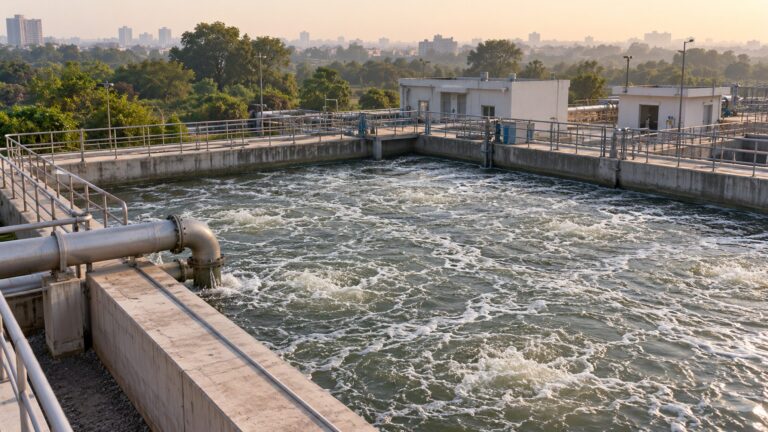
- The reported proposal concerns common effluent treatment plants, zero-liquid-discharge technology and recirculation of treated water to industrial units.
- The Bench indicated contributions from the State and industries. The report establishes neither a sanctioned budget nor completed restoration.
- Regulatory accountability becomes central when authorities permit activities despite detected environmental violations.
- Restoration planning must connect responsibility, finance and measurable ecological improvement, rather than end with a promise to build infrastructure.
UPSC Relevance
Prelims Relevance
- Polluter pays: connects environmental harm with the costs of prevention and restoration.
- CETP: a common effluent treatment plant serving multiple industrial units.
- ZLD: zero-liquid-discharge systems recover and reuse water while requiring management of remaining residues.
- Oral observations: remarks during a hearing must be distinguished from a final written order.
- Jojari-Luni-Bandi: the river system addressed in the reported Rajasthan proceedings.
Mains Relevance
GS Paper 3
- Financing industrial pollution control and river restoration.
- Testing environmental projects through compliance and ecological outcomes.
GS Paper 2
- Accountability for regulatory failure and the role of judicial oversight.
Background and Context
Why the Hearing Focuses on Regulatory Conduct
The reported concern extends beyond individual discharges to how public authorities exercised their responsibilities after violations came to light.
- The Bench questioned lease regularisation after detected violations, according to The Hindu. This focuses attention on the sequence of regulatory decisions and whether later permissions addressed the environmental problems that authorities had already identified.
- The State submitted that cases had been registered and preventive steps were being taken. These are reported submissions about action initiated; they do not independently establish that unlawful activity ended or river conditions improved.
- The reported CBI warning signals the court’s concern about official conduct. A warning about a possible investigation must remain distinct from an order directing one, and neither should be treated as a finding of criminal guilt.
- The court’s concern about State responsibility challenges the idea that restoration can be left entirely to industries and municipal bodies. The report attributes this position to the Bench while a workable financial proposal remains pending.
- Later permission and earlier harm require separate examination. The hearing raises questions about this case’s regulatory sequence; it should not be converted into a universal legal rule that every subsequent permission has the same effect.
What a Workable Restoration Proposal Must Connect
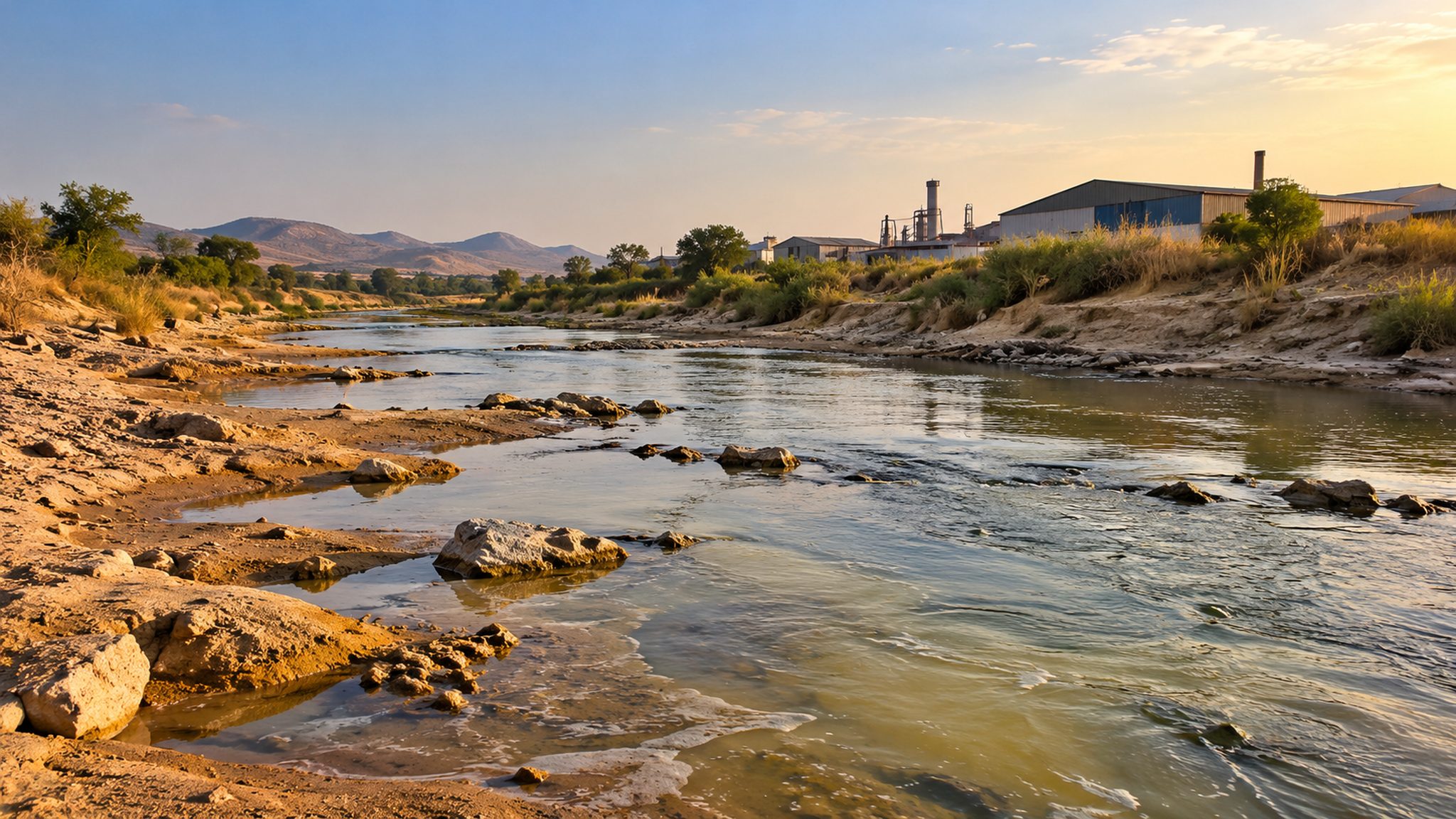
The proposed response combines treatment capacity, water recovery and financing, with responsibilities that must remain clear throughout operation.
- A common effluent treatment plant receives wastewater from multiple industrial units for shared treatment. Collective infrastructure can address a cluster’s needs, but participating units still need clear obligations concerning the waste entering the system.
- Zero-liquid-discharge technology aims to recover water and avoid routine liquid effluent discharge. It does not mean that pollution simply disappears: concentrated streams and solid residues remain management responsibilities within the overall treatment arrangement.
- The reported recirculation proposal would return treated water to industrial units through pipelines. Treatment and reuse must be planned together, because producing treated water alone does not establish that users can receive or suitably reuse it.
- State and industry contributions were indicated during the hearing, according to the report. The exact allocation, sanctioned expenditure and implementation arrangements are not established, so a proposal should not be described as an approved funding package.
- Polluter pays connects responsibility for environmental damage with restoration costs. Applying that principle requires identifying obligations and evidence in the relevant proceedings; a financial remedy and a determination of criminal liability answer different legal questions.
How to Judge Progress Beyond Announcements
A credible remedy needs evidence that the proposed arrangements reduce harm and that responsible institutions continue to perform their assigned roles.
- Construction and operation are separate stages of delivery. Even an installed treatment facility needs reliable operation, appropriate inputs and residue management; announcing equipment or completing civil works cannot alone establish effective pollution control over time.
- Monitoring should examine water quality and the functioning of treatment and reuse arrangements. The Mandovi water-quality discussion illustrates why a narrow indicator or isolated compliant result cannot substitute for a properly designed assessment.
- Institutional responsibility must be traceable when several bodies contribute finance, permissions and oversight. A shared project can leave gaps if each participant assumes another institution will verify performance, address failures or provide continuing operational support.
- The earlier Yamuna sewage note focused on municipal collection and treatment delivery. This case’s distinct lesson concerns industrial restoration finance and regulatory conduct, including how public authorities respond after violations have been detected.
- Judicial scrutiny can demand a clearer proposal and expose weak explanations, but ecological recovery still requires sustained implementation. Progress should be assessed through fulfilled obligations and measured conditions rather than the strength of courtroom language alone.
Way Forward
Link Funding to Verifiable Responsibilities
- Publish a costed implementation plan identifying the institutions responsible for treatment, reuse, residue management and continuing operation.
- Connect each funding commitment with measurable milestones and transparent reporting on whether the proposed facilities and regulatory measures are functioning.
- Use independent performance checks to distinguish expenditure and construction from sustained compliance and improvement in river conditions.
Conclusion
- The Jojari hearing places restoration finance alongside the conduct of regulators. Its durable lesson is that public responsibility, industrial obligations and environmental performance must be examined together when designing a remedy for continuing harm.
- A workable proposal is the beginning of implementation. Its eventual value depends on clear responsibilities, sustained operation and evidence of improvement; the reported warning and proposed measures should retain their correct legal and administrative status.
UPSC Practice Questions
Prelims MCQ 1
With reference to the reported Jojari river hearing, consider the following statements:
- The report describes a warning of a possible CBI investigation, rather than an ordered probe.
- The report establishes that a final restoration budget has been sanctioned.
- The proposed measures include treatment and recirculation of water to industrial units.
How many of the above statements are correct?
(a) Only one (b) Only two (c) All three (d) None
Answer: (b) Only two
Explanation:
Statements 1 and 3 follow the hearing report. A financial proposal was sought; the report does not establish a sanctioned budget, making statement 2 incorrect.
Prelims MCQ 2
Which statement best describes zero-liquid-discharge treatment?
(a) It removes every form of waste from an industrial process. (b) It makes monitoring and residue management unnecessary. (c) It aims to recover water and avoid routine liquid discharge while remaining residues require management. (d) It guarantees river restoration as soon as a plant is announced.
Answer: (c) It aims to recover water and avoid routine liquid discharge while remaining residues require management.
Explanation:
ZLD concerns liquid discharge and water recovery. It does not eliminate concentrated or solid residues, nor does a proposed facility establish successful operation or ecological recovery.
UPSC Mains Questions
- How can regulatory failure complicate the application of the polluter pays principle? Discuss with reference to the reported Jojari river proceedings.
- What should a financial proposal for industrial river-pollution control include to connect treatment infrastructure with sustained environmental improvement?
Source: The Hindu.
Frequently Asked Questions
What is the central issue in the Jojari hearing?
The reported hearing concerns regulatory conduct after detected violations and a workable financial proposal for river restoration. The focus includes the responsibilities of the State and industries, alongside treatment and water-reuse measures.
Has the Supreme Court ordered a CBI probe?
The Hindu reports an oral warning of a possible CBI investigation if remedial action failed. It does not establish that a probe was ordered. The warning should retain that status when explaining the case.
Has a restoration budget been approved?
The report says the court sought a concrete financial proposal and indicated contributions from the State and industries. It does not establish a sanctioned budget, final cost allocation or completed treatment infrastructure.
Does zero liquid discharge mean no waste remains?
No. ZLD aims to recover water and avoid routine liquid effluent discharge. Concentrated streams and solid residues still need appropriate management, and successful operation must be checked rather than assumed from the technology label.
Tell Google you want more of this.
Add Anantam IAS as a preferred sourceOne tap, and this site shows up more often in your own Top Stories, AI Overviews and AI Mode. Remove it any time.