Why in News?
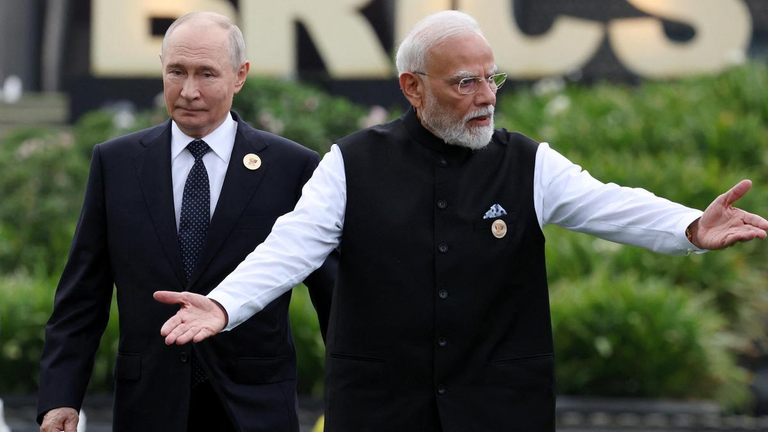
India has invited all 10 Shanghai Cooperation Organisation (SCO) member states, including Pakistan, to the inaugural SCO Civilisational Dialogue Forum scheduled for November 20-22, 2026, in New Delhi.
The invitation comes amid strained bilateral relations following Operation Sindoor in May 2025.
| UPSC Relevance: GS-2 International Relations: Regional groupings Prelims: About SCO Civilisational Dialogue Forum, SCO, Purana Qila Mains: SCO: Key Achievements and Significance |
About the Civilisational Dialogue Forum:
- Origin: PM Modi proposed the initiative at the 2025 SCO Summit in Tianjin, China, to strengthen cultural understanding and people-to-people ties.
- Organisers: The Ministry of Culture and the Ministry of External Affairs will jointly organise the event.
- Venue: Purana Qila, New Delhi
- Participation: Culture ministers and delegations from member states, alongside representatives of observer and dialogue-partner countries, have been invited.
- Purpose: Promote understanding of shared heritage, art, literature and traditions, and encourage cooperation in heritage, education and traditional knowledge.
What is Civilisational Diplomacy?
- Civilisational diplomacy uses historical connections, cultural traditions and shared heritage to build understanding between countries. It can involve museum exchanges, manuscript translation, archaeological research, festivals and academic collaboration.
For India, relevant connections include:
- Buddhist links: The movement of Buddhist ideas, texts and scholars between India, Central Asia and China.
- Persianate connections: Exchanges involving language, literature, architecture and intellectual traditions between India, Iran and Central Asia.
- Trade and migration: Historical networks that carried goods, artistic practices and knowledge across Eurasia.
- Shared South Asian heritage: Cultural traditions and historical sites that extend across present-day national boundaries.
Soft power is the ability to influence through attraction and credibility. Cultural diplomacy is one means of developing that influence.
Key Facts about SCO:
| Feature | Details |
| Established | June 15, 2001, in Shanghai; developed from the Shanghai Five process. |
| Nature | An intergovernmental organisation covering security, economic and cultural cooperation. |
| Members | 10 members (Belarus, China, India, Iran, Kazakhstan, Kyrgyzstan, Pakistan, Russia, Tajikistan and Uzbekistan) 2 observers (Afghanistan and Mongolia) and 15 dialogue partners. |
| India’s accession | India became a full member in 2017. |
| Secretariat | Beijing, China. |
| Regional Anti-Terrorist Structure (RATS) | Executive Committee headquartered in Tashkent, Uzbekistan. |
| Decision-making | Consensus-based. |
| Council of Heads of State | Determines the organisation’s broad priorities and direction. |
| Council of Heads of Government | Deals with economic cooperation, the budget and other practical matters. |
The SCO’s “Shanghai Spirit” emphasises mutual trust, mutual benefit, equality, consultation, respect for cultural diversity and common development.
Why is the Invitation to Pakistan Significant?
- Separates multilateral participation from bilateral normalisation: The invitation forms part of India’s engagement with the SCO as a whole. It does not, by itself, establish that bilateral talks, trade or other suspended engagements will resume.
- Maintains a channel for limited interaction: A cultural gathering can provide opportunities for official and scholarly contact despite political tensions.
- Demonstrates India’s commitment as host: Inviting all members helps India conduct an inclusive SCO event and advance an initiative it proposed.
About Purana Qila:
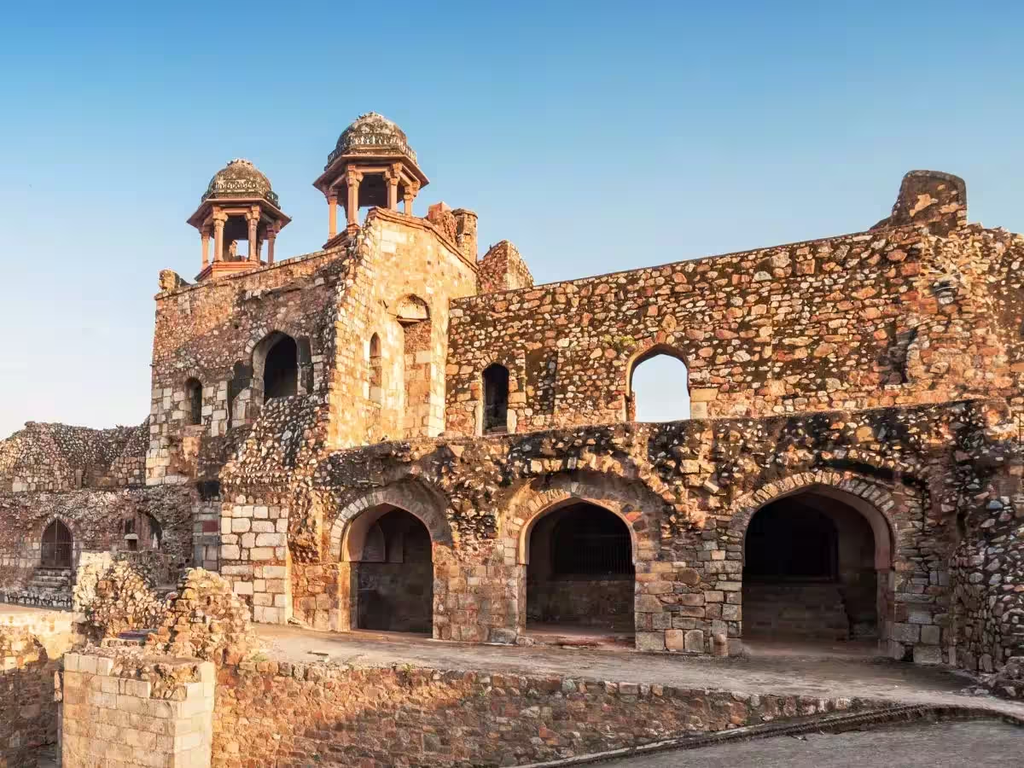
Purana Qila offers a setting where architecture and archaeology reflect several periods of Indian history.
- Construction: The present 16th-century fort is associated with both Humayun and Sher Shah Suri, rather than Humayun alone.
- Archaeological significance: Excavations have yielded Painted Grey Ware and material from Mauryan, Shunga, Kushana, Gupta, Rajput, Sultanate and Mughal periods.
- Indo-Islamic Synthesis: Combines Islamic pointed/horseshoe arches with indigenous architectural components such as Rajasthani jharokhas, brackets, and rooftop chhatris (domed pavilions).
- Diplomatic symbolism: The site can illustrate the interaction of cultures and the historical depth of Indian civilisation.
Prelims Trap: Purana Qila is not a UNESCO World Heritage Site (unlike the neighbouring Humayun’s Tomb and the Red Fort).
The forum offers India an opportunity to turn shared heritage into sustained cooperation. Its value will depend on credible cultural exchange, practical outcomes and realistic expectations about what diplomacy can achieve amid unresolved security tensions.
UPSC Mains PYQ 2021:
Q. Critically examine the aims and objectives of SCO. What importance does it hold for India?
Mains Practice Question:
Q. “Cultural diplomacy can sustain regional engagement even when bilateral relations remain strained.” Examine with reference to India’s proposed SCO Civilisational Dialogue Forum.
UPSC PYQ 2022
Q. Consider the following:
1. Asian Infrastructure Investment Bank
2. Missile Technology Control Regime
3. Shanghai Cooperation Organisation
India is a member of which of the above?
(a) 1 and 2 only
(b) 3 only
(c) 2 and 3 only
(d) 1, 2 and 3
Answer: (d)
Prelims Practice MCQ:
Q. Consider the following statements:
- The SCO Secretariat is located in Beijing.
- The Executive Committee of SCO-RATS is headquartered in Tashkent.
- India was a founding member of the SCO.
Which of the statements given above are correct?
(a) 1 and 2 only
(b) 2 and 3 only
(c) 1 and 3 only
(d) 1, 2 and 3
Answer: (a). Statement 3 is incorrect: the SCO was established in 2001, while India became a full member in 2017.
Tell Google you want more of this.
Add Anantam IAS as a preferred sourceOne tap, and this site shows up more often in your own Top Stories, AI Overviews and AI Mode. Remove it any time.