Why in News?
On September 15, 2026, DRDO VIMARSH introduced secure software source-code sharing with licensee industries and measures to improve industry participation in defence technology development.
- A standardised, secure framework covers DRDO-developed software source codes shared with licensee industries.
- Support for MSMEs and deep-tech start-ups includes direct funding, incubation and dedicated access to DRDO testing facilities.
- Nine licensing agreements for technology transfer were handed over to 13 manufacturing partners to enable commercial production.
- DRDO contracted with the Quality Council of India for SAMAR version 2.0, intended to benchmark manufacturing maturity.
- Technology absorption means building the practical capability to use transferred knowledge, troubleshoot production and support a system throughout its working life.
- The policy addresses the gap between laboratory development and reliable industrial production; an announcement alone does not demonstrate that this gap has closed.
UPSC Relevance
Prelims Relevance
- DRDO: Defence Research and Development Organisation.
- LAToT: Licensing Agreement for Transfer of Technology.
- Licensee source-code access differs from public open-source release.
- Obsolescence management concerns support when technologies or components age.
- SAMAR benchmarks manufacturing maturity; it is not a procurement order.
Mains Relevance
GS Paper 3
- Technology absorption and indigenous defence manufacturing.
- Balancing industry participation with security and lifecycle reliability.
GS Paper 2
- Institutional coordination and accountable implementation of industrial policy.
Essay
- Self-reliance depends on the capacity to learn, adapt and maintain technology.
Background and Context
What licensee source-code sharing changes
The central change concerns controlled access to the instructions behind software, which can matter long after a physical system leaves the factory.
- Source code is the human-readable set of instructions used to develop software. Access can help authorised engineers understand behaviour and maintain software, rather than relying only on a finished executable.
- The announced recipients are licensee industries. This is a controlled transfer framework, not a declaration that DRDO software is publicly available for anyone to copy, modify or redistribute without restrictions.
- Software-defined capabilities depend partly on software behaviour. Authorised access can support adaptation as requirements evolve, but the release does not promise unrestricted modification rights or automatic approval of every change.
- Obsolescence management addresses ageing technologies and support dependencies. Source access can help a licensed partner diagnose compatibility problems when hardware changes, subject to the permissions and safeguards governing the transfer.
- The PIB announcement does not disclose the complete licence clauses or access-control design. Treat expected maintenance benefits as a policy mechanism, not as proof that every licensee already has operational access.
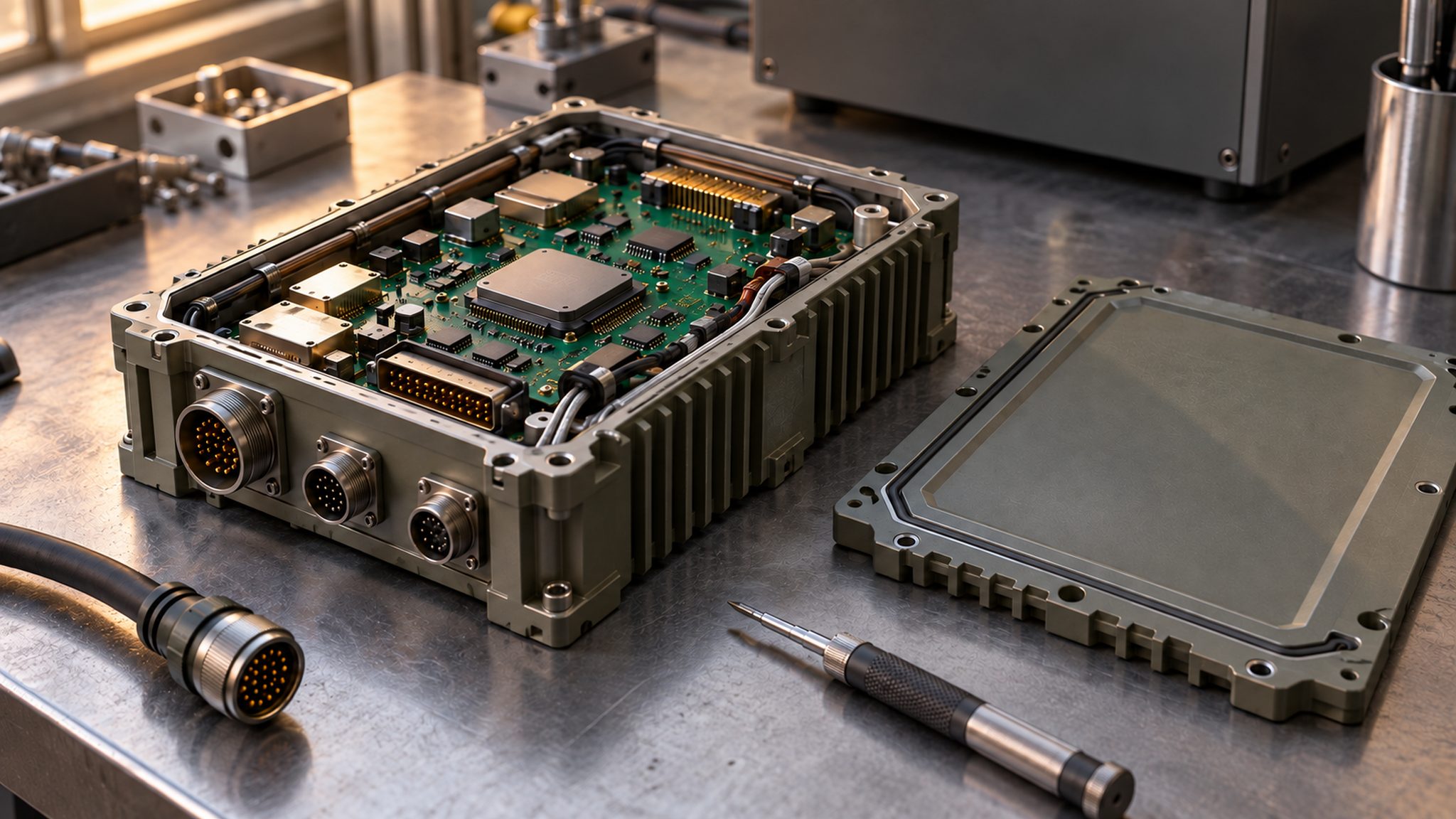
Technology absorption is different from buying equipment
A production licence can open a route to manufacturing; absorption requires the recipient to develop the skills and routines needed to use that route.
- Technology transfer supplies authorised knowledge or rights. Technology absorption is the receiving firm’s ability to understand and apply them consistently, including resolving practical production problems and maintaining quality over time.
- A Licensing Agreement for Transfer of Technology enables the specified commercial-production relationship. It does not, by itself, establish a government purchase order, a guaranteed market or acceptance by an operational user.
- Access to a testing facility gives firms a route to generate evidence about performance. It does not mean their products have already passed testing, received certification or entered military service.
- Industry-led development and procurement solve different problems: one builds capability, while the other acquires products against requirements. Confusing them hides the work needed between a prototype and reliable delivery.
- Read the wider defence manufacturing challenge through lifecycle capability: can domestic firms produce, maintain and improve equipment, rather than merely assemble it from transferred instructions?
Why funding, incubation and testing belong together
Small technology firms can possess a promising design while lacking the money, facilities or production experience needed to turn it into a dependable product.
- Funding addresses resource constraints during development. It cannot substitute for engineering validation, but it can help firms sustain the work required before a product becomes commercially viable and attracts repeat demand.
- Incubation support can connect a young firm with technical guidance and development resources. Its value depends on solving specific execution problems, rather than simply adding another institutional affiliation to a proposal.
- Dedicated testing access can reduce the need to recreate expensive facilities. Transparent access arrangements matter because an unavailable test slot can interrupt development even when a firm has engineers and financing.
- The proposed move covers research, design, testing, certification and manufacturing. Participation across this chain offers a deeper role for MSMEs than treating them only as suppliers of low-value components.
- iDEX provides related context on the defence innovation ecosystem. Do not assume its rules, funding terms or selection process automatically apply to the newly announced VIMARSH framework.
Manufacturing maturity and security remain separate tests
Wider participation becomes useful only when firms can handle sensitive knowledge responsibly and deliver consistent manufacturing outcomes under the applicable requirements.
- SAMAR stands for System for Advance Manufacturing Assessment and Rating. The announced contract with the Quality Council of India concerns benchmarking manufacturing maturity, a different question from access to software.
- Manufacturing maturity asks whether an enterprise has dependable production capability. A maturity benchmark can guide improvement; it should not be presented as proof that every product meets all operational requirements.
- Secure sharing requires a balance between usable access and protection of sensitive knowledge. Recommended safeguards include clear responsibilities and controlled access, without pretending that these unpublished licence terms are already verified.
- Lifecycle accountability also matters after transfer: who maintains documentation, resolves defects and supports changed components? These are implementation questions to examine, rather than benefits established merely by signing an agreement.
Way Forward
Measure absorption through demonstrated capability
- Define licence responsibilities clearly, including permitted access, maintenance obligations and responsibility for changes; publish non-sensitive guidance that helps smaller firms judge eligibility.
- Make facility access predictable through clear application steps and testing schedules, while retaining the relevant security and technical requirements.
- Evaluate outcomes through reliable production, maintainability and resolved technical bottlenecks, alongside participation counts and signed agreements.
- Keep development support, testing, certification and procurement distinct so that faster collaboration does not become a claim of automatic acceptance.
Conclusion
- VIMARSH is best understood as an attempt to improve technology absorption: controlled knowledge access must work together with finance, facilities and manufacturing competence.
- For an answer on defence self-reliance, distinguish access from capability and capability from procurement. The decisive outcome is dependable domestic support across a system’s lifecycle.
UPSC Practice Questions
Prelims MCQ 1
With reference to the DRDO VIMARSH initiatives, consider the following statements:
- The source-code framework is intended for licensee industries.
- Access to DRDO testing facilities automatically establishes acceptance by the armed forces.
- SAMAR concerns assessment and rating of manufacturing maturity.
How many of the above statements are correct?
(a) Only one (b) Only two (c) All three (d) None
Answer: (b) Only two
Explanation:
Statements 1 and 3 are correct. Testing access provides an opportunity for evaluation; it does not establish that a product has passed testing or received user acceptance.
Prelims MCQ 2
Which situation best illustrates technology absorption?
(a) A firm receives an invitation to an industry conference. (b) A firm obtains a licence but cannot resolve production problems. (c) A licensed firm develops the skills to manufacture consistently and maintain the transferred technology. (d) A laboratory publishes the title of a research project.
Answer: (c) A licensed firm develops the skills to manufacture consistently and maintain the transferred technology.
Explanation:
Technology absorption means the recipient develops practical competence to apply transferred knowledge. Merely receiving a licence or attending an event does not demonstrate that competence.
UPSC Mains Questions
- How can controlled source-code sharing improve technology absorption in India’s defence industry? Examine the safeguards and implementation conditions required. (150 words)
- Distinguish technology transfer, testing access and procurement. Explain why MSME participation in defence manufacturing requires more than licensing agreements. (250 words)
Source: PIB, Ministry of Defence.
Frequently Asked Questions
What did DRDO announce at VIMARSH?
DRDO announced secure source-code sharing with licensee industries, alongside support for MSMEs and start-ups through funding, incubation and testing access. Technology-transfer agreements and a manufacturing-maturity assessment initiative were also announced.
Does DRDO source-code sharing mean open-source software?
No. The announcement specifies a standardised, secure framework for sharing with licensee industries. It does not announce public access or unrestricted rights to copy, modify and distribute the software.
Does a technology-transfer licence guarantee a defence order?
No. A licence enables the specified transfer and production relationship. A procurement order, successful testing and acceptance by an operational user are separate matters that cannot be inferred from the licence alone.
Why does software access matter for obsolescence management?
Authorised access can help engineers understand software behaviour and address compatibility or maintenance problems as components age. The benefit depends on licence permissions, engineering competence and the applicable validation requirements.
Tell Google you want more of this.
Add Anantam IAS as a preferred sourceOne tap, and this site shows up more often in your own Top Stories, AI Overviews and AI Mode. Remove it any time.