Context:
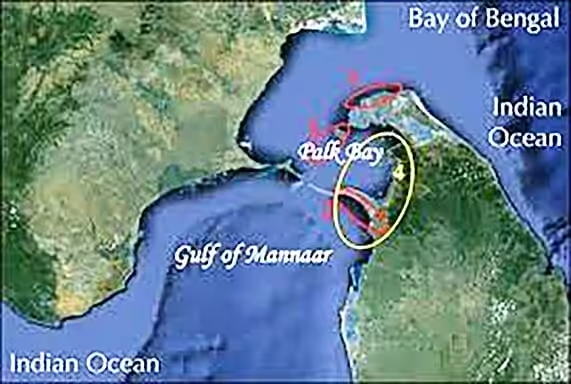
A new IUCN-commissioned report launched at the International Union for Conservation of Nature (IUCN) Conservation Congress in Abu Dhabi highlighted severe threats to India’s dugong (sea cow) population. Populations in Gulf of Kutch, Palk Bay, Gulf of Mannar, and Andaman–Nicobar Islands are declining due to pollution, habitat loss, and human activities.
UPSC Relevance:
Environment
UPSC PYQ:
Q. With reference to ‘dugong’, a mammal found in India, which of the following statements is/are correct?
- It is a herbivorous marine animal.
- It is found along the entire coast of India.
- It is given legal protection under Schedule I of the Wildlife (Protection) Act; 1972.
Select the correct answer using the code given below.
a) 3 only
b) 1 and 2
c) 2 only
d) 1 and 3
Dugongs(Indian Sea Cow):
Dugongs are cousins of manatees and share a similar plump appearance, but have a dolphin fluke-like tail. And unlike manatees, which use freshwater areas, the dugong is strictly a marine mammal. Commonly known as “sea cows,” dugongs graze peacefully on sea grasses in shallow coastal waters of the Indian and western Pacific Oceans.
- Dugongs are large grey mammals which spend their entire lives in the sea.
- Female dugongs give birth underwater to a single calf at three to seven year intervals.
- The calf stays with its mother, drinking milk from her teats and following close by until one or two years of age. Dugongs reach adult size between 4 and 17 years of age.
- Dugongs are sometimes called ‘sea cows’ because they graze on seagrasses. These marine plants look like grass growing on a sandy sea floor in shallow, warm water. Dugongs need to eat large amounts of seagrass.
Dugongs Ecologically Important?
- Improve coastal water quality
- Prevent coastal erosion
- Provide nursery grounds for fish
- Act as major carbon sinks (Blue Carbon)
Threats:
Habitat Degradation
- Destruction of seagrass meadows due to:
- Coastal development
- Dredging
- Ports
- Tourism activities
- Bottom trawling
Pollution
- Coastal and marine pollution has affected foraging grounds (seagrass beds).
- Runoff containing plastic and chemicals impacts their feeding.
Fishing Activities
- Accidental catch in fishing nets (bycatch)
- Collisions with fishing boats
- Noise pollution disrupting feeding behavior
Seagrass Loss = Food Loss
- As dugongs eat only seagrass, decline in meadows directly affects survival.
Climate Change Impact
- Though not explicitly stated, the article hints that rising ocean temperatures and extreme events reduce seagrass cover.
Conservation:
- Trade, hunting, or harm attracts severe penalties.
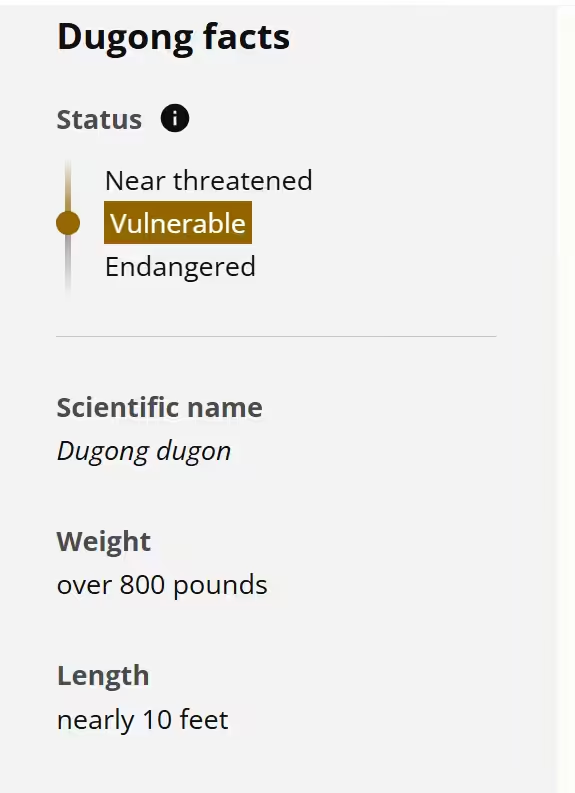
- IUCN Red List: Vulnerable
- India (WPA 1972): Schedule I → Highest protection
UPSC PRELIMS POINTERS
- Key threats: seagrass loss, pollution, fishing nets, coastal development.
- Dugongs are found in India in →
Gulf of Kutch, Palk Bay, Gulf of Mannar, Andaman–Nicobar Islands. - They are herbivorous marine mammals → feed exclusively on seagrass.
- They belong to Order Sirenia (same group as manatees).
- Listed under Schedule I of WPA 1972.
Tell Google you want more of this.
Add Anantam IAS as a preferred sourceOne tap, and this site shows up more often in your own Top Stories, AI Overviews and AI Mode. Remove it any time.