Context:
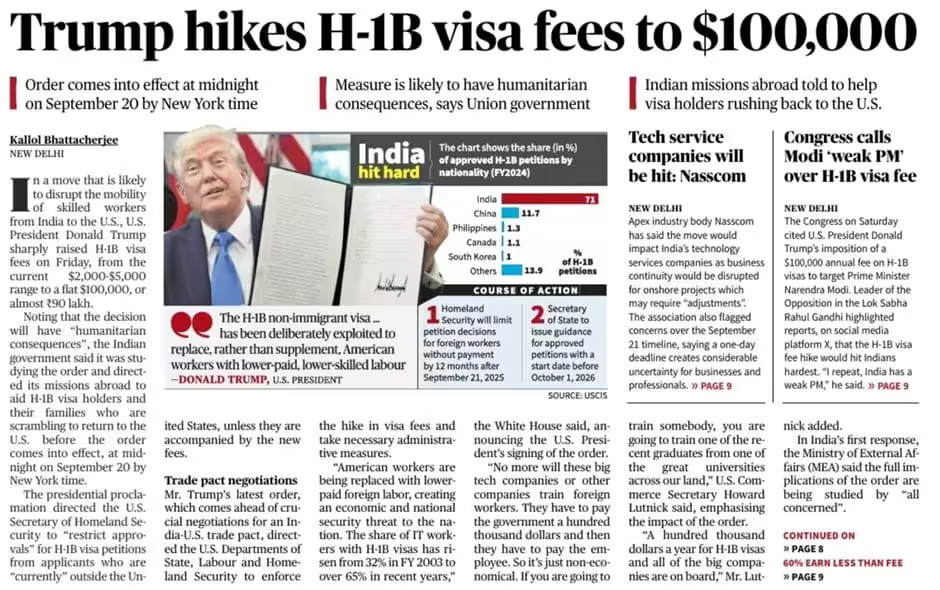
The recent changes made by USA with regards to H-1B visa, specially the hike in visa fees might have economic and political repercussions for India.
Recent changes in U.S. H-1B visa policy?
- Wage-Based Selection System: Replacing the lottery with a wage-based selection system, ranking and selecting registrations based on the highest wage level.
- Increased Fees: H-1B visa fee increased to $100,000.
UPSC Relevance: International relations.
What is the H-1B Visa?
- It is a temporary, non-immigrant visa that allows U.S. employers to hire foreign workers in specialized fields, require at least a bachelor’s degree or higher in related specific field.
- H1B visa requires a U.S. employer to act as a sponsor. A foreign national cannot apply for an H1B visa on their own.
- Duration: Valid for an initial period of three years, can be extended for another three years, for a total maximum stay of six years.
- Dual Intent: Temporary visa which provide visa holders the option to apply for permanent residency (a Green Card).
- Annual Cap: 85,000 H-1B visas; 65,000 visas under the general cap and an additional 20,000 reserved for individuals who have earned a U.S. master’s degree.
- Lottery System: U.S. Citizenship and Immigration Services (USCIS) uses a lottery system to select eligible candidates.
Why the H-1B visa is crucial for the U.S. economy?
- Addresses Skill Gaps: Launched in 1990 to help employers acquire business skills and abilities unavailable in the domestic workforce – filling talent gap in the U.S. labour market.
- Drives Innovation: Skilled immigrants boost innovation and productivity within the U.S. economy, maintaining the U.S.’s competitive edge in global markets. Aravind Srinivas, an IIT Madras graduate and CEO of the AI search firm Perplexity, is a prime example. Leading tech giants like Amazon, Microsoft, and Google have relied heavily on H-1B workers to fuel growth and innovation.
- Supports Industries: Companies in technology, engineering, finance, healthcare, and research, have benefited. In FY 2025, Amazon led H-1B visa approvals with 10,044, followed by TCS (5,505), Microsoft Corp (5,189), Meta (5,123), Apple (4,202), and Google (4,181). (Source: USCIS)
- Strengthens International Partnerships: Promote a strong “people-to-people link” between the U.S. and countries like India, enhancing soft power of US.
Why H-1B visa program is important for India?
- Dominance in the Program: Indians are the largest beneficiaries of the H-1B program, accounting for more than 70% of all H-1B petitions approved each year since 2015. China comes 2nd with 12-13% since 2018.
- Economic Contributions: Indian H-1B workers contribute to the Indian economy via remittances. Share of the US in India’s total inwards remittances is the largest; 27.7% in 2023-24 (about $32 billion), as per RBI’s data.
- IT Sector Growth and Outsourcing: American companies find difficult to substitute Indians with equally skilled American people, reason for Indian dominance.
- Bilateral Relations: Serves as a strong “people-to-people link” between the U.S. and India, supporting their strategic partnership in technology, healthcare, defence, and economic initiatives.
Controversies related to H-1B visa program
- U.S. Criticism: Aligns with anti-immigration rhetoric and accusations that the program undercuts American workers.
- Political Polarization: Immigration remains one of the most divisive issues in U.S. politics, with the discourse shifting from illegal immigration to programs like H-1B.
- Wage Disparities: Critics allege that American corporations use H-1B visas to hire overseas talent at cheaper costs than what it would take to hire native-born U.S. citizens.
Way Forward for India
- Diversify Job Opportunities Domestically: Strengthen domestic R&D and start-up ecosystem to diversify job opportunities, provide options to talented India, however, it could impact remittances but in the long run develop Indian IT and start-up ecosystem as a global hub.
- Cooperating with US: India supports legislative efforts, such as the Equal Access to Green Cards for Legal Employment (EAGLE) Act to eliminate the per-country cap on employment-based green cards. Such reforms would reduce backlog for Indian nationals and ensure fairer access to permanent residency.
- Promoting Bilateral Mobility: Promote bilateral skilled mobility agreements and remote work frameworks with other countries, to expand opportunities for Indians.
- Bilateral Negotiations: Strengthen bilateral engagement with the U.S. on immigration issues to recognize the mutual benefits of skilled migration. Tightening the H-1B program could strain bilateral ties, while policies supporting mobility could strengthen U.S.-India tech and defence partnerships and reinforce mutual economic benefits.
- Diversification of Markets: Indian IT sector should reduce its dependence on the U.S. market. Current H-1B restrictions could push professionals towards opportunities in other regions like Canada or the EU, or encourage remote work models.
- Promoting Reverse Migration: Create opportunities to attract skilled professionals back to India, encouraging tech innovation, could lead American firms to engage more directly in the Indian market rather than bringing Indian talent to the U.S.
The H-1B program remains a focal point in U.S. immigration policy. While it is vital for maintaining the country’s competitive edge, debates over its economic and social impact continue. Future reforms will likely aim to balance the interests of businesses, foreign workers, and the domestic workforce, ensuring the program aligns with national priorities.
Tell Google you want more of this.
Add Anantam IAS as a preferred sourceOne tap, and this site shows up more often in your own Top Stories, AI Overviews and AI Mode. Remove it any time.