Why in News:
Nagaland’s flagship cultural event, the Hornbill Festival, hass began on 1st December.
UPSC Relevance:
UPSC PYQ:
Q. Which one of the following was the latest inclusion in the Intangible Cultural Heritage List of UNESCO?
[A] Chhau dance
[B] Durga puja.
[C] Garba dance
[D] Kumbh mela
About Hornbill Festival:
- The Hornbill Festival was first organised in the year 2000.
- The festival aims to promote inter-tribal interaction and preserve the rich cultural heritage of Nagaland by blending traditional and contemporary elements in a harmonious spirit of unity.
- It is popularly known as the “Festival of Festivals” and is held annually.
- The festival is organised by the State Tourism and the Art & Culture Departments of the Government of Nagaland.
- The venue of the festival is Naga Heritage Village, Kisama, located about 12 km from Kohima.
- Over the years, it has evolved into a grand celebration showcasing the diverse, vibrant cultural and traditional heritage of the various Naga tribes.
- The festival is named after the Hornbill bird, which holds significant socio-cultural importance in Naga society.
- Theme of the Hornbill Festival 2025: Cultural Connect.
- For Hornbill Festival 2025, Nagaland has officially designated Switzerland and Ireland as the partner countries.
About Hornbill:
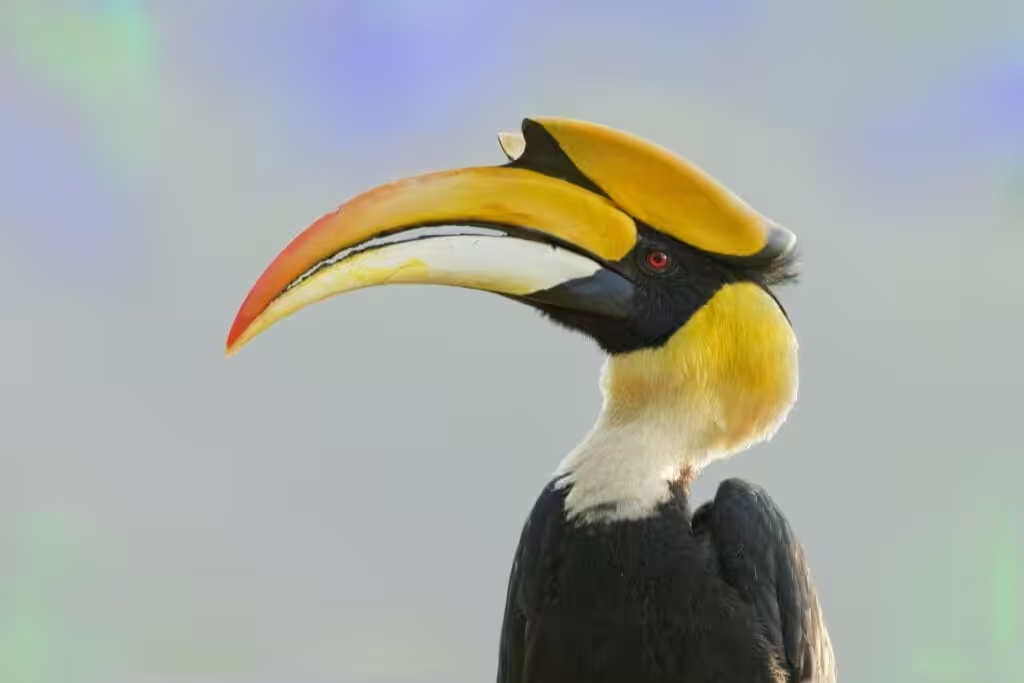
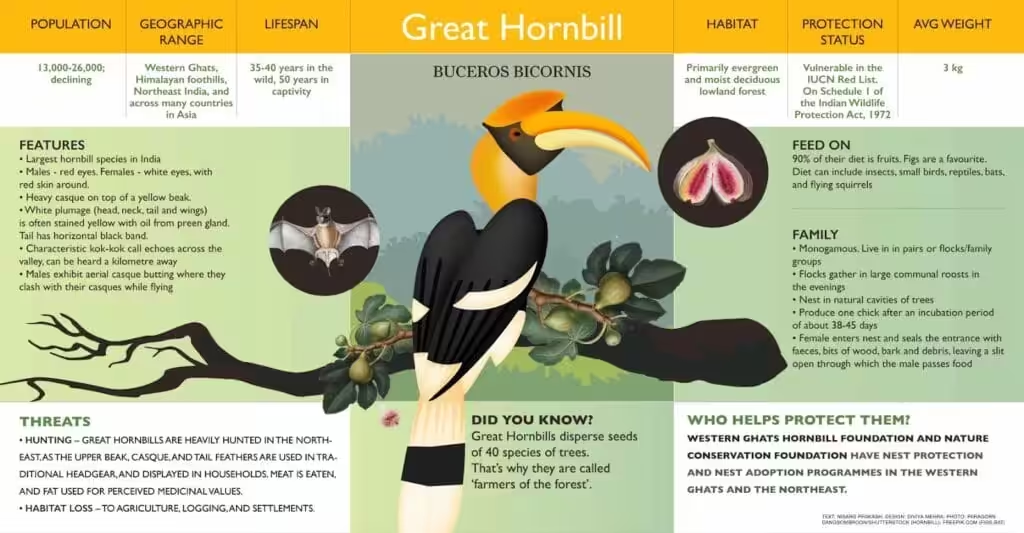
- Hornbills are giants among the forest birds: bizarre, spectacular, awe-inspiring. They also play essential roles in forest ecosystems as dispersers of seeds of forest plants.
- Hornbills are large and wide-ranging birds and most species are dependent on tropical forest habitats that contain large and tall trees.
- Habitat: Found in Africa and Southeast Asia, hornbills live in forests, rainforests, or savannas, depending on species.
- India:
- In India, it is found in the Western Ghats, Eastern Himalayas, Northeast, and parts of Central India.
- It serves as the official State Bird of both Kerala and Arunachal Pradesh.
- The Hornbill festival celebrated in Nagaland is named after this, which is the most revered and admired bird for the Nagas.
- Diet: Most hornbills are omnivorous and eat a combination of fruit, insects, and other small wildlife.
India has nine hornbill species, of which four are found in the Western Ghats: Indian Grey Hornbill (endemic to India), the Malabar Grey Hornbill (endemic to the Western Ghats), Malabar Pied Hornbill (endemic to India and Sri Lanka) and the widely distributed but endangered Great Hornbill. India also has one species that has one of the smallest ranges of any hornbill: the Narcondam Hornbill, found only on the island of Narcondam.
IUCN Status: Vulnerable
Tell Google you want more of this.
Add Anantam IAS as a preferred sourceOne tap, and this site shows up more often in your own Top Stories, AI Overviews and AI Mode. Remove it any time.