Why in News?
WHO reported on 16 October that Kenya detected two additional Bundibugyo Ebola cases among family contacts already under quarantine, illustrating how daily monitoring can shorten the interval between illness and isolation.
- Kenya confirmed its second and third cases on 14 and 16 October; both patients were close family members of the first case.
- The first case had travelled from the Democratic Republic of the Congo; the WHO update recorded three confirmed cases, including one death.
- Kenya’s Ministry of Health reported no evidence of community transmission at that update; this was a surveillance assessment, not proof that undetected infection was impossible.
- WHO reported no licensed vaccine or specific treatment for Bundibugyo Ebola at the time, while trials were under way in the Democratic Republic of the Congo.
- Finding a case among known contacts can indicate that monitoring is working; rising confirmed numbers do not automatically demonstrate wider uncontrolled transmission.
- Response design follows disease biology: transmission routes and the timing of infectiousness determine which observation and separation measures can interrupt spread.
UPSC Relevance
Prelims Relevance
- Contact tracing: identifying and following people with relevant exposure to a case.
- Quarantine: separating exposed contacts who are not yet ill; exposure does not itself confirm infection.
- Isolation: separating symptomatic or infected people to reduce opportunities for transmission.
- Bundibugyo Ebola: countermeasure availability must be checked for the specific virus involved.
- Transmission: direct contact with infected blood or body fluids, or objects contaminated by them; not airborne spread.
Mains Relevance
GS Paper 2
- Public-health preparedness through contact follow-up, laboratory confirmation and timely access to designated care.
- Accountable risk communication that distinguishes known transmission links from uncertainty.
GS Paper 3
- Using pathogen-specific evidence to select outbreak-control tools and evaluate biomedical claims.
Essay
- Public trust grows when institutions explain both what surveillance establishes and what remains uncertain.
Background and Context
Exposure, Symptoms and the Opportunity to Interrupt Spread
The Kenya update connects a biological fact with an operational response: detecting symptoms early can limit the time available for further exposure.
- Ebola transmission involves direct contact with blood or body fluids from someone sick with, or deceased from, the disease, or contaminated objects; WHO states that it does not spread through the air.
- Exposure is not a diagnosis: a person listed as a contact may never become ill, but a documented opportunity for exposure justifies follow-up rather than assuming that apparent health settles their status.
- WHO explains that people with Ebola do not transmit it before symptoms; monitoring known contacts can help teams recognise the transition to illness and arrange isolation before additional close contact occurs.
- Early symptoms are nonspecific, overlapping with malaria and other common illnesses; recognising an exposure history alongside fever or other symptoms supports investigation, while symptoms alone cannot establish which disease is present.
- Bleeding is not a necessary early signal: WHO describes it as less common and usually later in illness, so waiting for this dramatic feature would misunderstand the purpose of early symptom monitoring.
How Contact Monitoring Connects Quarantine With Isolation
Quarantine and isolation address different stages of risk; the Kenya cases show why a response needs a reliable connection between them rather than interchangeable labels.
- Contact tracing identifies people with relevant exposure, including family members, care providers and travel contacts; its practical value comes from linking those people to follow-up rather than merely producing a completed list.
- Quarantine concerns exposed contacts before they are ill, reducing opportunities for later exposure while monitoring continues; it does not mean that everyone separated has a confirmed infection or will eventually develop disease.
- Daily symptom and temperature checks were conducted through a 21-day observation period, reflecting the longest reported interval from exposure to illness; one symptom-free check cannot substitute for completing the appropriate monitoring period.
- Isolation becomes relevant when illness appears: the two family contacts were transferred into designated treatment arrangements after early detection, connecting surveillance to care while limiting opportunities for their infection to reach others.
- New cases within quarantine remain possible until monitoring ends; detecting such cases does not by itself mean quarantine failed, because its immediate purpose includes finding illness early and reducing onward exposure.
What the Update Establishes and What It Does Not
Interpret the findings through confirmed links and the specific virus involved; neither reassuring surveillance language nor a familiar disease name removes the need for qualification.
- Both additional cases were linked to the imported case, supporting an identifiable transmission chain in the reported investigation; this is different from finding infections with no established connection to a known source.
- No evidence of community transmission was the Kenyan ministry’s assessment at the update; it describes what investigations had established, not a guarantee that surveillance could detect every infection immediately or without gaps.
- Bundibugyo-specific evidence matters: the reported absence of a licensed vaccine or specific treatment applies to this virus, so the availability of countermeasures for other Ebola viruses cannot automatically settle response options here.
- Supportive care remains important even without a licensed specific treatment; WHO reported care in designated units and emphasised that early supportive care improves survival prospects, without suggesting that every patient’s outcome is predictable.
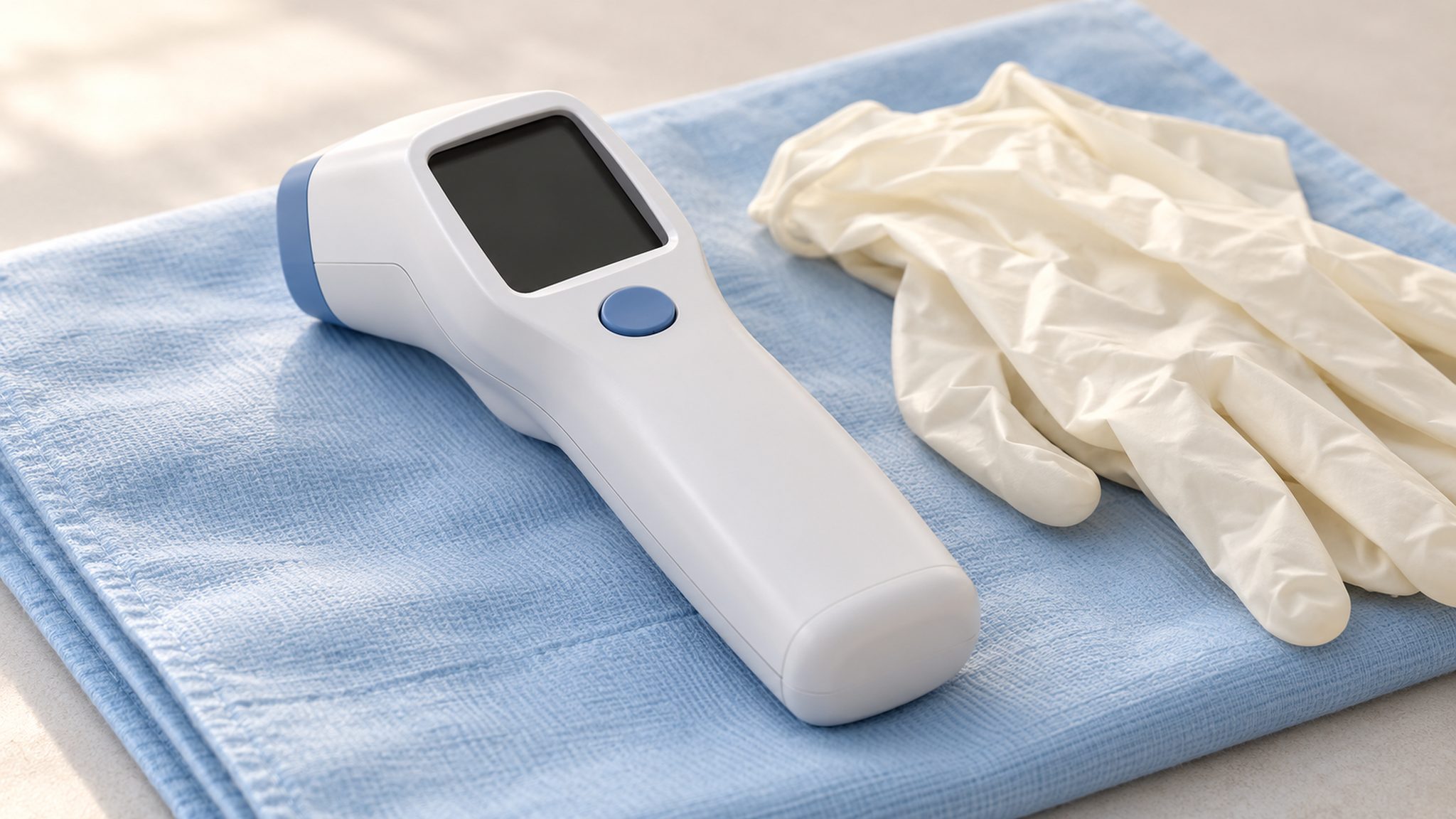
- Layered response capacity links monitoring with laboratory testing, trained staff, infection prevention and communication; a thermometer or contact list alone cannot provide the diagnosis, safe care and follow-up that containment requires in practice.
Way Forward
Make Every Follow-Up Actionable
- Close the monitoring-to-care gap: ensure contact teams can rapidly communicate emerging symptoms to laboratory and treatment services through a clear referral pathway.
- Explain restrictions accurately: distinguish exposure from confirmed infection and tell affected families what observation involves, reducing stigma that could discourage cooperation.
- Report uncertainty explicitly: publish whether new cases have known links, whether contacts remain under follow-up and the date of the surveillance assessment.
Conclusion
- Contact monitoring works through timing: it connects known exposure to repeated observation and prompt isolation when illness appears, reducing opportunities for onward transmission while helping patients reach designated care earlier.
- The exam lesson is disciplined inference: known links explain the reported cluster, surveillance language has limits, and countermeasure claims must match the virus involved rather than the broad label of Ebola.
UPSC Practice Questions
Prelims MCQ 1
With reference to the Ebola response described by WHO in Kenya, consider the following statements:
- Quarantine of a contact establishes that the person has a confirmed infection.
- Ebola can spread through direct contact with contaminated objects.
- Detection of illness among quarantined contacts can demonstrate effective monitoring.
How many of the above statements are correct?
(a) Only one (b) Only two (c) All three (d) None
Answer: (b) Only two
Explanation:
Statements 2 and 3 are correct. Quarantine addresses exposure and risk; it does not itself confirm infection. Monitoring aims to identify illness early among contacts.
Prelims MCQ 2
Which interpretation best reflects the Kenyan Ministry of Health’s statement that there was no evidence of community transmission at the update?
(a) Every possible infection had been conclusively excluded. (b) Further cases among quarantined contacts were impossible. (c) Investigations had not established community transmission at that point. (d) All Ebola vaccines could be used against Bundibugyo Ebola.
Answer: (c) Investigations had not established community transmission at that point.
Explanation:
The statement is a time-specific surveillance assessment. It does not guarantee zero undetected infection or determine the suitability of a vaccine for a particular Ebola virus.
UPSC Mains Questions
- Explain how contact tracing, quarantine and isolation perform different but connected functions in controlling an Ebola outbreak.
- Why must public-health authorities qualify reassuring surveillance assessments and distinguish virus-specific countermeasures? Discuss with reference to Kenya’s Ebola response.
Source: WHO Regional Office for Africa.
Frequently Asked Questions
What is the difference between quarantine and isolation?
Quarantine concerns people with relevant exposure who are not yet ill. Isolation separates symptomatic or infected people to limit transmission. Contact monitoring helps response teams recognise when a person needs assessment and isolation.
Why are Ebola contacts monitored for 21 days?
WHO’s Kenya update describes 21 days as the longest interval before illness can appear after exposure. Repeated checks across that period help detect emerging symptoms; a single symptom-free observation does not complete monitoring.
Does a new case in quarantine mean containment failed?
Not necessarily. A contact may develop illness from an earlier exposure while under observation. Early detection within quarantine can show that monitoring is functioning and reduce opportunities for further transmission.
Does Bundibugyo Ebola have a licensed vaccine?
The WHO update reported no licensed vaccine or specific treatment for Bundibugyo Ebola at that time, with trials under way. Claims about vaccines for other Ebola viruses should not be transferred automatically to Bundibugyo.
What does no evidence of community transmission mean?
It describes the findings available to the Kenyan Ministry of Health at the update. The reported additional cases had known links; the statement does not prove that every possible undetected infection has been excluded.
Tell Google you want more of this.
Add Anantam IAS as a preferred sourceOne tap, and this site shows up more often in your own Top Stories, AI Overviews and AI Mode. Remove it any time.