Why in News?
The Health Ministry reported on 17 October that FSSAI had published draft pesticide residue limits for tea, inviting stakeholder comments before finalisation.
- The 16 October draft proposes tea limits of 20 mg/kg for acetamiprid and 50 mg/kg for imidacloprid.
- These are proposed maximum residue limits, not newly finalised legal standards; the ministry describes their application as subject to finalisation.
- The proposal concerns measurable residues in a commodity; it does not prescribe a safe daily quantity of tea for an individual.
- Food regulation must connect farm pest control, laboratory measurement and consumer exposure without treating any one measure as a complete safety assessment.
- Public consultation allows the scientific basis, practical compliance requirements and enforcement implications of proposed standards to be examined before finalisation.
UPSC Relevance
Prelims Relevance
- Maximum residue limit: concentration in a food commodity.
- Acceptable daily intake: lifetime daily exposure expressed per kilogram of body weight.
- FSSAI: Indian food standards authority.
- Codex Alimentarius Commission and Joint FAO/WHO Meeting on Pesticide Residues.
- Good agricultural practice and supervised residue trials.
Mains Relevance
GS Paper 2
- Evidence-based food standards and transparent consultation.
- Coordination between regulators, laboratories and food businesses.
GS Paper 3
- Crop protection, residue monitoring and agricultural supply-chain compliance.
Essay
- Trust in regulation depends on explaining what a safety benchmark can and cannot establish.
Background and Context
What a Residue Limit Measures
A residue limit gives the laboratory a commodity-specific compliance benchmark; understanding its unit prevents a common confusion about consumer safety.
- A maximum residue limit is a concentration expressed in milligrams of pesticide residue per kilogram of the food commodity. The kilogram refers to the tested food, not the body weight of its consumer.
- The Health Ministry release identifies acetamiprid and imidacloprid in tea as the subjects of the draft. It does not turn the proposed benchmarks into final obligations merely by announcing them publicly.
- A pesticide residue can include specified conversion products, metabolites and impurities of toxicological significance. Measuring only the original chemical may not answer the regulatory question if the relevant residue definition includes other substances.
- Good agricultural practice concerns nationally authorised uses under conditions necessary for effective pest control, while leaving the smallest practicable residue. It is a disciplined use framework, rather than permission to apply pesticides without constraints.
- A laboratory finding and the applicable final standard must be read together when deciding compliance. A proposed concentration cannot replace the standard legally governing a consignment while consultation and finalisation are still pending.
How Concentration Becomes Dietary Exposure
Consumer risk assessment asks how much chemical a person takes in, not merely how much residue appears in a sample.
- The Codex glossary defines acceptable daily intake as daily intake over a lifetime without appreciable health risk, on the evidence available at evaluation. Its reference unit is chemical mass per kilogram of body weight.
- Concentration and intake answer different questions: exposure depends on residue levels and the amount consumed. Expressing that intake relative to body weight makes it comparable with the corresponding toxicological benchmark used in assessment.
- Dietary assessment must consider relevant food consumption and residue information across the diet. Reading a commodity limit alone cannot establish total intake of that pesticide or show how much exposure comes from other foods.
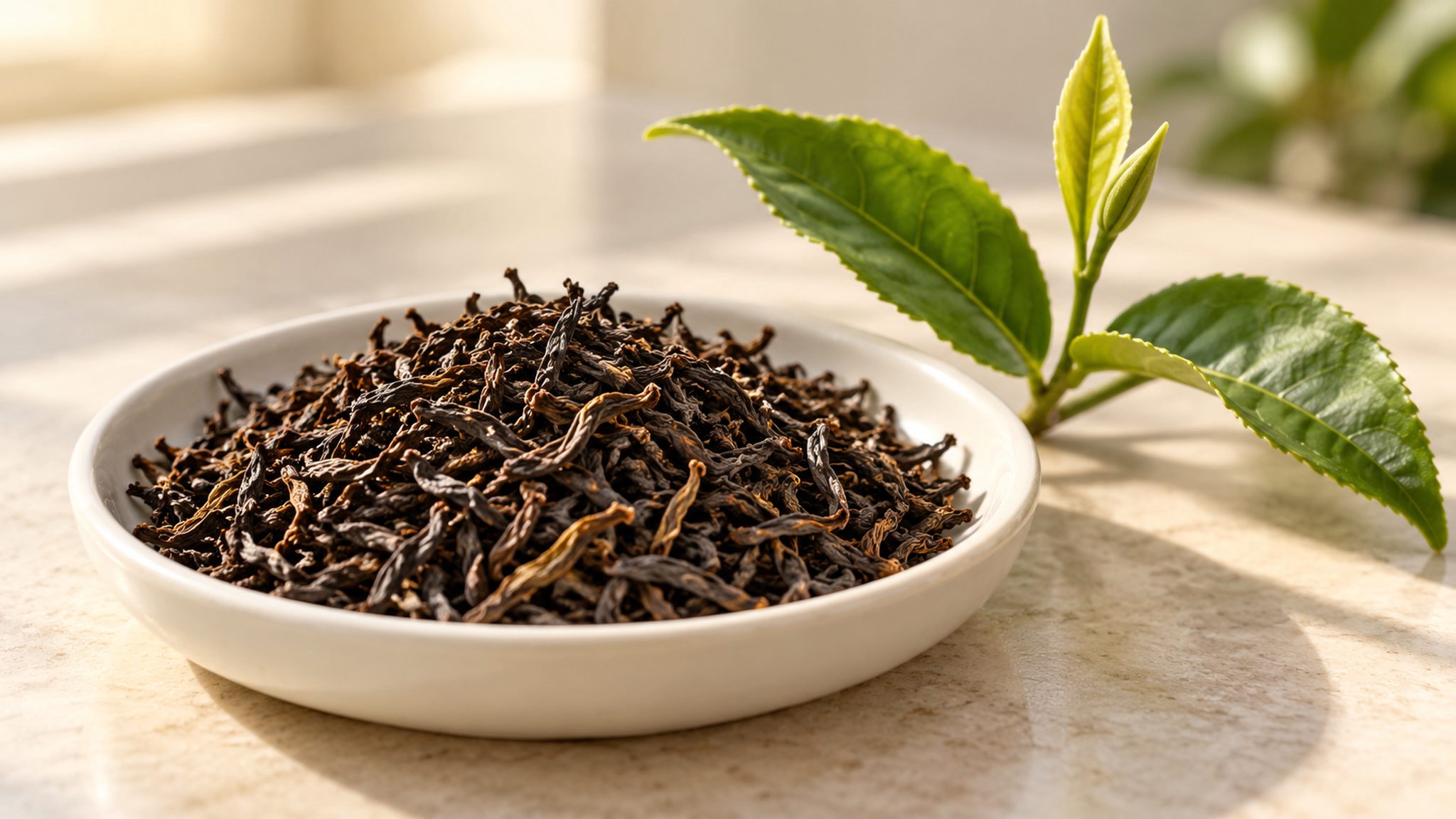
- For tea, the tested commodity and consumed beverage must not be casually treated as identical. Any numerical estimate of exposure from brewed tea needs supported preparation and residue-transfer assumptions, rather than an invented conversion.
- Codex MRLs combine toxicological assessment with residue evidence from supervised trials and authorised uses. Dietary residue estimates are compared with the ADI; the standard is intended to connect practical crop protection with consumer protection.
What Makes Compliance Evidence Credible
The useful distinction is between a measurable limit and the wider evidence needed to interpret it responsibly in food regulation.
- National pesticide-use averages describe agriculture at an aggregate scale. They cannot establish residue concentrations in a particular tea batch or substitute for dietary assessment of consumers with different consumption patterns and body weights.
- A foreign residue limit can inform regulatory comparison, but a lower numerical limit alone does not prove a complete safety case. The commodity, residue definition, authorised practices and exposure assessment also need examination.
- Analytical capability matters because a standard must be measurable with acceptable certainty. Codex defines the limit of determination through reliable identification and quantification in a specified commodity using a regulatory method of analysis.
- Sampling and traceability should connect a tested lot to its producer and handling history. As a governance measure, this makes an adverse result useful for targeted investigation instead of leaving responsibility across the supply chain unclear.
- Exceeding an applicable MRL raises a compliance problem; the number alone does not diagnose poisoning in a consumer. Assessing health implications requires exposure information, while enforcement still addresses the failure to meet the standard.
Way Forward
Make the Evidence Auditable
- Publish the residue-trial and exposure rationale supporting the proposed limits so consultation can test assumptions rather than debate isolated numbers.
- Align sampling, validated laboratory methods and lot traceability so growers and enforcement authorities can identify where compliance fails.
- Explain the distinction between draft standards, final limits and dietary risk in public communication; avoid national averages as reassurance about individual products.
Conclusion
- Tea residue regulation links a measurable commodity standard with evidence about authorised agricultural use and dietary exposure. Its credibility rests on explaining that connection, not presenting a single concentration as a universal guarantee.
- For a governance answer, distinguish consultation from final law and compliance from exposure assessment. Strong enforcement needs dependable testing, traceable consignments and transparent reasoning about how the proposed standard protects consumers.
UPSC Practice Questions
Prelims MCQ 1
With reference to pesticide residue assessment, consider the following statements:
- An MRL expresses concentration in a food commodity.
- The ADI is expressed relative to the body weight of the consumer.
- Low national pesticide use proves that every food consignment meets its applicable residue limit.
How many of the above statements are correct?
(a) Only one (b) Only two (c) All three (d) None
Answer: (b) Only two
Explanation:
Statements 1 and 2 are correct. Aggregate pesticide use cannot establish residue concentrations or compliance in an individual consignment.
Prelims MCQ 2
Which evidence best connects a commodity residue limit with assessment of long-term dietary exposure?
(a) The number of countries registering a pesticide (b) The national average quantity of pesticide applied per hectare (c) Dietary residue estimates compared with the acceptable daily intake (d) The retail price of the commodity
Answer: (c) Dietary residue estimates compared with the acceptable daily intake
Explanation:
Codex links dietary residue estimates with the ADI. The comparison incorporates intake and body weight rather than relying on commodity concentration alone.
UPSC Mains Questions
- Explain how maximum residue limits and dietary exposure assessment perform different but connected roles in food safety regulation.
- What institutional and technical conditions are necessary for effective enforcement of pesticide residue standards in agricultural supply chains?
Sources: PIB, Ministry of Health and Family Welfare and Codex Alimentarius glossary.
Frequently Asked Questions
Are the announced tea limits already final law?
No. The Health Ministry describes them as proposed limits in draft amendment regulations. Their finalisation is still required; an announcement of a draft must not be reported as a newly operative final standard.
What is the difference between an MRL and the ADI?
An MRL concerns residue concentration in a food commodity. The ADI concerns daily chemical intake over a lifetime without appreciable health risk, expressed relative to the consumer’s body weight.
Does a lower national pesticide-use average prove that tea is safe?
No. A national average does not measure residue in a specific batch or the intake of an individual consumer. Product testing and dietary exposure assessment address those different questions.
Can the proposed tea limit be converted directly into exposure from a cup?
No. Such an estimate needs the amount consumed and supported assumptions about preparation and residue transfer into the beverage. A commodity concentration alone does not provide those inputs for a credible numerical calculation.
Tell Google you want more of this.
Add Anantam IAS as a preferred sourceOne tap, and this site shows up more often in your own Top Stories, AI Overviews and AI Mode. Remove it any time.