Context:
After eight years, the kurinji flower (Strobilanthes sessilis) has bloomed again in Gudalur, Nilgiris district, Tamil Nadu — a newly notified reserve forest.
UPSC Relevance:
Environment
UPSC PYQ:
Q. Recently, our scientists have discovered a new and distinct species of banana plant which attains a height of about 11 meters and has orange coloured fruit pulp. In which part of India has it been discovered? (2016)
(a) Andaman Islands
(b) Anaimalai Forests
(c) Maikala Hills
(d) Tropical rain forests of northeast
Neelakurinji Flower:
The scientific name of the Neelakurinji is named after the Kunthi River in Kerala’s Silent Valley National Park where it is abundantly found.
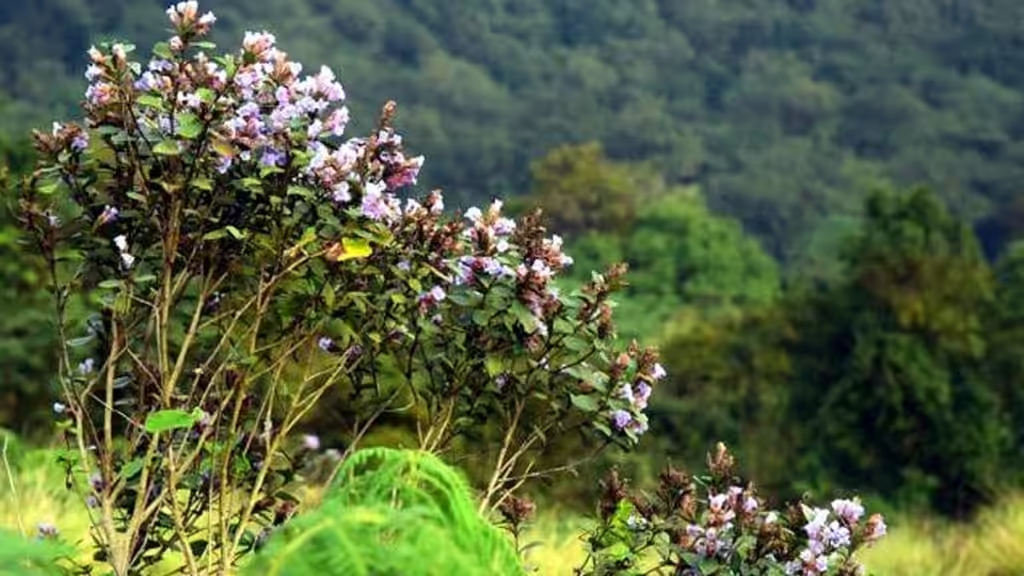
- Strobilanthes kunthiana (Nees) T. Anderson ex Benth locally known as Neelakurinji is an endemic to Western Ghat, India and belongs to the Acanthaceae family.
- It has a unique flowering pattern to bloom every 12 years.
- Origin: The origin of this species is Asia. It is native mostly to tropical Asia and Madagascar, but it extends to north temperate regions of Asia.
- Habitat: is an endemic undershrub that grows above 1800 m in the sholas of the Western Ghats. Plants which bloom like Neelakurinji, i.e., at long intervals are called plietesials.
- Distribution: It is endemic to Western Ghats, India (Karnataka, Kerala, and Tamil Nadu)
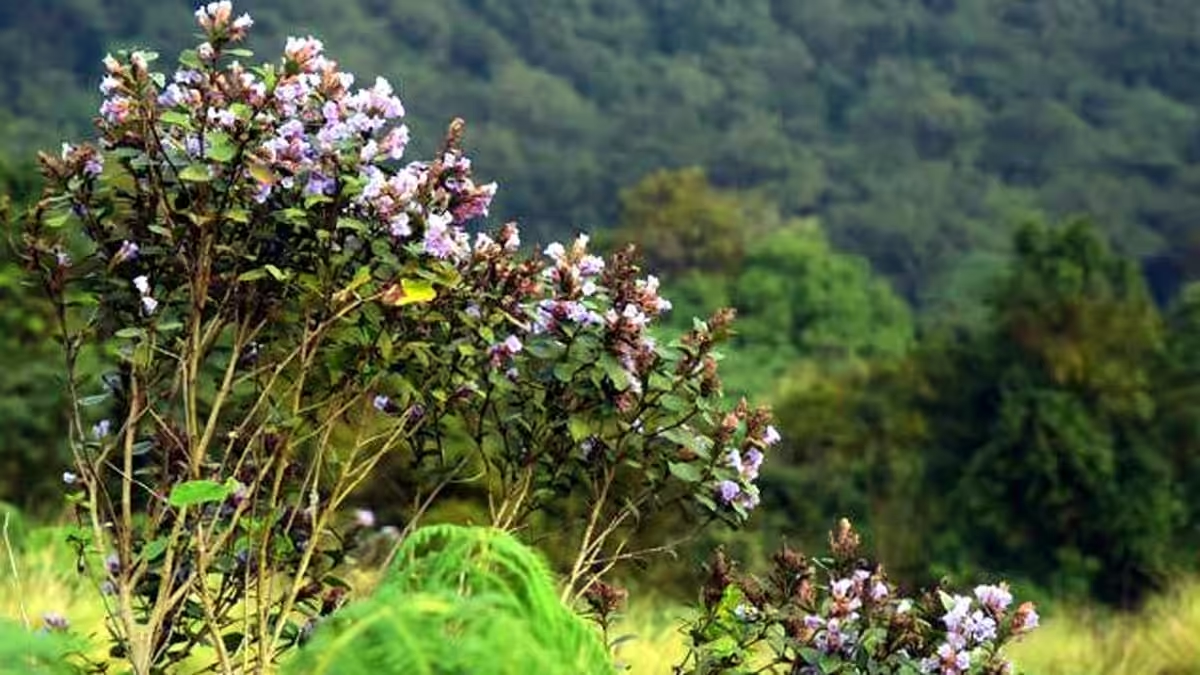
Neelakurinji (Strobilanthes kunthiana), the purplish flowering shrub, which blooms once in 12 years, has been included on the IUCN (International Union for Conservation of Nature) official Red List of threatened species.
Tamil Nadu’s ‘Paliyan’ tribe used the Neelakurinji flowers to calculate age.
Tell Google you want more of this.
Add Anantam IAS as a preferred sourceOne tap, and this site shows up more often in your own Top Stories, AI Overviews and AI Mode. Remove it any time.