Why in News?
On 10 November 2026, the Department of Pharmaceuticals invited fresh applications under the medical device PLI scheme, extended its duration to 2035–36 and revised the conditions for claiming incentives.
- The government removed the minimum sales threshold for an incentive claim and reduced the minimum investment required.
- Applicants have three years to set up facilities in the covered segments.
- The department expected the application portal to open within ten days of the announcement.
- A country can assemble a scanner while importing the detector that makes imaging possible. The revised scheme targets such gaps in domestic manufacturing.
- Investment and sales measure different stages of production. A change in one eligibility condition affects how a manufacturer moves from setting up a plant to claiming support.
UPSC Relevance
Prelims Relevance
- Implementing department: Department of Pharmaceuticals, Ministry of Chemicals and Fertilizers.
- PLI stands for Production Linked Incentive.
- Critical components have a dedicated target segment.
- The minimum investment requirement continues at a reduced level.
Mains Relevance
GS Paper 3
- Assess how component production changes the domestic share of value added in medical equipment.
- Examine the trade-off between opening eligibility to smaller manufacturers and verifying their claims.
Essay
- Industrial capability can depend on mastering a particular part of a complex product.
Background and Context
Which Manufacturers Can Apply?
The scheme groups products according to what firms make and how far domestic production has developed.
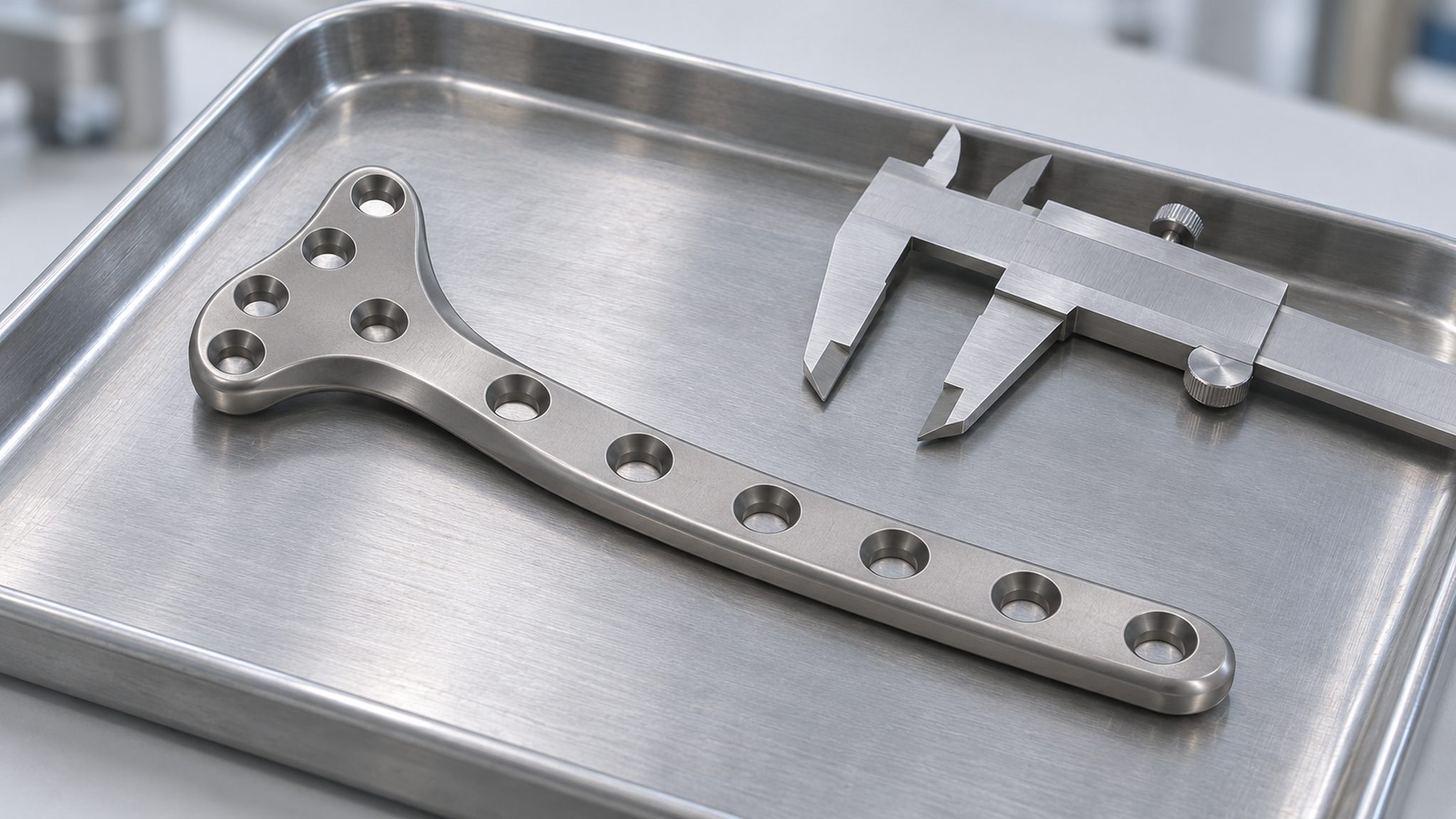
- The first segment covers consumables, disposables and implants. An orthopaedic plate illustrates a finished implant whose manufacture requires a workshop to shape the part and check its dimensions against the design.
- The second segment covers critical components. An X-ray detector has a distinct function inside an imaging machine. A supplier can specialise in making that part while another firm integrates the complete system.
- The third segment covers high-end devices at an early stage of domestic manufacture. Here the policy question is whether producers can establish a reliable manufacturing process and then repeat it at scale.
- The fourth segment covers high-end devices assembled in India using a supply chain that still needs deeper domestic manufacture. An assembly line can operate even while its specialised inputs come from overseas.
- An applicant may submit multiple applications across one or more target segments. The categories describe manufacturing activities, so a firm should identify the product or component associated with each proposed investment.
What Changed for an Incentive Claim?
Read the revision by separating expenditure on the facility from sales after production begins.
- The minimum investment requirement governs the scale of investment expected from an applicant. The department reduced that requirement, giving a smaller proposed project more scope to qualify under the revised conditions.
- Previously, the minimum sales threshold acted as a qualifying hurdle for a claim. The revision removes that hurdle. A manufacturer can examine its claim under the revised rules even with lower sales.
- The change leaves the other conditions relevant. A firm must still establish that its project belongs to a covered segment and satisfies the investment requirement before treating projected incentive receipts as available funds.
- The setup period gives applicants time to install equipment and establish production. A manufacturer preparing a project appraisal should distinguish the cost incurred during setup from sales it expects after the line starts.
- The department announced a long application window and expected the portal to become operational after the announcement. An invitation to apply establishes an opportunity for manufacturers. Approval and payment are later decisions.
How Can Component Production Deepen the Supply Chain?
A finished device can contain parts made by several suppliers. Its final assembly location reveals only one stage.
- Consider an imaging system assembled from an imported detector, electronics and a locally made housing. The assembler can supply a finished machine while procurement of the detector still depends on an overseas producer.
- If a domestic supplier starts making the detector, the equipment maker gains a local source for one critical input. Qualification of that part for use in a finished system remains an engineering task.
- For an MSME, specialising in one part may be feasible when developing an entire high-end machine exceeds its resources. The component segment recognises that route into the medical device supply chain.
- To assess industrial outcomes, ask which parts firms now manufacture, which inputs they continue to import and whether equipment makers can source those parts consistently. Counting complete machines alone leaves those questions open.
Way Forward
Track What Each Facility Produces
- Record which manufacturing stage a project adds to the domestic supply chain.
- Compare the planned facility with evidence of actual production when reviewing implementation.
- Track the availability of qualified local components for producers of finished devices.
Conclusion
- The revision changes two separate entry conditions. A firm faces a lower investment requirement and can consider an incentive claim without first crossing the former minimum sales threshold.
- A useful test of manufacturing depth follows one critical part from its supplier into a finished device. That shows what capability India gains when a producer moves beyond final assembly.
UPSC Practice Questions
Prelims MCQ 1
With reference to the revised medical device PLI scheme, consider the following statements:
- It includes a target segment for critical components.
- It allows applications in more than one target segment.
- It reduces the minimum investment requirement.
How many of the above statements are correct?
(a) Only one (b) Only two (c) All three (d) None
Answer: (c) All three
Explanation:
The department identified a critical-component segment, permitted multiple applications across segments and retained a reduced minimum investment requirement.
Prelims MCQ 2
Which change most directly increases manufacturing depth in an imaging equipment supply chain?
(a) Establishing domestic production of a detector previously imported for assembly (b) Importing additional complete scanners for resale (c) Changing the packaging of an imported device (d) Opening a sales showroom for an imported scanner
Answer: (a) Establishing domestic production of a detector previously imported for assembly
Explanation:
Making a critical input domestically adds a production stage to the local supply chain.
UPSC Mains Questions
- Examine how the revised medical device PLI segments address gaps between assembly and domestic component manufacture.
- How can the government assess whether revised incentive conditions have improved manufacturing capability in medical devices?
Source: PIB, Department of Pharmaceuticals.
Frequently Asked Questions
Which department announced the revised scheme?
The Department of Pharmaceuticals in the Ministry of Chemicals and Fertilizers invited fresh applications on 10 November. It announced that the medical device PLI scheme would extend to 2035–36.
Does removing the sales threshold guarantee a payment?
An applicant can make a claim without clearing the former minimum sales hurdle. The covered manufacturing segment, reduced investment requirement and remaining conditions still matter to the claim.
Can a component manufacturer apply independently of a finished-device maker?
The scheme identifies critical components as a target segment. A manufacturer can seek support for an eligible component project, subject to the applicable investment and claim conditions.
What does local assembly tell us about import dependence?
Local assembly identifies where parts are brought together. Understanding import dependence requires identifying where the individual parts are made, particularly specialised components such as imaging detectors.
Tell Google you want more of this.
Add Anantam IAS as a preferred sourceOne tap, and this site shows up more often in your own Top Stories, AI Overviews and AI Mode. Remove it any time.