Why in news:
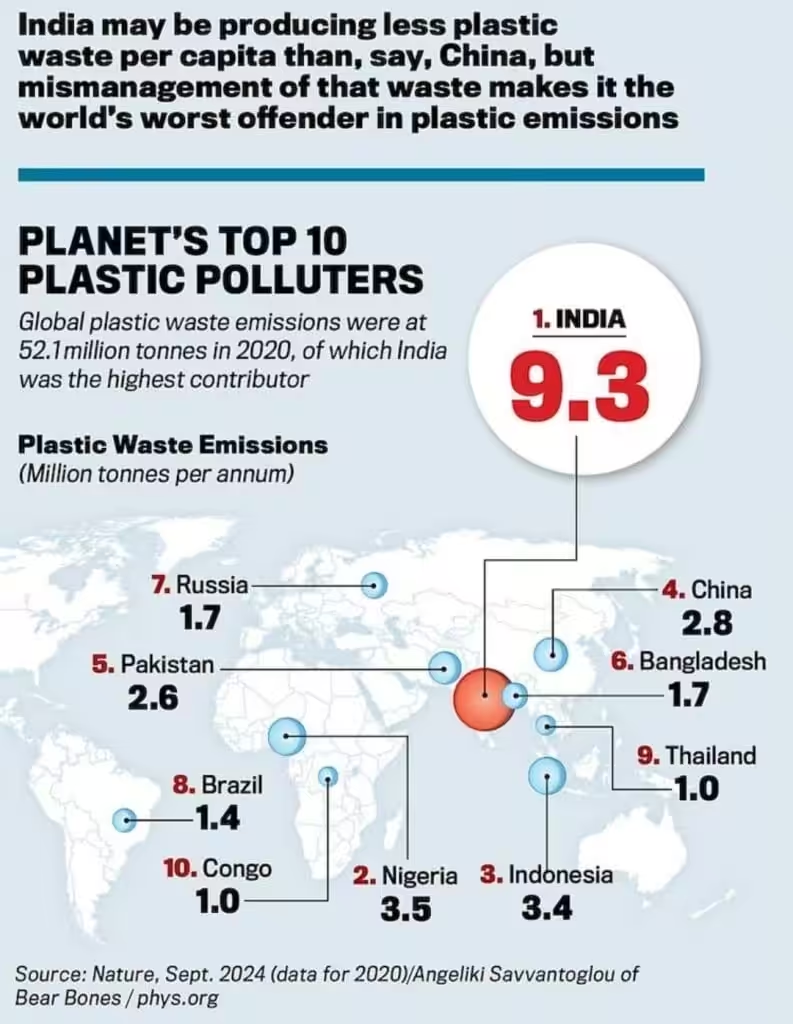
The major sources of ‘microplastic’ pollution along India’s coasts are “riverine inputs” and abandoned, lost, and discarded fishing gear, Union Minister of State for Science and Technology Jitendra Singh said in a written response to a question in the Lok Sabha.
UPSC CSE UPSC CSE Relevance:
UPSC has shown key interest in issues related to environmental pollution in GS 3. Plastics as a theme has been appearing in Prelims also lately.
UPSC Mains PYQ :
Question: What are the impediments in disposing of the huge quantities of discarded solid wastes which are continuously being generated? How do we remove safely the toxic wastes that have been accumulating in our habitable environment? (2018) GS3, 10 marks
UPSC Prelims 2024
Q: Consider the following statements:
Statement I: Many chewing gums found in the market are a source of environmental pollution.
Statement II: Many chewing gums contain plastic as gum base.
Which one of the following is correct in respect of the above statements?
A) Both Statement-I and Statement-II are correct and Statement-II explains Statement-I
B) Both Statement-I and Statement-II are correct, but Statement-II does not explain Statement-I
C) Statement I is correct, but Statement II is incorrect
D) Statement I is incorrect, but Statement II is correct
Findings of Recent Study:
- The Ministry of Earth Sciences (MOES), through the National Centre for Coastal Research (NCCR), conducted field surveys along India’s coastline between 2022 and 2025 to assess microplastic and marine debris levels.
- The findings indicated that the predominant sources of microplastic pollution are riverine in-puts and abandoned, lost, and discarded fishing gear (ALDFG).
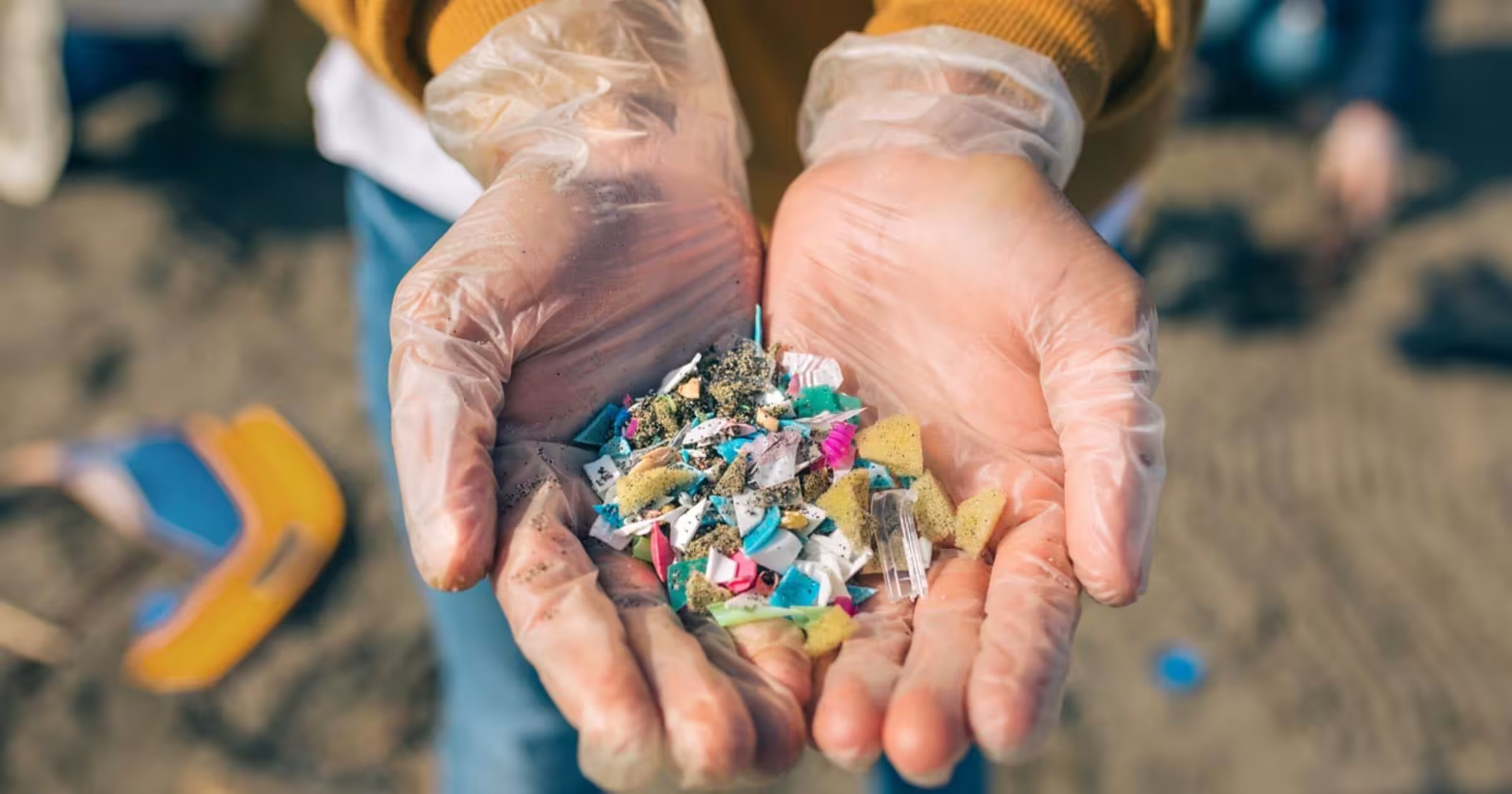
What are Microplastics?
- Tiny plastic particles less than 5mm in size.
- Scientists call the present era ‘Plasticene’ due to the presence of plastic everywhere from blood to Antarctica.
| Type | Definition | Examples |
| Primary | Manufactured intentionally at small sizes | Microbeads, plastic pellets (nurdles), glitter, seed coatings, synthetic textile fibers |
| Secondary | Result from breakdown of larger plastics | Fragments from bottles/bags, fibers from clothing, tire dust, fishing net particles |
Impacts of Microplastics on Environment
- Marine ecosystem : proves fatal once ingested by marine fauna as it may cause suffocation, inflammation and choke critical glands & pores.
- Terrestrial Ecosystem: contaminates soil structure, fertility, affecting yields in long run and contaminates freshwater resources.
- Food Chain Contamination : can move through the food web, starting from small organisms like zoo-plankton to humans Bioaccumulation in higher predators.
- Human health: exposure via food, water, skin contact can have carcinogenic effects.
- Chemical Pollution – Microplastics can absorb & transport harmful chemicals including Persistent Organic Pollutants (POPs), which can further exacerbate their toxic effects on life on earth.
- Disruption of ecosystem processes: Microplastics can alter microbial communities, disrupt nutrient cycling such as nitrogen processing, and potentially destabilize vital systems like ocean carbon storage by interfering with the biological carbon pump.
Plastic Waste Management Rules for 2025:
1. Enhanced Traceability through Labeling and Technology
- Barcode and QR Codes: A significant change effective from July 1, 2025, is that Producers, Importers, and Brand Owners (PIBOs) will have the option to provide required product information on plastic packaging through barcodes or Quick Response (QR) codes.
- Unique Number: Alternatively, they can print a unique number issued under relevant laws on the plastic packaging.
- Mandatory Information: This information, whether provided via a code or a number, must include details such as the PIBO’s name, their registration certificate number from the Central Pollution Control Board (CPCB) portal, and the thickness of the plastic packaging in certain cases.
- CPCB Publication: The CPCB will maintain and publish a list of PIBOs who have provided this product information, updating it quarterly on its website.
- A National Plastic Waste Reporting Portal was launched on June 5, 2025, to facilitate mandatory online submission of annual reports, a move away from physical reporting.
2. Strengthened Extended Producer Responsibility (EPR)
- Accountability: The amendments aim to make plastic products more traceable throughout their lifecycle, holding industry players accountable for their environmental impact.
- Recycled Content Targets: There are specific targets for the use of recycled plastic content. For example, a mandate for 30% recycled content in rigid Category-1 PET packaging for beverages was to be effective from April 1, 2025. However, there has been some recent discussion and proposed amendments that could allow brand owners to carry forward shortfalls in meeting this target over the next three years, causing some uncertainty and concern within the recycling industry.
3. Penalties for Non-Compliance:
- New Rule 19: A new Rule 19 has been inserted into the Plastic Waste Management Rules, introducing penalties for contravention.
- Legal Framework: Any person who fails to comply with the provisions of these rules will be liable to a penalty in accordance with Section 15 of the Environment Protection Act. This provision strengthens the enforcement of the rules and provides a clear legal framework for penalizing non-compliant entities.
Strategies to deal with microplastic challenge:
- Strict reinforcement of nationwide ban on single use plastics which constitutes 43% of all plastics and is most likely to be disposed of in the open leading to creation of microplastics.
- Strict implementation of Plastic Waste Management Rules 2025.
- Creating awareness : A “National Plastic Pollution Reduction Campaign (NPPRC)” was launched for the period from June 5 to October 31, 2025, with a focus on reducing plastic pollution in various areas.
- Effective solid waste management with segregation at source to prevent dumping of plastics at landfills.
- Sustainable products and alternatives to plastics must be incentivised. Plastic Waste Management Rules 2021 gave 10 years to industries to look for alternatives to hard to recycle multilayered plastics in food packaging etc.
- Chemical recycling and upcycling of polymers.
- Promoting use of waste plastics as a structural material in blocks, pavements, roads etc. For Example- Plastone is a plastic based synthetic Granite. Use of Polyblend in laying roads.
- Promote biodegradable plastics and bioplastics that do not leave any microplastic behind on degradation.
About international plastic pollution treaty:
5th meeting of the United Nations(UN) Intergovernmental Negotiating Committee (INC-5) in Busan, South Korea.
- Countries negotiating a legally binding agreement to tackle plastic pollution have completed their fifth round of discussions, but the treaty is yet to be finalized.
- The treaty under negotiation stems from a resolution adopted by the UN Environment Assembly in 2022.It aims to cover the entire life cycle of plastics — from production and design to final disposal.
- Countries such as the European Union, along with several Latin American and African nations, pushed for setting limits on plastic production. However, this proposal faced resistance from nations including India and China.
- The draft lacks clear provisions for phasing out specific plastic chemicals and products.
- While it provides definitions for plastic and plastic products, it does not adequately define key terms like microplastics, nanoplastics, primary plastic polymers, and recycling.
Tell Google you want more of this.
Add Anantam IAS as a preferred sourceOne tap, and this site shows up more often in your own Top Stories, AI Overviews and AI Mode. Remove it any time.