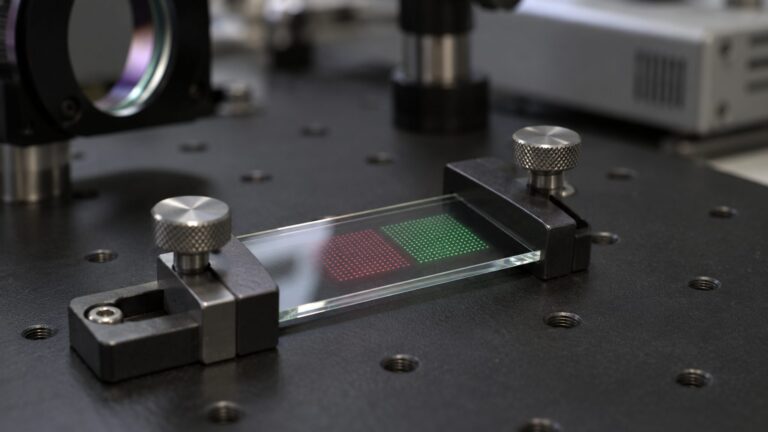
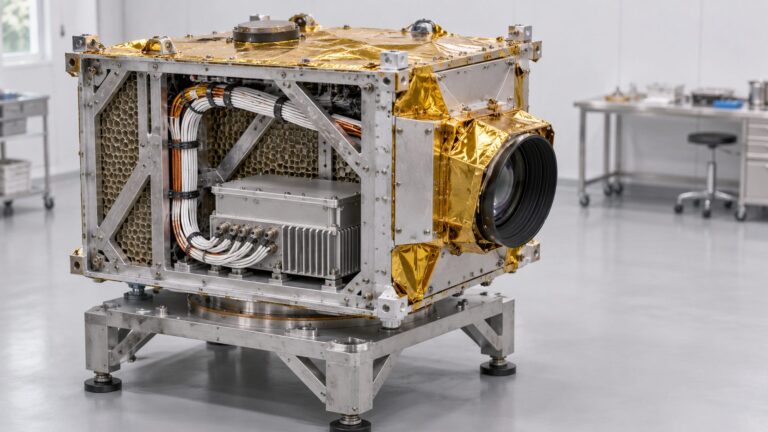
Why in News?
The Hindu reported on November 28 that ISRO’s Human Space Flight Centre had invited industry proposals for Mission ANTARIKSH, an Earth-based human spaceflight engineering simulation facility.
- The November 26 Expression of Interest seeks capable Indian vendors or industrial consortia. It begins an assessment for a subsequent procurement process.
- The proposed facility combines representative spacecraft modules with mission control and specialised task systems, enabling coordinated rehearsal and examination of crew interaction with equipment.
- The scope includes integration, testing and commissioning, followed by operation and maintenance. The invitation itself establishes neither a contract award nor an operational facility.
- Ground simulation lets engineers repeat a task under controlled conditions, observe problems and change equipment or procedures before the next run.
- Different simulators reproduce different parts of a mission. Results are useful when the reproduced conditions and remaining physical differences are understood.
UPSC Relevance
Prelims Relevance
- HSFC is ISRO’s Human Space Flight Centre.
- Human-in-the-loop simulation includes people interacting with a simulated system.
- Hardware-in-the-loop testing connects physical equipment with a simulation.
- Neutral buoyancy balances an object’s weight with the upward force of water.
- Weight offloading uses an external supporting force to reduce the weight a subject must support.
Mains Relevance
GS Paper 3
- Engineering infrastructure for human spaceflight and domestic industrial capability.
- Limits of ground simulation, safety assessment and evidence needed before flight.
Background and Context
Integrated Modules and Crew Interfaces
The proposed facility brings crew, equipment and mission control into a shared simulation so their interactions can be examined together.
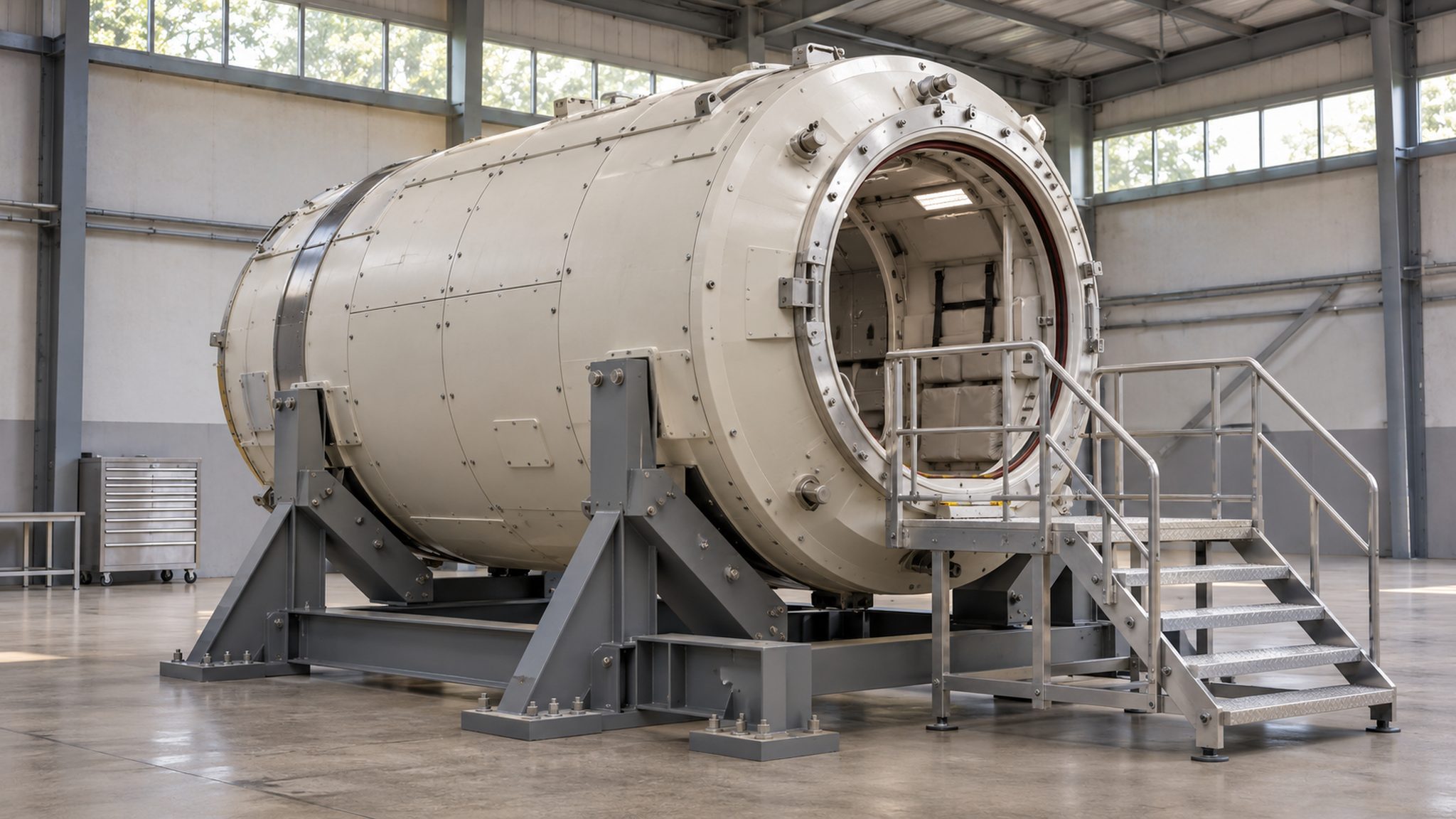
- The EOI specifies Gaganyaan and Bharatiya Antariksh Station simulator modules. These representative spaces would allow examination of movement, equipment use and operating procedures within the types of modules envisaged for human spaceflight.
- Mission control integration connects crew activities with the people and systems directing a simulated campaign. This permits assessment of communication, coordination and responses when the scenario requires decisions across different operating positions.
- Human-in-the-loop simulation includes a person’s actions and responses within the test. Hardware-in-the-loop simulation connects real equipment to the simulated environment, allowing engineers to examine how components behave during a controlled sequence.
- The proposed docking systems include consoles and a mechanical platform for approach, alignment, contact and capture. Operable hatches would support rehearsal of crew transfer and latching procedures at the relevant interfaces.
- The HSFC document also provides for reconfiguration and repeated campaigns. Revising a setup between runs allows engineers to examine the effects of a changed procedure, interface or equipment arrangement.
Simulating Reduced Weight on Earth
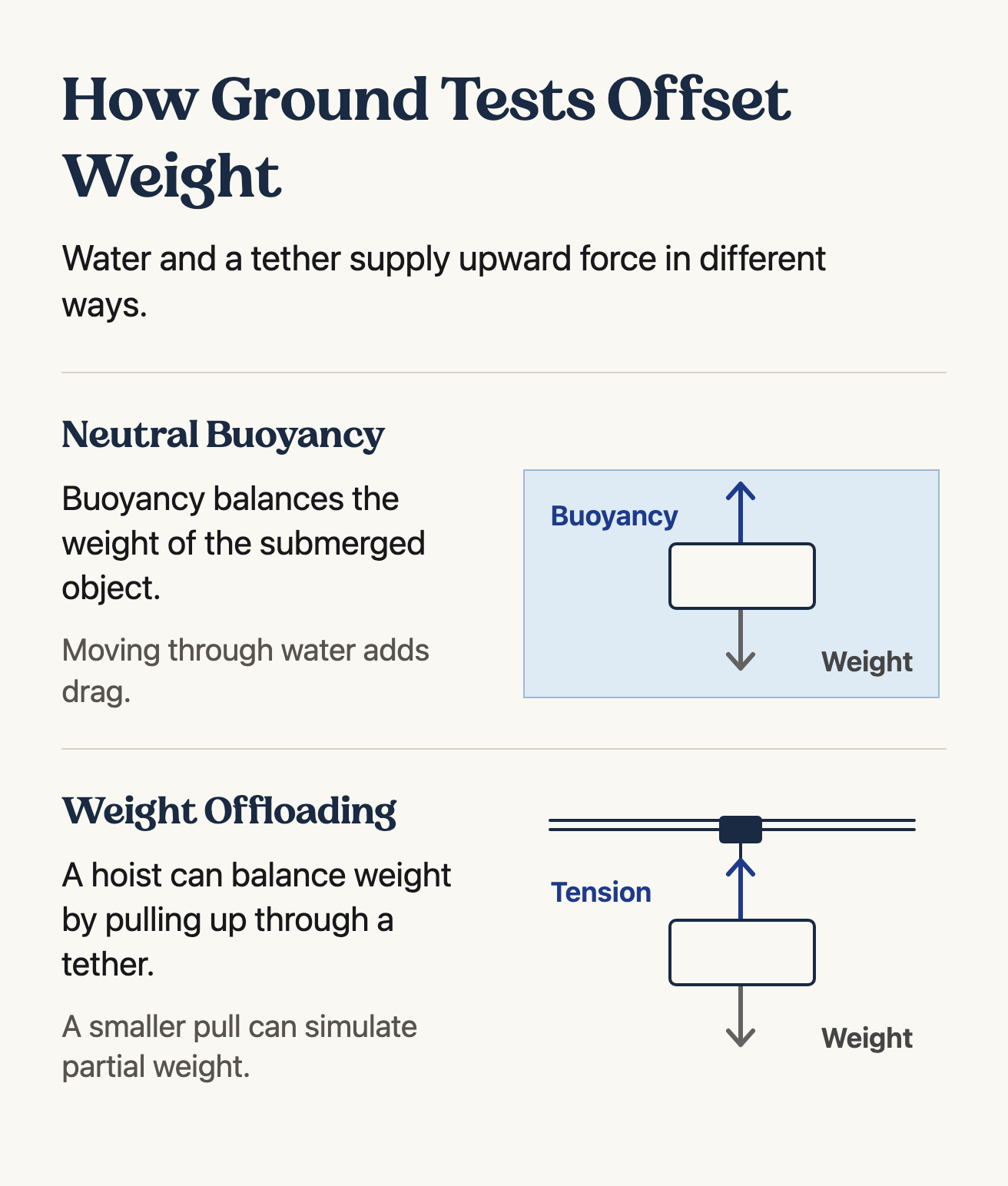
Buoyancy and mechanical offloading supply upward support in different ways, allowing selected tasks to be rehearsed under altered loading conditions.
- In a neutral-buoyancy setup, water supplies an upward force that balances the submerged object’s weight. The resulting support can help a person practise movement and equipment handling associated with spacewalk tasks.
- Water drag affects movement through a tank. A task’s speed and resistance can differ from orbital conditions, so an underwater result needs interpretation alongside the physical effects introduced by the simulation environment.
- A weight-offloading system applies an upward pull through a harness or tether. Adjusting that support changes the weight the subject must bear while Earth’s gravitational force continues to act.
- The EOI’s internal gravity-offload system combines body-weight support with movement tracking for translation, equipment handling and hatch operations. Harnesses and emergency recovery provisions form part of the specified engineering arrangement.
- NASA’s analog facilities illustrate these methods. Their use shows why simulation fidelity must be judged for a particular task, including the forces reproduced and the constraints introduced by water or supporting hardware.
From a Rehearsal to Engineering Evidence
A useful simulation identifies what was tested, records the conditions and connects the result to a specific engineering decision.
- The proposed facility would examine crew-system interactions, including coordination during contingencies. A successful equipment test alone cannot establish how a person will perceive a cue, reach a control or complete a procedure.
- Controlled scenarios make repeated comparisons possible. Engineers can hold important conditions steady while changing an interface or instruction, then examine whether the observed performance changes across otherwise comparable runs.
- Task realism has several dimensions, including geometry, forces and timing. A mock-up may reproduce a hatch’s arrangement well while representing only selected environmental conditions, so each conclusion needs a clearly defined scope.
- The EOI stage assesses vendor capability for participation in subsequent procurement. The document states that detailed contractual terms and requirements will follow through a Request for Proposal, preserving a distinction between invitation and delivery.
- Ground-test results contribute evidence for engineering development and procedure validation. Flight readiness requires the wider programme’s applicable qualification and safety work, with the limitations of each analog carried into the interpretation of its findings.
Way Forward
Make Each Test Decision-Useful
- Define the task and acceptance criteria before a campaign, including the conditions that the simulator can reproduce.
- Record configuration and deviations so teams can trace a result to the equipment, software and procedures used.
- Connect observed problems to design changes and repeat checks, while keeping unresolved differences from flight conditions visible.
Conclusion
- Mission ANTARIKSH proposes a reusable environment for examining crew interaction with spaceflight equipment, mission control and operating procedures.
- The value of an analog comes from controlled, interpretable evidence. Its usefulness depends on matching the simulation to the task and understanding the physical conditions it leaves unrepresented.
UPSC Practice Questions
Prelims MCQ 1
With reference to ground simulation of human spaceflight, consider the following statements:
- Neutral buoyancy uses an upward force exerted by water.
- A gravity-offload system can support a subject through a harness or tether.
- An Earth-based analog automatically reproduces every condition of orbital flight.
How many of the above statements are correct?
(a) Only one (b) Only two (c) All three (d) None
Answer: (b) Only two
Explanation:
The first two statements describe the supporting forces. Ground analogs reproduce selected conditions and retain limitations, so the third statement is incorrect.
Prelims MCQ 2
What does the Mission ANTARIKSH Expression of Interest primarily seek to establish?
(a) The capability of prospective vendors for a subsequent procurement process (b) Completion of the proposed facility’s commissioning (c) The flight qualification of all Gaganyaan hardware (d) Selection of astronauts for an orbital mission
Answer: (a) The capability of prospective vendors for a subsequent procurement process
Explanation:
The EOI seeks capable Indian vendors or consortia. It describes a proposed facility and precedes a subsequent Request for Proposal.
UPSC Mains Questions
- Explain how integrated ground simulation can improve the assessment of crew-system interactions in human spaceflight.
- Discuss the benefits and limitations of buoyancy and mechanical offloading as analogs for reduced-weight operations.
Sources: ISRO Human Space Flight Centre and The Hindu, November 28.
Frequently Asked Questions
What is Mission ANTARIKSH?
It is a proposed Earth-based human spaceflight engineering simulation facility described in HSFC’s November 26 EOI. Its scope includes representative modules, mission control, specialised task systems and support for repeated campaigns.
Does the EOI mean the facility is operational?
The EOI seeks industry capability for subsequent procurement. The document describes future development, commissioning and operation, with detailed contractual terms to follow through a Request for Proposal.
How does neutral buoyancy differ from weight offloading?
Neutral buoyancy uses water’s upward force to balance weight. Mechanical offloading supplies support through a tether or harness. Each changes loading conditions while introducing its own constraints on movement.
Why are several kinds of simulator useful?
Different setups reproduce different aspects of a mission. Engineers can examine interfaces, tasks and coordination under controlled conditions, then interpret each result within the limits of the conditions that were simulated.
Tell Google you want more of this.
Add Anantam IAS as a preferred sourceOne tap, and this site shows up more often in your own Top Stories, AI Overviews and AI Mode. Remove it any time.