Why in News?
The Hindu reported on November 25 that IN-SPACe’s newly released report identified import dependence and gaps in India’s satellite supply chains.
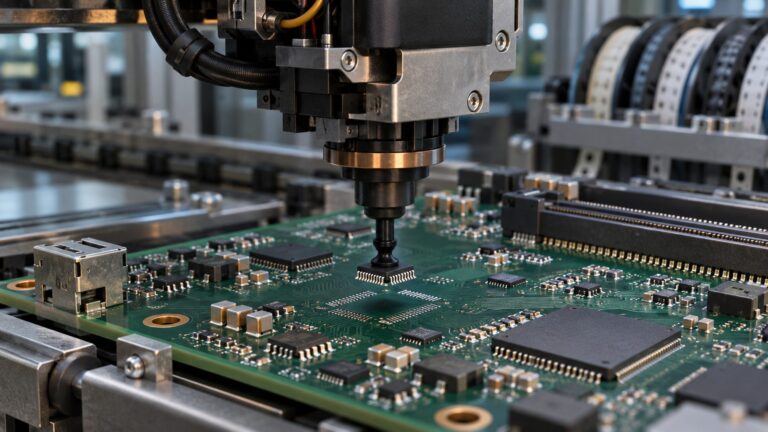
- The IN-SPACe report maps satellite manufacturing capabilities and opportunities, including limitations in domestic production of space-grade microelectronics and advanced subsystems.
- Its recommendations include commercial testing and qualification facilities, research in specialized components and partnerships with established manufacturers. These are proposed development priorities in the report.
- The assessment covers systems, subsystems and components. Its illustrative supplier and product lists describe capabilities and opportunities without establishing each supplier’s market share.
- Satellite assembly depends on components whose performance has been demonstrated for the intended mission.
- Industrial capability includes design, repeatable production, testing and access to customers.
UPSC Relevance
Prelims Relevance
- Satellite bus and payload
- Assembly, integration and testing
- Environmental qualification
- IN-SPACe authorization
- Electromagnetic compatibility
Mains Relevance
GS Paper 3
- Domestic industrial capability and critical technology supply chains
- Testing infrastructure and private participation in the space sector
Essay
- Technological capability and international interdependence
Background and Context
How Components Become a Working Satellite
A satellite combines a platform that supports operations with equipment that performs the mission’s intended task.
- The satellite bus supplies supporting functions such as power, structural support and thermal control. A payload performs the intended service, such as observing Earth or carrying communications, within the platform’s operating limits.
- Integration joins subsystems into a functioning spacecraft. Mechanical fit, electrical connections and operating interfaces must work together, so successful assembly depends on understanding how one subsystem affects the others during operation.
- The report identifies domestic strengths in structural assemblies and fabrication alongside gaps in advanced components. This explains how a country can assemble a satellite while continuing to source some important inputs from abroad.
- A useful industrial assessment follows the value chain into its inputs. The distinction also appears in electronics materials and manufacturing equipment, although satellite parts carry mission-specific performance and reliability requirements.
- Supplier substitution involves more than matching a component’s name. An alternative must satisfy the required interfaces and operating conditions, with evidence that it can perform its assigned role in the integrated system.
Why Testing Is Part of Manufacturing
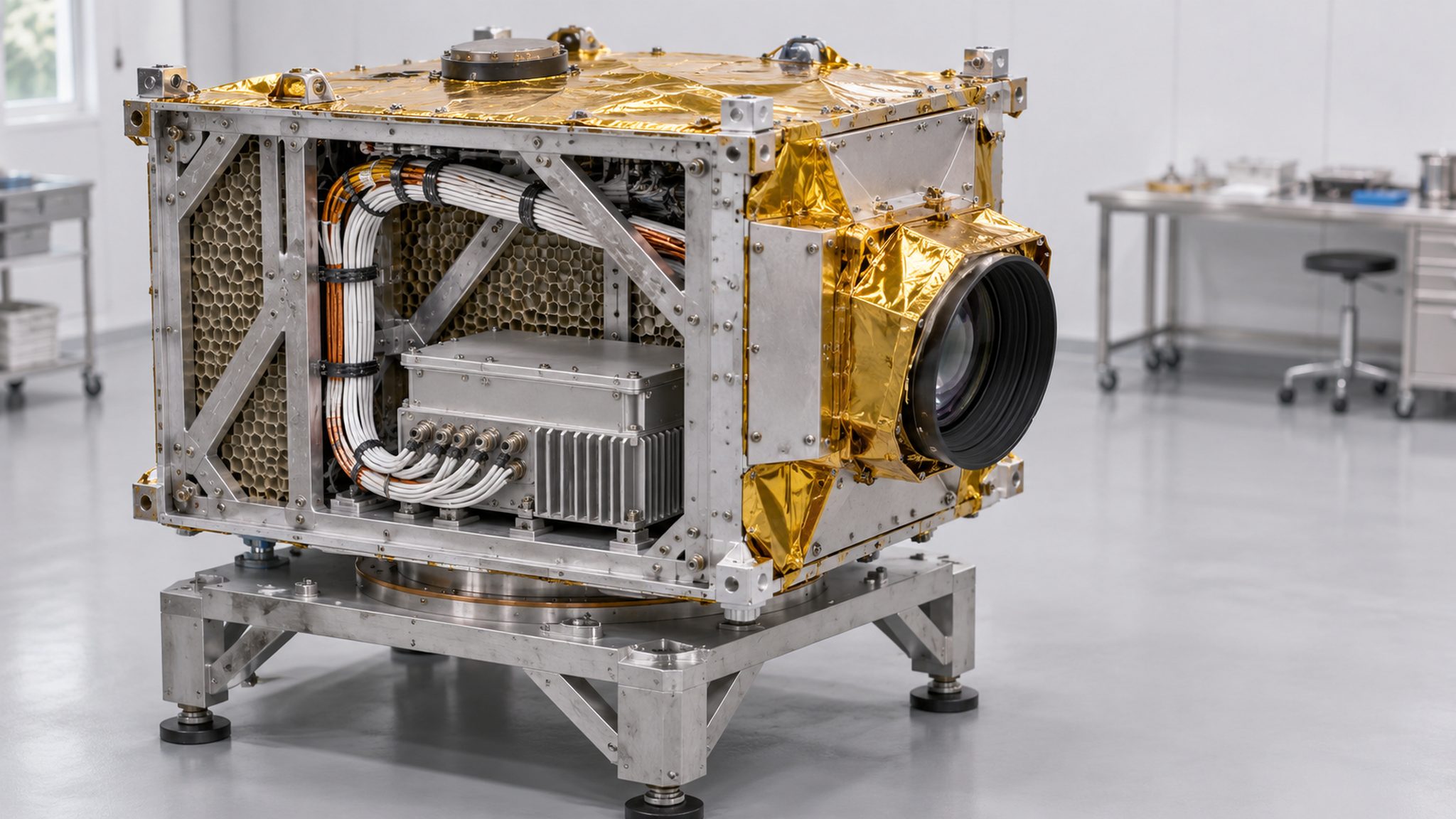
Qualification provides evidence that a design can meet specified requirements under the conditions it is expected to encounter.
- ISRO lists thermal-vacuum, vibration and acoustic testing among available satellite support facilities. These facilities allow engineers to examine hardware under different environmental conditions as part of a planned verification programme.
- Electromagnetic compatibility concerns equipment working together without unacceptable interference. ISRO also lists facilities for this purpose, showing that testing addresses interactions between electrical systems as well as mechanical and thermal conditions.
- A supplier needs repeatable production alongside design competence. Customers need confidence that later units meet agreed requirements, making documentation, process control and traceability relevant to commercial acceptance of a component or subsystem.
- The report recommends commercially operated testing and qualification facilities. Shared specialist infrastructure can help firms obtain necessary evidence without each business building every testing capability internally, subject to suitable access and scheduling arrangements.
- Test results apply to defined requirements and conditions. A passed test supports the relevant performance claim. Evaluating a different configuration or mission requires checking whether the available evidence covers its particular requirements.
Reading the Report’s Opportunities Carefully
A capability map helps identify industrial gaps, while investment and procurement decisions require evidence about individual products and suppliers.
- The report’s illustrative export opportunities include platforms, structures, electronics and specialist services. An opportunity listing signals areas for assessment. Actual orders depend on demonstrated capability, qualification status, customer requirements and commercial terms.
- Supplier counts cannot establish production shares or import dependence by value. Firms supply different products and volumes, so a market-share estimate needs a defined market, comparable values and an appropriate measurement period.
- The Indian Space Policy assigns IN-SPACe a role in promotion and authorization. Its functions include frameworks for standards and access to public facilities, connecting industrial participation with regulatory oversight.
- Authorization answers whether an entity may undertake covered activities. Product qualification examines performance against requirements. The earlier satellite network authorization discussion illustrates the regulatory side of this distinction.
- The report’s recommendations describe possible capability development. Their appearance in an official assessment does not establish that a new subsidy, procurement commitment or testing facility has been approved or implemented.
Way Forward
Connect Capability Support With Evidence
- Prioritize verified component gaps and assess supplier readiness against defined customer requirements.
- Improve access to specialist testing with transparent schedules and documented procedures.
- Track qualified products and repeat orders when evaluating industrial progress.
Conclusion
- Satellite manufacturing capacity grows through reliable components, integration expertise and evidence from testing. These capabilities determine how effectively firms can participate in complex supply chains.
- The report offers a basis for assessing industrial opportunities. Its proposals should be followed through to concrete decisions, delivery and customer acceptance.
UPSC Practice Questions
Prelims MCQ 1
With reference to satellite manufacturing, consider the following statements:
- Satellite integration requires compatibility between subsystems.
- A supplier directory alone establishes each firm’s market share.
- Qualification evaluates performance against specified requirements.
How many of the above statements are correct?
(a) Only one (b) Only two (c) All three (d) None
Answer: (b) Only two
Explanation:
Statements 1 and 3 are correct. Market shares require comparable output or value data and a defined market.
Prelims MCQ 2
Which measure most directly addresses access to specialist verification infrastructure for satellite component suppliers?
(a) Increasing the number of supplier names in a directory (b) Granting authorization without examining product requirements (c) Providing access to suitable testing and qualification facilities (d) Estimating market share from the number of registered firms
Answer: (c) Providing access to suitable testing and qualification facilities
Explanation:
Testing facilities help generate evidence about performance under defined conditions. Directories and registrations do not provide that evidence.
UPSC Mains Questions
- Explain how qualification and testing infrastructure influence private participation in satellite manufacturing.
- How should policymakers distinguish supplier mapping from evidence of domestic industrial capability?
Sources: IN-SPACe and The Hindu.
Frequently Asked Questions
What is a satellite bus?
A satellite bus is the supporting platform that provides functions such as power, structure and thermal control. The payload performs the intended service while operating within the platform’s design limits.
Why does qualification matter?
Qualification supplies evidence that a design meets specified requirements under defined conditions. It helps customers assess suitability for their applications, alongside production controls and other evidence needed for acceptance.
Do supplier counts measure market share?
Supplier counts identify listed participants. Market share requires a defined market and comparable production or value data. Firms may supply different products and quantities, so their numbers alone cannot determine shares.
Are the report’s proposals already implemented?
The report identifies gaps and recommends possible measures. Specific implementation must be established through subsequent decisions and evidence of delivery, such as operational facilities or approved programmes.
Tell Google you want more of this.
Add Anantam IAS as a preferred sourceOne tap, and this site shows up more often in your own Top Stories, AI Overviews and AI Mode. Remove it any time.