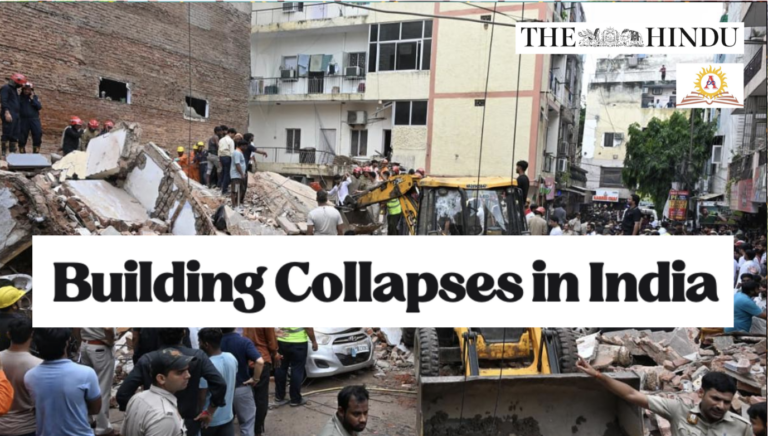
Why in News?
India welcomed the Philippines’ decision to join CDRI during a bilateral meeting in New Delhi on 13 September 2026, linking cooperation with disaster-resilient infrastructure.
- CDRI stands for the Coalition for Disaster Resilient Infrastructure.
- The Prime Minister’s Office reported the Philippines’ decision to join; the release does not establish completed accession formalities or a funded construction project.
- The meeting placed cooperation within the India-Philippines Strategic Partnership, established in August 2025.
- Infrastructure resilience concerns whether essential services can withstand disruption and recover, not simply how much new construction is undertaken.
- International cooperation can improve technical knowledge and risk governance, while implementation still requires decisions by infrastructure owners and public authorities.
UPSC Relevance
Prelims Relevance
- CDRI: Coalition for Disaster Resilient Infrastructure.
- Scope: resilience of infrastructure systems to climate and disaster risks.
- Participation: governments, international institutions, financing bodies, businesses and knowledge institutions.
- Service continuity: maintaining or restoring essential functions during disruption.
- Cascading failure: disruption spreading through connected infrastructure systems.
Mains Relevance
GS Paper 2
- Assess practical cooperation under the India-Philippines Strategic Partnership.
- Distinguish a coalition-participation announcement from binding project commitments.
GS Paper 3
- Explain infrastructure interdependence, maintenance and disaster-risk reduction.
Essay
- Resilience is measured by services that continue when normal conditions fail.
Background and Context
What CDRI cooperation can contribute
CDRI brings infrastructure and disaster risk into the same policy conversation, creating opportunities for learning before damaged assets interrupt essential services during an emergency.
- The coalition connects national governments with international organisations, financing institutions, businesses and knowledge institutions. Its infrastructure focus gives different participants a common problem: reducing vulnerability across systems that societies depend on for everyday services.
- Knowledge cooperation can help authorities compare risk-assessment methods, design choices and maintenance practices. The useful output is an improvement in decisions about real assets, rather than participation being treated as sufficient proof of resilience.
- Capacity building matters because a technical recommendation must be understood by planners, engineers and operators before it can change practice. Cooperation becomes useful when institutions can apply shared knowledge to their own infrastructure constraints.
- Risk governance connects technical evidence with responsibilities and decisions. A hypothetical exposed bridge needs an accountable owner, inspection arrangements and a repair strategy; exchanging engineering knowledge does not remove these domestic implementation requirements.
- The announcement is a decision to join CDRI, welcomed by India. It should not be rewritten as proof of completed accession, a new construction contract or automatic financing for a particular Philippine infrastructure project.
Why service continuity is the real test
A road, power line or hospital matters because of the service it enables; resilience asks what happens to that service when a hazard disrupts operations.
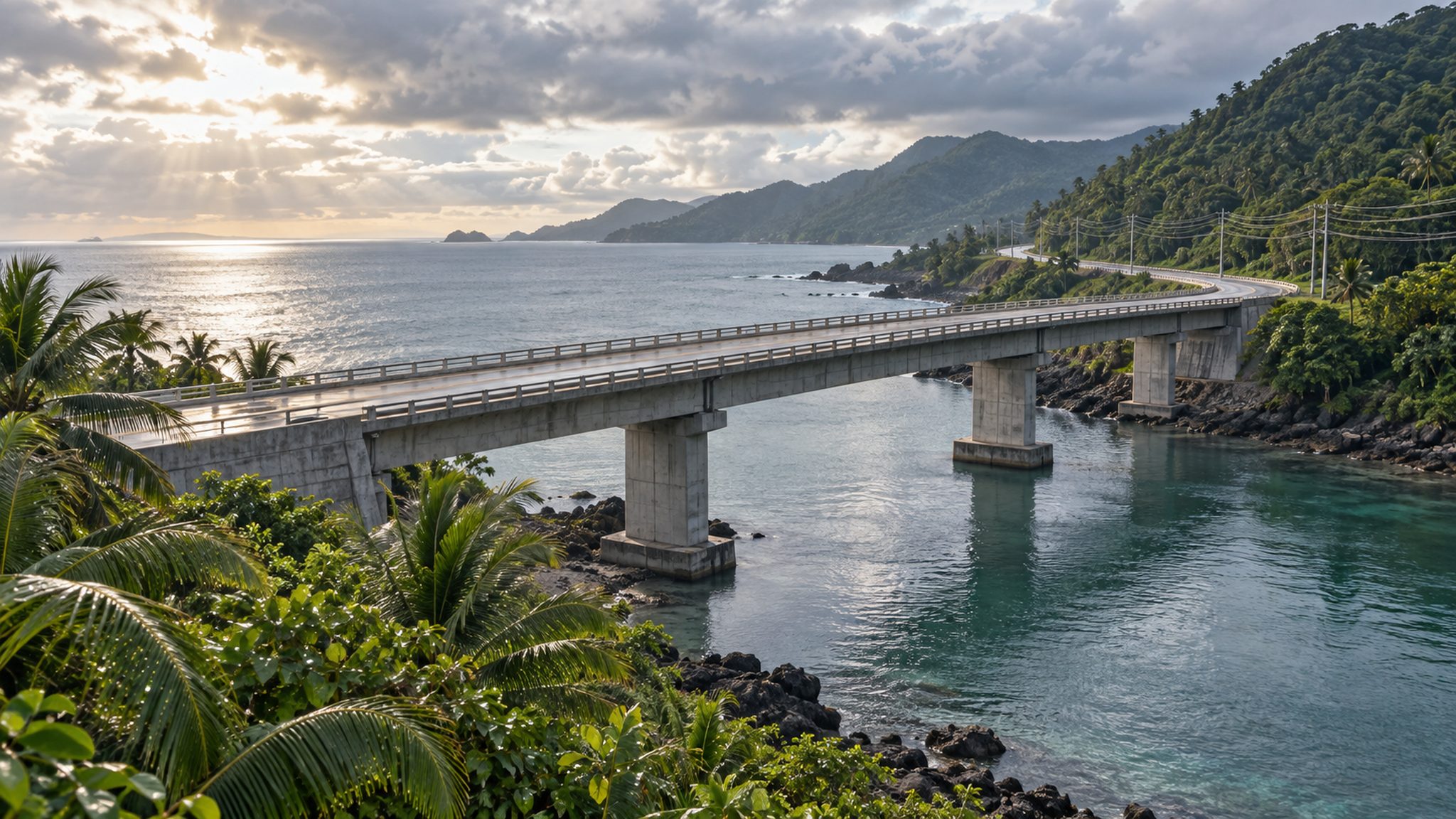
- Consider a coastal road: it may connect settlements with hospitals, markets and evacuation routes. Its resilience depends on whether those connections remain usable or can be restored, not only whether the road surface survives.
- Interdependence changes the analysis. In an illustrative storm scenario, a hospital building may remain intact while damaged access roads delay supplies and electricity failure disrupts equipment; strengthening one asset alone leaves other service dependencies exposed.
- Redundancy means providing a workable alternative when a component fails. An alternate access route or backup electricity can support continuity, but its usefulness depends on capacity, availability and whether the same hazard disables it.
- Maintenance and recovery planning should accompany construction. A drainage channel that is blocked, or backup equipment that cannot operate, can undermine an apparently sound design; operating arrangements need scrutiny alongside the physical structure itself.
- Health infrastructure illustrates this systems approach particularly clearly: beds require power, water, supplies and staff access. Our PM-ABHIM explainer discusses the linked institutional and service requirements behind functioning public-health capacity rather than treating buildings as outcomes.
Resilience, relief and diplomacy are different claims
The new cooperation hook concerns infrastructure resilience; keeping it distinct from disaster relief and defence avoids overstating what the bilateral announcement actually establishes.
- Emergency relief addresses urgent needs during and after a disaster. Infrastructure resilience also concerns decisions made beforehand, including where assets are placed, how they are maintained and how essential functions can continue under stress.
- Preparedness learning can connect the two: disruptions reveal weak links that future investment should address. The NIDM disaster-review approach explains how lessons from actual incidents can inform readiness, rather than remain isolated reports after an emergency.
- Defence cooperation appeared elsewhere in the bilateral discussion, but that does not make CDRI a military alliance. Each initiative should be interpreted through its stated purpose instead of transferring claims between separate parts of diplomacy.
- Project delivery would require further evidence of what is planned, who is responsible and how it is financed. The current statement establishes the participation decision; it does not identify a funded project or construction schedule.
- Policy evaluation should follow the chain from shared knowledge to implemented changes and more reliable services. Fewer disruptions or faster restoration would be more meaningful outcomes than the number of meetings or cooperation announcements alone.
Way Forward
Turn cooperation into operational improvements
- Map service dependencies before selecting projects, including transport, electricity, water and communications links.
- Assign operating responsibilities alongside engineering upgrades, with maintenance funding and workable restoration arrangements.
- Track service outcomes such as interruption and restoration, while distinguishing proposed cooperation from approved and implemented projects.
Conclusion
- The Philippines’ CDRI decision gives India-Philippines cooperation a practical infrastructure-resilience dimension. Its value will depend on whether technical exchange helps authorities and operators protect essential services against disruption and restore them effectively when failures occur.
- For an analytical answer, move from the physical asset to the service it supports, then identify connected systems and implementation responsibilities. Preserve the distinction between a decision to join, a financed project and demonstrated resilience.
UPSC Practice Questions
Prelims MCQ 1
With reference to disaster-resilient infrastructure, consider the following statements:
- Service continuity depends only on whether the main physical structure survives.
- Failure of one infrastructure system can disrupt another dependent system.
- CDRI cooperation is concerned with climate and disaster risks to infrastructure.
How many of the above statements are correct?
(a) Only one (b) Only two (c) All three (d) None
Answer: (b) Only two
Explanation:
Statements 2 and 3 are correct. Services also depend on access, supplies, utilities, operators and other connected systems.
Prelims MCQ 2
What does the September 2026 bilateral statement establish about the Philippines and CDRI?
(a) A funded coastal-bridge construction contract (b) Completed construction of a new emergency network (c) India welcomed the Philippines’ decision to join CDRI (d) A new military mutual-defence obligation
Answer: (c) India welcomed the Philippines' decision to join CDRI
Explanation:
The official statement reports the decision to join. It does not establish the other commitments or outcomes.
UPSC Mains Questions
- Explain why service continuity is a better test of infrastructure resilience than the survival of an individual asset.
- Discuss how India-Philippines cooperation through CDRI can support disaster-risk reduction. Distinguish institutional cooperation from project delivery.
Sources: PIB, Prime Minister's Office and Coalition for Disaster Resilient Infrastructure.
Frequently Asked Questions
What is CDRI?
CDRI is the Coalition for Disaster Resilient Infrastructure, a partnership focused on infrastructure resilience to climate and disaster risks. Its work brings together technical knowledge, capacity building and risk-governance approaches.
What did the Philippines announce about CDRI?
The bilateral statement says India welcomed the Philippines’ decision to join CDRI. It does not establish completed accession formalities, a funded construction contract or an operational infrastructure project resulting from that decision.
How is infrastructure resilience different from emergency relief?
Emergency relief addresses immediate needs during or after a disaster. Infrastructure resilience also involves advance planning, design, maintenance and recovery arrangements that help essential services withstand disruption and resume functioning.
Why can an undamaged hospital still stop functioning?
A hospital depends on electricity, water, equipment, supplies, communications and access for staff and patients. Failure in these connected systems can interrupt healthcare even if the hospital building itself remains intact.
Tell Google you want more of this.
Add Anantam IAS as a preferred sourceOne tap, and this site shows up more often in your own Top Stories, AI Overviews and AI Mode. Remove it any time.