Why in news:
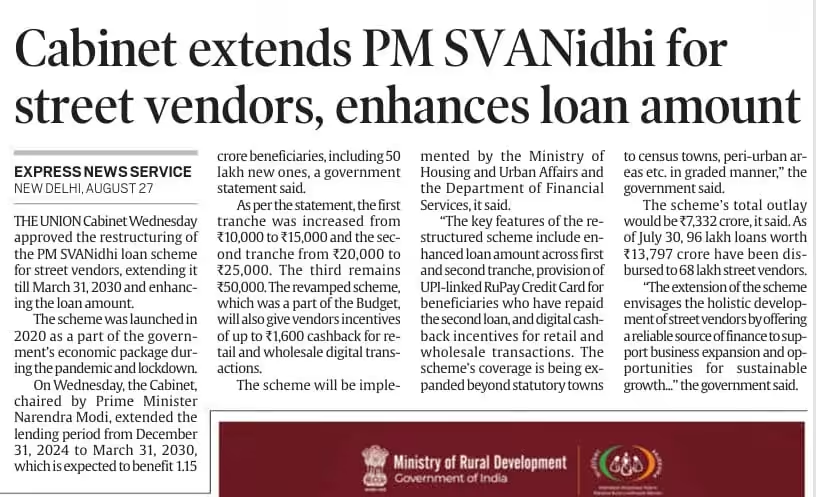
The Union Cabinet has extended the PM SVANidhi Scheme until March 31, 2030, and enhanced the loan limits to support street vendors.
UPSC Relevance:
UPSC has been continuously asking questions based on various Govt. scheme in news. for example-
UPSC PYQ 2016:
Q. With reference to ‘Pradhan Mantri Fasal Bima Yojana’, consider the following statements:
- Under this scheme, farmers will have to pay a uniform premium of two percent for any crop they cultivate in any season of the year.
- This scheme covers post-harvest losses arising out of cyclones and unseasonal rains.
Which of the statements given above is/are correct?
(a) 1 only
(b) 2 only
(c) Both 1 and 2
(d) Neither 1 nor 2
PM SVANIDHI Scheme:
- PM SVANidhi is a central-sector micro-credit scheme launched on 1st June 2020
- Ministry of Housing & Urban Affairs launched a scheme PM Street Vendor’s AtmaNirbhar Nidhi (PM SVANidhi) to empower Street Vendors by not only extending loans to them, but also for their holistic development and economic upliftment.
- The scheme initially facilitated a working capital collateral-free loan of ₹10,000, with subsequent loans of ₹20,000 and ₹50,000 with a 7% interest subsidy. The scheme focuses on increasing the digital footprint in India by promoting the use of digital transactions among street vendors. To incentivize the adoption of digital transactions, a cashback of up to ₹100 per month is given to Street Vendors.
New Cabinet Decisions (August 2025):
Extension of Scheme:
- Expected to benefit 1.15 crore vendors, including 50 lakh new entrants.
- New deadline: March 31, 2030 (from previous March 2024).
Enhanced Loan Amounts:
- Introduced in Union Budget 2024-25
- First tranche: ₹10,000 → ₹15,000
- Second tranche: ₹20,000 → ₹25,000
- Third tranche: Remains at ₹50,000
New Incentives:
- Digital Rupay Credit Card for vendors who repay loans on time.
- Up to ₹1,600 cashback for digital transactions in retail and wholesale.
Implementation:
Jointly by:
- Ministry of Housing and Urban Affairs
- Department of Financial Services
Aim:
The scheme aims to formalize the street vendors and open up new opportunities for this sector to move up the economic ladder. Street vendors represent a very important constituent of the urban informal economy and play a significant role in ensuring availability of the goods and services at affordable rates at the doorstep of the city dwellers. They are known as vendors, hawkers, thelewala, rehriwala, theliphadwala, etc. in different areas/ contexts. The goods supplied by them include vegetables, fruits, ready-to-eat street food, tea, pakodas, bread, eggs, textile, apparel, footwear, artisan products, books/ stationary, etc. The services include barber shops, cobblers, pan shops, laundry services, etc.
Benefits:
- Financial assistance of up to ₹15,000 is provided to street vendors to help them restart and expand their businesses.
- The loan is provided at a low-interest rate of 7%, making it easier for street vendors to repay the loan.
- No collateral is required to avail of the loan, making it more accessible to street vendors.
- There is no processing fee to apply for the scheme, making it cost-effective for street vendors.
- The loan amount can be used for any purpose related to the street vending business, such as buying raw materials, paying rent, or purchasing equipment.
- The scheme provides financial stability to street vendors and helps them to become self-reliant.
- The loan repayment period is one year, which gives street vendors sufficient time to repay the loan.
- The scheme encourages entrepreneurship and helps to create employment opportunities.
- The scheme is aimed at providing financial assistance to street vendors affected by the COVID-19 pandemic, helping them to recover from the economic impact of the pandemic.
- The scheme is implemented at the national level and is available in all States and Union Territories, making it accessible to street vendors across the country.
Eligibility Criteria:
- Street vendors in possession of Certificate of Vending / Identity Card issued by Urban Local Bodies (ULBs).
- The vendors, who have been identified in the survey but have not been issued Certificate of Vending / Identity Card.
- Street Vendors left out of the ULB-led identification survey or who have started vending after completion of the survey and have been issued a Letter of Recommendation (LoR) to that effect by the ULB / Town Vending Committee (TVC).
- The vendors of surrounding development/ peri-urban/rural areas vending in the geographical limits of the ULBs, who have been issued a Letter of Recommendation (LoR) to that effect by the ULB / TVC.
Tell Google you want more of this.
Add Anantam IAS as a preferred sourceOne tap, and this site shows up more often in your own Top Stories, AI Overviews and AI Mode. Remove it any time.