Royalty on Critical Minerals

- The Union Cabinet approved the rationalization of royalty rates for several critical minerals to reduce import dependence and help bidders rationally submit their financial bids in the auction process.
- Graphite – The royalty structure for graphite has been changed from a per tonne-basis (a fixed amount for a specific weight) to an ad valorem basis (a percentage of the average sale price).
- Graphite with less than 80% Fixed Carbon: 4% royalty of the average sale price.
- Graphite with more than or equal to 80% Fixed Carbon: 2% royalty of the average sale price.
- Other Critical Minerals– Specific ad valorem rates have been set for other critical elements like Zirconium, Caesium and Rubidium
Clarification on Royalty vs. Tax
- Royalty is NOT a Tax: In a landmark 2024 judgment, the Supreme Court clarified that the Royalty paid to the Central Government (under the MMDR Act) is a statutory payment for the use of the mineral resource and is not a tax.
- States’ Power to Tax: This clarification empowers State Legislatures to independently levy Taxes (such as cess) on mineral-bearing lands or mineral rights, as this power is derived from the State List in the Constitution and is not automatically restricted by the Central Government’s power to fix the royalty rate.
- The authority to decide royalty and related taxes on minerals in India is primarily divided between the Central Government and the State Governments based on the type of mineral and the nature of the levy under MMDR Act.
| Aspect of Mineral Levy | Authority Responsible | Applicable Minerals/Levy | Legal Framework |
| Royalty on Major Minerals | Central Government (Parliament) | All Major Minerals (e.g., Coal, Iron Ore, Bauxite, Critical Minerals) | Mines and Minerals (Development and Regulation) Act, 1957 (MMDR Act). The rates are specified in the Second Schedule of the MMDR Act. |
| Royalty on Minor Minerals | State Government | Minor Minerals (e.g., building stones, sand, ordinary clay). | State-specific rules made under the MMDR Act. |
| Taxes on Mineral Rights/Land | State Government (State Legislature) | Taxes on mineral-bearing land or mineral rights (often a cess or additional levy). | Entry 50 of the State List and Entry 49 of the State List (Tax on Lands and Buildings) of the Seventh Schedule of the Constitution. |
India’s 30 Critical Minerals and Global Production Leaders
| Sl. No. | Critical Mineral (for India) | Global Production Leader (approx.) |
| 1 | Antimony | China |
| 2 | Beryllium | China, United States |
| 3 | Bismuth | China |
| 4 | Cadmium | China, South Korea |
| 5 | Cobalt | Democratic Republic of Congo (DRC) |
| 6 | Copper | Chile |
| 7 | Gallium | China |
| 8 | Germanium | China |
| 9 | Graphite | China |
| 10 | Hafnium | France, United States |
| 11 | Indium | China, South Korea |
| 12 | Lithium | Australia |
| 13 | Molybdenum | China |
| 14 | Niobium | Brazil |
| 15 | Nickel | Indonesia |
| 16 | Phosphorus | China, Morocco |
| 17 | Potash | Canada |
| 18 | Rhenium | Chile, United States |
| 19 | Silicon | China |
| 20 | Strontium | China |
| 21 | Tantalum | Democratic Republic of Congo (DRC) |
| 22 | Tellurium | China, United States |
| 23 | Tin | China, Indonesia |
| 24 | Titanium | China (for concentrate/sponge) |
| 25 | Tungsten | China |
| 26 | Vanadium | China |
| 27 | Zirconium | Australia |
| 28 | Selenium | Japan, Germany |
| 29 | Platinum Group Elements (PGE) | South Africa |
| 30 | Rare Earth Elements (REE) | China |
India’s Critical Mineral Strategy
Global TB Report, 2025

According to the WHO Global TB Report, 2025, and the Union Health Ministry :
- Steep TB Incidence Fall: India’s TB incidence (new cases per year) fell by 21% from 2015 to 2024.
- India’s pace of decline (21%) is almost double the global decline observed over the same period (12%).
- This decline is highlighted by the WHO report as one of the highest globally, surpassing other high-burden countries.
- The progress is attributed to India’s “innovative case finding approach,” driven by swift uptake of newer technologies and large-scale community mobilisation.
- The number of “missing cases” (people with TB but not reported to the program) dramatically reduced from an estimated 15 lakh in 2015 to less than 1 lakh in 2024.
- Diagnostic Coverage Surged from 53% in 2015 to over 92% in 2024.
- There is no significant increase in the number of multidrug-resistant (MDR) TB patients.
- Treatment Success Rate: India’s treatment success rate reached 90% under the TB Mukt Bharat Abhiyan, launched in December 2024. which is ahead of the global average of 88%.
- The TB mortality rate has significantly decreased from 28 deaths per lakh population in 2015 to 21 deaths per lakh population in 2024.
- The mission achieved extensive reach, screening over 19 crore vulnerable individuals.
Basics of Tuberculosis (TB)
- TB is caused by a bacteria called Mycobacterium tuberculosis.
- It most commonly affects the lungs (pulmonary TB). However, it can affect any part of the body, including the brain, spine, kidneys, and lymph nodes (extrapulmonary TB).
- Transmission: TB is spread through the air when a person with active pulmonary TB disease coughs, sneezes, spits, laughs, or sings. You must breathe in the bacteria to become infected.
- It is not spread by shaking hands, sharing food or dishes, touching bedding.
- Globally, TB remains one of the leading infectious disease killers, despite being preventable and curable.
| Condition | Status | Contagious? | Treatment Recommendation |
| 1. Latent TB Infection (Inactive TB) | The bacteria is present in the body but is inactive (dormant). The immune system has contained the germs. | No. Cannot spread TB to others. | Treatment is often recommended to prevent it from becoming active disease, especially in high-risk individuals. |
| 2. Active TB Disease | The bacteria are multiplying and actively making the person sick. | Yes, if the disease is in the lungs or throat. | Must be treated with a combination of antibiotics to be cured. |
- Treatment Duration: Active TB disease is treated with a combination of antibiotics for a long duration, typically 6 months or longer. Stopping treatment early or taking it incorrectly can lead to the bacteria becoming drug-resistant.
- Drug-Resistant TB (MDR-TB): This is a form of TB caused by bacteria that do not respond to the two most effective first-line TB drugs. It is treatable but requires a much longer course of more complex and expensive drugs.
DNA Profiling
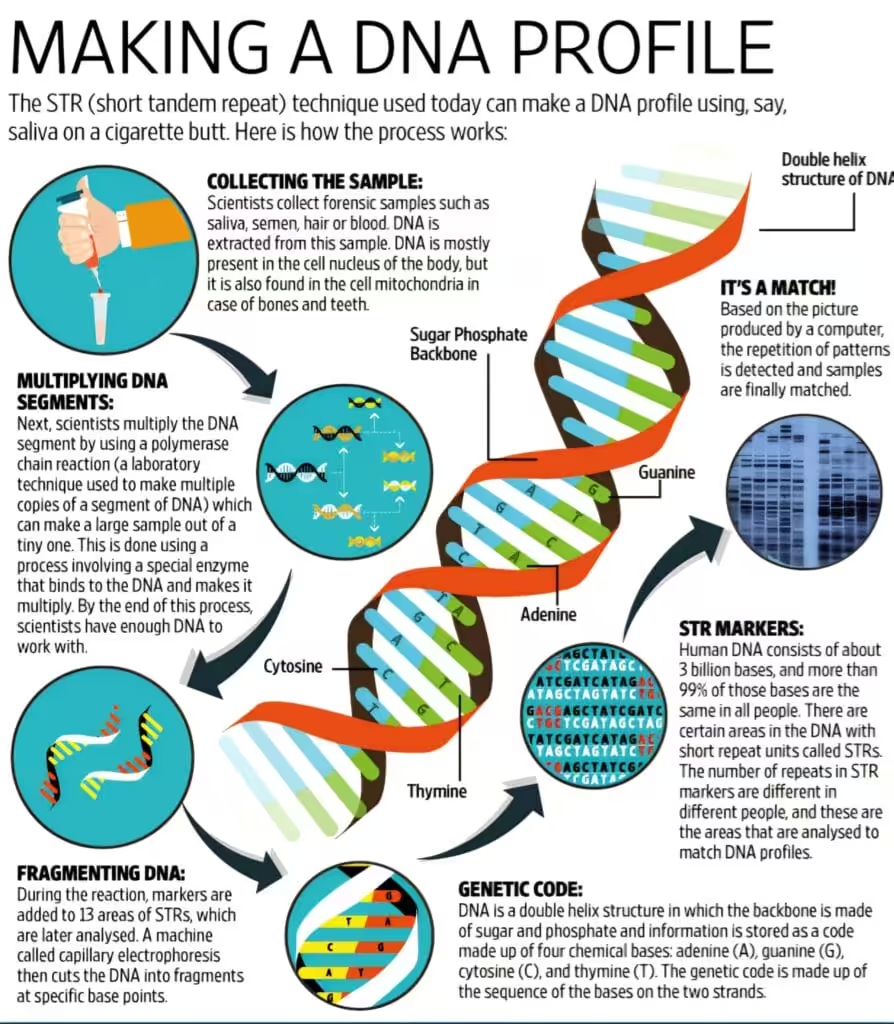
- DNA samples from the mother of Dr. Umar Nabi Bhat (suspected driver in a recent Red Fort explosion) are being matched against unidentified bodies found at the Delhi blast site.
- Forensic experts rely on DNA testing, especially in cases of blasts, fires, or mass disasters where bodies are severely burned or physically unrecognizable, as it is the most reliable tool for identification.
- Sample Source: When facial recognition or fingerprinting is impossible, DNA is extracted from the most preserved parts of the body, typically bones or teeth, as these hard tissues protect genetic material better than soft tissue, even under extreme heat.
- Genetic Inheritance: A child inherits 50% of their DNA markers from their parents, allowing for a high-accuracy confirmation of identity.
Methods of DNA Identification
- Autosomal Short Tandem Repeats (STR) Profiling:
- Method: Analyzes patterns of STRs (small, repeating sequences of DNA) which are unique to every individual.
- Accuracy: Matching 50% of these markers with a parent’s sample can confirm identity with high accuracy.
- Mitochondrial DNA (mtDNA) Analysis:
- Use Case: Employed when nuclear DNA is too badly damaged for STR profiling.
- Inheritance: mtDNA is inherited exclusively from the mother and exists in large numbers within each cell.
- Limitation: It can only confirm maternal lineage, but remains vital when other methods fail.
- Steps in DNA Profiling
- Collection: Biological material is collected (e.g., blood, bone, teeth).
- Extraction: Samples are processed to separate DNA from other cellular components.
- Quantification: The amount and quality of DNA are checked (e.g., using gel electrophoresis).
- PCR Amplification: Selected STR regions are copied millions of times using Polymerase Chain Reaction (PCR) to make them detectable, even if the original sample amount was small.
- Separation and Detection: DNA fragments are separated by size using capillary electrophoresis, which detects the number of repeats at each STR location.
- Profile Generation: The result is analyzed using genotyping software (e.g., GeneMapper) to generate a DNA profile.
- Comparison: The resulting profile is compared with reference samples (from relatives or known items) for identity confirmation.
Global Climate Risk Index (CRI)
- The report is released by Germanwatch, a Bonn-based NGO.
- Long-Term Rank (1995-2024): India is ranked 9th among countries most affected by climate-related disasters over the last 30 years (1995 to 2024).
- This is a slight improvement from the previous report (2023), where India was ranked 8th.
- The nations that suffered the greatest realised risk over the last three decades were:
- Dominica
- Myanmar
- Honduras
- Recent Annual Ranks : India’s ranking for the disasters in the previous year also improved from 10th (in 2023) to 15th now.
- Potential Reasons for Improvement: The improved ranking might be due to a fewer number of disasters in India, or it could indicate the country is steadily improving its resilience.
- The report was presented at the ongoing COP30 climate conference in Belém, Brazil.
- Total Events: India reported as many as 430 extreme weather events in the past three decades.
- Economic Losses: These events resulted in losses worth $170 billion USD.
- Fatalities: India recorded 80,000 fatalities, which is nearly 9.6% of the global total lives lost (8.32 lakh) due to extreme weather events worldwide during the same period.
- Risk Types: India faces a diverse range of extreme weather events, including:
- Floods and Landslides (from heavy monsoons, displacing millions and damaging agriculture).
- Cyclones (devastating coastal areas).
- Heatwaves (recurring and intense, with temperatures above 50°C).
- Droughts.
- Specific Noted Events:
- Cyclones: Gujarat (1998), Odisha (1999), Hudhud (2014), and Amphan (2020).
- Floods: Northern India (1993), Uttarakhand (2013), and severe floods in 2019.
- Heatwaves: High fatality events occurred in 1998, 2002, 2003, and 2015
Ammonium Nitrate

- Key Terror Component: Ammonium nitrate has historically been widely used in terror-related blasts in India, especially before 2012 (e.g., Delhi serial blasts in 1996 and 1997).
- It remains a key component in Improvised Explosive Devices (IEDs) used by most terror groups today.
- Scale of Impact: An explosion involving an estimated 60-70 kg of ammonium nitrate could potentially damage over a hundred nearby vehicles.
- Strict Regulation: Access to ammonium nitrate is highly regulated in India.
- Licensing Authority: A District Magistrate can permit possession of up to 30 metric tonnes; larger quantities require approval from the Petroleum and Explosives Safety Organisation (PESO).
- Buyers are required to state the purpose of use, and the government’s System for Explosive Tracking and Tracing (SETT) monitors all licensed transactions.
- Despite stringent regulations, large-scale illegal sales and purchases of ammonium nitrate still persist.
- The material is often easy to obtain in areas with mining, such as Faridabad near the Aravalli Hills, where it is routinely used for industrial purposes along with detonators.
Identifying Ammonium Nitrate Residue
- Gaseous Byproducts: A blast releases gases like nitrogen, nitrous oxide, and carbon dioxide, which quickly disperse into the air, especially in open-air explosions.
- Confined Blasts: Blasts inside a vehicle can produce brownish nitrogen oxides (NO and NO2), which may be detectable immediately.
- Solid Residue:Particles of ammonium nitrate, or incomplete combustion residue (like that from a firecracker), can be scattered around.
- These traces likely settle on windowpanes, car parts, road surfaces, dust particles, or clothing.
- Detection Method: While washing removes some traces, it does not remove them entirely. Highly sensitive chromatographic tests can detect minute traces on almost any object.
- ANFO-style Blast Indicator: An explosion where nitrogen dioxide (NO2) forms and dissolves in water to create nitric acid (HNO3) leaves behind elevated nitrate (NO3) levels in the surrounding environment, which indicates the prior presence of ammonium nitrate.
Fertilizer vs. Explosive Grade
- Fertilizer Safety: Ammonium nitrate, sometimes treated with phosphate or sulfur, is widely used as a fertilizer and is generally safe.
- Detonation Risk (Pure): If stored at high temperature or subjected to a strong shock, the chemical itself can undergo violent decomposition and may detonate even without added fuel.
- ANFO (Explosive Mix): A typical explosive mixture, ANFO (Ammonium Nitrate-Fuel Oil), uses industrial-grade ammonium nitrate (about 94%) mixed with fuel oil (about 6%).
- Detonator Requirement: ANFO usually requires a detonator—a small amount of a primary explosive—to initiate the large blast.
- Evidence Type: Matching ammonium nitrate found in a suspect’s house to the blast site is usually established only on the basis of circumstantial evidence.
GI Tags
- GI Tag Fee Reduction: Commerce and Industry Minister Piyush Goyal announced that the application fee for the Geographical Indications (GI) tag has been drastically reduced from ₹5,000 to ₹1,000 addressing the Tribal Business Conclave.
- The reduction is intended to encourage more tribal artisans and groups to register and protect their traditional products and crafts.
- Some Recent GI Tags distributed in 2025
- Highest GI Tags are in Uttar Pradesh with a total of 75.
| GI Product Name | Category | State/Region | Key Highlight |
| Warangal Chapata Chilli (Tomato Chilli) | Agricultural | Telangana | Known for its bright red colour, tomato-like shape, and less pungency. |
| Kannadippaya (Mirror Mat) | Handicraft | Kerala | A unique tribal handicraft, the first tribal product from Kerala to get a GI tag. |
| Nolen Gurer Sandesh | Foodstuff | West Bengal | A traditional sweet made from date palm jaggery. |
| Panruti Palappazham & Cashew | Agricultural | Tamil Nadu | Jackfruit and cashew known for distinctive taste and quality. |
| Borsuri Tur Dal | Agricultural | Maharashtra | A variety of pigeon pea cultivated in Latur. |
| Andaman Karen Musley Rice | Agricultural | Andaman & Nicobar Islands | An aromatic rice variety cultivated by the Karen community. |
| Apatani Textile | Handicraft | Arunachal Pradesh | Traditional woven textiles of the Apatani tribe. |
| Marthandam Honey | Natural | Tamil Nadu | Known for its high quality and natural origin. |
| Lepcha Tungbuk | Handicraft | Sikkim | A traditional craft of the Lepcha community. |
| Bodo Aronai | Handicraft | Assam | A woven piece of cloth with cultural significance to the Bodo community. |
| Ambaji White Marble | Natural Product | Gujarat | White marble from the Ambaji region. |
| Bedu and Badri Cow Ghee | Foodstuff | Uttarakhand | Ghee from indigenous Bedu and Badri cows, known for medicinal properties. |
| Banaras Lal Bharwa mirch (Banarasi Stuffed Red Chilli Pickle), Thandai, Lal Peda and Tiranga Barfi | Foodstuff/Agricultural | Varanasi, UP | – |
| Banarasi Tabla and Shehnai | Musical Instrument | Varanasi, UP | A classical percussion instrument renowned for its craftsmanship and sound and a wind instrument associated with the legacy of Ustad Bismillah Khan. |
| Banaras Mural Painting | Handicraft | Varanasi, UP | Unique wall art of the region. |
| Chiraigaon Karonda | Agricultural | Chiraigaon, Varanasi, UP | A local variety of Carissa carandas fruit. |
| Pilibhit’s Bamboo Flute | Musical Instrument | Pilibhit, UP | Handcrafted bamboo flutes known for their melodious tone. |
| Mathura Sanjhi Craft | Handicraft | Mathura, UP | A traditional paper-cutting art form with religious motifs. |
| Bundelkhand Kathiya Wheat | Agricultural | Bundelkhand Region, UP/MP | A distinct variety of wheat with high nutritional value. |
| Prayagraj Moonj Craft | Handicraft | Prayagraj, UP | Craft made from Moonj grass. |
| Chitrakoot Wood Craft | Handicraft | Chitrakoot, UP | Traditional wooden crafts. |
| Agra Stone Inlay Work | Handicraft | Agra, UP | Famous intricate stone art, similar to that used in the Taj Mahal. |
| Lakhimpur Kheri Tharu Embroidery | Handicraft | Lakhimpur Kheri, UP | Traditional embroidery of the Tharu tribal community. |
| Gorakhpur Terracotta | Handicraft | Gorakhpur, UP | Clay pottery and crafts. |
Quick Facts:
- Ricin – The Gujarat Anti-Terrorist Squad arrested three men – including a doctor for allegedly trying to produce a lethal chemical compound called Ricin. Ricin is a highly toxic, naturally occurring protein poison found in castor beans (Ricinus communis). It is one of the most potent poisons known and acts by shutting down protein synthesis within cells, leading to cell death and organ failure.
- Operation Black Forest
- It is also referred to as Operation Kagar.
- The operation was the longest continuous anti-Naxal campaign of its kind, running for over 21 days (starting April 21, 2025).
- Location: Primarily executed in the Karreguttalu Hills (KGH) area along the border of Chhattisgarh and Telangana. This region was considered a strong Naxal stronghold.
- Forces Involved: It was a joint mission involving the Central Reserve Police Force (CRPF), including its elite CoBRA (Commando Battalion for Resolute Action) unit, the Chhattisgarh Police, and the District Reserve Guard (DRG).
- Exercise Maru Jwala – The Indian Army’s Southern Command conducted the “Exercise Maru Jwala” (roughly translated to desert flame) in Rajasthan’s Jaisalmer, close to the border with Pakistan.
Tell Google you want more of this.
Add Anantam IAS as a preferred sourceOne tap, and this site shows up more often in your own Top Stories, AI Overviews and AI Mode. Remove it any time.