Context:
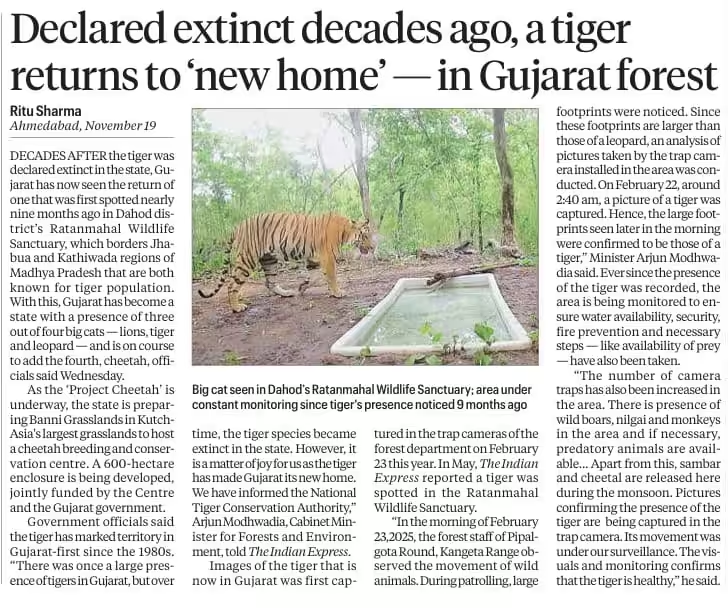
Tigers were declared extinct in Gujarat in the 1980s. For the first time in nearly four decades, a live tiger has been spotted in Gujarat’s Dahod district, in the Ratanmahal Wildlife Sanctuary.
UPSC Relevance:
Environment
UPSC PYQ:
Q. Among the following Tiger Reserves, which one has the largest area under “Critical Tiger Habitat”? (2020)
(a) Corbett
(b) Ranthambore
(c) Nagarjunasagar-Srisailam
(d) Sundarbans
About Ratanmahal WLS:
- This sanctuary harbours maximum population of sloth bears in the entire state, which is the star attraction in the wilds of Ratanmahals.
- This area was declared as a wildlife sanctuary in March 1982. The sanctuary falls on the border of Gujarat with Madhya Pradesh.
- The forests include dry teak forests at the foothills and mixed deciduous forests with dry bamboo brakes on the periphery. There are pure patches of timru and sadad as well. The high concentration of mahuda trees provides a favourite food for sloth bears.
- Ecological significance: The forests of Ratanmahals form the catchment of river Panam- a major river of Central Gujarat.
- . High population of ‘Mahudo’ trees intermixed with pure patches of ‘Sadad’ and ‘Timru’ forest on plateaus of the hills, at foothills, in plains on the periphery of PA provide food to sloth bear. Tree cover is very good. There are also quite a good number of ‘Jamun’ trees, which provide food to sloth bear during monsoon.
About Tiger:
Tell Google you want more of this.
Add Anantam IAS as a preferred sourceOne tap, and this site shows up more often in your own Top Stories, AI Overviews and AI Mode. Remove it any time.