Why in News?
On 2 October 2026, the Commerce Ministry announced an extension of RELIEF Component II timelines to support exporters facing West Asia maritime disruption.
- The extension follows a 30 September notification; the announcement does not specify the extended closing date.
- Component II offers 95% risk coverage for eligible upcoming shipments to specified regions.
- Eligible Stand Alone or Whole Turnover Policies must have been obtained on or after 16 March 2026.
- Covered cargo categories include FCL, LCL and reefer containers; energy shipments are excluded.
- Maritime disruption can combine transport costs with payment uncertainty, making an otherwise viable export order harder to accept.
- Insurance support addresses the exporter’s risk exposure; ports, shipping routes and buyer demand still determine whether trade can continue.
UPSC Relevance
Prelims Relevance
- RELIEF: Resilience & Logistics Intervention for Export Facilitation.
- Component II: ECGC insurance support under the Export Promotion Mission.
- Export credit insurance: protection against covered export-payment risks.
- FCL, LCL and reefer containers: distinct cargo arrangements.
- Premium protection and risk coverage: different policy features.
Mains Relevance
GS Paper 3
- How targeted credit insurance can sustain exports during geopolitical disruption.
- Why risk protection cannot substitute for reliable transport and contractual discipline.
Essay
- Resilience requires institutions that share risk without pretending to eliminate it.
Background and Context
What the extension changes
The extension continues a targeted insurance intervention; exporters still need to establish that their shipment and policy fall within its scope.
- RELIEF means Resilience & Logistics Intervention for Export Facilitation, a time-bound intervention under the Export Promotion Mission. Component II encourages exporters to obtain ECGC cover for upcoming shipments to specified regions.
- The 95% coverage announced for Component II is partial risk protection, not a promise to repay every rupee associated with an export. Actual entitlement still depends on the eligible loss and applicable policy conditions.
- Premium protection is a separate feature: the premium exporters pay cannot rise beyond the pre-disruption level during the eligible period. It limits the insurance price; it does not turn the policy into free cover.
- The policy eligibility date applies to Stand Alone Policies or Whole Turnover Policies obtained on or after 16 March 2026. An exporter should not assume that every older insurance contract automatically qualifies for this intervention.
- The official announcement confirms a timeline extension but supplies no revised end date. Exporters must consult the applicable notification and ECGC terms before treating any particular future shipment as eligible.
How export credit insurance shares risk
An exporter may deliver goods before receiving payment, leaving a receivable exposed to buyer failure or political disruption in the destination market.
- Commercial risk concerns the buyer or transaction, such as buyer insolvency. Export credit insurance can protect against specified non-payment events, but it does not guarantee that every disagreement with a buyer produces a payable claim.
- Political risk concerns events outside the ordinary buyer relationship, including war or restrictions that obstruct payment transfers. The precise insured events matter: geopolitical tension alone is not proof that a covered loss has occurred.
- Coverage and premium answer different questions: how much eligible risk the insurer bears, and what the exporter pays for protection. Holding premiums steady can preserve access even when uncertainty makes insurance harder to afford.
- Claims remain conditional: exporters need the relevant policy, transaction records and evidence of the insured event. Insurance is a contractual mechanism for sharing covered loss, not automatic compensation whenever a vessel arrives late.
- The Hormuz shipping-risk discussion explains the route context. Credit insurance can cushion eligible financial consequences; it cannot reopen a sea lane, prevent conflict or guarantee that a buyer remains solvent.
Cargo eligibility and the limits of support
The cargo categories define who may benefit; they should not be confused with the events that an insurance policy actually covers.
- Full Container Load describes cargo booked as a full container, while Less than Container Load allows smaller consignments to share container space. Including both categories avoids limiting the intervention only to full-container exporters.
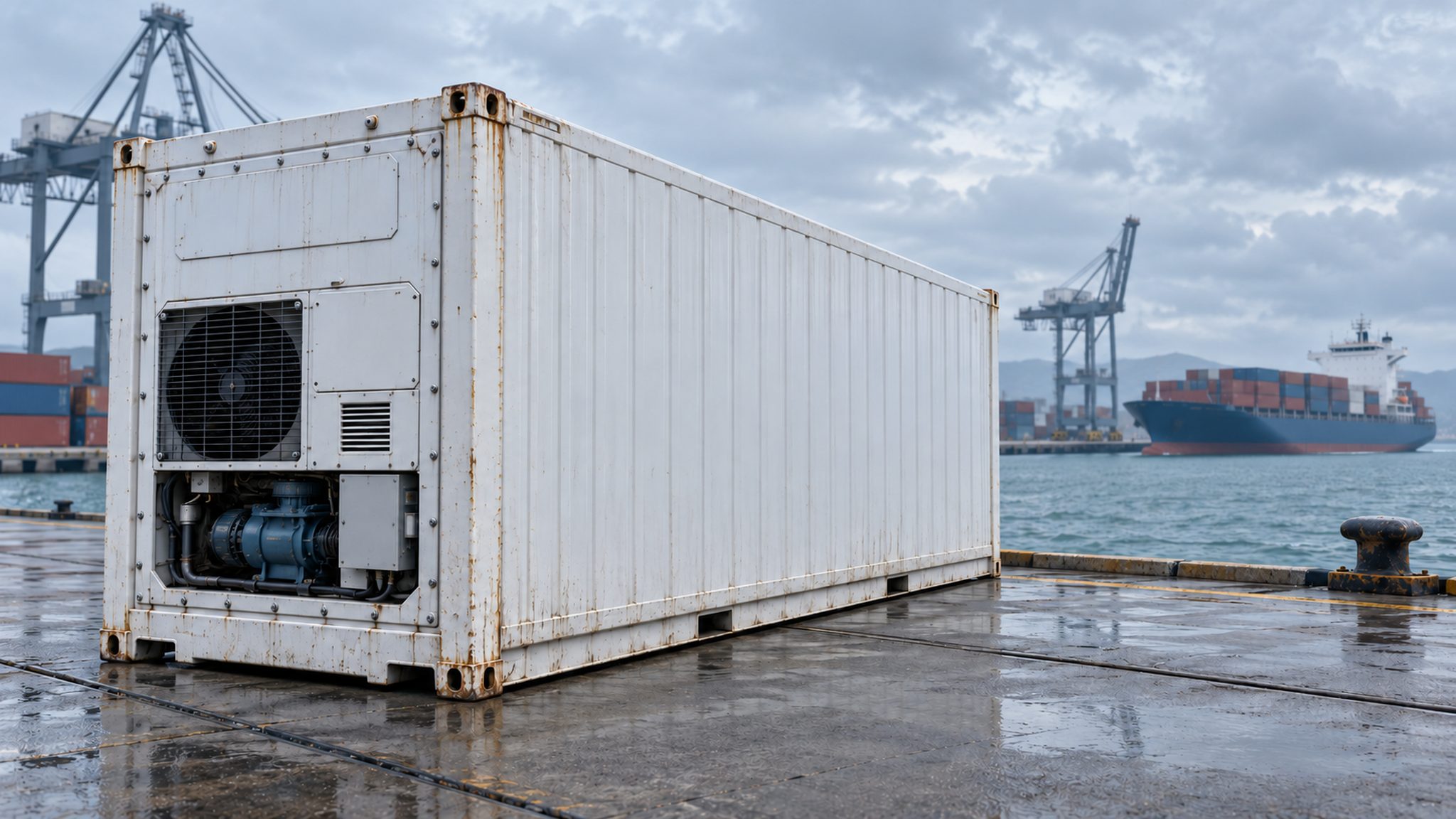
- Reefer containers provide temperature-controlled transport for suitable goods. Their inclusion is relevant to perishable cargo, but it does not establish that every refrigeration failure, spoilage incident or physical cargo loss is insured under Component II.
- Energy shipments are excluded from the stated benefits. The announcement also refers to specified regions, so neither eligibility nor coverage should be generalized to all Indian exports merely because maritime freight has become more expensive.
- A freight subsidy reduces an eligible transport bill; export credit insurance shares covered risk. Component II’s insurance and premium provisions should not be described as an unconditional reimbursement of freight escalation across every shipment.
- The RCMC exemption for small exports addresses compliance costs. RELIEF addresses disruption-related insurance needs; simpler documentation and better risk protection remove different obstacles and should be evaluated separately when assessing export policy.
Way Forward
Make eligibility usable
- Publish a clear eligibility checklist covering regions, policy dates, cargo exclusions and the revised operational deadline.
- Help exporters distinguish credit insurance, marine cargo cover and freight assistance before they price contracts or file claims.
- Assess whether premium protection sustains access for smaller exporters while monitoring claims, exclusions and continuing exposure to disrupted routes.
Conclusion
- RELIEF Component II combines partial risk coverage with premium protection for eligible shipments. Its economic purpose is to keep insurable export transactions viable while geopolitical disruption raises uncertainty for firms.
- An exam answer should separate transport cost, payment risk and physical cargo damage. A targeted insurance extension addresses a defined part of that problem; its value depends on eligibility, policy conditions and accessible claims handling.
UPSC Practice Questions
Prelims MCQ 1
With reference to the announced extension of RELIEF Component II, consider the following statements:
- Energy shipments are included in the stated cargo benefits.
- Eligible reefer containers are among the covered cargo categories.
- Premiums paid by exporters cannot rise beyond the pre-disruption level during the eligible period.
How many of the above statements are correct?
(a) Only one (b) Only two (c) All three (d) None
Answer: (b) Only two
Explanation:
Energy shipments are excluded. The release includes reefer containers and specifies premium protection during the eligible period.
Prelims MCQ 2
Which statement best distinguishes export credit insurance from a freight subsidy?
(a) Both automatically reimburse all shipping expenses. (b) Insurance eliminates the need to meet policy conditions. (c) Credit insurance shares specified export risks, while a freight subsidy offsets eligible transport costs. (d) Freight subsidies protect only against buyer insolvency.
Answer: (c) Credit insurance shares specified export risks, while a freight subsidy offsets eligible transport costs.
Explanation:
Risk coverage concerns covered losses under a policy. Freight support concerns eligible transport expenditure; the two instruments address different problems.
UPSC Mains Questions
- Explain how export credit insurance can sustain trade during geopolitical disruption. What limitations should policymakers recognize?
- Distinguish transport-cost support from export-risk protection. Assess the importance of clear eligibility and claims rules for smaller exporters.
Source: PIB, Ministry of Commerce and Industry.
Frequently Asked Questions
What is RELIEF Component II?
It encourages exporters to obtain ECGC cover for eligible upcoming shipments to specified regions. The announced provisions combine partial risk coverage with protection against premium increases beyond the pre-disruption level.
Does RELIEF cover all export losses?
No. The announced coverage is partial, and eligibility and policy conditions still apply. Inclusion of a cargo category does not establish that every delay, physical loss or commercial dispute is insured.
Which cargo categories are mentioned?
The release lists Full Container Load, Less than Container Load and reefer containers, while excluding energy shipments. Exporters must also check the specified regions, policy eligibility and applicable operational period.
What is the new closing date?
The 2 October announcement confirms that operational timelines were extended but does not state the revised closing date. A specific deadline should be taken from the applicable notification and operational terms.
Tell Google you want more of this.
Add Anantam IAS as a preferred sourceOne tap, and this site shows up more often in your own Top Stories, AI Overviews and AI Mode. Remove it any time.