Why in News?
India observed Sardar Vallabhbhai Patel’s 151st birth anniversary on October 31, 2026, commemorated as Rashtriya Ekta Diwas (National Unity Day). The occasion highlights his contribution to the freedom struggle, integration of princely states and creation of a unified administrative framework.
| UPSC Relevance: GS-1 History & Culture: Modern India; Personalities in News Prelims & Mains: Sardar Vallabhbhai Patel: Key Contributions |
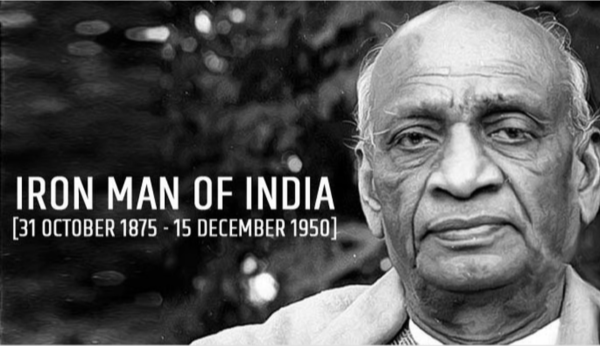
About Sardar Vallabhbhai Patel:
- Born: October 31, 1875, in Nadiad, Gujarat. Popularly known as the Iron Man of India.
- Professional background: A barrister who returned from England in 1913 and subsequently joined the national movement under Gandhi’s influence.
- Public offices: Independent India’s first Deputy Prime Minister and Home Minister; also responsible for the States portfolio.
- Early administrative experience: President of the Ahmedabad Municipality (1924-1928), where he worked on civic administration and public services.
- Recognition: Awarded the Bharat Ratna posthumously in 1991.
Contribution to the Freedom Struggle:
(i) Peasant Mobilisation:
- Kheda Satyagraha (1918):
- Issue: Colonial refusal to suspend land revenue despite severe crop failure (violating the Bombay Land Revenue Code).
- Role: As Secretary of Gujarat Sabha, organised peasants to withhold taxes despite asset seizures. First major agrarian success; proved his capacity to enforce disciplined non-violence.
- Borsad Satyagraha (1923-24):
- Issue: Imposition of a punitive poll tax (haidya tax) to fund policing against local dacoity.
- Role: Deployed a village-level intelligence network to evade property attachments (zapti). Forced total withdrawal of the levy within five months.
- Bardoli Satyagraha (1928):
- Issue: Arbitrary 22% hike in land revenue during economic distress.
- Role: Established 13 Satyagraha camps (Chhavanis) and mobilised women leaders (e.g., Mithuben Petit). Forced the Broomfield-Maxwell Committee to cut the hike to 6.03%. Earned the title “Sardar” from the women of Bardoli.
(ii) National Movement & Institutional Leadership
- Non-Cooperation Movement (1920-22): Led the Gujarat leg; raised ₹10 lakhs for the Tilak Swaraj Fund and established Gujarat Vidyapith to build national education infrastructure.
- Nagpur Flag Satyagraha (1923): Coordinated a pan-India influx of volunteers to defy the colonial ban on nationalist flags, resolving the deadlock through strategic negotiation.
- Civil Disobedience Movement (1930): Arrested preemptively at Rasam village five days before the Dandi March; his arrest catalysed widespread anti-tribute strikes across western India.
- Karachi Congress Presidency (1931): Presided over the historic session that adopted the Resolution on Fundamental Rights and Economic Programme, framing independent India’s socio-economic blueprint.
- Quit India Movement (1942): Delivered key mobilisation speeches at Gowalia Tank; imprisoned at Ahmednagar Fort until 1945 (his longest continuous incarceration).
Role in Post-Independence Nation-Building
(i) Integration of Princely States (1947-1950):
At Independence, British India consisted of directly administered provinces and over 560 princely states. The lapse of British paramountcy created the possibility of political fragmentation.
Patel’s contribution:
- As the Minister of States, Patel worked closely with V.P. Menon, Secretary of the States Department, to secure the accession and integration of princely states into the Indian Union.
- He employed a combination of diplomatic negotiations, assurances to rulers, Instruments of Accession and administrative measures.
- He addressed difficult cases such as Junagadh and Hyderabad through distinct political and administrative approaches.
Significance:
- Prevented political fragmentation and strengthened India’s territorial integrity.
- Facilitated the emergence of a unified political and administrative structure.
- Created the foundations for democratic consolidation and national development.
- Demonstrated the importance of diplomacy, negotiation and administrative coordination in nation-building.
(ii) Strengthening India’s Administrative Framework
- All India Services: Strongly advocated the continuation and restructuring of the colonial-era administrative services into independent India’s All India Services.
- Constitutional safeguards: Supported constitutional protection for civil servants to ensure administrative independence, impartiality and continuity.
- Steel Frame of India: Famously described the All India Services as essential to preserving the unity and stability of the Union.
His position contributed to the constitutional framework under Article 312, which provides for the creation of All India Services common to the Union and the States.
Contemporary Relevance of Patel’s Ideas:
Patel’s contributions remain relevant to several contemporary governance and nation-building challenges.
- Cooperative Federalism and National Integration: His integration of princely states highlights the importance of dialogue, accommodation and institutional coordination. His legacy is relevant to Centre-State relations, regional aspirations and the management of diversity in a federal democracy.
- Civil Service Reforms and Administrative Neutrality: His emphasis on an impartial and professional bureaucracy remains relevant to civil service reforms. His vision can be linked to Mission Karmayogi and capacity-building initiatives for civil servants.
- National Unity Amidst Social Diversity: India’s linguistic, religious, cultural and regional diversity requires a shared constitutional identity. His legacy underscores the importance of fraternity, communal harmony and constitutional patriotism.
- Internal Security and Territorial Integrity: His role in consolidating the Union highlights the importance of effective border management, internal security and institutional coordination. His approach remains relevant in addressing separatism, insurgency and threats to national sovereignty.
- Ethical and Decisive Leadership: His public life demonstrated the importance of organisational discipline, decisiveness, integrity and commitment to public service. His leadership during the peasant movements illustrates the importance of connecting governance with grassroots concerns.
Thus, Patel helped connect three foundations of modern India: popular mobilisation, territorial consolidation and institutional continuity.
Prelims Practice MCQ:
Q. With reference to Sardar Vallabhbhai Patel, consider the following statements:
1. He presided over the Karachi Session of the Indian National Congress in 1931.
2. He chaired the Fundamental Rights Sub-Committee of the Constituent Assembly.
3. He advocated the retention of All India Services after Independence.
Which statements are correct?
(a) 1 and 2 only
(b) 1 and 3 only
(c) 2 and 3 only
(d) 1, 2 and 3
Answer: (b). Statement 2 is incorrect: J.B. Kripalani chaired the Fundamental Rights Sub-Committee; Patel chaired the overarching Advisory Committee.
Mains Practice Question:
Q. “Sardar Patel’s contribution to nation-building extended beyond the territorial integration of princely states.” Discuss with reference to his constitutional and administrative contributions.
Tell Google you want more of this.
Add Anantam IAS as a preferred sourceOne tap, and this site shows up more often in your own Top Stories, AI Overviews and AI Mode. Remove it any time.