Why in News?
On 12 October 2026, the Ministry of Science & Technology reported research linking solar polar brightening with large-scale polar magnetic fields and smaller magnetic structures.
- An ARIES-led collaboration combined radio, extreme-ultraviolet and magnetic observations to examine enhanced microwave emission near the Sun’s poles.
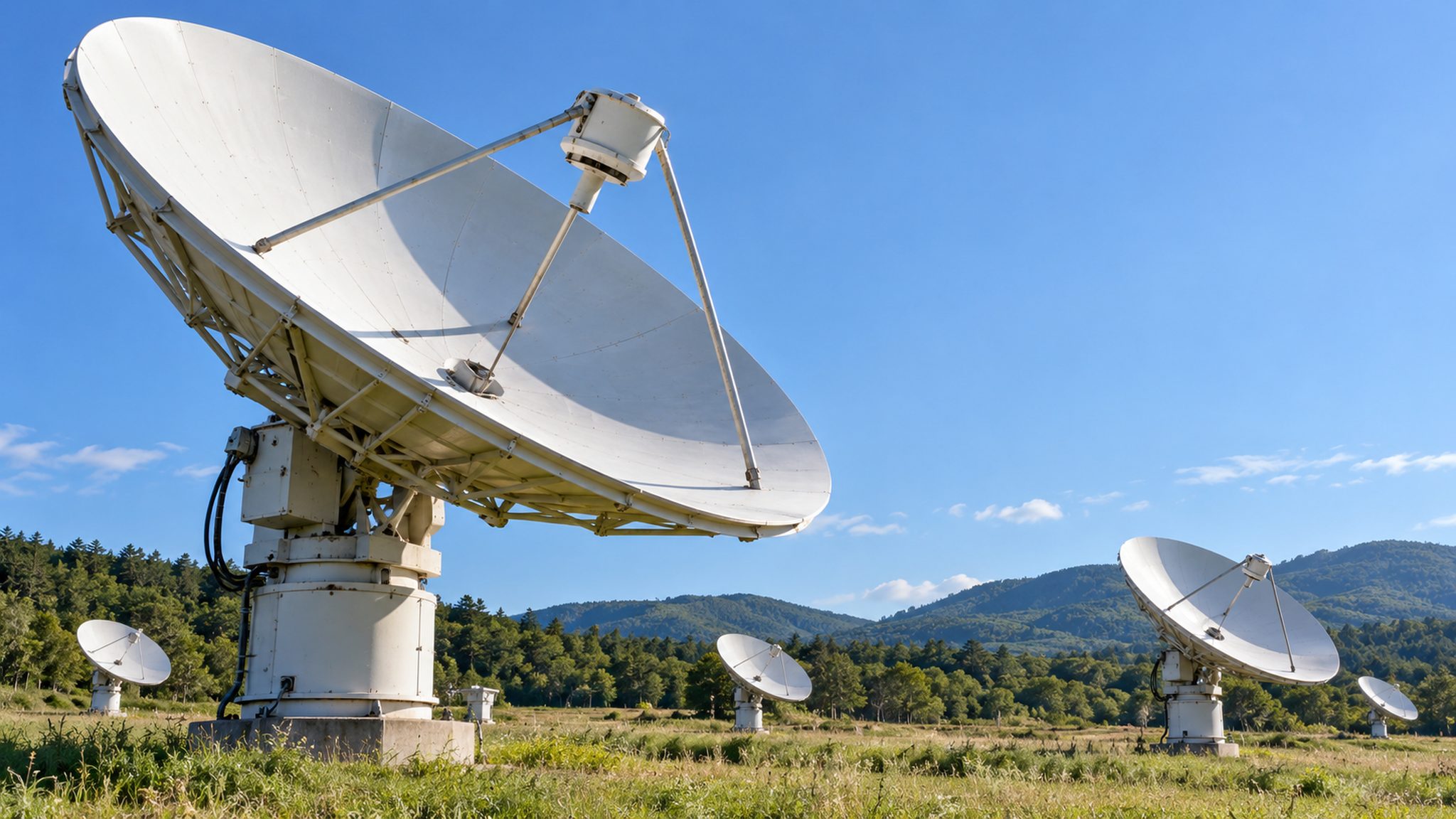
- The Nobeyama Radioheliograph observations used a frequency of 17 GHz, providing a consistent radio view for comparison with other measurements.
- The study found correlations with polar coronal-hole area and polar magnetic-field strength, alongside local associations with bright points and jets.
- The solar poles matter for magnetic-field evolution and the generation of the solar wind; observing them helps explain the Sun’s changing magnetic environment.
- The finding concerns observational research. It does not announce a deployed solar-storm warning service or establish that one structure explains every bright patch.
UPSC Relevance
Prelims Relevance
- Microwave polar brightening: enhanced radio brightness near the Sun’s poles.
- Coronal holes: EUV-dark regions with predominantly open magnetic fields.
- Coronal bright points: small bright features associated with compact magnetic loops.
- Multiwavelength observation: comparing different emissions from the same solar region.
Mains Relevance
GS Paper 3
- Scientific observation: combining independent measurements to investigate a physical mechanism.
- Research interpretation: distinguishing correlations, proposed mechanisms and operational applications.
Background and Context
Why Can the Same Region Look Dark and Bright?
Brightness is measured in a particular observing band; a region does not have one universal brightness across every view of the Sun.
- Microwave polar brightening means that polar regions show enhanced radio emission relative to the surrounding solar disk at certain frequencies. It does not mean that the poles look brighter to human eyes.
- Extreme-ultraviolet (EUV) images reveal coronal holes as relatively dark regions. The term describes their appearance in that diagnostic; it does not imply a physical cavity cut through the Sun or an absence of matter.
- Different wavelengths reveal different solar features and temperature conditions, as NASA’s wavelength comparison explains. A dark EUV region can overlap microwave enhancement without the two observations contradicting one another.
- Radio and EUV comparisons let researchers ask whether enhanced emission occupies the same region as a coronal hole or a smaller bright structure. Their value lies in connecting complementary observations of the same area.
- Diagnostic contrast is the key lesson: specify the observing band before interpreting brightness. Treating every bright pixel as the same physical phenomenon would erase the distinction that this study uses to investigate polar activity.
Open Fields and Compact Loops Describe Different Scales
The study connects broad polar magnetic conditions with local bright structures, rather than treating the entire polar atmosphere as one uniform feature.
- Coronal holes have predominantly open magnetic-field lines, permitting fast solar wind to escape. Open describes the large-scale field configuration; it does not mean that every magnetic structure inside the region has identical geometry.
- Coronal bright points are associated with small magnetic loops and commonly occur within polar coronal holes. These compact structures explain why a broadly dark EUV region can still contain individual bright features.
- Polar magnetic-field strength showed a stronger relationship with microwave brightening than coronal-hole area did. This comparison supports attention to the magnetic environment, instead of explaining brightness only through how much area a hole covers.
- North–south differences appeared in the long-term evolution of brightening and coronal-hole area. The finding cautions against assuming that observations from one solar pole automatically describe the behaviour of the other pole.
- Local microwave patches often coincided with EUV bright points, and several were associated with coronal jets. These observations connect small-scale activity with local enhancement without making jets a necessary feature of every patch.
What Does the Evidence Establish?
The strength of the study is agreement across observations; its limits matter when moving from an association to a causal explanation or prediction.
- Three complementary datasets supplied different evidence: Nobeyama recorded radio emission, NASA’s Solar Dynamics Observatory supplied EUV observations, and Wilcox Solar Observatory supplied magnetic measurements. Combining them allows comparisons unavailable from a single observing channel.
- Long-term correlation means that measured quantities vary together across the observations. It supports a relationship between polar brightness and magnetic evolution, but cannot by itself establish that one measured quantity is the sole cause.
- Spatial coincidence means that features overlap in the compared images. Simultaneous radio and EUV observations strengthen the association with local structures; they do not demonstrate that every bright patch has an identical emission mechanism.
- Large and small scales should remain separate in interpretation: overall brightness follows the evolving polar environment, while local enhancements associate with compact structures. Neither observation requires discarding the other as an explanation.
- Forecasting claims need additional evidence about prediction and performance. This report improves understanding of polar activity and solar-wind origins; it does not show that a tested operational solar-storm forecast system has been deployed.
Way Forward
Test the Interpretation Across Observations
- Compare both poles over time so hemispheric differences are retained rather than hidden inside a single average.
- Use simultaneous measurements to examine whether local radio enhancements repeatedly align with bright points or jets under different polar conditions.
- Require predictive validation before translating research associations into warning claims: a plausible physical connection is not itself evidence of reliable forecasts.
Conclusion
- Solar polar brightening illustrates why observing wavelength and magnetic scale must be specified together: EUV-dark coronal holes and microwave-bright polar features can coexist within a complex magnetic environment.
- The durable takeaway is complementary evidence: correlations and local overlap support magnetic interpretations, while causal completeness and operational forecasting remain separate claims requiring their own evidence.
UPSC Practice Questions
Prelims MCQ 1
With reference to solar polar brightening, consider the following statements:
- A region that appears dark in an EUV image can show enhanced microwave emission.
- Coronal holes have predominantly open magnetic-field lines.
- Every microwave bright patch necessarily coincides with a coronal jet.
How many of the above statements are correct?
(a) Only one (b) Only two (c) All three (d) None
Answer: (b) Only two
Explanation:
The first two statements are correct. Brightness depends on the observing band, and coronal holes have predominantly open fields. The study associated jets with several cases, not every bright patch.
Prelims MCQ 2
A correlation between polar microwave brightness and magnetic-field strength most directly supports which conclusion?
(a) Magnetic-field strength is proven to be the sole cause of every bright patch. (b) A solar-storm warning service has become operational. (c) Brightness and magnetic-field evolution are observationally related. (d) EUV observations are unnecessary for studying local solar features.
Answer: (c) Brightness and magnetic-field evolution are observationally related.
Explanation:
Correlation supports an observational relationship. It does not independently establish a sole cause, eliminate complementary observations or validate an operational forecasting service.
UPSC Mains Questions
- Explain how radio, extreme-ultraviolet and magnetic observations together improve understanding of solar polar activity.
- Distinguish long-term correlation from spatial coincidence using solar polar brightening. Why must both be interpreted cautiously when making causal or forecasting claims?
Sources: PIB, Ministry of Science & Technology and NASA.
Frequently Asked Questions
What is solar polar brightening?
Solar polar brightening is enhanced radio emission near the Sun’s poles at certain microwave frequencies. It describes brightness in the observing band, not necessarily how the poles would appear in visible light.
How can a coronal hole look dark and bright?
A coronal hole appears dark in EUV images, while overlapping polar regions can show enhanced microwave emission. Different observing bands reveal different features, so these descriptions do not represent a contradiction.
Are coronal holes and coronal bright points the same?
No. Coronal holes are broad regions with predominantly open magnetic fields. Coronal bright points are compact features associated with small magnetic loops and can occur inside those broader coronal holes.
Does the study provide a solar-storm forecast?
The report describes observational evidence linking polar microwave brightness with magnetic conditions and local structures. It improves physical understanding but does not announce a deployed, validated service for predicting solar storms.
Tell Google you want more of this.
Add Anantam IAS as a preferred sourceOne tap, and this site shows up more often in your own Top Stories, AI Overviews and AI Mode. Remove it any time.