Why in News?
A concentrated national campaign against tuberculosis has public-health, implementation and inter-ministerial coordination implications for disease elimination targets and health-system responsiveness.
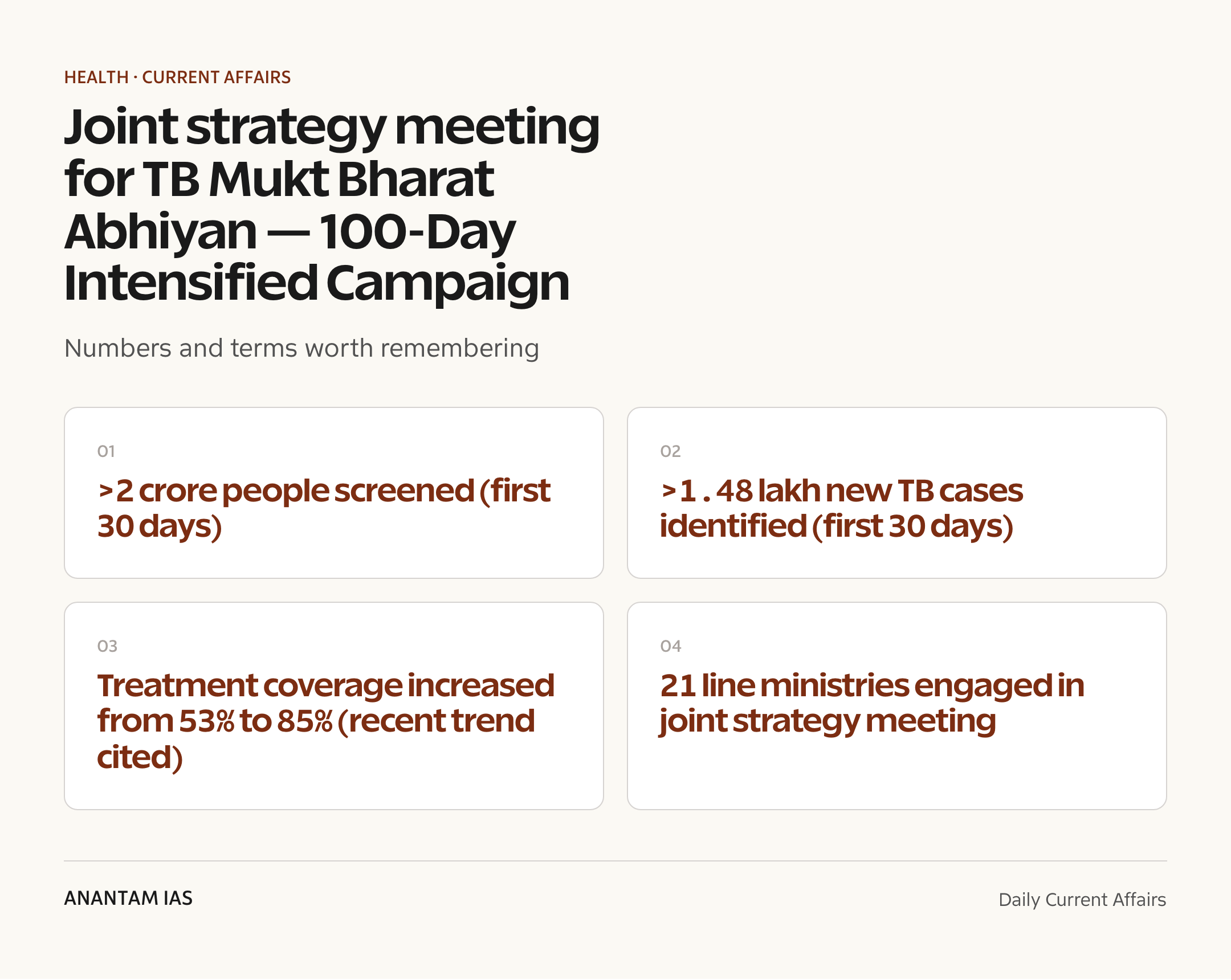
- High-level push: Union Health Minister chaired a meeting with 21 line ministries to operationalise the 100-day intensified campaign under TB Mukt Bharat Abhiyan.
- Target horizon: Reiterates the national goal to eliminate TB by 2025, earlier than the UN SDG 2030 deadline.
- Early results: First 30 days reported >2 crore people screened and >1.48 lakh new TB cases identified, showing rapid operational scale-up.
- Whole-of-government: Ministries of Labour, WCD, Tribal Affairs, Steel, AYUSH, Panchayati Raj, Railways and others committed actions spanning screening, nutrition, workplace outreach and stigma reduction.
- Systems focus: Emphasis on screening expansion, treatment coverage, nutritional support and community mobilisation via Anganwadi workers and volunteers.
The development matters in the context of:
- Disease burden: India has the world’s largest absolute TB burden; national interventions determine global progress on TB elimination.
- Policy timeline: The PM’s call to eliminate TB by 2025 set an accelerated national objective that requires concentrated, short-term intensification of activities.
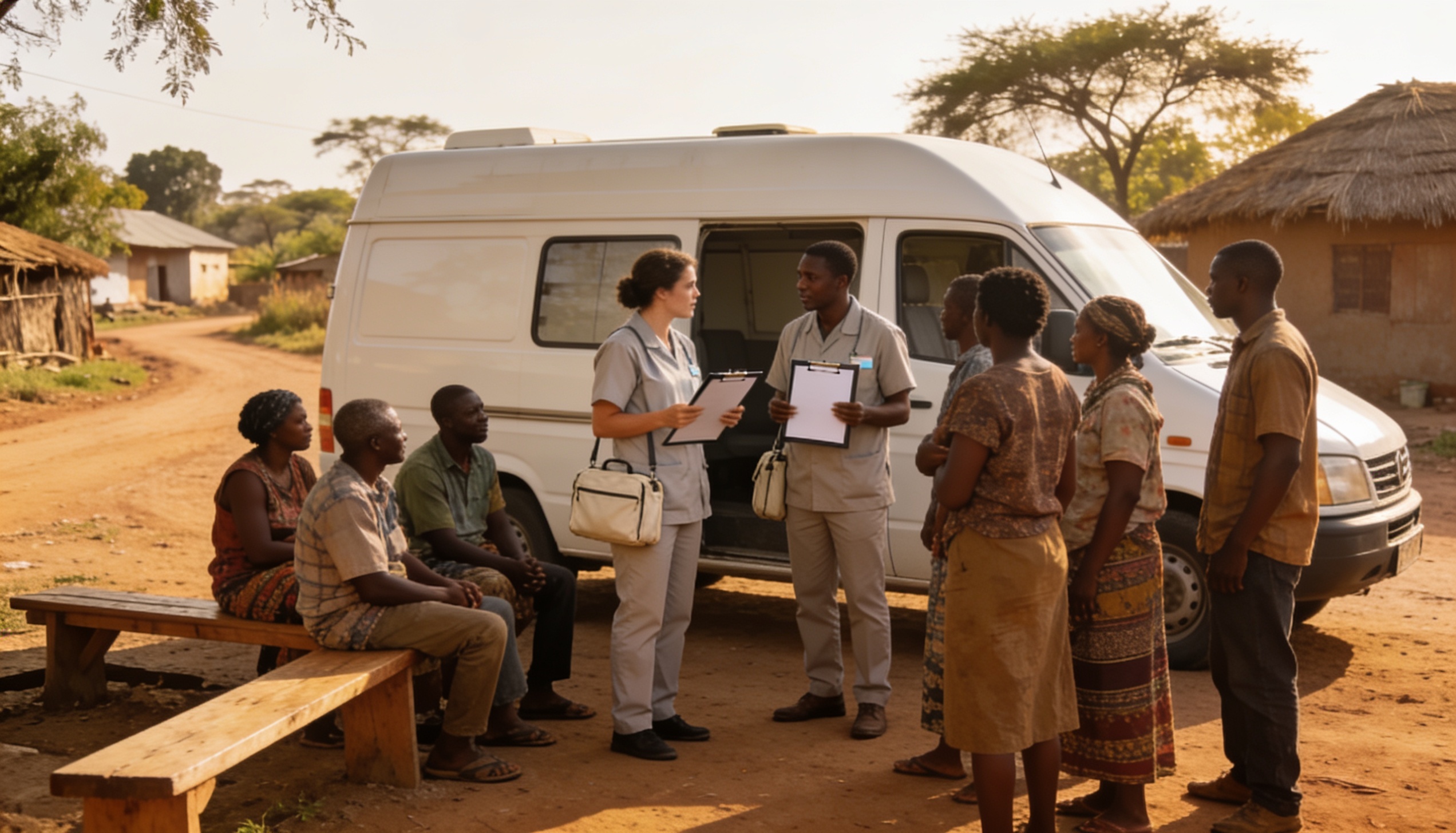
- Operational challenge: TB elimination needs active case-finding, diagnostic access, treatment adherence, social support and stigma reduction working together.
- Intersectoral determinants: Malnutrition, overcrowding, occupational exposures and limited access in tribal or remote areas drive transmission and poor outcomes.
- Health system readiness: Screening at workplaces, ESIC hospitals, community platforms and integration with AYUSH and WCD services can increase reach but need monitoring.
- Measurement: Progress measured through screening numbers, new case detection, treatment initiation and treatment outcomes, plus reductions in mortality.
UPSC Relevance
Prelims Relevance
- Definition and symptoms of tuberculosis and causative organism Mycobacterium tuberculosis.
- Key national programmes: National Tuberculosis Elimination Programme (NTEP) and TB Mukt Bharat Abhiyan structure.
- Public health terms: active case finding, contact tracing, DOTS, diagnostic tools like CBNAAT/CB-NAAT and chest X-ray screening.
- Institutional roles: responsibilities of Ministry of Health, WCD, Ministry of Labour, AYUSH and Panchayati Raj in health campaigns.
Mains Relevance
GS2 Governance
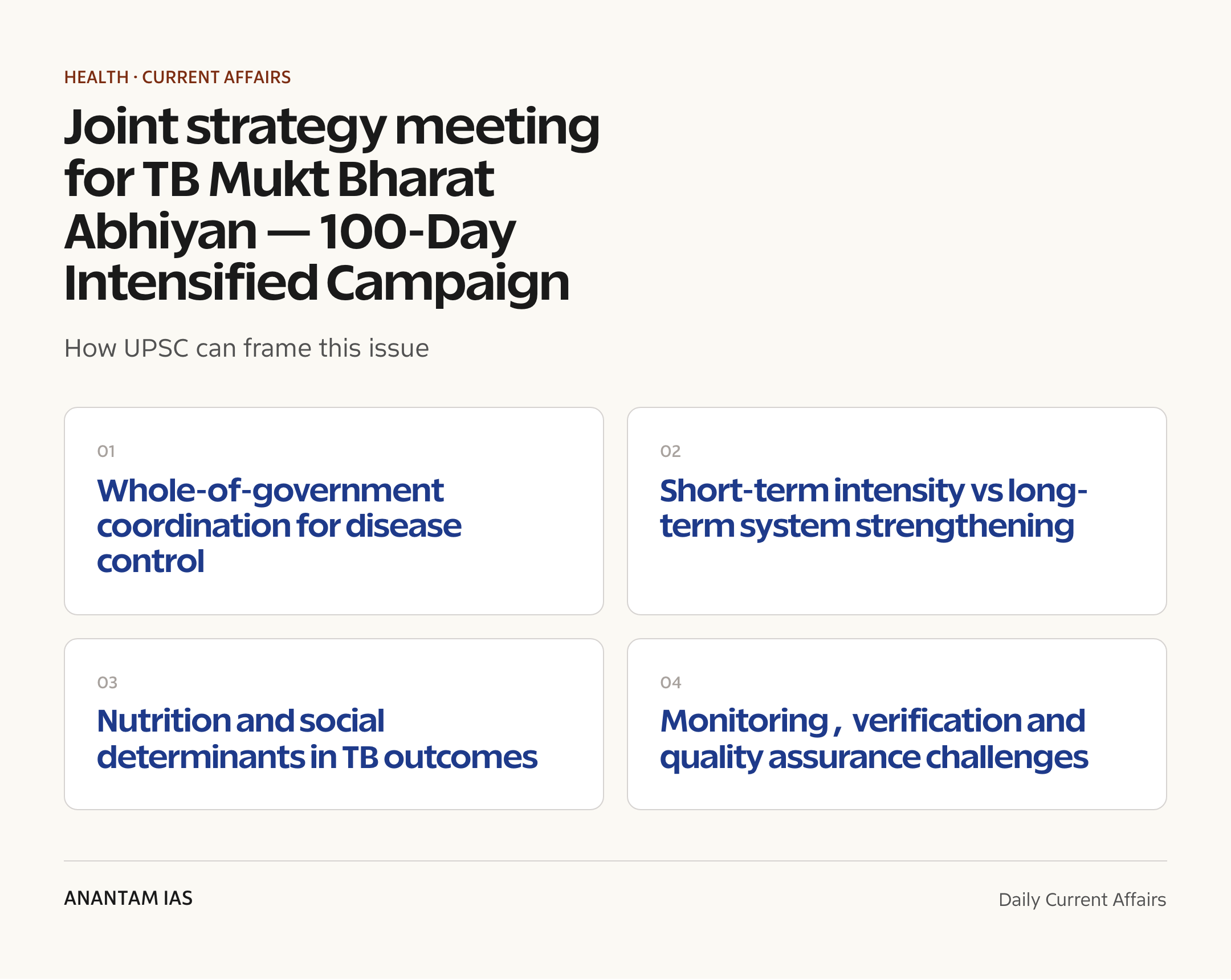
- Evaluating whole-of-government approaches to tackle public health problems — merits, coordination challenges and accountability mechanisms.
- Policy analysis on how short, intensive campaigns affect long-term health system strengthening and disease surveillance.
- Discussing social determinants such as malnutrition and tribal disadvantage in disease control and policy responses.
- Assessment of program monitoring: selecting indicators and balancing quantity (screens) with quality (diagnostic accuracy, treatment outcomes).
Essay
- Use as a case study for public policy essays on cooperative federalism and mobilising state machinery for national goals.
- Illustrates trade-offs between vertical disease campaigns and integrated health systems for long-term outcomes.
- Material for essays on social inclusion, health equity and the role of community workers like Anganwadi staff in national missions.
Background and Context
National TB burden and targets
Where India stands and why an accelerated target was set.
- High absolute burden: India accounts for a large share of global TB cases and deaths, making national progress pivotal for global targets.
- 2025 goal: The Prime Minister’s target to eliminate TB by 2025 compresses the SDG 2030 timetable and demands rapid scale-up of interventions.
- Trends: Recent WHO data showed a notable reduction in cases and deaths in India, indicating progress but gaps remain in detection and care.
- Key metrics: Case notification, treatment coverage, treatment success rate and mortality form the core indicators monitored.
Design of the 100-Day Intensified Campaign
Operational features and immediate objectives of the campaign.
- Short-term intensity: Focus on ramping up screening and case detection over a defined 100-day window to reduce community transmission.
- Active case finding: Use of community screening, workplace outreach, railways and ESIC hospitals to detect missed cases.
- Multi-pronged interventions: Screening linked to diagnostic pathways, prompt treatment initiation and nutritional/social support.
- Performance targets: Daily/weekly screening targets and rapid linkage to treatment with data reporting for real-time course correction.
Inter-ministerial roles and contributions
What different ministries are expected to do in the whole-of-government approach.
- Ministry of Labour: Screening at workplaces and ESIC facility engagement to find cases among workers.
- WCD and Anganwadi: Nutrition support through Poshan Maah and Poshan Pakhwara and community mobilisation to reduce stigma.
- Tribal Affairs: Targeted outreach in tribal areas where malnutrition and access issues increase vulnerability.
- AYUSH and Health field collaboration: Using local health channels to expand awareness and referral linkages.
Screening and diagnostics
Tools and pathways used to detect TB cases during the campaign.
- Mass screening: Symptom screening and use of chest X-rays for large population cohorts in community and institutional settings.
- Molecular testing: CBNAAT/CB-NAAT for rapid confirmation and detection of drug resistance where necessary.
- Referral chains: Screening hubs linked to diagnostic centres and NTEP treatment facilities to avoid loss to follow-up.
- Data systems: Real-time reporting to national dashboards to monitor coverage and cascade from screening to treatment.
Nutrition and social support
Role of nutrition and social determinants in treatment outcomes.
- Malnutrition link: Poor nutrition increases susceptibility and worsens treatment outcomes, particularly in tribal and rural populations.
- Poshan initiatives: Integration with Poshan Maah/Pakhwara to provide supplements and counseling through Anganwadi workers.
- Financial and non-financial support: Incentives, food rations and counselling to improve adherence and reduce catastrophic costs.
- Community participation: Use of MyBharat volunteers and local workers to mobilise patients and reduce stigma.
Monitoring, reporting and accountability
How results are measured and the governance mechanisms envisaged.
- Indicator cascade: From people screened, tests done, positive cases diagnosed, to treatment initiation and completion.
- Inter-ministerial accountability: Secretaries and senior officers assigned deliverables and reporting responsibilities.
- Real-time dashboards: Use of digital reporting for rapid course correction and resource reallocation.
- Quality checks: Ensuring diagnostic accuracy and follow-up to prevent misdiagnosis and ensure successful treatment outcomes.
Way Forward
Operational scale-up and integration
- Institutionalise screening-to-treatment pathways with clear referral linkages and transport support where needed.
- Expand CBNAAT capacity and mobile diagnostic units to reduce turnaround times for confirmation.
- Use workplace and institutional screening (railways, ESIC, industries) as ongoing mechanisms beyond the 100 days.
- Integrate campaign activities with routine NTEP operations to avoid parallel systems and ensure continuity.
Strengthening nutrition and social support
- Coordinate with WCD and Poshan schemes to provide targeted nutrition packs for diagnosed patients.
- Enable conditional cash transfers or travel support tied to treatment milestones to reduce dropouts.
- Train Anganwadi and community volunteers to provide adherence counselling and psychosocial support.
- Monitor nutritional status as part of TB treatment indicators to measure impact on recovery.
Community engagement and stigma reduction
- Deploy MyBharat volunteers and local leaders for door-to-door awareness and debunking myths about TB.
- Run behaviour-change communications tailored for tribal and rural contexts to reduce diagnostic delays.
- Use testimonials from cured patients while protecting privacy to show treatment success and reduce fear.
- Engage faith groups, panchayats and schools to normalise screening and follow-up.
Governance, monitoring and evaluation
- Set short and medium-term KPIs with ministry-level responsibility matrices and public dashboards.
- Conduct independent rapid evaluations and audit of campaign quality and diagnostic accuracy mid-course.
- Ensure data triangulation from facility records, digital reports and field verification to prevent over-reporting.
- Plan a post-campaign transition to sustain high case-finding and integrate lessons into routine NTEP practice.
Conclusion
The 100-Day Intensified Campaign under TB Mukt Bharat Abhiyan is a focused push using a whole-of-government model to accelerate detection, treatment and social support. Early screening numbers show programmatic reach but sustaining gains will depend on integration with routine services, strengthening diagnostics, addressing social determinants like malnutrition and enforcing clear monitoring and accountability across ministries.
UPSC Practice Questions
Prelims MCQ 1
Which microorganism is the primary cause of pulmonary tuberculosis in humans?
(a) Mycobacterium leprae (b) Mycobacterium tuberculosis (c) Streptococcus pneumoniae (d) Klebsiella pneumoniae
Answer: (b) Mycobacterium tuberculosis
Explanation:
Pulmonary tuberculosis in humans is primarily caused by Mycobacterium tuberculosis. Mycobacterium leprae causes leprosy. Streptococcus pneumoniae and Klebsiella pneumoniae cause other respiratory infections.
Prelims MCQ 2
Under the National Tuberculosis Elimination Programme (NTEP), what does CBNAAT primarily provide in TB control?
(a) Nutritional support (b) Rapid molecular diagnosis and rifampicin resistance detection (c) Vaccination against TB (d) Contact tracing only
Answer: (b) Rapid molecular diagnosis and rifampicin resistance detection
Explanation:
CBNAAT (cartridge based nucleic acid amplification test) provides rapid molecular diagnosis for TB and can detect rifampicin resistance, enabling quicker treatment decisions. It does not provide nutrition or vaccination.
UPSC Mains Questions
- {‘question’: ‘Analyse the advantages and risks of pursuing short-term, intensified public health campaigns like the 100-Day TB campaign in a federal system. Discuss mechanisms to mitigate the risks.’, ‘model_answer’: ‘Short-term intensified campaigns can rapidly increase case detection, mobilise resources, and create political momentum. They can reduce transmission quickly when combined with rapid diagnostics and prompt treatment initiation. Risks include diversion of routine health-system resources, possible compromise of diagnostic quality under pressure, duplication of reporting systems and incomplete follow-through after the campaign ends. In a federal system these risks are compounded by variable state capacity and coordination gaps. Mitigation mechanisms include: (a) integration of campaign activities into routine NTEP systems to prevent parallel processes, (b) clear division of responsibilities between central and state authorities with agreed KPIs, (c) real-time quality audits and data verification to prevent over-reporting, (d) capacity building and resource support to weaker states, and (e) a defined post-campaign transition plan to sustain case-finding and treatment adherence.’}
- {‘question’: ‘Evaluate the role of non-health ministries such as WCD, Labour, Panchayati Raj and Tribal Affairs in reducing tuberculosis burden in India.’, ‘model_answer’: ‘Non-health ministries address social determinants that drive TB risk and outcomes. WCD and Anganwadi systems can provide nutritional support and community-level counselling, improving treatment adherence and recovery. Labour engages workplaces and ESIC hospitals for screening and early detection among working populations. Panchayati Raj institutions can enable local mobilisation, remove barriers to care and monitor vulnerable households. Tribal Affairs can design targeted outreach for tribal communities with higher malnutrition and access constraints. Their role is complementary to clinical services: addressing malnutrition, ensuring social security, reducing catastrophic costs and lowering stigma. For effective contribution, there must be clear coordination mechanisms, data sharing protocols, resourcing, and monitoring frameworks that align with NTEP objectives.’}
Source: PIB, Ministry of Health & Family Welfare.
Frequently Asked Questions
q
a
q
a
q
a
q
a
q
a
q
a
Tell Google you want more of this.
Add Anantam IAS as a preferred sourceOne tap, and this site shows up more often in your own Top Stories, AI Overviews and AI Mode. Remove it any time.