Why in News?
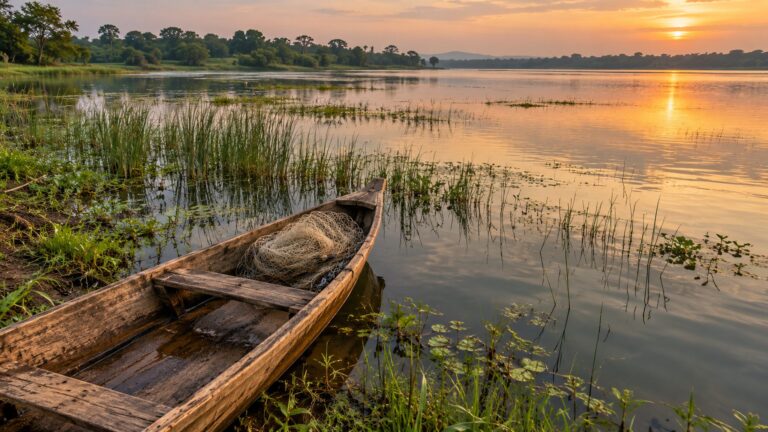
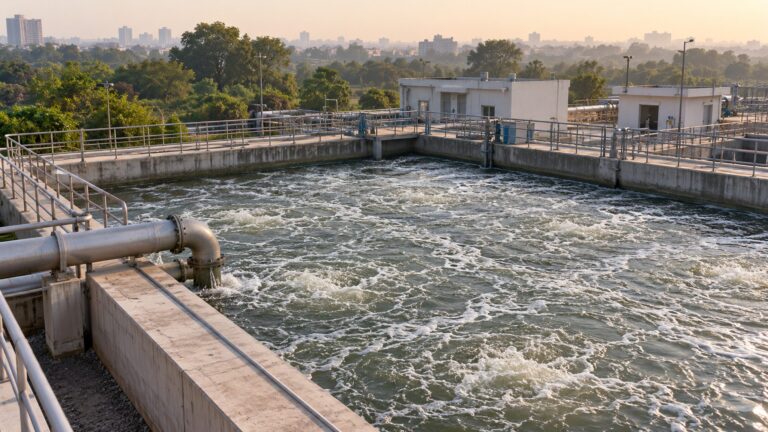
Untreated sewage has allegedly contaminated the pond within the Shri Guru Gorakhnath Community Reserve at Kajalheri village in Haryana’s Fatehabad district. Pollution, destruction of nesting sites and road mortality now threaten an estimated 150-200 freshwater turtles.
| UPSC Relevance: GS-3 Environment and Biodiversity: Protected Areas; Biodiversity Prelims: Community Reserves; Major Turtle species in India |
About the Reserve:
- Notified by Haryana in 2019, the approximately 3.5-hectare reserve emerged from the local Bishnoi community’s long tradition of protecting turtles.
- A community reserve is declared under Section 36C of the Wildlife (Protection) Act, 1972, generally on community or private land where residents voluntarily participate in conserving wildlife and habitats.
Turtle Species Reported:
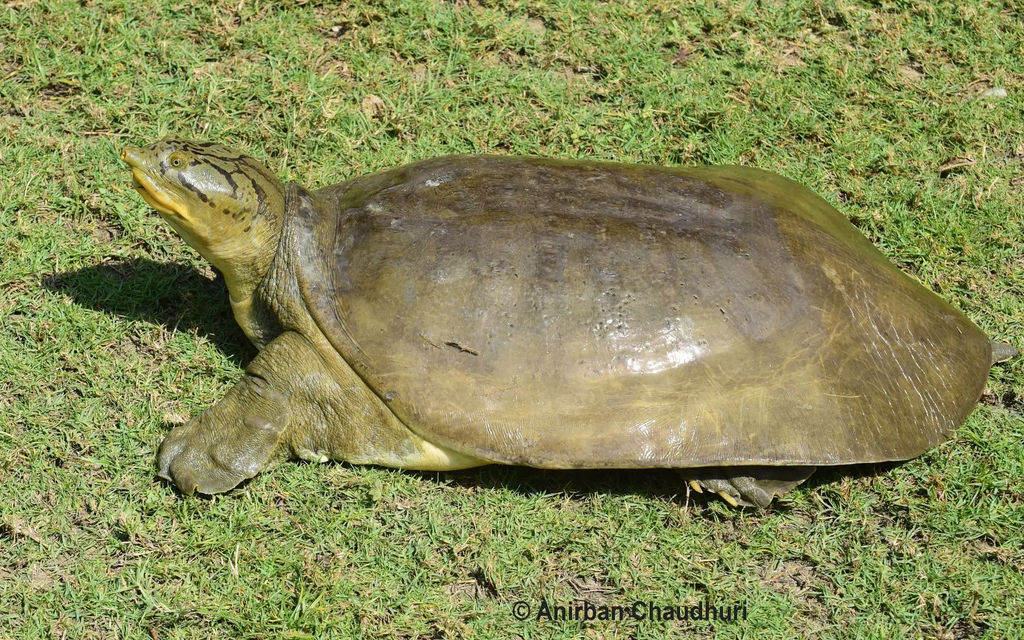
1. Indian Softshell Turtle
- Also called the Ganges softshell turtle
- IUCN status: Endangered
- Has a flat, leathery shell, webbed limbs and an elongated snout.
- Found mainly in the Indus, Ganga, Brahmaputra and Mahanadi river systems, as well as canals, lakes and ponds.
- Functions as both a predator and a scavenger in freshwater ecosystems.
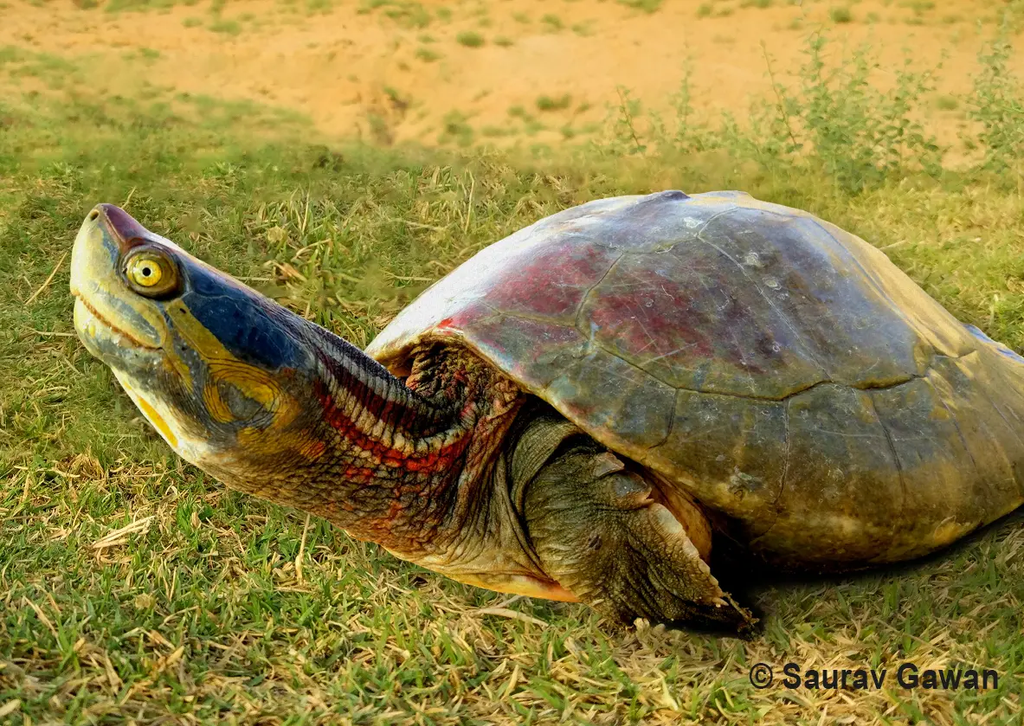
2. Red-crowned Roofed Turtle
- IUCN status: Critically Endangered
- Adult males develop striking red, yellow and blue colouration during the breeding season.
- It is primarily associated with deep rivers and requires undisturbed sandbanks for nesting.
- The National Chambal Sanctuary is among its last major strongholds.
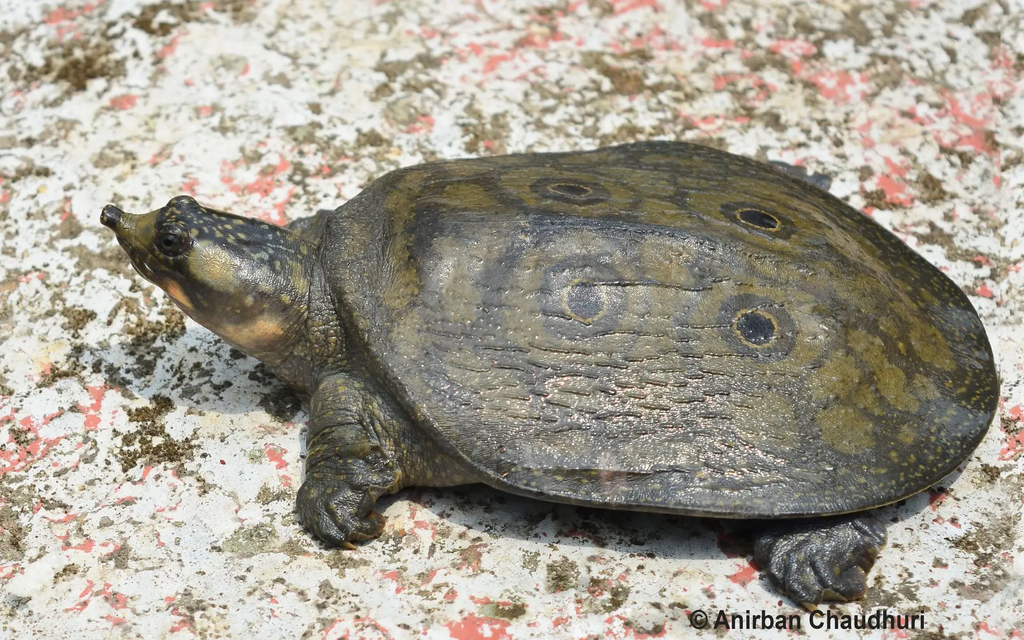
3. Indian Peacock Softshell Turtle
- IUCN status: Endangered
- Juveniles possess distinctive eye-like markings resembling a peacock’s feathers.
- It inhabits rivers, lakes and ponds across India and neighbouring South Asian countries.
All three species are listed in Schedule I of the Wildlife (Protection) Act, giving them the highest level of statutory protection. They are also covered by CITES Appendix I, which generally prohibits commercial international trade.
A comprehensive scientific census is required to verify the present species composition and population.
Why are Turtles Ecologically Important?
- Freshwater Turtles:
- consume carrion and help clean water bodies
- control populations of fish, insects and molluscs
- recycle nutrients within aquatic ecosystems
- serve as both predators and prey in food webs; and
- act as bio-indicators, since their declining health often reflects deterioration of the entire wetland ecosystem.
Unlike terrestrial tortoises, turtles are largely aquatic but must come onto land for basking and nesting. Therefore, they require both clean water and undisturbed banks.
Way Forward:
- Immediate measures must include stopping sewage inflow, testing water quality, veterinary treatment, and temporarily protecting affected turtles.
- Long-term action should create a separate sewage-treatment facility, fence the reserve, construct safe nesting mounds and basking sites, regulate cattle and stray dogs, and establish road-crossing structures.
The crisis shows that merely notifying a protected area is insufficient. The reserve requires an annual scientific census, disease surveillance and an adequately funded community-based management plan. Any translocation should be treated as a last resort and undertaken only under expert supervision.
UPSC PYQ 2013
Q. Consider the following fauna of India
1. Gharial
2. Leatherback turtle
3. Swamp deer
Which of the above is/are endangered?
(a) 1 and 2 only
(b) 3 only
(c) 1, 2 and 3
(d) None
Answer: (a)
Tell Google you want more of this.
Add Anantam IAS as a preferred sourceOne tap, and this site shows up more often in your own Top Stories, AI Overviews and AI Mode. Remove it any time.