Why in News?
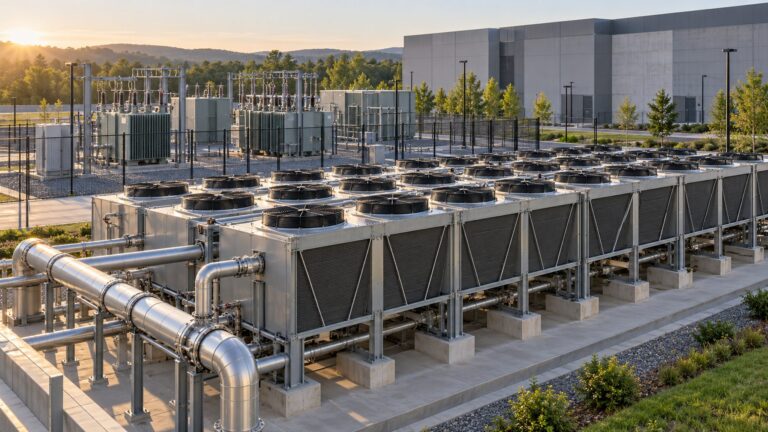
PIB reported that Delhi inaugurated some Yamuna rejuvenation projects and initiated others on October 22, 2026, covering sewage treatment plants, household sewer connections, pumping and drain interception.
- The release distinguishes 10 inaugurated projects from 33 initiated projects; these are different stages of delivery.
- The package includes new STPs and upgrades to existing sewage treatment plants, with foundation stones laid for these works.
- PIB also describes a decentralised STP pumping station, household sewer-connection work, sewer rehabilitation and drain tapping.
- River-cleaning projects depend on a connected wastewater service chain: collecting sewage matters as much as building treatment infrastructure.
- The announcement establishes the scope of works; it does not independently establish plant performance or measured river recovery.
UPSC Relevance
Prelims Relevance
- STP: sewage treatment plant.
- Drain interception: capturing sewage-bearing flows for conveyance to treatment.
- Pumping station: infrastructure that moves wastewater where gravity conveyance is insufficient.
- Installed capacity: designed treatment capability, distinct from actual sewage treated.
- Effluent: water leaving a treatment process.
Mains Relevance
GS Paper 3
- Urban wastewater infrastructure and river pollution control.
- Connecting infrastructure investment to functioning environmental services.
GS Paper 2
- Accountability across sewer networks, pumping stations and treatment-plant operators.
Essay
- Public infrastructure delivers value when its connected parts work together.
Background and Context
What the Yamuna Project Package Actually Covers
The announcement combines assets at different stages, so readers should separate existing infrastructure, upgrades and newly initiated works before judging what services are available.
- Household connections provide the entry point into a sewer network. A sewer passing through a neighborhood does not establish that every property is connected or that its wastewater reaches the intended treatment destination.
- Sewer rehabilitation addresses the conveyance network rather than adding treatment capacity by itself. Its relevance lies in restoring the physical route through which collected wastewater can move toward pumping and treatment facilities.
- Drain tapping brings sewage-bearing flows into an interception arrangement. The useful question is where the captured flow goes next, because diversion without a functioning downstream route cannot demonstrate that sewage has been treated.
- STP upgrades and new plants concern the treatment stage. The release mentions foundation-stone laying for these works; treating the entire announced package as already commissioned would erase an important distinction in project status.
- Decentralised treatment places treatment closer to a local catchment, while larger networks convey flows farther. This is a difference in system arrangement; either approach still needs reliable collection, operation and an appropriate outlet.
How Capture, Conveyance and Treatment Work Together
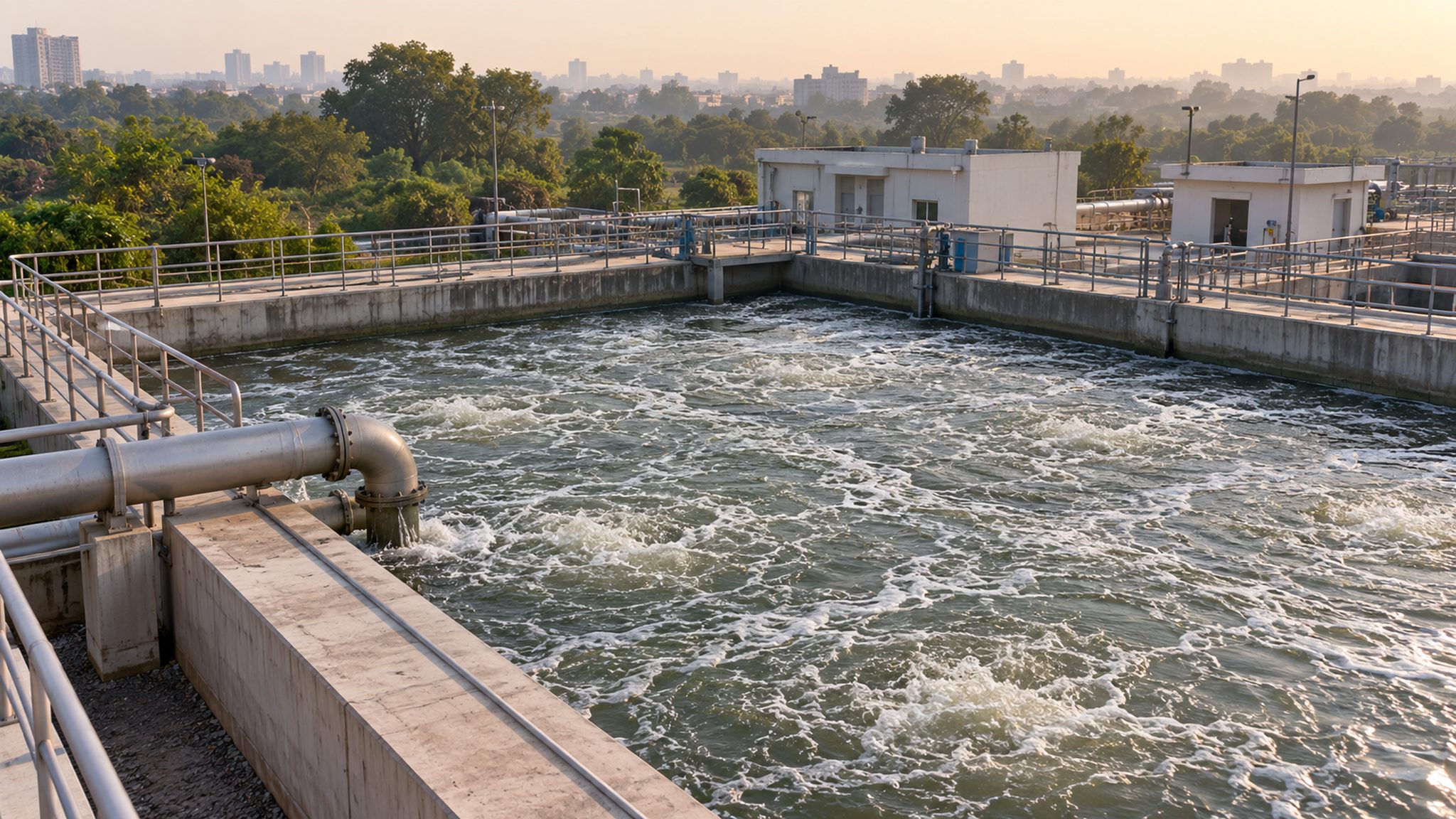
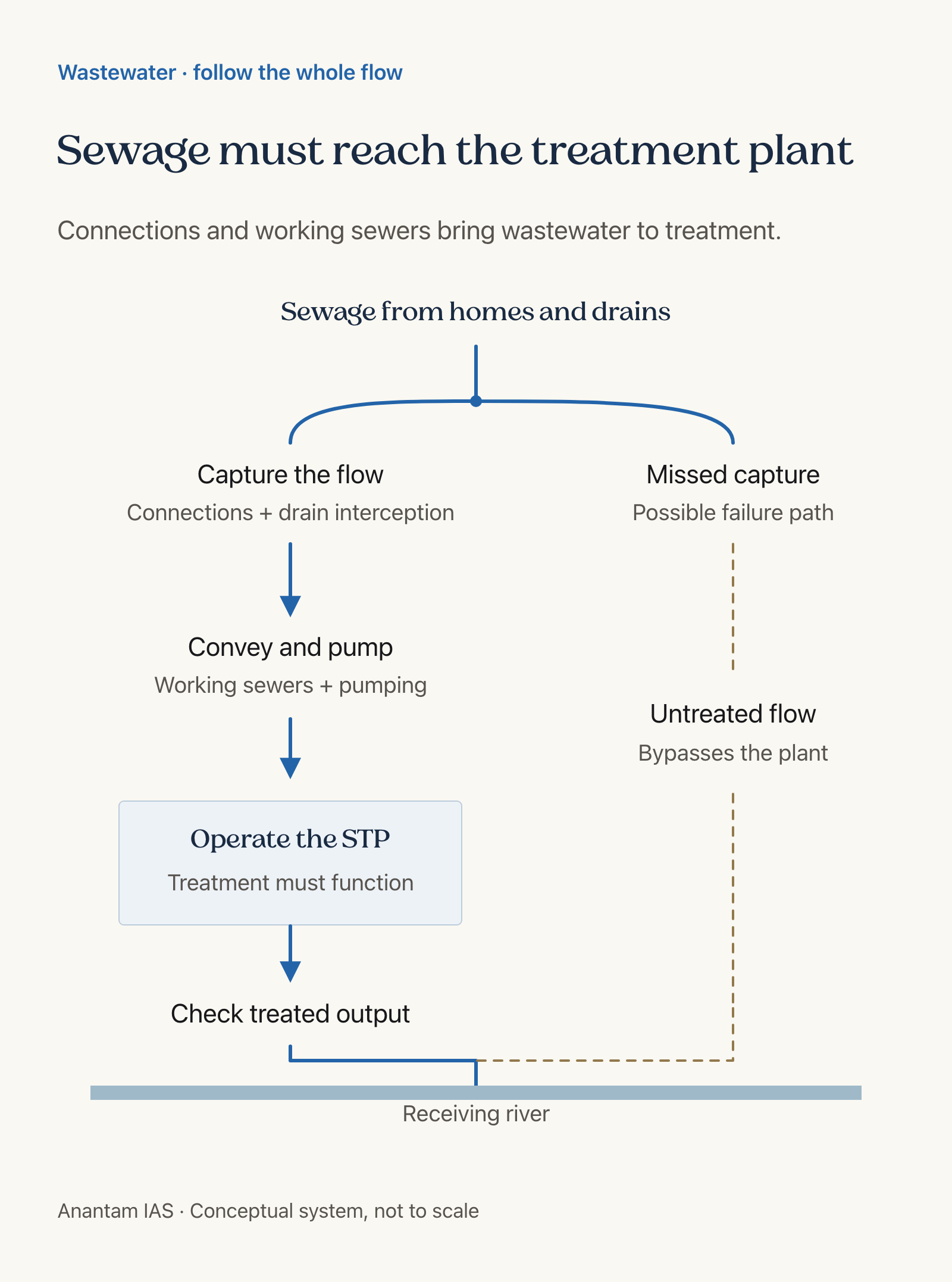
Follow the wastewater physically from its source to the outlet: each stage supplies the next, and a missing connection can interrupt the whole chain.
- Capture begins with household sewer connections or interception of sewage-bearing drains. Water that never enters the collection system cannot receive treatment at the intended plant, regardless of the capacity available inside that facility.
- Conveyance carries collected wastewater through sewers toward treatment. Network continuity matters: a completed plant and an unfinished connecting sewer are separate assets, but they do not yet form a complete wastewater service.
- Pumping supplies the lift needed where gravity alone cannot deliver flow. Electricity, equipment maintenance and operating arrangements become part of the treatment chain because the plant depends on wastewater actually arriving at its inlet.
- Treatment acts on the wastewater received at the plant. Installed capacity describes what infrastructure is designed to handle; actual throughput depends on incoming flows and working equipment, making the two measures conceptually different.
- Output management completes the chain through an appropriate discharge or reuse route. A conceptual bypass illustrates how uncaptured sewage could avoid treatment; it is not evidence that a particular Delhi project has such a bypass.
From Completed Assets to a Working Service
Assess delivery through connected operations, rather than assuming that construction milestones alone establish treatment performance or the condition of the receiving river.
- Inauguration and initiation must remain separate in progress reporting. The source announces both; it does not provide project-by-project operating records that would allow every component to be classified as delivering continuous treatment today.
- Capacity and utilisation answer different questions. The first concerns designed capability; the second concerns its use. An underfed plant may reflect missing collection links, so adding another plant would not automatically resolve that bottleneck.
- Maintenance responsibilities should follow the entire physical route. Sewer blockages, unavailable pumps and plant downtime require different operational responses; reporting only the treatment-plant component can hide a failure elsewhere in the service chain.
- Commissioning evidence should connect each completed asset to actual operations. For an answer on governance, ask whether household connections, sewer routes, pump operation and plant receipt are demonstrated together rather than through isolated completion certificates.
- River recovery is a wider environmental outcome than a construction milestone. The present release provides an infrastructure announcement, so a claim of achieved cleanup would require additional evidence beyond the inauguration and foundation-stone ceremony.
Way Forward
Verify the Connected Service
- Publish project-wise status distinguishing initiated, under-construction, commissioned and operating assets.
- Check connections and flow routes before expanding capacity where collection or conveyance is the limiting stage.
- Assign clear operating responsibility for sewers, pumps and plants, including maintenance and interruption response.
- Report actual treatment delivery alongside installed capacity and construction progress.
Conclusion
- The Yamuna package illustrates a central infrastructure lesson: collecting, conveying and treating sewage are interdependent functions. A treatment plant becomes useful to a catchment only when wastewater can reliably reach and pass through it.
- For UPSC answers, distinguish assets, services and environmental outcomes. Use the announcement to explain the delivery chain, while reserving claims about achieved treatment or river recovery for evidence that actually measures those results.
UPSC Practice Questions
Prelims MCQ 1
With reference to urban sewage management, consider the following statements:
- Installed STP capacity necessarily equals the volume of sewage treated.
- Household connections and drain interception can bring wastewater into a treatment delivery chain.
- Pumping may be required where gravity conveyance is insufficient.
How many of the above statements are correct?
(a) Only one (b) Only two (c) All three (d) None
Answer: (b) Only two
Explanation:
Statements 2 and 3 are correct. Installed capacity is designed capability; actual treatment depends on sewage reaching the plant and its operation.
Prelims MCQ 2
A completed sewage treatment plant receives little wastewater because connecting sewers remain unfinished. Which action most directly addresses this bottleneck?
(a) Increasing the plant’s nominal capacity alone (b) Declaring the entire catchment pollution-free (c) Completing the collection and conveyance links (d) Replacing operating records with expenditure totals
Answer: (c) Completing the collection and conveyance links
Explanation:
The immediate constraint is delivery of sewage to the plant. Additional treatment capacity does not itself complete the missing network.
UPSC Mains Questions
- Why does installed sewage treatment capacity alone provide an incomplete picture of urban river-cleaning performance? Explain using the wastewater delivery chain.
- Discuss how project-wise commissioning and operational accountability can improve the effectiveness of urban sewerage investments.
Source: PIB, Ministry of Home Affairs.
Frequently Asked Questions
What was announced for Yamuna rejuvenation?
PIB reported a package combining inaugurated and initiated works, including sewage treatment plants, household sewer connections, sewer rehabilitation, pumping and drain tapping. The announcement does not mean every component is already operating.
Why are household sewer connections important?
They connect properties to the collection network. Without an effective entry route, wastewater may never reach the intended treatment plant, even when that plant has available capacity and functioning treatment equipment.
What does drain interception do?
It captures sewage-bearing drain flows for onward conveyance to treatment. Its effectiveness depends on the downstream network, pumping where required, and a functioning plant that can receive and treat the intercepted wastewater.
Does installed STP capacity prove the river is clean?
No. Installed capacity describes designed capability. Actual treatment depends on collection and operations, while a claim about river recovery requires additional evidence concerning environmental outcomes beyond the completion of sewage infrastructure.
Tell Google you want more of this.
Add Anantam IAS as a preferred sourceOne tap, and this site shows up more often in your own Top Stories, AI Overviews and AI Mode. Remove it any time.