Why in news?
Union Home Minister pledged to clean the Yamuna by May 2029, launching water and sewerage projects worth ₹8,941 crore.
UPSC Relevance
Prelims: Yamuna – origin, course, tributaries; water quality parameters (BOD, DO, faecal coliform); Water Act 1974.
Mains GS3: Conservation, environmental pollution and degradation.
River Pollution in India
The scale of the problem
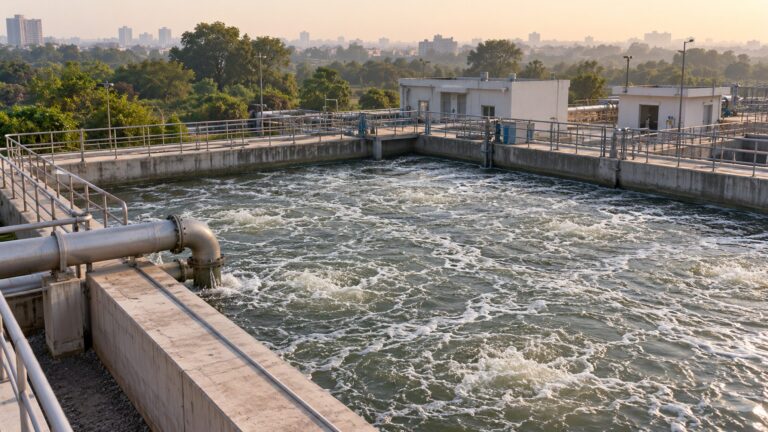
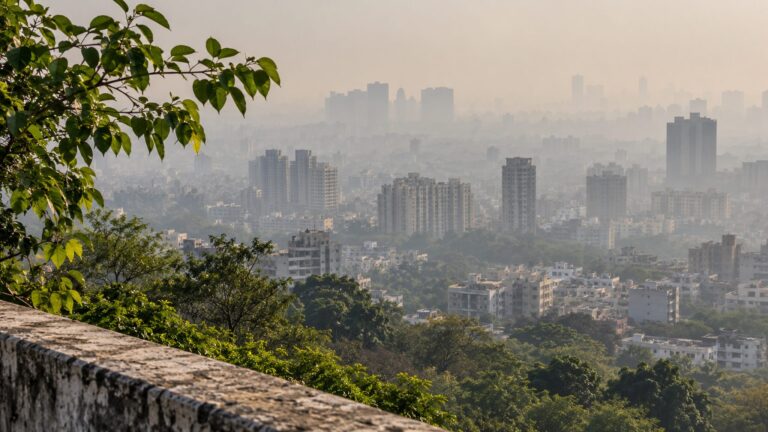
Indian rivers are worshipped as mothers and yet treated as drains. Almost every major city releases its waste into a river that flows past it. The result is that many rivers like Musi, Yamuna etc. which support farming, drinking water and faith for crores of people are now unfit even for bathing in long stretches.
- Polluted stretches: CPCB’s 2022 assessment identified 311 polluted river stretches on 279 rivers across 30 States and UTs.
- Sewage gap: As per CPCB (2021), urban India generates about 72,000 MLD of sewage, but installed treatment capacity is only around 44% of this, and actual treatment is even lower – roughly 28%.
- Biggest source: Untreated domestic sewage is the single largest cause of river pollution in India, ahead of industrial effluents.
Key water quality parameters
| Parameter | CPCB bathing water criteria | What it tells us |
| Dissolved Oxygen (DO) | 5 mg/l or more | Oxygen available for fish and aquatic life; low DO means the river is “dying” |
| Biochemical Oxygen Demand (BOD) | 3 mg/l or less | Amount of organic waste; higher BOD means more pollution |
| Faecal Coliform | Up to 2,500 MPN/100 ml (500 desirable) | Presence of human and animal excreta |
| pH | 6.5 to 8.5 | Acidity or alkalinity of water |
Causes of river pollution
- Untreated sewage: Shortage of sewage treatment plants (STPs), poor sewer networks and unsewered colonies mean most household waste flows through open drains into rivers.
- Industrial effluents: Tanneries, textile dyeing, distilleries, sugar mills, paper and chemical units release heavy metals and toxic chemicals. Many Common Effluent Treatment Plants (CETPs) do not meet standards.
- Agricultural runoff: Excess fertilisers and pesticides wash into rivers, causing eutrophication – algae bloom, oxygen falls and fish die.
- Solid waste and plastics: Garbage dumping on banks and in drains chokes the river.
- Dairy and animal waste: Dung and washings from dairies along drains add organic load.
- Religious and cultural practices: Idol immersion with toxic paints, offerings and riverside cremation add to the pollution.
- Reduced flow: Dams, barrages and diversion for irrigation reduce the river’s flow, so it cannot dilute or clean itself. Groundwater over-extraction lowers base flow.
- Encroachment and sand mining: Construction on floodplains and illegal sand mining destroy the natural filtering role of riverbanks and wetlands.
Challenges in cleaning rivers
- Infrastructure without results: STPs are built but run below capacity due to missing sewer connections, poor maintenance and erratic power supply.
- Fragmented governance: Many agencies – municipal bodies, water boards, development authorities, pollution control boards and irrigation departments – work in silos.
- Inter-state nature: Rivers flow across States, but water is a State subject. Upstream States control flow, downstream States bear the pollution.
- Weak enforcement: State Pollution Control Boards face staff shortages and limited powers. The Water (Prevention and Control of Pollution) Amendment Act, 2024 replaced jail terms with penalties for many offences, raising concerns about deterrence.
- Rapid urbanisation: Unauthorised colonies and slums grow faster than sewer networks.
- Lack of environmental flow: Without minimum water in the river, even treated discharge cannot keep it healthy.
- Political blame game: Cleaning rivers becomes an election promise rather than a long-term mission with continuity.
Case study – the Yamuna
| Feature | Details |
| Origin | Yamunotri glacier, Bandarpunch range, Uttarakhand |
| Length | About 1,376 km |
| Confluence | Joins the Ganga at Prayagraj (Triveni Sangam) |
| Major tributaries | Tons (largest), Giri, Hindon, Chambal, Sindh, Betwa, Ken |
| States | Uttarakhand, Himachal Pradesh, Haryana, Delhi, Uttar Pradesh |
- The Delhi stretch: The roughly 22 km stretch from Wazirabad to Okhla is only about 2% of the river’s length, but accounts for around three-fourths of its pollution load.
- Drains: Over 20 major drains, led by the Najafgarh drain, carry sewage and industrial waste into the river.
- A river without water: At Hathnikund barrage in Haryana, most of the water is diverted into canals. In the lean season, what flows through Delhi is mostly sewage.
- Toxic foam: Thick white foam at Kalindi Kunj and Okhla is caused by phosphates and surfactants from detergents in untreated sewage.
- Near-zero oxygen: Downstream of Delhi, DO often falls close to zero and faecal coliform levels run far above bathing limits.
- Why past efforts fell short: Yamuna Action Plans built STPs, but sewer connections lagged, plants were under-utilised and treated water mixed with untreated flow in the same drains.
- Cultural importance: The river is central to Chhath Puja for Purvanchali communities, making its cleanliness a social and political issue.
Strategies needed
- Last-mile sewer connectivity: Connect every household, including unauthorised colonies, to sewers; an STP without sewage reaching it is wasted capacity.
- Decentralised treatment: Small STPs and constructed wetlands for colonies and villages where big networks are hard to build.
- Reuse treated water: Use treated wastewater for industry, construction, parks and power plants, as per the National Framework on Safe Reuse of Treated Water (2022). This also eases the demand for fresh water.
- Ensure environmental flows: Release minimum water from barrages, especially Hathnikund, so the river can dilute and clean itself.
- Strict industrial control: Zero Liquid Discharge for highly polluting units, real-time online monitoring of effluents, and closure of non-compliant units.
- Restore floodplains: Remove encroachments and develop biodiversity parks and wetlands that naturally filter water.
- Single river authority: One basin-level body with clear responsibility across States and agencies.
- People’s participation: Awareness on idol immersion, plastic use and dairy waste; volunteer groups like Ganga Praharis.
- Learn from the world: The Thames (UK) and the Rhine (Europe, under the Rhine Action Programme of 1987) were once declared dead and were revived through decades of steady investment and cross-border cooperation.
A river is cleaned in the city, not in the river. Until every drain is tapped, every STP runs at full capacity and the river gets back its own water, deadlines will keep moving forward while the river keeps dying.
Practice MCQ
Q1. Consider the following statements regarding river water quality:
1. A higher Biochemical Oxygen Demand (BOD) indicates a higher level of organic pollution.
2. As per CPCB criteria for bathing water, Dissolved Oxygen should be 5 mg/l or more.
3. The toxic foam seen on the Yamuna in Delhi is mainly caused by a high level of dissolved oxygen.
How many of the statements given above are correct?
(a) Only one
(b) Only two
(c) All three
(d) None
Answer: (b). Statement 3 is incorrect – the foam is caused by phosphates and surfactants from detergents in untreated sewage.
Q2. Which of the following rivers are tributaries of the Yamuna?
1. Tons
2. Chambal
3. Gomti
4. Betwa
5. Son
Select the correct answer using the code given below:
(a) 1, 2 and 4 only
(b) 2, 3 and 5 only
(c) 1, 3 and 4 only
(d) 1, 2, 3, 4 and 5
Answer: (a). The Gomti and the Son are tributaries of the Ganga, not the Yamuna. The Betwa joins the Yamuna in Uttar Pradesh.
Mains Practice Question
Q. Despite decades of river action plans, the Yamuna continues to be one of India’s most polluted rivers. Analyse the causes of river pollution in India and suggest a comprehensive strategy for river rejuvenation. (15 marks, 250 words)
Tell Google you want more of this.
Add Anantam IAS as a preferred sourceOne tap, and this site shows up more often in your own Top Stories, AI Overviews and AI Mode. Remove it any time.