Why in News?
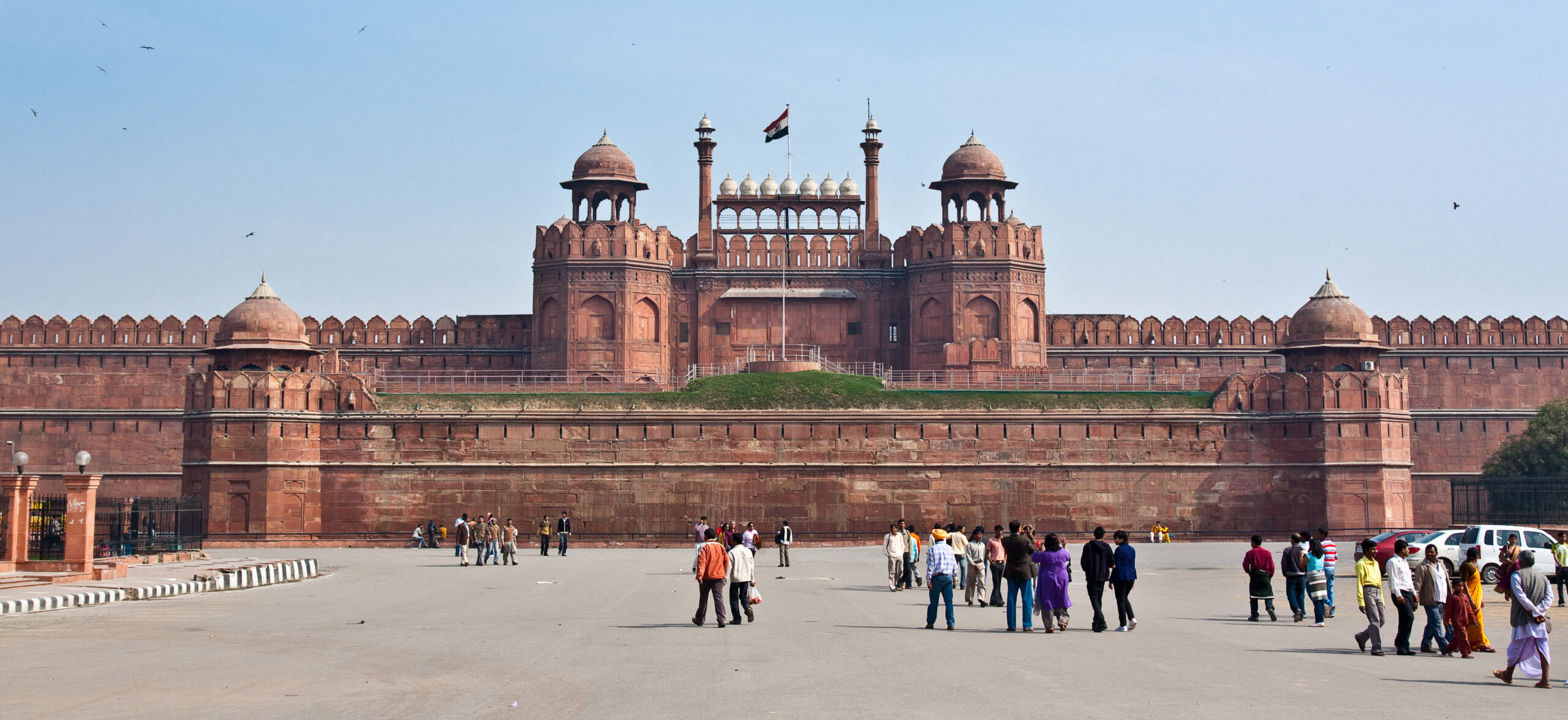
From 8 to 13 December 2025, India for the first time hosted and chaired the 20th session of UNESCO’s Intergovernmental Committee for the Safeguarding of the Intangible Cultural Heritage (ICH) at the Red Fort, New Delhi. PIB confirmed the historic venue — itself a UNESCO World Heritage Site — was chosen to symbolise the convergence of India’s tangible and intangible heritage.
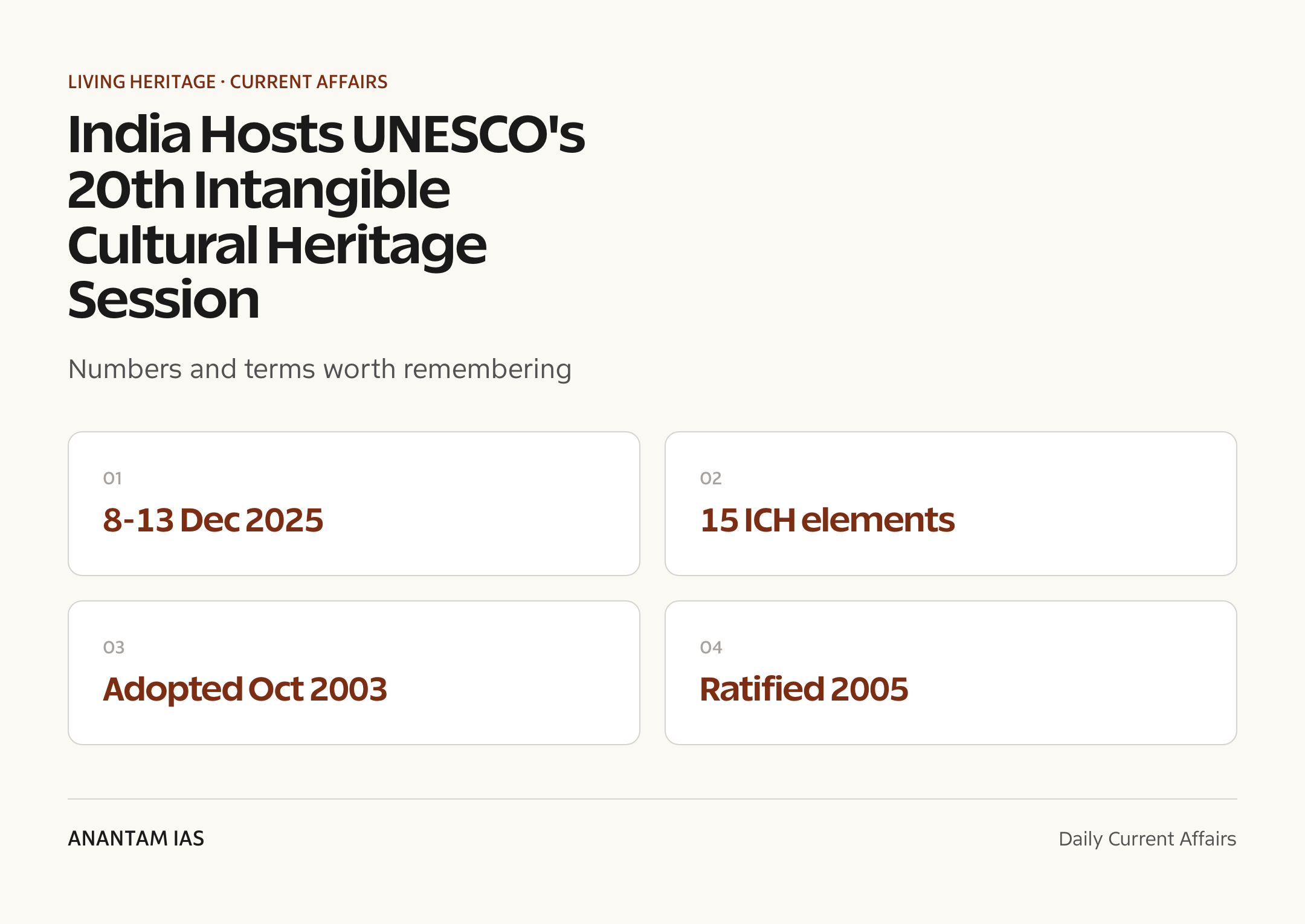
The meeting was chaired by H.E. Vishal V. Sharma, India’s Permanent Delegate to UNESCO, and coincided with the twentieth anniversary of India’s 2005 ratification of the 2003 Convention for the Safeguarding of the Intangible Cultural Heritage.
- Dates: 8-13 December 2025; venue: Red Fort (Lal Qila), New Delhi.
- First time India has hosted the ICH Committee session.
- Chaired by Vishal V. Sharma, India’s Permanent Delegate to UNESCO.
- Nodal agencies: Ministry of Culture and the Sangeet Natak Akademi (SNA).
- External Affairs Minister S. Jaishankar opened the session; UNESCO Director-General Khaled El-Enany attended the inaugural.
- India has 15 elements inscribed on UNESCO’s Representative List; nominations for Chhath Mahaparva and Diwali were under review.
The development matters in the context of:
- Hosting the apex body of the 2003 Convention is a major instance of India’s cultural diplomacy and soft-power projection.
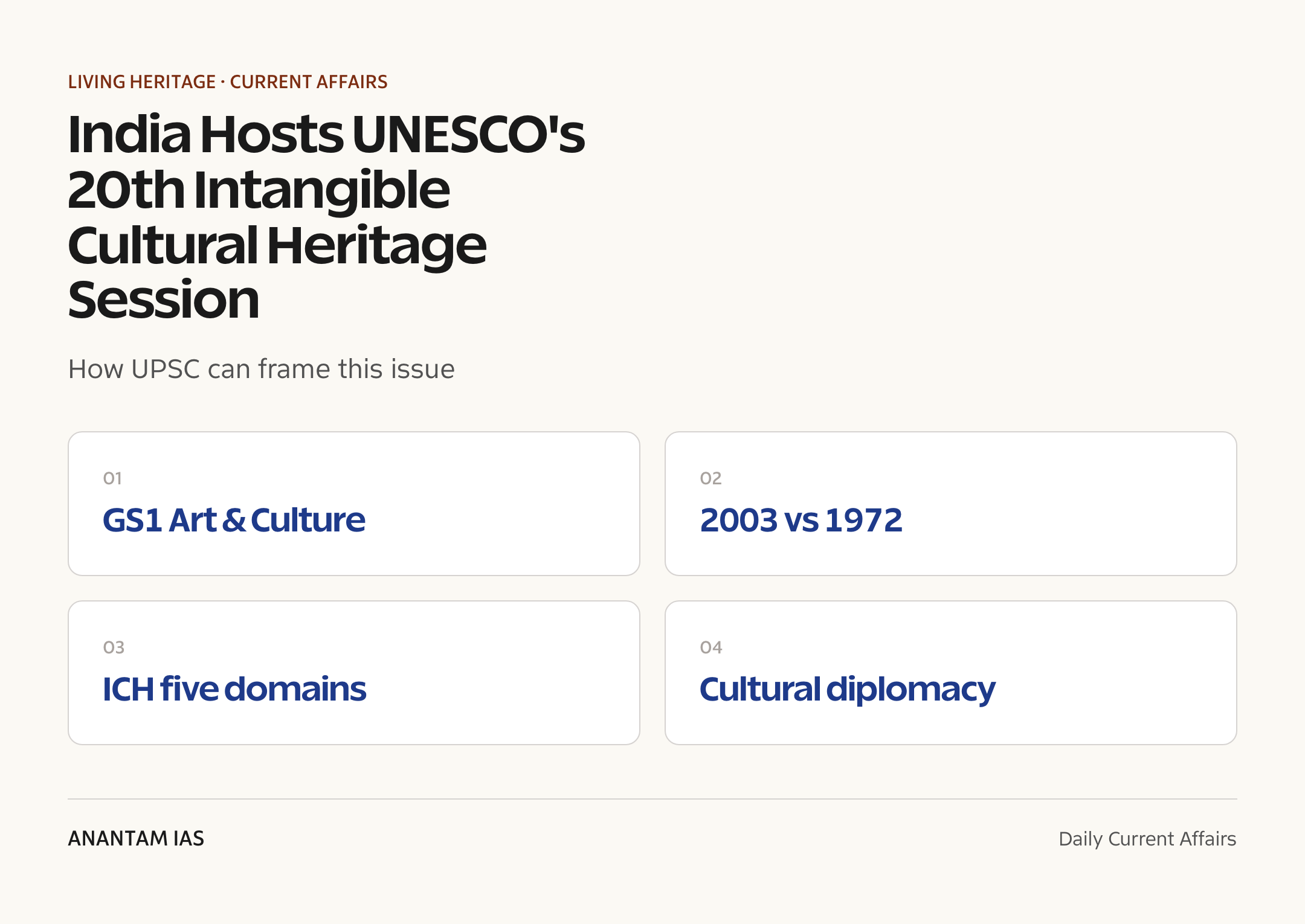
- Marks two decades of India operationalising a global instrument distinct from the 1972 World Heritage Convention.
UPSC Relevance
Prelims Relevance
- 2003 Convention for the Safeguarding of the Intangible Cultural Heritage — adopted 17 October 2003, 32nd UNESCO General Conference, Paris.
- India ratified the 2003 Convention in 2005; 20th anniversary in 2025.
- Intergovernmental Committee — 24 elected States Parties; evaluates nominations and manages the ICH Fund.
- ICH covers: oral traditions, performing arts, social practices/rituals/festive events, knowledge of nature, and traditional craftsmanship.
- Distinguish the Representative List, the List in Need of Urgent Safeguarding, and the Register of Good Safeguarding Practices.
- India’s 15 ICH inscriptions include Kutiyattam, Vedic chanting, Ramlila, Kalbelia, Kumbh Mela, Yoga, Durga Puja, Garba of Gujarat and the Thatheras of Jandiala Guru.
- Nodal agencies in India: Ministry of Culture and Sangeet Natak Akademi.
- The Red Fort, built by Shah Jahan (17th century), is a UNESCO World Heritage Site (inscribed 2007).
- India has served on the Intergovernmental Committee for three terms.
Mains Relevance
GS Paper 1
- Salient aspects of Indian art forms and the role of UNESCO’s 2003 Convention in safeguarding living traditions.
- Tangible versus intangible cultural heritage — how the two reinforce each other (Red Fort as venue).
GS Paper 2
- India and the UN system — leveraging UNESCO bodies for cultural diplomacy and agenda-setting.
GS Paper 1 (Society)
- Community-centred safeguarding and its links to livelihoods, crafts and social cohesion.
Essay
- Heritage is not what we inherit but what we choose to carry forward.
- Soft power and the diplomacy of culture.
Background and Context
What intangible cultural heritage means
ICH is the living, practised heritage that communities recognise as part of their identity.
- UNESCO defines it as the practices, knowledge, expressions, objects and spaces communities see as part of their cultural identity, transmitted across generations.
- Five domains: oral traditions and expressions (including language); performing arts; social practices, rituals and festive events; knowledge and practices about nature and the universe; and traditional craftsmanship.
- Unlike monuments, ICH is process-based and evolving — kept alive by practitioners rather than preserved in stone.
- It places communities, groups and individual practitioners at the centre of safeguarding.
The 2003 Convention — the legal instrument
The Convention is the global treaty that created the ICH machinery.
- Adopted on 17 October 2003 at UNESCO’s 32nd General Conference in Paris; it entered into force in 2006.
- It answered concerns that oral traditions, performing arts, rituals and craftsmanship were threatened by globalisation, social change and limited resources.
- Four purposes: safeguard ICH; ensure respect for the heritage of communities; raise awareness of its importance; and provide for international cooperation and assistance.
- It established the ICH Lists and the Intangible Cultural Heritage Fund, and underscored the interdependence of tangible and intangible heritage.
2003 ICH Convention vs the 1972 World Heritage Convention
The two UNESCO conventions protect different kinds of heritage and must not be confused.
- The 1972 World Heritage Convention protects tangible sites — monuments, ensembles and natural sites of Outstanding Universal Value (the World Heritage List).
- The 2003 Convention protects intangible, living heritage — practices and expressions, with no single “site”.
- 1972 ranks sites by universal value; 2003 deliberately avoids hierarchy — its Representative List showcases diversity rather than “the best”.
- The Red Fort embodies the link: a 1972 World Heritage monument hosting the 2003 Convention’s committee.
The Intergovernmental Committee and its functions
The Committee is the working body that implements the Convention between sessions of the General Assembly.
- Promotes and monitors the objectives and implementation of the 2003 Convention.
- Evaluates nominations for inscription on the ICH Lists (under Articles 16, 17 and 18) and grants international assistance.
- Prepares the draft plan for using the ICH Fund and mobilises additional resources.
- Drafts operational directives and examines periodic reports from States Parties.
- India has served on the Committee for three terms, building a record of engagement before hosting.
India's ICH footprint
India carries one of the world’s richest portfolios of inscribed living traditions.
- 15 Indian elements sit on UNESCO’s Representative List of the Intangible Cultural Heritage of Humanity.
- Performing arts: Kutiyattam (Sanskrit theatre), Chhau dance, Sankirtana of Manipur, Kalbelia folk songs and dances of Rajasthan.
- Rituals and festivals: Vedic chanting, Ramlila, Ramman, Buddhist chanting of Ladakh, Kumbh Mela, Durga Puja in Kolkata, and Garba of Gujarat.
- Knowledge and craft: Yoga and the brass-and-copper craft of the Thatheras of Jandiala Guru, Punjab.
- Nominations for Chhath Mahaparva and Diwali were under review at the session.
Why India hosted — agenda and significance
Hosting let India set the agenda and project a safeguarding model to the world.
- Showcased India’s national ICH safeguarding model — institutional support, community participation, documentation and a national inventory — as a global good practice.
- EAM S. Jaishankar opened the session, calling intangible heritage the most “democratic expression of culture”, “owned by all and guarded by many”.
- The Ministry of Culture’s Scheme for Safeguarding the Intangible Heritage and the Sangeet Natak Akademi coordinated exhibitions, performances and nomination dossiers.
- It advanced cultural diplomacy and soft power, while encouraging joint nominations, capacity building and technical exchange with other States Parties.
Way Forward
Deepen documentation and inventories
- Expand the national inventory of living traditions, prioritising lesser-known crafts and regional festivals.
- Build robust nomination dossiers with verified community consent, learning from the Chhath and Diwali files.
Centre the community
- Tie safeguarding to livelihoods of artisans and performers, so heritage funds reach practitioners.
- Engage youth through schools, fellowships and digital archiving to ensure transmission.
Convert the hosting spotlight into durable cooperation — joint multinational nominations, shared safeguarding initiatives and technical exchange under the 2003 Convention, rather than a one-off event.
Conclusion
Hosting the 20th ICH Committee session at the Red Fort placed India at the centre of the global conversation on living heritage and marked twenty years since it embraced the 2003 Convention.
The deeper test now is institutional: turning the visibility into stronger inventories, community-led safeguarding and livelihoods for the artisans and performers who keep these traditions alive.
UPSC Practice Questions
Prelims MCQ 1
With reference to UNESCO’s 2003 Convention for the Safeguarding of the Intangible Cultural Heritage, consider the following statements:
- It was adopted in 2003 and protects living traditions rather than tangible sites.
- India ratified it in 2005.
- The Intergovernmental Committee under it evaluates nominations to the Intangible Cultural Heritage Lists.
How many of the above statements are correct?
(a) Only one (b) Only two (c) All three (d) None
Answer: (c) All three
Explanation:
The 2003 Convention (adopted 17 October 2003) safeguards intangible heritage, distinct from the 1972 World Heritage Convention. India ratified it in 2005. The Intergovernmental Committee evaluates inscriptions to the ICH Lists. All three are correct.
Prelims MCQ 2
Which of the following is NOT among the recognised domains of intangible cultural heritage under UNESCO’s 2003 Convention?
(a) Oral traditions and expressions (b) Performing arts (c) Monuments and architectural ensembles (d) Traditional craftsmanship
Answer: (c) Monuments and architectural ensembles
Explanation:
Monuments and architectural ensembles are tangible heritage covered by the 1972 World Heritage Convention. The 2003 Convention’s five domains are oral traditions; performing arts; social practices/rituals/festive events; knowledge of nature; and traditional craftsmanship.
UPSC Mains Questions
- India hosting UNESCO’s 20th Intangible Cultural Heritage Committee session reflects a maturing of its cultural diplomacy. Examine how the 2003 Convention differs from the 1972 World Heritage Convention and why the distinction matters for India.
- “Intangible cultural heritage survives only when communities, and not the state alone, are its custodians.” Discuss in the context of India’s safeguarding model and its inscriptions on the UNESCO Representative List.
Sources: PIB, Ministry of Culture and DD News.
Frequently Asked Questions
What event did India host at the Red Fort in December 2025?
India hosted and chaired the 20th session of UNESCO’s Intergovernmental Committee for the Safeguarding of the Intangible Cultural Heritage from 8 to 13 December 2025 at the Red Fort, New Delhi. It was the first time India convened this committee, the apex body of the 2003 ICH Convention.
How is the 2003 Convention different from the World Heritage Convention?
The 1972 World Heritage Convention protects tangible sites such as monuments and natural areas of Outstanding Universal Value. The 2003 Convention protects intangible, living heritage like oral traditions, performing arts, rituals and craftsmanship. One safeguards places; the other safeguards practices kept alive by communities.
When did India ratify the 2003 ICH Convention?
India ratified the 2003 Convention for the Safeguarding of the Intangible Cultural Heritage in 2005. The December 2025 session coincided with the twentieth anniversary of that ratification, underscoring two decades of India’s engagement with the Convention’s mechanisms.
How many Indian elements are on UNESCO’s Representative List?
Fifteen Indian elements are inscribed on UNESCO’s Representative List of the Intangible Cultural Heritage of Humanity. They range from Kutiyattam and Chhau dance to Vedic chanting, Ramlila, Kalbelia, Kumbh Mela, Yoga, Durga Puja, Garba of Gujarat and the craft of the Thatheras of Jandiala Guru.
What are the five domains of intangible cultural heritage?
UNESCO recognises five domains: oral traditions and expressions including language; performing arts; social practices, rituals and festive events; knowledge and practices concerning nature and the universe; and traditional craftsmanship. These cover the breadth of living heritage that the 2003 Convention protects.
Which Indian agencies coordinate intangible heritage work?
The Ministry of Culture and its autonomous body, the Sangeet Natak Akademi, are the nodal agencies. They run documentation, inventorying, training, exhibitions and the preparation of UNESCO nomination dossiers, supported by the Ministry’s Scheme for Safeguarding the Intangible Heritage.
Tell Google you want more of this.
Add Anantam IAS as a preferred sourceOne tap, and this site shows up more often in your own Top Stories, AI Overviews and AI Mode. Remove it any time.