Why in news:
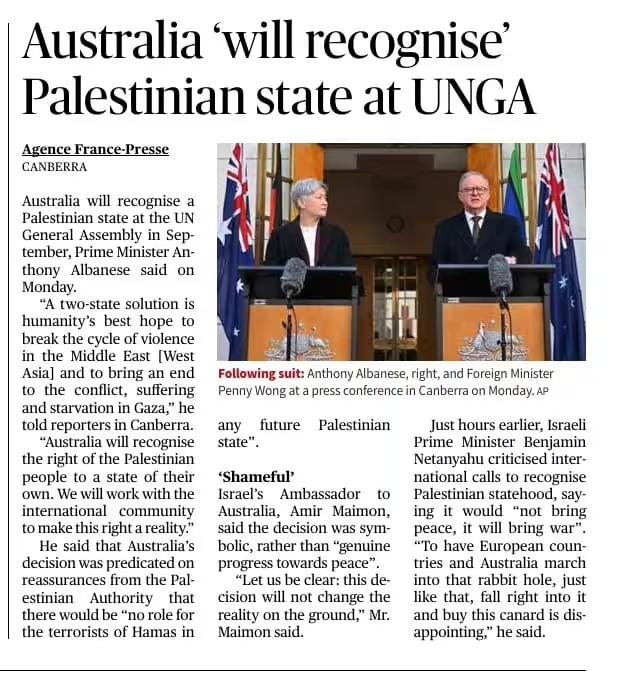
Australia has announced that it will recognise the State of Palestine at the upcoming UN General Assembly (UNGA) in September. Prime Minister Anthony Albanese stated that this decision is aimed at supporting a two-state solution to end violence and conflict in the Middle East, particularly in Gaza.
UPSC relevance:
Important International institutions, agencies and fora their structure, mandate.
UPSC Prelims PYQ 2022:
Q. With reference to the United Nations General Assembly, consider the following statements:
- The UN General Assembly can grant observer status to the non-member States.
- Inter-governmental organisations can seek observer status in the UN General Assembly.
- Permanent Observers in the UN General Assembly can maintain missions at the UN headquarters.
Which of the statements given above are correct?
a) 1 and 2 only
b) 2 and 3 only
c) 1 and 3 only
d) 1, 2 and 3About UNGA:
History:
- Established in 1945 under the Charter of the United Nations, the General Assembly occupies a central position as the chief deliberative, policymaking and representative organ of the United Nations.
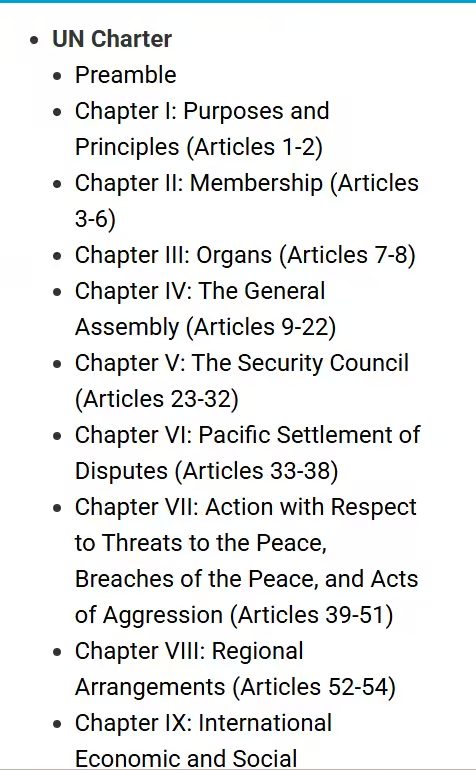
- The Charter of the United Nations is the founding document of the United Nations. It was signed on 26 June 1945, in San Francisco, at the conclusion of the United Nations Conference on International Organization, and came into force on 24 October 1945.
- Comprised of all 193 Members of the United Nations, it provides a unique forum for multilateral discussion of the full spectrum of international issues covered by the Charter.
Meeting:
The Assembly meets from September to December each year (main part), and thereafter, from January to September (resumed part), as required.
Functions and powers of the General Assembly:
- The Assembly makes recommendations to States on international issues within its competence. It has also taken actions across all pillars of the United Nations, including with regard to political, economic, humanitarian, social and legal matters.
- Consider and approve the United Nations budget and establish the financial assessments of Member States.
- Elect the non-permanent members of the Security Council and the members of other United Nations councils and organs and, on the recommendation of the Security Council, appoint the Secretary-General
- Consider and make recommendations on the general principles of cooperation for maintaining international peace and security, including disarmament
- Discuss any question relating to international peace and security and, except where a dispute or situation is currently being discussed by the Security Council, make recommendations on it
- Initiate studies and make recommendations to promote international political cooperation, the development and codification of international law, the realization of human rights and fundamental freedoms, and international collaboration in the economic, social, humanitarian, cultural, educational and health fields
- Make recommendations for the peaceful settlement of any situation that might impair friendly relations among countries
- Consider reports from the Security Council and other United Nations organs
- The Assembly may also take action in cases of a threat to the peace, breach of peace or act of aggression, when the Security Council has failed to act owing to the negative vote of a permanent member.
Decision making:
Each of the 193 Member States in the Assembly has one vote. Votes taken on designated important issues – such as recommendations on peace and security, the election of Security Council and Economic and Social Council members, and budgetary questions – require a two-thirds majority of Member States, but other questions are decided by a simple majority.
Main Committees:
- The Disarmament and International Security Committee
- The Economic and Financial Committee
- The Social, Humanitarian and Cultural Committee
- The Special Political and Decolonization Committee
- The Administrative and Budgetary Committee
- The Legal Committee
H.Q:
New York City, U.S.
President of the United Nations General Assembly:
- 79th session: Mr. Philemon Yang
- For 80th session: Annalena Baerbock
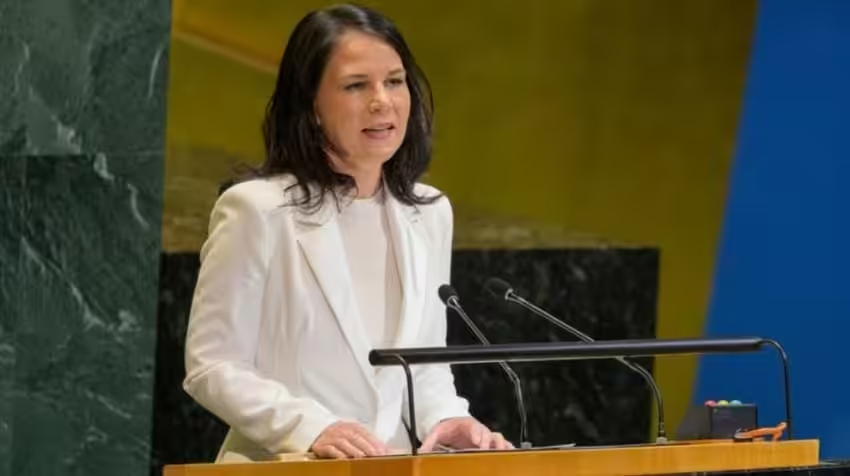
- Philemon Yang of Cameroon, current UNGA President, assuming the presidency on 9 September 2025.
Tell Google you want more of this.
Add Anantam IAS as a preferred sourceOne tap, and this site shows up more often in your own Top Stories, AI Overviews and AI Mode. Remove it any time.