Why in news
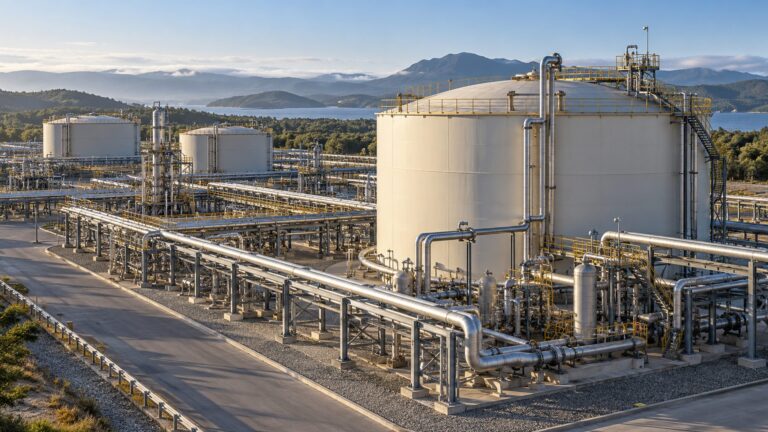
Recent escalation in the Middle East conflict involving the US, Israel, and Iran has sharply increased risks to marine traffic through Hormuz:
- Iran reportedly shut or threatened to close traffic through the strait in retaliation to US-Israel strikes.
- Multiple oil tankers have been attacked or damaged near the strait, leading to safety fears and anchoring of ships outside the waterway.
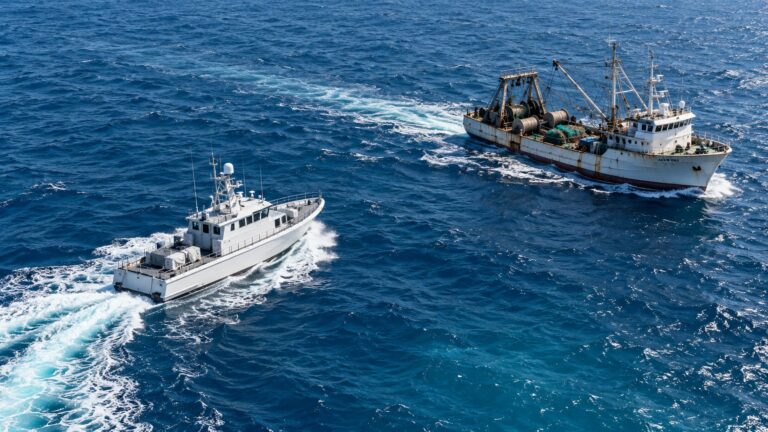
- Heightened naval activity and risk warnings have disrupted normal shipping patterns.
Tanker movements are halted or rerouted, and war risk insurance premiums have spiked.
UPSC Relevance:
GS-II: International Relations, GS-III: Indian Economy – Energy Security, Internal Security & Maritime Security
What is the Strait of Hormuz?
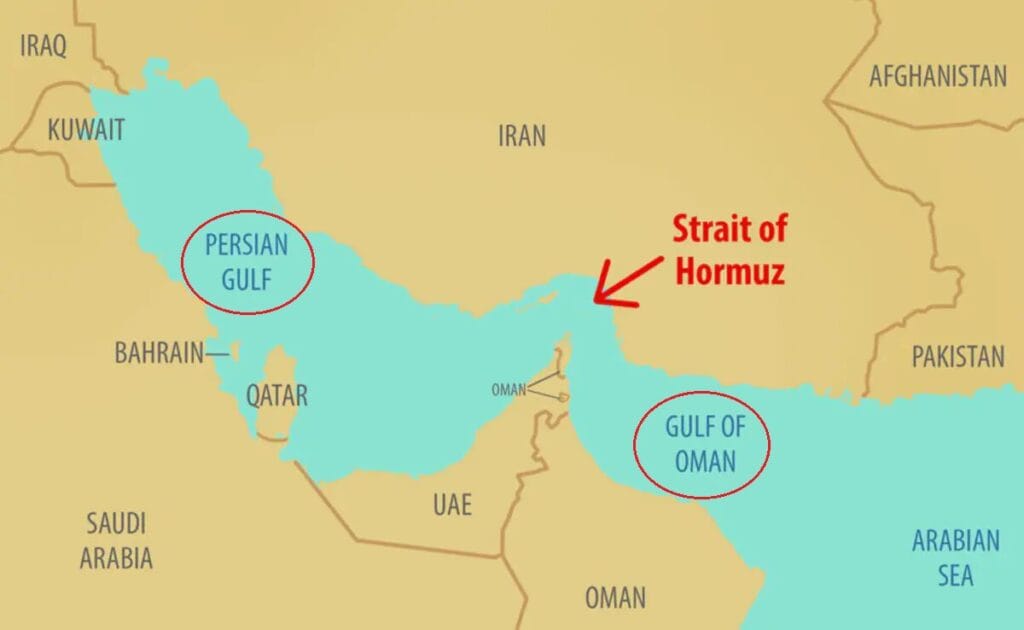
The Strait of Hormuz is a narrow sea passage between the Persian Gulf and the Gulf of Oman/Arabian Sea.
- It is about 33 km wide at its narrowest, but extremely significant — nearly 20% of the world’s crude oil and major volumes of LNG pass through it daily.
- It’s a maritime chokepoint — meaning a narrow route where global energy flow can be seriously affected by disruptions.
- Multiple Gulf producers (Saudi Arabia, UAE, Kuwait, Qatar, Iraq) depend on it to export energy.
- Indian imports are part of this traffic.
India’s energy profile
India is a major net energy importer:
- ~90% of crude oil and a significant share of LNG are imported.
- India’s oil consumption is about 5.5 million barrels per day and it relies heavily on Middle Eastern supplies.
Key dependencies via Hormuz
- Crude oil: ~35-50% of India’s crude imports flow through the Strait.
- LPG: Around 80-85% of imported LPG (cooking gas) passes via Hormuz.
- LNG: Over half of LNG imports route through the strait.
Note: LPG vulnerability is often higher than crude because India has limited strategic LPG reserves.
Immediate impacts of the disruption
Even if physical supplies haven’t stopped yet, the market reaction and economic effects are real:
A. Price effects
- Crude oil prices have jumped (with Brent crude touching multi-month highs).
- A spike in oil prices increases India’s import bill sharply – roughly ₹13,000 crore increase in import bill for every $1 rise in crude.
- LPG and LNG prices are sensitive due to high Gulf dependence.
B. Supply chain stress
- Insurance costs and freight rates increase because tankers avoid high-risk zones.
- Some shipping lines have delayed or rerouted cargoes, causing logistics delays.
C. Financial markets & macro
- Indian stock markets fell due to risk appetite deterioration.
- Rupee weakens under higher import costs and inflation pressure.
Can India face actual supply shortages?
Short-term:
- Government says even if flows are disrupted, India has crude stocks sufficient for ~10 days and fuel stocks for ~5-7 days.
- Strategic reserves can cushion for a short period.
Medium-term:
- India could recalibrate sourcing — increasing imports from Russia, Africa, Americas to reduce reliance on Hormuz.
But shipments of LPG remain more vulnerable because of limited stockpiles and high Gulf dependence.
Strategic and policy implications for India
A. Energy security strategy
- Diversification of suppliers: India has been shifting some purchases to Russia, the US, West Africa, and Latin America to reduce Gulf dependence.
- Strategic Petroleum Reserves (SPR): Maintain buffer stocks to guard against short-term supply shocks.
B. Infrastructure and alternative routes
- India may use pipelines bypassing Hormuz (like Saudi Eastern pipelines to Red Sea, UAE’s pipeline to Fujairah) to import oil without transiting the strait.
These alternative routes, while useful, may have limited capacity.
C. Foreign policy and strategic autonomy
- India aims to balance relations with Middle Eastern suppliers, the US, and major powers while protecting its energy interests.
- Maintaining neutral diplomatic posture reduces direct exposure in regional conflicts.
D. Economic impact
- Imported inflation can feed into fuel and transport costs, affecting inflation, current account deficit, and fiscal balances.
Long-term lessons for India
1. Importance of chokepoints
Strait of Hormuz illustrates how geopolitical conflicts can threaten global trade and energy security through maritime chokepoints.
2. Energy security = national security
For a net importer like India, stability of energy supply corridors is critical; disruption affects economic growth, inflation, and diplomacy.
3. Inter-linkage with global geopolitics
Energy security cannot be viewed in isolation — conflicts in West Asia have direct macro, social, and energy implications for India.
Conclusion
The Strait of Hormuz is a vital global energy artery, critical to India because a significant portion of its crude, LPG, and LNG imports pass through it. Recent Middle East conflicts threatening or disrupting traffic have raised energy security concerns — reflected in rising oil prices, higher freight/insurance costs, financial market stress, and inflation potential. India’s response involves strategic reserves, supply diversification, alternative import routes, and careful foreign policy navigation to ensure stability.
Practice Questions:
The Strait of Hormuz connects:
(a) Red Sea and Arabian Sea
(b) Persian Gulf and Gulf of Oman
(c) Mediterranean Sea and Red Sea
(d) Black Sea and Mediterranean Sea
Answer: (b)
Practice Mains Question:
Evaluate the implications of disruption in the Strait of Hormuz for India’s energy security.
Tell Google you want more of this.
Add Anantam IAS as a preferred sourceOne tap, and this site shows up more often in your own Top Stories, AI Overviews and AI Mode. Remove it any time.