Why in News?
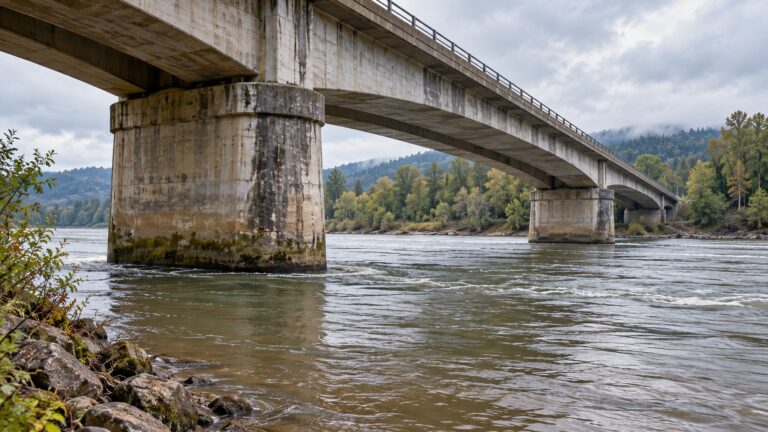
On 16 October 2026, UNESCO reported that Santo Domingo’s Colonial City was piloting a Climate Action Toolkit to integrate climate risks into World Heritage management.
- The 5–9 October workshop tested the toolkit’s Zero Draft through technical sessions, practical exercises and fieldwork in the historic centre.
- Santo Domingo is the first cultural property and second World Heritage property in the pilot phase; it is not the first pilot overall.
- The wider process runs from 17 September to 15 November 2026; participating institutions expect to move towards a Climate Action Plan, which is not yet reported complete.
- The World Heritage Centre, ICCROM, ICOMOS and IUCN are developing the tool from the climate-action policy adopted in 2023.
- Historic centres combine vulnerable physical fabric with inhabited streets and services, so conservation decisions also depend on urban planning and community knowledge.
- The pilot asks how a hazard threatens specific heritage attributes, rather than treating every building or climate threat as equally important.
UPSC Relevance
Prelims Relevance
- Outstanding Universal Value: the exceptional significance underpinning World Heritage recognition.
- Attributes: features conveying a property’s heritage value.
- ICCROM, ICOMOS and IUCN: the World Heritage Committee’s Advisory Bodies.
- Hazard, exposure and vulnerability: distinct components of climate-risk assessment.
- Zero Draft: a methodology under testing, not a final mandatory standard.
Mains Relevance
GS Paper 1
- Conserving cultural heritage while retaining the functioning of living historic cities.
GS Paper 3
- Linking climate projections, vulnerability assessment and adaptation to site-management decisions.
Essay
- Protecting inherited places requires anticipating change, not only repairing past damage.
Background and Context
Begin With Heritage Value, Not Just a Weather Warning
The toolkit starts with what gives a property its significance, then examines how climate pressures could weaken the features carrying that significance.
- Outstanding Universal Value is the central conservation reference. A risk assessment must identify the attributes conveying that value before deciding what deserves protection, rather than starting with an undifferentiated inventory of structures.
- Attributes make an otherwise broad conservation objective concrete. In a historic city, relevant features might include historic fabric or spatial relationships; each example must be checked against the particular property’s recognised values.
- Living heritage settings require attention to residents and institutions as well as buildings. UNESCO’s pilot explicitly combines heritage conservation, urban planning and climate expertise because these responsibilities intersect within the same historic centre.
- Site-specific assessment avoids assuming identical consequences from the same storm. Materials, condition, drainage and location can change how damage occurs; these are illustrative assessment considerations, not findings measured for every Santo Domingo building.
- The Ramappa heritage discussion offers an Indian comparison about heritage and its setting. This connection is analytical: UNESCO’s announcement does not establish an Indian application of the new toolkit.
Trace the Path From Hazard to Damage
Hazard, exposure and vulnerability explain different parts of risk; separating them helps managers choose an intervention that addresses the actual route to harm.
- A hazard is a potentially damaging physical event or trend. UNESCO identifies hurricanes, heavy rainfall and flooding in the Dominican context; warming and sea-level rise also feature in the toolkit’s broader climate perspective.
- Exposure asks which heritage attributes are situated where a hazard can act. Locating a threatened structure or landscape feature connects climate information with a conservation responsibility; a regional warning alone cannot complete that task.
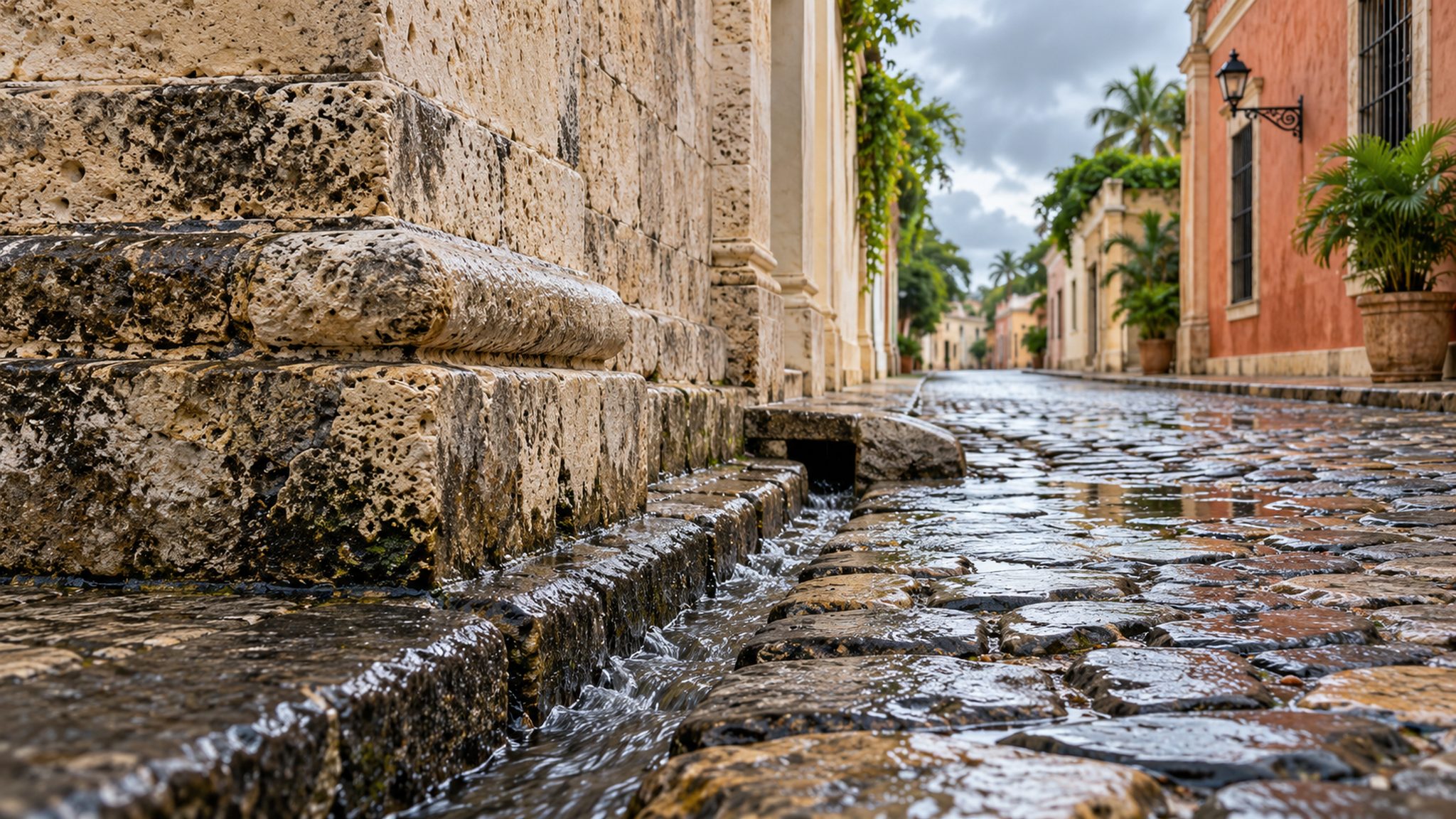
- Vulnerability concerns susceptibility to damage. As an illustration, deteriorated fabric and obstructed drainage may make rainfall more damaging, while maintenance can reduce susceptibility without eliminating rainfall or relocating the historic property itself.
- Climate projections inform short-, medium- and long-term planning. They describe possible future conditions rather than the exact date of a future disaster; management choices should acknowledge uncertainty instead of treating one scenario as certainty.
- Local knowledge can identify recurring water entry, past damage and maintenance constraints. Combined with scientific assessment, it helps explain how projected hazards may affect specific attributes rather than leaving climate information disconnected from conservation practice.
Turn the Assessment Into Management Choices
The practical test is whether risk information changes conservation decisions while preserving heritage values and involving the people responsible for the site.
- Adaptation reduces harm from climate impacts, while mitigation addresses emissions. The pilot considers both, but improving drainage and reducing energy-related emissions solve different problems; neither should be presented as a substitute for the other.
- Conservation compatibility matters when selecting responses. A protective intervention that damages the attributes it is meant to safeguard can defeat its purpose; this is a decision principle, not a reported evaluation of any completed pilot intervention.
- Institutional mandates determine who can maintain structures, manage streets or act on warnings. UNESCO highlights clear responsibilities and participation by rights-holders and stakeholders, making coordination part of applying the methodology rather than an optional consultation.
- Pilot feedback will refine the Zero Draft and identify knowledge, capacity and resource needs. A workshop demonstrating usefulness does not prove long-term effectiveness, announce a completed action plan or create a new binding conservation obligation.
- The climate oversight discussion provides a complementary governance lens: implementation requires assigned responsibilities and follow-through. Here, the relevant operational destination is the property’s own planning and management instruments.
Way Forward
Make Each Response Traceable to a Risk
- Identify the heritage attribute, hazard and vulnerability before choosing a response; record the evidence and uncertainty behind each decision.
- Assign maintenance and monitoring responsibilities across conservation, urban and climate institutions, with residents contributing observations of recurring damage.
- Use pilot feedback to improve the methodology before wider application, distinguishing training outcomes from demonstrated reductions in climate damage.
Conclusion
- Climate-resilient conservation begins by linking a specific hazard to a specific heritage attribute and a defensible response, rather than treating heritage protection as emergency repair after every damaging event.
- For an exam answer, connect risk assessment, institutional responsibility and community knowledge; keep the status clear: Santo Domingo is testing an unfinished methodology, not demonstrating a completed global or Indian rollout.
UPSC Practice Questions
Prelims MCQ 1
With reference to UNESCO’s Climate Action Toolkit pilot, consider the following statements:
- Santo Domingo is the first cultural property participating in the pilot phase.
- The Zero Draft is already a final mandatory standard for all World Heritage properties.
- The methodology links climate risks with attributes conveying Outstanding Universal Value.
How many of the above statements are correct?
(a) Only one (b) Only two (c) All three (d) None
Answer: (b) Only two
Explanation:
Statements 1 and 3 are correct. The toolkit remains under development and its Zero Draft is being tested; it is not a final mandatory standard.
Prelims MCQ 2
Which example best illustrates reducing vulnerability rather than removing a climate hazard?
(a) Assuming heavy rainfall will cease after restoration (b) Repairing drainage that allows rainwater to damage historic fabric (c) Declaring every exposed building equally susceptible to damage (d) Treating a regional rainfall projection as a precise disaster date
Answer: (b) Repairing drainage that allows rainwater to damage historic fabric
Explanation:
Drainage maintenance can reduce susceptibility to rainfall damage while rainfall remains a hazard. This is an illustrative distinction, not a reported completed action in the pilot.
UPSC Mains Questions
- How can climate-risk assessment be integrated into the management of living historic cities without weakening their heritage values? Discuss. (150 words)
- Distinguish hazard, exposure and vulnerability in heritage conservation. Explain how institutional coordination and local knowledge can turn risk assessment into adaptation decisions. (250 words)
Source: UNESCO.
Frequently Asked Questions
What is UNESCO’s Climate Action Toolkit intended to do?
It is being developed to help World Heritage managers assess how climate risks affect attributes conveying Outstanding Universal Value and integrate adaptation and mitigation into planning and management.
Is the toolkit final and mandatory?
No. Santo Domingo is testing the Zero Draft within an ongoing pilot process. Feedback will inform revisions, and UNESCO’s report does not announce a final mandatory toolkit or completed Climate Action Plan.
Why does the toolkit focus on heritage attributes?
Attributes connect a property’s recognised significance to concrete conservation decisions. Identifying them helps managers determine what a hazard could damage and whether a proposed protective response would preserve the value concerned.
Does the Santo Domingo pilot establish implementation in India?
No. The reported pilot concerns the Dominican Republic. Its approach can inform discussion of Indian heritage management, but that analytical relevance does not demonstrate adoption or implementation at an Indian property.
Tell Google you want more of this.
Add Anantam IAS as a preferred sourceOne tap, and this site shows up more often in your own Top Stories, AI Overviews and AI Mode. Remove it any time.