

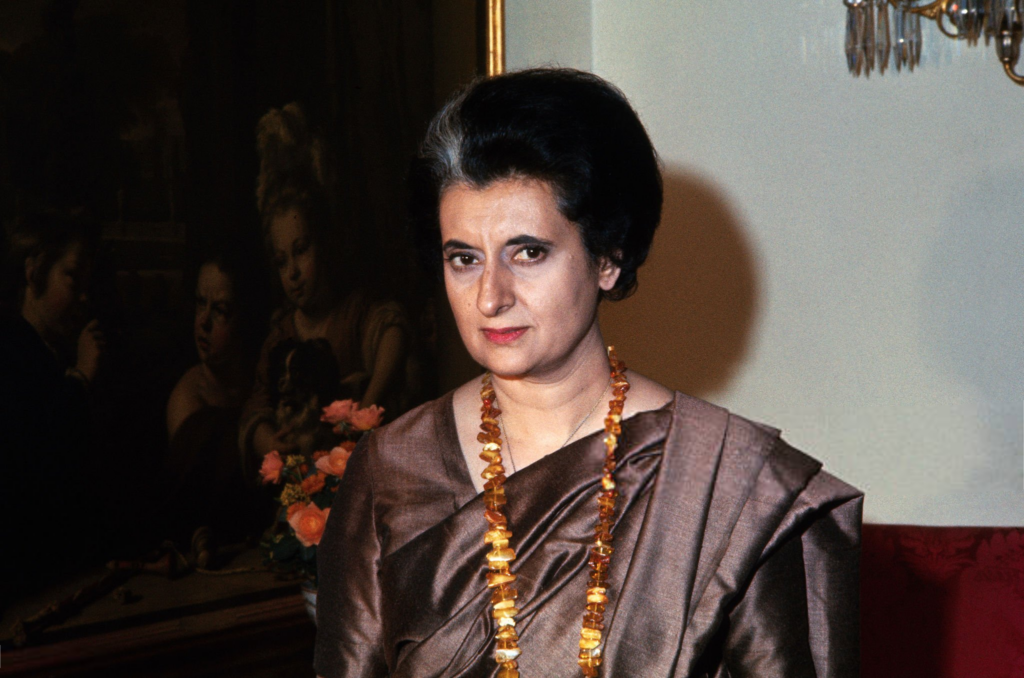
The National Emergency of 1975-1977 — declared by Prime Minister Indira Gandhi on June 25, 1975 and lifted on March 21, 1977 — was one of the most consequential periods in independent India’s political history. During the 21 months of Emergency, civil liberties were suspended, opposition leaders were imprisoned, the press was censored, and the Constitution was amended to concentrate power in the executive.
The Emergency ended with the Janata Party's decisive victory in the 1977 elections — the first defeat of the Congress at the centre since independence. The experience fundamentally altered Indian political consciousness, strengthened civil liberties jurisprudence, and made the 1975 Emergency a cautionary touchstone in Indian democracy.
For UPSC, the Emergency is one of the most thoroughly tested topics — covering Polity (Article 352), Modern History, and Ethics.
Background: The Road to Emergency
Political Pressure on Indira Gandhi
By 1973-74, several pressures converged on Indira Gandhi:
Economic crisis:
- Oil shock of 1973 — global oil prices quadrupled; Indian economy stressed
- Food grain shortage — persistent shortages and price inflation
- Bangladesh refugees — cost of the 1971 war's aftermath
- Unemployment at record highs
Political turmoil:
- Bihar Movement (1974) led by Jayaprakash Narayan (JP) — demanded "Total Revolution" against corruption
- Navnirman Andolan in Gujarat (1974) — student-led protests
- Railway Strike (1974) — George Fernandes led the largest workers' strike in Indian history
- Nav Nirman Movement — students and civil society mobilised against corruption
- Gherao politics — opposition parties coordinated to disrupt governance
The Allahabad High Court Judgment (June 12, 1975)
The immediate trigger was the Allahabad High Court judgment:
Case: Indira Nehru Gandhi v. Raj Narain Date: June 12, 1975 Judge: Justice Jagmohan Lal Sinha
Facts: Raj Narain, who had lost the 1971 Rae Bareli election to Indira Gandhi, filed an election petition alleging electoral malpractice.
Judgment: Justice Sinha ruled that Indira Gandhi was guilty of corrupt electoral practices — specifically, using government machinery for her campaign. The court:
- Declared her election void
- Disqualified her from holding elected office for six years
Indira Gandhi was given 20 days to file an appeal with the Supreme Court.
The Supreme Court Stay (June 24, 1975)
On June 24, 1975, the Supreme Court (Justice V.R. Krishna Iyer, vacation bench) gave a conditional stay:
- Indira Gandhi could continue as PM
- But she could NOT vote in Parliament
- The appeal was to be decided on merits
This stay was inadequate for her political survival and further inflamed the opposition.
The Midnight Declaration (June 25, 1975)
On the night of June 25, 1975:
- JP and opposition leaders held a massive rally at Ramlila Maidan, Delhi
- JP called on police and military to disobey "illegal orders" — seen by the government as a call to mutiny
- At around 11:45 PM, Indira Gandhi met President Fakhruddin Ali Ahmed
- Ahmed signed the Emergency proclamation under Article 352 (citing "internal disturbance")
- By early morning of June 26, 1975, opposition leaders were being arrested
The Emergency was formally announced over All India Radio on the morning of June 26, 1975.
Features of the Emergency
Constitutional Basis
Article 352 of the Constitution provides for National Emergency when:
- War
- External aggression, or
- Internal disturbance (before the 44th Amendment) / Armed rebellion (after the 44th Amendment)
The 1975 Emergency was declared on grounds of "internal disturbance" — a vague term that subsequent amendments removed.
Effects of the Emergency Declaration
| Effect | Detail |
|---|---|
| Fundamental Rights suspended | Right to move courts for enforcement of most fundamental rights (Articles 14, 21, 22) suspended under Article 359 |
| Centre-State balance | Centre could direct states on any matter |
| Election postponement | Parliamentary term extended; state elections postponed |
| Executive powers enhanced | Ordinances liberally used |
| Media censorship | All publications subject to pre-censorship |
The Shah of Iran Precedent
The declaration used the constitutional machinery properly — but its political use was unprecedented and democratically questionable.
Key Events During Emergency
Mass Arrests
On June 26, 1975, and in the following days, thousands were arrested:
- Jayaprakash Narayan
- Morarji Desai
- L.K. Advani
- Atal Bihari Vajpayee
- George Fernandes (who went underground; later arrested)
- Charan Singh
- Arun Jaitley (then a young ABVP activist)
In total, approximately 100,000+ people were detained under MISA (Maintenance of Internal Security Act) and other preventive detention laws.
The "Excesses"
Several excesses marked the Emergency:
Forced sterilisation:
- Sanjay Gandhi's "Five-Point Programme" included aggressive family planning
- Estimated ~6.2 million sterilisations were performed in 1976 alone (many forced or coerced)
- Major political damage — particularly in rural north India where the programme was most aggressively pursued
Slum demolitions:
- Turkman Gate in Old Delhi — police fired on protesters during demolition drive (April 1976)
- Several casualties
- Sanjay Gandhi's urban "beautification" campaign affected thousands of urban poor
Torture and custodial deaths:
- Numerous cases documented by civil liberties organisations
- Rajan case (Kerala) — P. Rajan, a student, died in police custody; never recovered
Press censorship:
- Pre-censorship of all publications
- Newspapers had to submit articles for clearance
- Famous papers left blank columns or ran classical Sanskrit quotations as forms of passive resistance
- The Statesman, Indian Express, and some regional papers resisted most actively
- Kuldip Nayar and other journalists were imprisoned
The 42nd Amendment (1976)
The most far-reaching constitutional change was the 42nd Amendment Act, 1976 — called the "Constitution of India" amendment for the extent of its changes:
Preamble changes:
- Added "Socialist" and "Secular"
- Added "and integrity"
Fundamental Duties (Article 51A):
- Inserted — 10 (now 11) fundamental duties of citizens
Judicial review:
- Restricted judicial review of constitutional amendments
- Tried to make Parliament's amendment power unlimited
Centre-State relations:
- Centre strengthened vs. states
- More subjects in Concurrent list (Article 254)
Others:
- Extended Parliamentary term from 5 to 6 years
- Parliament could provide for reservation to backward classes
The End of Emergency (1977)
Why Indira Gandhi Lifted the Emergency
By early 1977, Indira Gandhi faced pressure from multiple directions:
- International criticism — India's democratic image damaged
- Intelligence reports — she reportedly believed (wrongly) that the Emergency had popular support
- Party pressure — many Congress leaders were uneasy
- Personal sense — she may have genuinely wanted to test her legitimacy
On January 18, 1977, she announced elections for March 1977 and released political prisoners.
The 1977 Elections
Major opposition parties merged to form the Janata Party:
- Jan Sangh (Vajpayee, Advani)
- Bharatiya Lok Dal (Charan Singh)
- Congress (O) (Morarji Desai)
- Socialist Party (George Fernandes, Raj Narain)
The Janata Party ran on a simple platform: "Save Democracy."
Results (March 1977):
| Party | Seats |
|---|---|
| Janata Party | 298 |
| Congress | 154 |
| Others | 93 |
Indira Gandhi lost her own Rae Bareli seat to Raj Narain. It was a devastating personal defeat.
Formation of Janata Government
Morarji Desai became India's first non-Congress Prime Minister on March 24, 1977. The Emergency was formally lifted on March 21, 1977.
The Shah Commission (1977-78)
The Janata government appointed the Shah Commission under retired CJI J.C. Shah to investigate Emergency excesses.
Findings:
- Widespread abuse of power during Emergency
- Forced sterilisations were indeed forced
- Mass detentions were extra-legal
- Press censorship was often arbitrary
- Sanjay Gandhi emerged as a key unconstitutional power centre
The Shah Commission's reports are one of the most important primary sources on Emergency excesses.
The 44th Amendment (1978)
The Janata government enacted the 44th Amendment Act, 1978 to prevent future Emergency abuses:
| Reform | Detail |
|---|---|
| Article 352 tightened | "Internal disturbance" replaced with "armed rebellion" |
| Written recommendation | Cabinet must give written recommendation for Emergency declaration |
| Parliamentary approval | Stricter conditions for Parliament to approve proclamation |
| Article 359 restricted | Articles 20 and 21 CANNOT be suspended even during Emergency |
| Article 74 | President's advisory role clarified |
| Right to property | Removed as fundamental right; made Article 300A (constitutional right) |
Key Supreme Court Cases
ADM Jabalpur v. Shivkant Shukla (1976)
During the Emergency, the Supreme Court infamously held (4-1) that during Emergency, the right to move courts under Article 21 is suspended — even for illegal detention.
Dissenting opinion by Justice H.R. Khanna (the sole dissenter): Even during Emergency, the right to life cannot be suspended. For his dissent, Justice Khanna was superseded for Chief Justiceship (which he would otherwise have received).
Subsequent correction: The 44th Amendment made it impossible to suspend Article 21. In Puttaswamy v. Union of India (2017), the Supreme Court explicitly overruled ADM Jabalpur, calling it one of the darkest moments of Indian jurisprudence.
Impact on Indian Democracy
Immediate Impact
- First defeat of Congress at the centre
- Non-Congress government for the first time
- Restoration of civil liberties
- Constitutional amendments (44th) to prevent future abuses
Long-term Impact
Strengthened democracy: The Emergency experience created a deep cultural commitment to civil liberties. Indian voters remembered the Emergency and consistently rejected candidates perceived as authoritarian.
Judicial reform: The Emergency-era abuses led to:
- Public Interest Litigation (PIL) expansion
- Basic Structure Doctrine reaffirmation (Minerva Mills, 1980)
- Greater judicial activism on civil liberties
- Stronger jurisprudence on Article 21
Political culture: Coalition politics became the norm; single-party dominance was broken.
Press freedom: Newspapers became more assertive; the Emergency experience entrenched the idea that press restrictions would be resisted.
UPSC Relevance
GS2 (Polity): Emergency provisions (Article 352), 42nd and 44th Amendments, civil liberties, judicial review.
GS1 (Modern History): Indira Gandhi era, political history of the 1970s.
GS4 (Ethics): Abuse of constitutional powers, institutional integrity, moral courage (Khanna's dissent).
Essay: Democracy under threat; constitutional safeguards; the role of civil society.
Key Prelims facts:
- Emergency declared: June 25, 1975 (night)
- Emergency lifted: March 21, 1977
- Duration: ~21 months
- Ground invoked: "Internal disturbance" (Article 352)
- President: Fakhruddin Ali Ahmed
- Allahabad HC judgment: June 12, 1975 (Justice Jagmohan Lal Sinha)
- Case: Indira Nehru Gandhi v. Raj Narain
- 42nd Amendment: 1976
- 44th Amendment: 1978 (reformed Article 352)
- ADM Jabalpur case: 1976 (Justice Khanna's dissent)
- First non-Congress PM: Morarji Desai (March 24, 1977)
- Janata Party seats: 298
- Shah Commission: Headed by retired CJI J.C. Shah
- Sanjay Gandhi's programme: Five-Point Programme (family planning, slum clearance, etc.)
- Major opposition leader (pre-Emergency): Jayaprakash Narayan (JP)
- Ramlila rally: June 25, 1975
- Basic Structure doctrine (from Kesavananda Bharati): Protected the Constitution from Emergency-era amendments
Tell Google you want more of this.
Add Anantam IAS as a preferred sourceOne tap, and this site shows up more often in your own Top Stories, AI Overviews and AI Mode. Remove it any time.






