Disclosure: this guide contains Amazon affiliate links. As an Amazon Associate, Anantam IAS earns from qualifying purchases — at no extra cost to you.
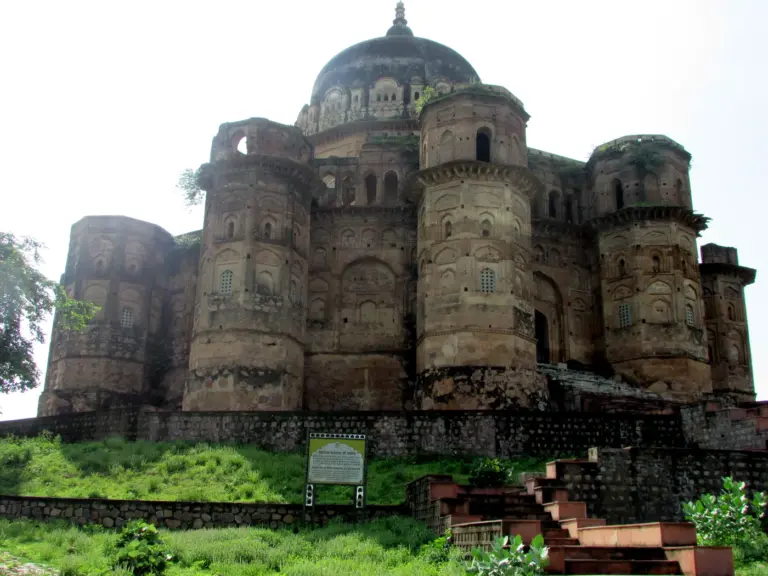
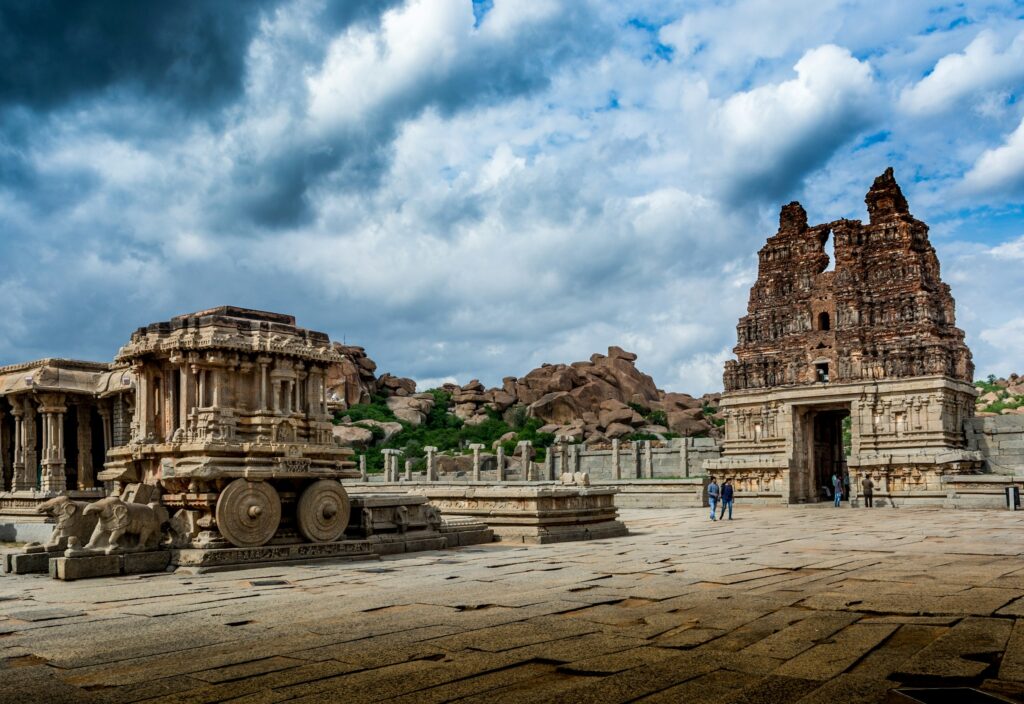
Walk through the ruins at Hampi and you stand inside a city that once believed it was the centre of the world. Half a million people, a bazaar where diamonds were sold by the bushel, ambassadors from Persia and Portugal writing home about a splendour they had never seen. The Vijayanagara court did not imagine itself as one empire in a long queue of empires; it imagined itself as the culmination, the arrival, the age that mattered. Today the granite halls are roofless and the river runs past stones that no longer remember their own names. Every age believes it is unique. Hampi is the quiet, eloquent proof that every age is mistaken.
Why UPSC could set this in 2026 — and what it would really test
This is a strong candidate for the UPSC Civil Services Mains 2026 Essay paper, most likely as a Section A philosophical-abstract prompt. The essay paper has drifted firmly toward open quotations since 2020 — single lines with no policy hook, no current-affairs anchor, no GS overlap to lean on. A line like “every age believes it is unique; every age is mistaken” fits that pattern exactly, and it carries unusual contemporary charge in a moment when artificial intelligence, the climate crisis and a reshaping world order all tempt us to declare our own decade unprecedented.
UPSC would be testing four things at once. One, whether you can sit with a self-undermining sentence — it indicts the very age writing about it — without collapsing into cliché. Two, whether you can move across history, science, philosophy and the present without turning the essay into a list of empires. Three, whether you can hold the tension between humility and genuine novelty rather than picking the easy side. Four, whether you can examine the claim instead of merely agreeing with it. The aspirant who handles all four scores in the 130s; the one who simply nods along and lists dead civilisations scores in the 90s.
Four angles that unlock “Every age believes it is unique; every age is mistaken”
The trap with this quote is to read it as a simple sermon on humility and ride that for 1,100 words. The mark-pulling answer instead identifies distinct lenses, names them, and weaves them — and crucially, it pushes back against the quote at least once. Here are the four most defensible readings of every age believes it is unique; every age is mistaken. You do not need all four — three, treated well, is the sweet spot — but know all four so your choice is conscious.
- Chronological vanity — the literal reading. Every generation imagines its triumphs and crises are without precedent. This opens up the rise-and-fall of empires from Maurya to Mughal, the cyclical time of Indian thought (yugas, the turning kalachakra), and the recurring conviction that “this changes everything.”
- The psychology of recency — why the illusion persists. We feel our own time vividly and read other times faintly, so the present always looms larger than the past. The angle here is cognitive: the mistake is not arrogance alone, it is the structure of memory and attention itself.
- The counter-current — some ages are genuinely discontinuous. The quote is partly mistaken about itself. The splitting of the atom, the decoding of DNA, and now artificial intelligence are not merely the latest fashions; some thresholds are real. The mature essay concedes this and asks how to tell a true break from a vain one.
- The ethic of humility across time — what the maxim asks of us. If our certainties will look quaint in a century, we should hold them lightly, build institutions that outlast our enthusiasms, and treat the past as a peer rather than a primitive. This is the constructive turn that lifts the essay from lament to argument.
A strong essay uses angles 1 and 2 to establish the claim, brings in 3 as the honest counter-current that complicates it, and lands on 4 as the resolution. That gives the essay rhythm — assertion, complication, resolution — instead of a single straight line of agreement.
A time map for the 1,500-second window
One essay deserves about 75 to 90 minutes inside the three-hour paper. Spending more on Essay 1 starves Essay 2. The single biggest source of below-100 essay scores is poor time discipline — beautiful introductions, panicked conclusions. Use a rough breakdown like this:
| Minutes | Activity | What it earns you |
|---|---|---|
| 0 — 10 | Decode the topic. Write the thesis in one line. List 4 angles. Pick 3, including the counter-current. | Direction. The single most important investment of the 90 minutes. |
| 10 — 18 | Brainstorm examples — empires, science, an Indian anchor, one personal hook. | The substance the body paragraphs will run on. |
| 18 — 22 | Draft a paragraph-level outline — 12 to 13 bullets, in sequence. | Prevents the mid-essay drift that kills 60% of attempts. |
| 22 — 80 | Write the essay — opening, body, conclusion — without re-planning. | The actual marks come from this window. Protect it. |
| 80 — 85 | Read the conclusion. Tighten the last two sentences. Fix factual errors. | Conclusions are over-weighted by examiners. A clean ending saves 5 marks. |
Notice what is not on the list: rewriting the introduction halfway, hunting for the perfect quote, fancy diagrams, decorative underlining. None of that earns marks. Discipline does.
What to add — and what to avoid at all costs
The essay paper rewards what most aspirants under-do and punishes what most aspirants over-do. Memorise this list before you walk into the hall.
Add liberally
- One precise thesis, stated by the end of paragraph two and not abandoned. “Every age over-rates its own uniqueness, yet a few ages truly break with the past; wisdom lies in telling vanity from genuine novelty.”
- Concrete examples across three or four domains — one historical (the fall of Vijayanagara, Maurya to Mughal), one Indian-philosophical (cyclical yuga time, the kalachakra), one scientific (the atom, DNA, AI) and one personal or literary (Shelley’s Ozymandias, an Ashokan edict weathering in the field).
- Two or three short, named references — Shelley’s “Ozymandias,” Marcus Aurelius on the sameness of human affairs, the Buddha on impermanence. One per major section is enough.
- One Indian philosophical anchor. The cyclical conception of time in Indian thought — the yugas, the turning wheel of kalachakra, the rise and dissolution of worlds. Examiners read 300 essays a day; an Indian anchor stands out among Roman and Greek examples.
- A genuine counter-argument handled at length, not in passing. Concede that nuclear weapons and AI may be real discontinuities, then show how to judge the claim — this is the essay’s spine, not a footnote.
- A clean conclusion that returns to the opening image — the ruin, the weathered stone — not a fresh argument or a new example.
Avoid — even when tempted
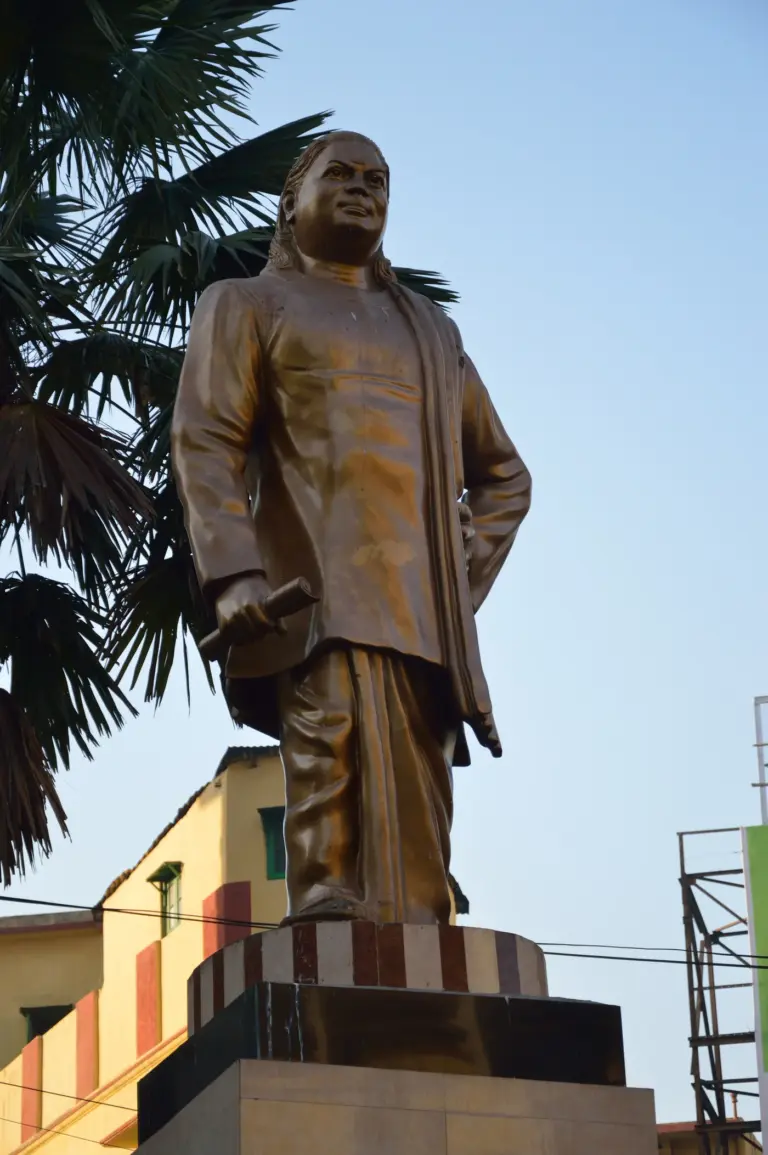
- Restating the topic in the first sentence. “Every age believes it is unique is a profound statement…” signals you have nothing to add. Open with a ruin, a statue, a museum case.
- Turning the essay into a catalogue of dead empires. Listing Rome, Egypt, the Mughals and the Soviets in sequence is description, not argument. Each example must earn its place by advancing the thesis.
- One-sided agreement. If you only prove that every age is mistaken, you have written half the essay. The line dares you to ask: what if this age really is different? Engage that.
- Hot-button political examples. The Essay paper is graded by humans across the ideological spectrum. Naming current parties, leaders or live controversies adds avoidable risk. Use the institution and the historical figure.
- Unsourced statistics. “90% of all data was created in the last two years” — if you cannot name the source cleanly, do not write the number. Examiners cross-mark this.
- Moralising. “We must all stay humble” reads like a school speech. The essay paper rewards examination, not exhortation.
A paragraph-by-paragraph blueprint
Twelve paragraphs at roughly 95 words each gets you to about 1,140. Thirteen at 90 each gets you to 1,170. Either works. What follows is a 13-paragraph plan that maps cleanly onto the model essay below. Each line is what that paragraph is doing, not what it is saying.
- Opening image — a ruined imperial city or a weathered edict that once stood for permanence. No mention of the topic yet.
- The pivot to thesis — name the topic, then state the thesis in one sentence.
- Define the terms — what “age” means, what “unique” claims, and the two ways an age can be mistaken (about its triumphs and about its crises).
- Angle 1 — chronological vanity in history — Vijayanagara, the arc from Maurya to Mughal, each empire sure it was the arrival.
- Indian anchor — cyclical time, the yugas and the kalachakra; a civilisation that built impermanence into its cosmology.
- Angle 2 — the psychology of recency — why the present always looms larger than the past; memory and attention, not just arrogance.
- The literary turn — Shelley’s Ozymandias and the Ashokan edict; the shattered boast in the sand.
- The counter-current introduced — but some ages are genuinely discontinuous: the atom, DNA.
- The counter-current deepened — AI and climate — the present age’s strongest claim to real novelty.
- Resolution — how to tell vanity from novelty — the test of irreversibility and scale, applied honestly.
- Way forward — the individual — intellectual humility, reading the past as a peer, holding certainties lightly.
- Way forward — the civilisation — institutions and archives built to outlast a single generation’s enthusiasms.
- Closing image — return to the ruin, close with one resonant line.
How to make an examiner stop and read
An essay examiner reads several hundred scripts in a sitting. The first paragraph decides whether they read the second with attention or with autopilot. Four small habits separate the essays that get attention from the ones that get skimmed.
- Open with a scene, not a statement. A roofless palace at Hampi, a museum case of a fallen dynasty’s coins, a half-buried edict. Concrete images cost no marks and earn attention.
- Use the topic phrase itself two or three times across the essay. Once in the thesis, once at the turn, once at the close. It signals discipline and prevents drift.
- Vary sentence length. A short sentence after three long ones lands. Examiners feel rhythm before they parse meaning.
- End paragraphs with the takeaway, not with examples. Place the example mid-paragraph. Let the last sentence be the thought, so the reader carries it forward.
The complete essay — “Every age believes it is unique; every age is mistaken”
What follows is a model essay built on the blueprint above. Read it twice — once for the argument, once for the moves. The moves are what you can carry into your own essay; the argument is one of many you could make.
The granite halls at Hampi have no roofs now. Five hundred years ago this was the capital of Vijayanagara, a city of half a million, where Persian and Portuguese travellers wrote home about bazaars selling diamonds by weight. The court did not think of itself as one empire among many. It thought of itself as the arrival, the summit, the age history had been building toward. Then a coalition of neighbours met it on a single afternoon in 1565, and within months the city was emptied and burned. Today the river runs past stones that have forgotten their own names.
That is the quiet education the ruins offer, and it is the whole of the proposition before us. Every age believes it is unique; every age is mistaken. My argument is that the line is two-thirds true and one-third dangerous: almost every generation does overstate its own significance, yet a rare few truly break with the past, and the real work is learning to tell honest novelty from chronological vanity.
Begin with terms. An “age” is a generation’s sense of its own moment — its conviction that its triumphs are unprecedented and its crises unmatched. To be “mistaken” is therefore a double error: we overrate our achievements, certain that no one ever saw what we see; and we overrate our catastrophes, certain that no one ever suffered as we suffer. Both errors flow from the same root, a failure to read the past as a living peer rather than a faded backdrop.
History is the great correction. The Mauryas built a bureaucracy that an emperor could believe would last forever; the Mughals raised a court so dazzling that Bernier thought Europe should study it; the British administrators who followed assumed their empire was the permanent order of the world. Each was the summit to itself. Each is now a chapter. The arc from Maurya to Mughal to Raj is not a story of failure but of succession — every peak convinced it was the plateau, every plateau merely a slope seen from too close.
India, of all civilisations, built this knowledge into its cosmology. Where the modern West tends to imagine time as a straight line climbing toward progress, classical Indian thought imagined it as a wheel — the kalachakra turning through the four yugas, worlds rising and dissolving and rising again across spans so vast they dwarf any dynasty. To a tradition that measured time in such cycles, the idea that any single age was final would have seemed not wicked but simply naïve. Impermanence was not a warning tacked onto the philosophy; it was the architecture of the philosophy itself.
If the mistake is so old, why does it never die? The answer lies less in arrogance than in the structure of the mind. We live the present in colour and remember the past in outline. Our own crises arrive with the full weight of fear and immediacy; the crises of dead generations reach us as dates and summaries. So the present always looms larger than the past, not because we are vain but because we are near it. The illusion of uniqueness is the natural optical effect of standing inside one’s own time.
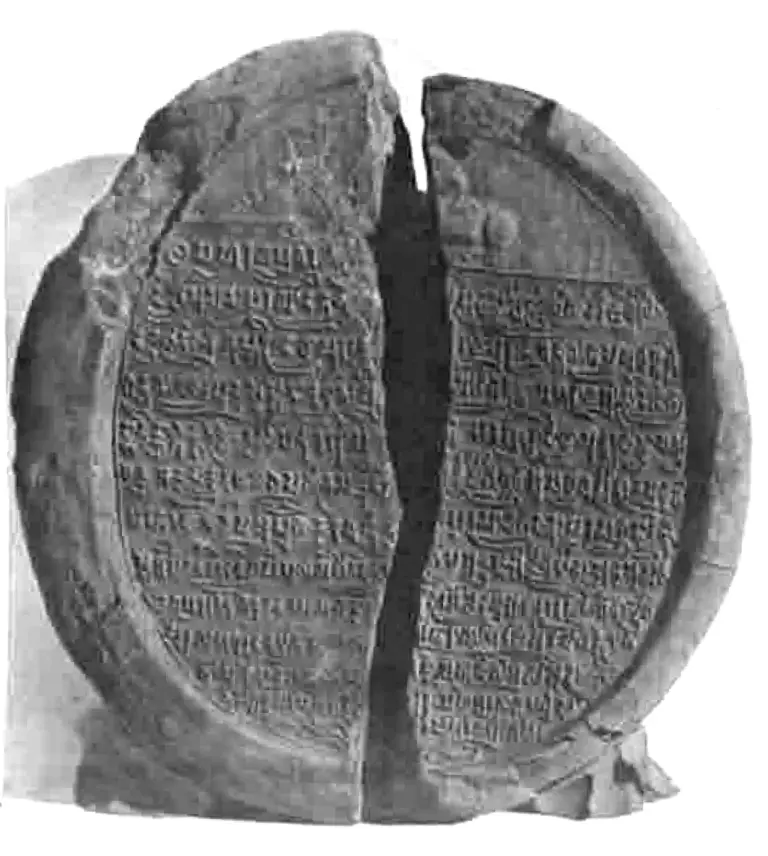
Literature has caught this better than any textbook. Shelley’s traveller finds two vast legs of stone in a desert and a shattered face half-sunk in the sand, and on the pedestal the boast: “Look on my works, ye Mighty, and despair.” Around it, nothing but level sand. The poem could have been written at Hampi, or beside any of Ashoka’s edicts that now weather quietly in fields where farmers pass them without a glance. The Mighty always believe the works will speak forever. The sand always has the last word.
And yet — here the maxim must be cross-examined, for it is partly mistaken about itself. Some ages are genuinely discontinuous. When physicists split the atom in the 1940s, humanity acquired for the first time the power to end itself within an afternoon; that is not the recurring vanity of a proud generation but a true and irreversible threshold. When biologists decoded the structure of DNA, they opened the book of life to direct editing. These are not louder versions of old achievements. They are categorical breaks, and to dismiss them as more chronological conceit would be its own kind of blindness.
Our own age presses this counter-claim hardest. Artificial intelligence now drafts, diagnoses and decides at a scale no earlier tool approached, and a single generation is altering the planet’s chemistry for tens of thousands of years to come. A medieval peasant could not have cooked the atmosphere or built a mind in silicon. If any age has a serious case that it is genuinely new, it may be this one — which is precisely why the maxim is a useful discipline rather than a settled verdict.
How, then, to tell true novelty from vanity? Two tests help. First, irreversibility: a real break changes what is permanently possible — nuclear weapons, gene editing, a warmed planet — whereas vanity merely changes fashion and feeling. Second, scale measured against the long human record, not against last decade. By those tests, most of what each age calls unprecedented is recycled excitement, but a thin and growing band of our powers genuinely is not. The honest essayist holds both findings at once and refuses the comfort of either extreme.
For the individual, this points to a quiet discipline: read the past as a contemporary, not a primitive; hold today’s certainties loosely enough to be revised; and treat the conviction “we are special” as a signal to slow down rather than speed up. Marcus Aurelius, surveying an empire he knew would not last, reminded himself that everything he saw had been seen before and would be seen again. That is not despair. It is proportion — the rarest and most useful of the intellectual virtues.
For a civilisation, it points to building things meant to outlast a single generation’s enthusiasms: archives, constitutions, universities, institutions designed to remember what individuals forget. A society that mistakes its current mood for permanent truth legislates badly and learns slowly. One that knows it is a passing chapter writes its laws and keeps its records for the readers who will come after — and, in doing so, gives those readers a fairer chance of being a little less mistaken than we were.
Stand once more in the roofless halls at Hampi. The court that built them believed it was unique, and in its splendour it very nearly was; it was also, in its certainty of permanence, entirely mistaken. Our own age believes the same of itself, and the truth will likely be the same — mostly vanity, with a thread of something genuinely new running through it. Every age believes it is unique. The wise age is the one that suspects it is mistaken, and builds, humbly, for the age that will read its ruins.
Word count: approximately 1,200.
How to use this model essay
Do not memorise it. Memorised essays read like memorised essays, and examiners spot them in two paragraphs. Use the model the way a chess student uses a master game: study the opening image, the pivot to thesis, the placement of the Indian anchor, and above all the way the counter-argument is given real weight rather than waved away. Then take a related abstract prompt — “There is no greater wealth than wisdom” or “The future of humanity lies in the choices we make today” — and write your own essay on the same blueprint. Repeat the exercise eight to ten times and the structure becomes muscle memory.
Books quoted in this essay
Meditations, Marcus Aurelius (Penguin Classics).
Tell Google you want more of this.
Add Anantam IAS as a preferred sourceOne tap, and this site shows up more often in your own Top Stories, AI Overviews and AI Mode. Remove it any time.