An ethical dilemma is rarely solved by a single principle. Real administrative situations bring several values, several stakeholders, and several futures into tension at the same time. What a civil servant needs, and what the UPSC GS IV paper tests, is not a single moral philosophy but a method — a disciplined sequence of steps that converts confusion into a defensible decision. This guide presents such a framework, drawn from public-administration practice and philosophical ethics, with Indian examples and case-study prompts.
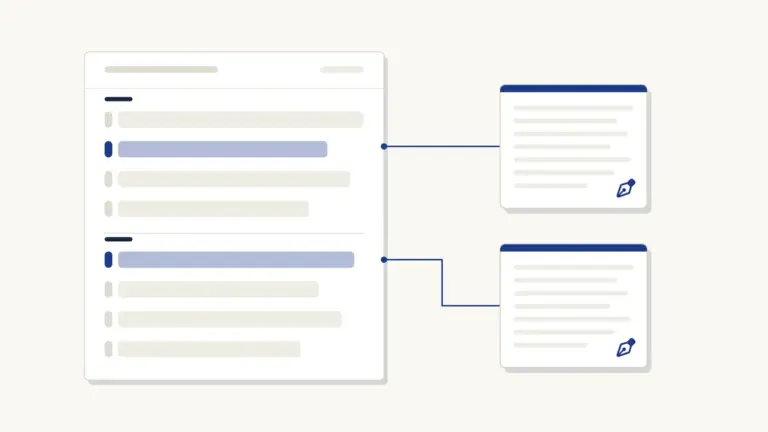
| Step | Action | Application Example |
|---|---|---|
| 1 | Identify the ethical issue | Recognize that a moral conflict exists, e.g. public interest vs. senior official's instructions |
| 2 | Gather all relevant facts | Collect information before judging, who is affected, what are the stakes, what is legally permissible |
| 3 | Identify stakeholders | Map all parties affected, citizens, institutions, government, media, vulnerable groups |
| 4 | Apply ethical frameworks | Consequentialism, deontology, virtue ethics, what outcome is best? What is my duty? What would a person of good character do? |
| 5 | Consider alternatives | Generate multiple courses of action; don't see only binary choices |
| 6 | Consult codes and laws | Check statutory provisions, service rules, constitutional provisions |
| 7 | Consult conscience | Ask: can I defend this decision publicly? Would it stand scrutiny by an ethical observer? |
| 8 | Decide and act | Take the most ethically defensible course; document reasoning |
| 9 | Review and learn | After action, reflect on whether the decision was right; learn for future |
Step One: Identify the Dilemma
Before doing anything else, the decision-maker must be clear about what the dilemma actually is. Name the nature of the situation and the conflicting ethical principles or values involved. Ask yourself: does the decision involve a choice between two rights, two wrongs, or a right and a wrong?
A dilemma that is misnamed is a dilemma that cannot be solved. Many "ethical" problems on closer inspection turn out to be legal ones (follow the rule), procedural ones (consult the manual), or resource ones (demand more staff). Genuine dilemmas survive these checks. Typical examples include transparency versus confidentiality, efficiency versus inclusion, loyalty to a superior versus duty to the public, and autonomy versus welfare.
Step Two: Gather Information
Collect all the relevant facts and understand the context of the situation. Identify the stakeholders involved and the potential consequences of different actions. Map the options that are practically available for taking an ethical decision.
Ethical reasoning without factual foundation produces confident but misguided answers. An officer facing what looks like a clear case of misconduct may be wrong about the facts; a situation that looks ambiguous may clarify quickly once the paperwork is read. Slow down, gather the record, interview stakeholders, and document what you find.
Step Three: Consider the Options
Identify possible courses of action. Evaluate each option against ethical principles such as fairness, justice, and respect for persons. Rule out options that are neither legally nor ethically defensible. Add options you might not have initially considered. Real administrative choices almost always have more than two alternatives; the binary "do X or Y" is often a sign of insufficient creativity.
Step Four: Weigh the Consequences
Analyse the potential outcomes of each option. Consider both short-term and long-term consequences, as well as who will be affected and how. A common failure mode in public administration is short-termism — decisions that look good this quarter but create problems for years. A disciplined weighing of consequences includes:
- Direct effects on the primary stakeholders.
- Spillover effects on indirect stakeholders.
- Institutional effects on public trust, organisational morale, and future behaviour.
- Distributional effects — who gains, who loses, and where they stand relative to each other before the decision.
Step Five: Apply Ethical Theories
The workhorse step of the framework. Several ethical theories illuminate different dimensions of the dilemma.
Deontological Ethics
Focuses on adherence to rules, duties, and obligations. Kant's categorical imperative asks whether the maxim of your action could be universalised. A civil servant's statutory duties — to be impartial, to disclose conflicts, to maintain confidentiality — are deontological in character.
Utilitarianism
Evaluates actions based on their outcomes, aiming to maximise overall happiness or minimise harm. Bentham's hedonic calculus and Mill's rule utilitarianism provide the tools. Use them for decisions with measurable welfare consequences: scheme design, resource allocation, public health interventions.
Virtue Ethics
Considers what a virtuous person would do in the given situation, emphasising character and moral virtues. Aristotle's doctrine of the mean and Tagore's spiritual humanism belong here. Ask what compassion, courage, prudence and justice would require in this case.
Justice Approach
Evaluates actions based on the principles of natural justice and the Rawlsian idea that everyone should be treated fairly and equally. The veil of ignorance is the signature test: would you endorse this decision if you did not know which stakeholder you would be?
Rights-Based Approach
Grounds decisions in inalienable rights — to life, liberty, dignity, due process — that cannot be traded for aggregate welfare. The Indian Constitution‘s fundamental rights chapter is the operating manual of this approach.
Gandhian Approach
The Gandhian talisman asks the decision-maker to recall the face of the poorest and weakest person he or she has seen, and to consider whether the decision about to be taken will be of any use to her. Gandhi's test is austere and moving; it cuts through sophistication and reconnects policy with its human stakes.
Laws, Rules and Codes
Following laws, rules and codes of conduct provides a significant anchor in ethical dilemmas. Where law and rule give a clear answer, that is often the right answer — and often the only legally defensible one. Where they do not, conscience must step in.
Step Six: Consult Others
At times, it is appropriate to seek advice from professionals, seniors, trusted colleagues, mentors, or experts. Different perspectives provide valuable insights and help clarify the decision-making process.
Consultation is not outsourcing. The decision remains the officer's. But consulting with others reduces the risk of ethical tunnel vision — the narrowing of moral perception under stress. It also builds a record that the decision was made with care.
Three cautions on consultation are worth noting.
- Choose interlocutors who can disagree with you freely.
- Consult widely, not just up the hierarchy.
- Protect confidentiality where the dilemma requires it.
Step Seven: Make a Decision
Choose the course of action that best aligns with ethical principles and values, given the information you have gathered and the analysis you have done. Do not pretend that you have more certainty than you have. Do not refuse to decide because you cannot achieve perfection; the perfect is the enemy of the good.
A defensible decision is one that can be explained — to stakeholders, to superiors, to the public, to yourself on a future day — as the best option under the conditions you faced with the information you had. That is what ethical decision-making looks like in practice.
Step Eight: Implement and Reflect
Carry out the chosen action and monitor its outcomes. Reflect on the decision-making process and the results to learn from the experience and improve future ethical decision-making.
Reflection is not self-criticism; it is self-education. It asks: what surprised me? What did I miss? What would I do differently next time? Over a career, these small reflections compound into judgment — the capacity to read difficult situations quickly and to act well under pressure.
Step Nine: Document the Process
Keep a record of the decision-making process, the rationale for the chosen action, and the steps you took. Documentation provides transparency and accountability in case of future issues. Good documentation is also ethical. It signals that you are prepared to be accountable for what you decided and why.
A Worked Example
Consider a district magistrate facing a scarcity of ICU beds during a pandemic surge.
- Identify the dilemma: right versus right — the duty to save lives competes with the duty to allocate scarce resources fairly across patients.
- Gather information: how many beds, how many applicants, what are the clinical indicators, what are the alternatives (transfer, triage, telemedicine)?
- Consider the options: first come first served; clinical-priority triage; random allocation after a triage threshold; publicly announced rules vs discretion case by case.
- Weigh the consequences: each option produces different numbers of lives saved, different distributional outcomes, and different levels of public trust.
- Apply ethical theories: utilitarianism favours clinical triage for maximum lives saved; rights-based approach insists on non-discrimination; Rawls demands the least advantaged be protected; the Gandhian talisman reminds us of the most vulnerable.
- Consult others: clinical leadership, hospital ethics committee, state health authority, community representatives.
- Decide: a publicly announced clinical triage protocol with safeguards against caste, class, religion and gender bias.
- Implement and reflect: monitor outcomes, revise criteria as evidence accumulates.
- Document: the protocol, the reasoning, the consultation, and the review schedule.
The same structure can be adapted to any dilemma — land acquisition, school admissions, food safety enforcement, environmental clearance, public procurement, whistleblower protection.
Resolving Conflicts of Interest within the Framework
Conflict-of-interest situations fit into the framework naturally. The identification step names the conflict (actual, perceived or potential). The options step includes the 6R strategies: register, restrict, recruit, remove, relinquish, resign. The consequences step asks what the conflict does to public trust if left unresolved. The theories step finds deontology particularly strong here, because rules of disclosure and recusal are deontological in character. The documentation step ensures that the chosen strategy is visible and auditable.
Case study prompts
- Apply the framework to a dilemma in which transparency (disclosing a whistleblower's identity) collides with protection of the whistleblower (preserving confidentiality). Walk through each step.
- A collector faces pressure to allow a religious procession through a route that runs through a communally sensitive area. Using the framework, outline the steps from identification through documentation.
- A departmental officer receives a direction from a superior to expedite a contract that he suspects violates procurement rules. Apply the framework and, at the theories step, stress-test the response using deontology, utilitarianism and the Gandhian talisman.
UPSC Relevance
This framework is directly testable and broadly applicable. GS IV case studies are designed to reward precisely this kind of disciplined reasoning — identify, gather, options, consequences, theories, consult, decide, implement, reflect, document. Candidates who can run the sequence cleanly, invoke multiple ethical theories at the right moment, and arrive at a defensible decision produce the kind of answers examiners describe as "mature." The framework is also portable: it can be folded into answers on probity, conflict of interest, service delivery, public procurement, and many others, converting abstract principles into a visible method of ethical judgment.
Tell Google you want more of this.
Add Anantam IAS as a preferred sourceOne tap, and this site shows up more often in your own Top Stories, AI Overviews and AI Mode. Remove it any time.